
Samos Dive Center
Google 4.9/5 (75 reviews)
Greece · Mediterranean
Rocky walls, shallow training grounds, sandy seabeds and an officially recognised underwater archaeological site in the ancient harbour shape diving from Pythagoreio on Samos.
For subtitles in English: start the video firstthen click the gearat the top right of the video, select “Subtitles/CC”, then “Auto-translate” and choose “English”.
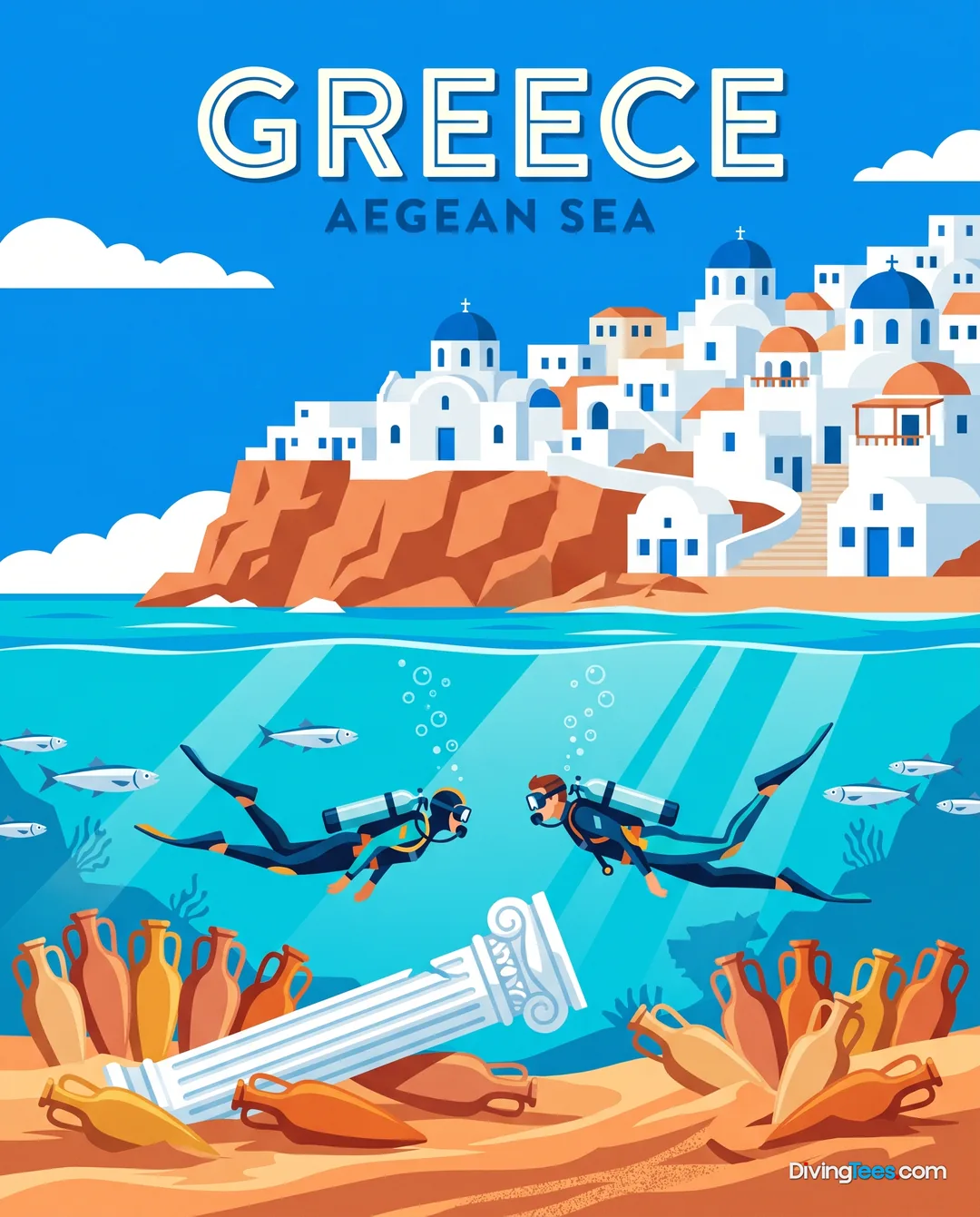
Pythagoreio puts you beside an old harbour, with rocky seabeds, caves and sandy patches reached from the coast or by boat. It is a base for exploring the south-east of Samos rather than a single enclosed dive bay. Shallow water around the harbour suits baptisms, refresher dives and training, while boat trips open up more varied relief around the island. The underwater archaeological status of the ancient harbour adds a historical dimension, although the practical experience depends on the outing arranged.
Expect Mediterranean diving built around rock rather than coral: uneven seabeds, walls, cave sections and sandy bottoms, with the ancient harbour providing a very different setting from the natural sites. Some dives begin from the coast, while others leave Pythagoreio harbour by boat for bays and coastal sectors around Samos. Depths commonly described for the island's diving lie between 10 and 25 metres, so the terrain can remain engaging without automatically becoming deep. Currents are variable, and a calm-looking departure does not guarantee identical conditions at the far end of a boat trip. Ask what the day actually involves, including entry point, depth and boat time. This is not a destination built around a single signature reef, but a succession of rocky, sandy, cavernous and archaeological environments.
Mediterranean fish and invertebrate life form the background to dives around Pythagoreio, with encounters shaped more by the terrain than by a promised seasonal spectacle. Rocky faces and cave mouths offer the places to examine closely, while sandy seabeds change the texture of the dive and may reveal smaller life at the margins. The ancient harbour brings history into the underwater view, rather than functioning as a conventional natural reef. From May to October, when local diving operations run, the practical interest lies in combining different habitats and looking carefully at the rock, sand and harbour structures. Expect a Mediterranean setting, not a tropical fish display, and choose the outing for its terrain as much as for wildlife.
The working diving season runs from May to October, with May, June, September and October particularly sensible choices for a stay. These months make it easier to combine diving with time ashore and to avoid placing the whole trip in the busiest part of summer. July and August remain within the operating season, but popular outings and harbour activity can be more noticeable. There is no rainy season or monsoon pattern shaping the choice here. Keep spare days in the itinerary, because boat access and local sea conditions can affect which part of Samos is practical on a given day.
Pythagoreio works for beginners, returning divers and experienced divers, provided the chosen outing matches the diver rather than merely the destination. Shallow harbour and coastal areas are used for baptisms, courses and refresher work. More demanding walls, caves and deeper boat sites suit divers who are comfortable with variable currents and changing underwater terrain. PADI, SSI and BSAC divers should find the important question is experience and comfort in the planned conditions, not the badge on the card.
From London Heathrow, London Gatwick or Manchester, the journey is built around reaching Samos, then continuing by road to Pythagoreio. The island is also reached by ferry from other Greek islands or Greek ports, followed by a road transfer. Allow room for connections, particularly if a flight and ferry are being combined, and avoid fixing the only diving day immediately before a crossing or return flight. Once in Pythagoreio, a centre near the old harbour may be walkable from accommodation in town. Further away, plan on a taxi or local transfer, as a general shuttle network between accommodation and diving is not established.
Treat Pythagoreio as a base for Samos, not as a promise of beach diving at every turn. Ask whether the planned outing is a harbour archaeological dive, a natural coastal entry or a boat trip, because those are quite different experiences. If you want the ancient harbour, say so before booking and ask how access is handled rather than assuming an officially identified archaeological site can be explored freely. For natural diving, ask which bays and coastal sectors are normally reachable by boat, not just what depth is offered. Keep several diving days available: the sites are spread around the island and navigation can alter the plan. A stay built around one departure window is needlessly fragile, especially before a flight or ferry. Staying in or near Pythagoreio cuts down the daily land transfer, while a spare non-diving day gives you room for Samos's villages, beaches and inland walks.
A week suits the shape of a Pythagoreio stay. Use the harbour as the daily starting point, mix coastal dives with boat outings towards other parts of Samos, and leave a day free for changing sea conditions. The town itself supplies an easy base between dives, with the historic waterfront and ancient remains close at hand. Non-divers can spend time on the harbour, visit the island's cultural sites or join road excursions to bays and inland villages.
Hello, I'm Marina, DivingDeal.com's AI assistant. I guide you through destinations, areas and countries.
Thinking about the whole trip and the flights? Talk it over with Edith →
Marina is an AI. Some links are affiliate links: DivingDeal may earn a commission, at no extra cost to you. Bookings are made with the partner.
The diving season in Pythagoreio runs from May to October, with May, June, September and October offering sensible timing for combining dives with time ashore. July and August remain operational but can bring more harbour activity and popular outings. Keep spare days available because sea conditions may affect boat access.
Pythagoreio suits beginners, returning divers and experienced divers when the outing matches your comfort and experience. Shallow harbour and coastal areas support baptisms, courses and refresher dives. Divers comfortable with variable currents and changing terrain can consider walls, caves and deeper boat sites. Ask about the planned conditions before booking.
Diving in Pythagoreio combines rocky seabeds, walls, caves, sandy patches and Mediterranean fish and invertebrate life. The ancient harbour offers an underwater archaeological setting distinct from natural sites. Boat outings can reach bays and coastal sectors around south-east Samos, while the terrain, rather than a tropical fish display, shapes the experience.
Use Pythagoreio as a base for coastal dives, boat outings and exploration around Samos. Ask whether each trip visits the archaeological harbour, a natural coastal entry or another bay, and confirm the entry point, depth and boat time. Staying near town can simplify access to the harbour, while spare days help absorb weather or navigation changes.