
Atlantis Diving Center
Google 4.9/5 (694 reviews)
2.1 km away as the crow flies
Gozo · Malta · Mediterranean
Max. depth · 80 mDescend the northernmost point of Gozo, where strong walls drop into offshore currents, bringing pelagic species close to the reef.
For subtitles in English: start the video firstthen click the gearat the top right of the video, select “Subtitles/CC”, then “Auto-translate” and choose “English”.
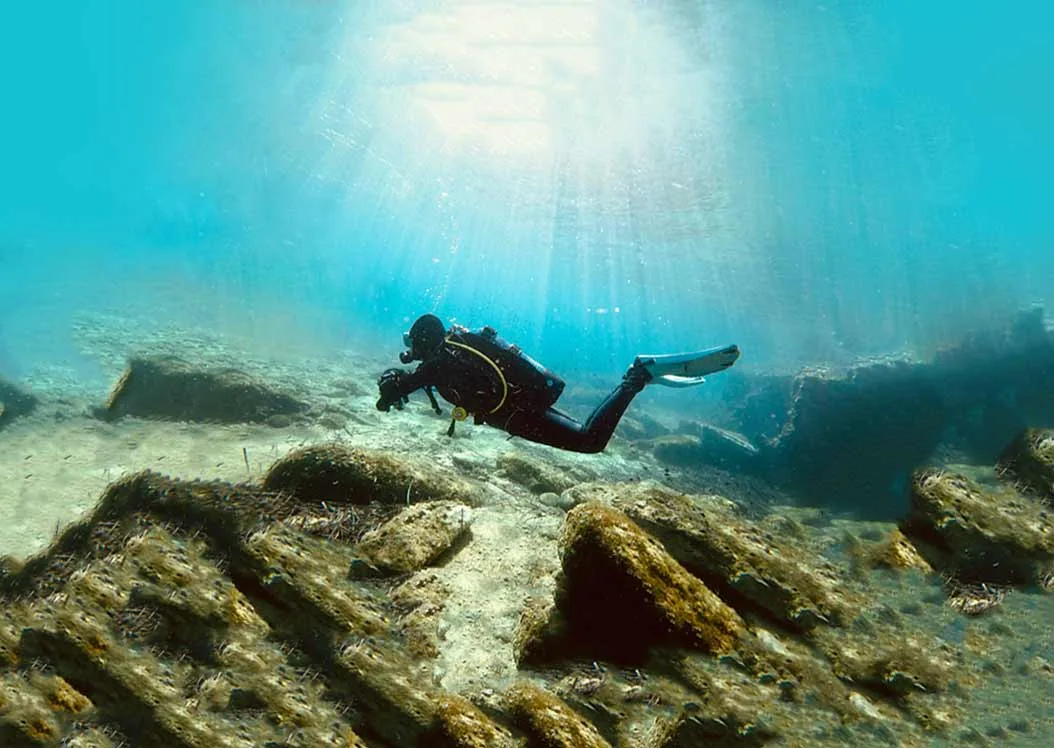
Reqqa Point marks the northernmost tip of Gozo, a dive site characterized by its dramatic topography and exposure. The dive typically begins near the saltpans, with options for a direct giant stride entry or a longer walk-in. Immediately, you're faced with a descent along impressive walls and overhangs that define the underwater landscape here.
One of the distinct features of Reqqa Point is a chimney system that begins as shallow as 6 metres and opens onto the main reef at 16 metres. Moving through this chimney, you'll observe star corals (Madracis auretenra), cardinalfish (Apogon imberbis), and scorpionfish (Scorpaena scrofa), finding shelter in the ambient light filtering from above. The base of this chimney offers a spacious exit into the main dive area.
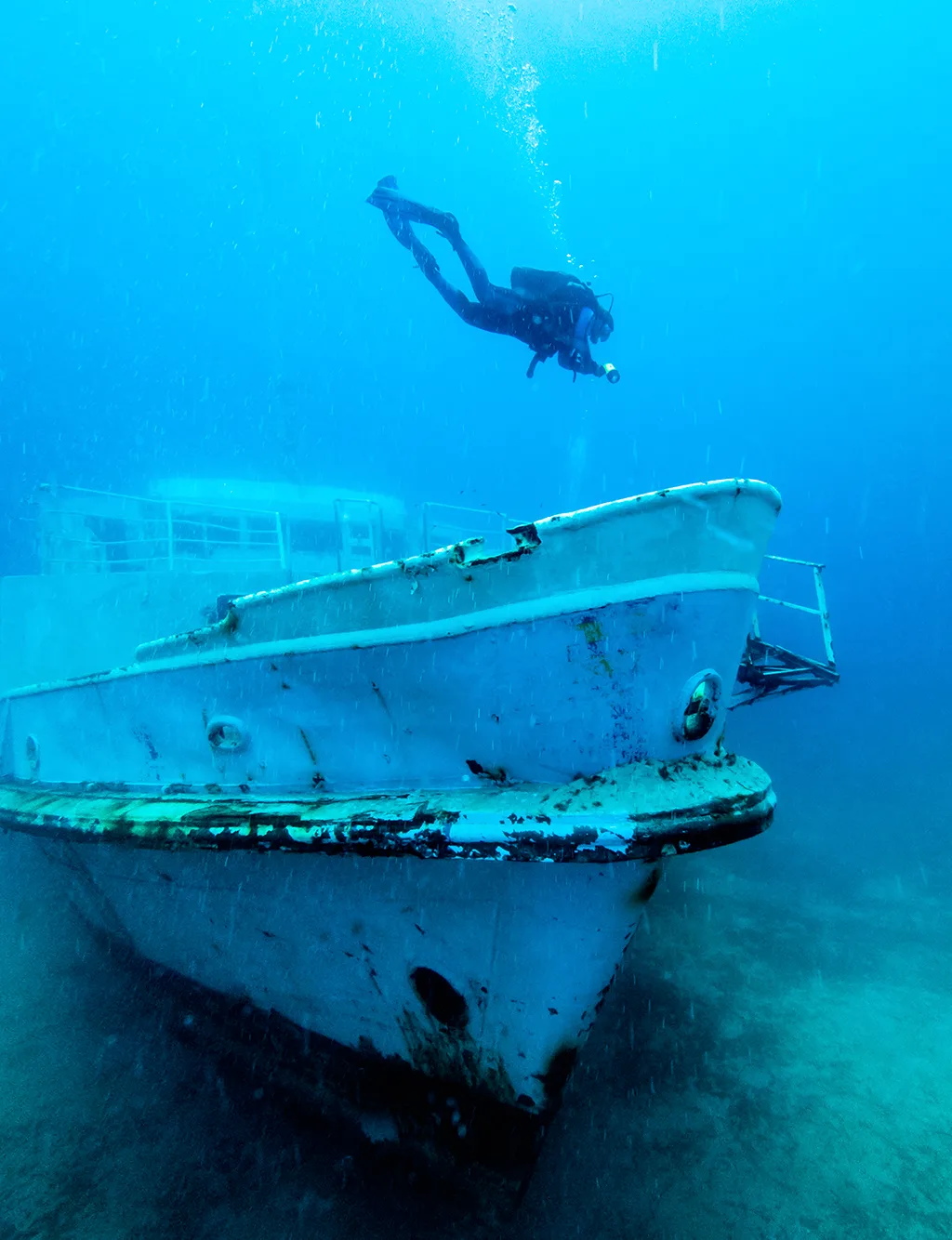
Following the wall to your left, it culminates in a prominent point at 18 metres, resembling the bow of an ancient ship. This feature is a natural aggregation point for marine life, where various small to medium-sized reef fish congregate. From here, the spectacular drop-offs extend vertically to depths beyond 60 metres, creating an environment favored by larger species.
The deep sections of Reqqa Point are known for sightings of groupers (Epinephelus marginatus) and dentex (Dentex dentex), often cruising along the deeper parts of the wall. The exposed nature of this site means that you have a higher chance of encountering pelagic species. Tuna (Thunnus thynnus), amberjacks (Seriola dumerili), and barracuda (Sphyraena barracuda) are regular visitors, often seen hunting baitfish schools in the open water.
Moray eels (Muraena helena) are common residents within the crevices and natural overhangs of the wall. You will also spot various rays, notably eagle rays (Myliobatis aquila), gliding gracefully in the blue. These pelagic encounters differentiate Reqqa Point from more sheltered sites, offering a dynamic dive experience.
Visibility at Reqqa Point is often excellent, typically exceeding 30 metres, which allows you to appreciate the scale of the wall and observe marine life from a distance. The northern exposure means conditions can vary, particularly with strong northerly winds, which can render the site inaccessible. When conditions allow, the clear water provides an extensive view into the deep blue.
While the site offers accessible sections beginning at 18 metres, the continuous drop-off to 80 metres makes it a compelling location for those certified for deeper dives. The possibility of encountering larger pelagic fish and the sheer scale of the underwater rock formations make every dive here an exploration of a vibrant ecosystem. Always plan your dive thoroughly, especially when aiming for deeper profiles, and consider the potential for variable currents near the point.
This site is officially accessible from an Advanced Open Water certification, due to potential depths extending over 40 metres. While shallower sections at 18 metres are diveable, the full experience and the chance to encounter more pelagic life require comfort with deeper profiles. Visibility is consistently good, often surpassing 30 metres. Current conditions are generally reliable, but Reqqa Point is exposed to open water, so be prepared for potential stronger currents, especially around the point itself. The best period to dive here is from May through October.
The best period to dive Reqqa Point is from May through October. Because the site is exposed to open water and its northern exposure can make conditions vary, strong northerly winds may render it inaccessible. When conditions allow, visibility is consistently good, often exceeding 30 metres.
Reqqa Point is officially accessible from an Advanced Open Water certification because potential depths extend beyond 40 metres. Shallower sections at 18 metres are diveable, but you should be comfortable with deeper profiles to experience the dramatic walls and improve your chance of seeing pelagic species.
Reqqa Point ranges from shallow areas in the chimney system, beginning at 6 metres and opening onto the reef at 16 metres, to a prominent point at 18 metres. The wall then drops vertically beyond 60 metres, with the site extending to 80 metres.
Reqqa Point often has visibility exceeding 30 metres, but its open-water exposure can bring stronger currents, particularly around the point. You may see tuna, amberjack, barracuda, groupers, dentex, eagle rays, moray eels, scorpionfish, cardinalfish, and reef fish along the walls and in crevices.