Dwejra Divers
Google 5/5 (225 reviews)
2.3 km away as the crow flies
Gozo · Malta · Mediterranean
Max. depth · 60 mHigh cliffs and a sloping rocky plateau create a deep, open-water environment for encounters with larger pelagics.
For subtitles in English: start the video firstthen click the gearat the top right of the video, select “Subtitles/CC”, then “Auto-translate” and choose “English”.
The geography of San Dimitri Point is defined by its dramatic western coastline, where the land falls away into massive, high cliffs. You start your dive on a shallow rocky plateau, roughly 6 metres deep, where the boat usually anchors to provide a stable starting point. This plateau provides a brief, calm transition before the terrain begins its descent. It serves as a stable platform before the topography shifts into the main features of the site.
As you move away from the anchoring zone, the seafloor begins to descend through a series of large boulders and rock masses. This transition is not a sudden drop but a gradual slope that leads you toward the primary vertical features. The bottom topography is characterized by these large blocks, which create various niches and shelter along the descent. This structural complexity provides a base for many of the site's resident species.
The descent eventually leads you to the main vertical walls that define the site's character. While the standard recreational dive profile typically stays around the 30 to 35 metre mark, the walls continue to drop significantly deeper. Some surveys indicate the descent reaches down to 60 metres, depending on whether you are exploring the standard profile or the deeper limits of the drop-off. This depth variation creates a distinct verticality that is central to the experience.
The topography includes a specific sheltered channel located between the reef platform and the coastline. This area offers a different environment from the exposed outer wall, providing a break from the more direct swell. Navigating this channel allows you to see how the reef structure interacts with the shoreline. It acts as a natural buffer, making this part of the site feel more protected compared to the open blue beyond.
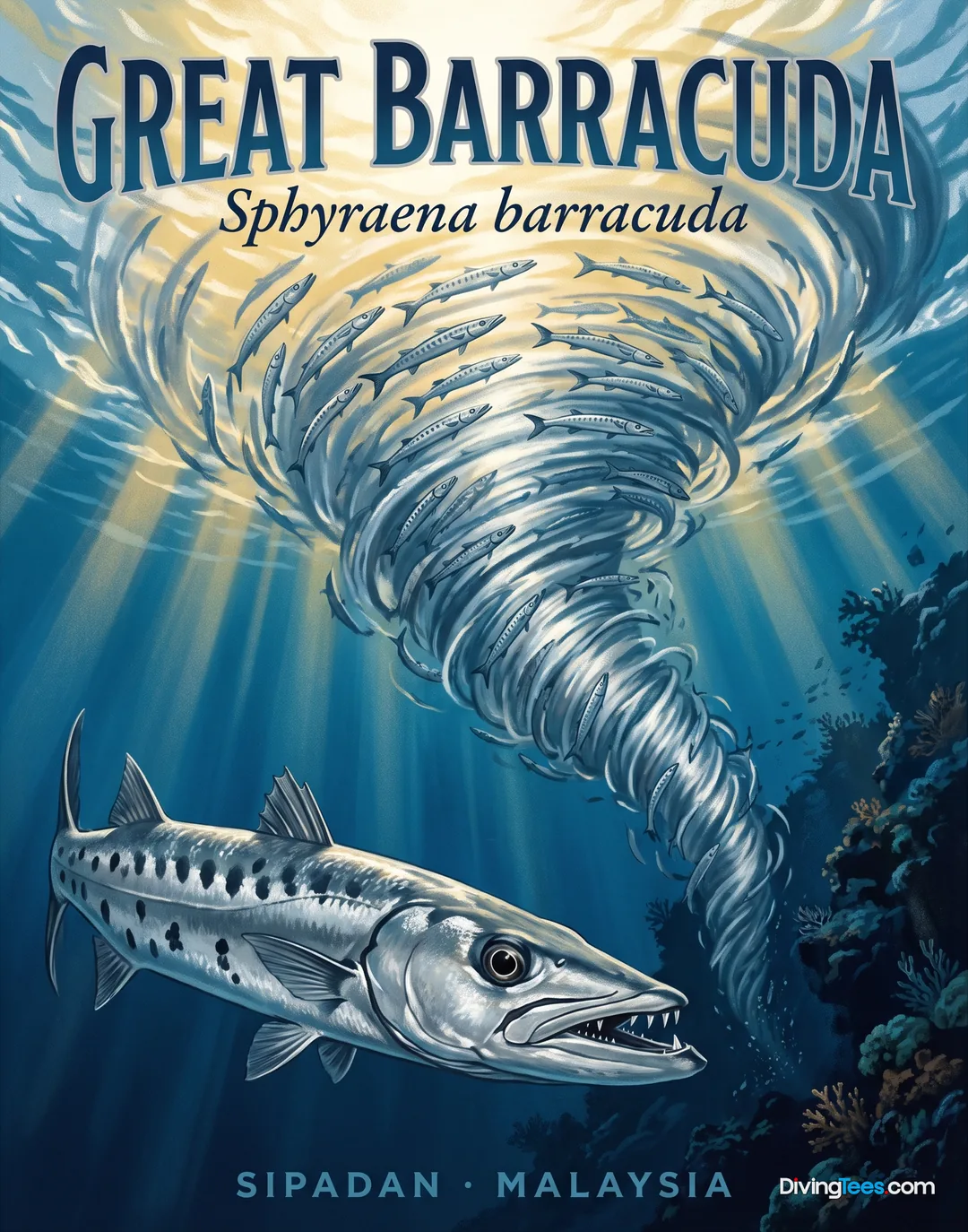
For those watching the blue, the site is a notable location for larger pelagic species. You can often encounter barracuda and tuna patrolling the edges of the wall. The presence of amberjack is also documented, often moving through the deeper sections of the site. These predatory fish take advantage of the current and the structure to hunt, making the deeper parts of the wall a point of interest.
The visibility at San Dimitri Point is generally high, typically ranging between 20 and 50 metres. This clarity is essential for spotting life as it moves along the vertical face. The combination of deep walls and high visibility makes the site a favoured location for observing larger species in their natural habitat. It is this sense of openness and clarity that defines the visual experience here.
Current conditions at the site can be highly variable due to its exposed position to the open sea. The site is sensitive to swell and the direction of the wind, which can shift the water movement. Conditions are notably more favorable when the sea is calm and an easterly wind is present. Because the site is open to the sea, you must be prepared for the water to feel more active than in a sheltered bay.
The site has a depth range from 5 to 60 metres. It is an Advanced level dive, and real experience in open sea and deep diving is recommended. Visibility is expected to be between 20 and 50 metres. The best season is from June to September when sea conditions are calm.
You can dive San Dimitri Point throughout the year, but June to September is the best season because sea conditions are calm. The site lies on an exposed western coastline, so choosing calmer conditions helps you approach the shallow rocky plateau and descend toward the walls more comfortably.
San Dimitri Point is an Advanced level dive, with real open-sea and deep-diving experience recommended. You begin on a shallow plateau around 6 metres, then descend through large boulders toward vertical walls. A standard recreational profile usually reaches around 30 to 35 metres, while the walls descend to 60 metres.
At San Dimitri Point, current and water movement can vary because the site is exposed to the open sea. Swell and wind direction influence conditions, while calm seas and an easterly wind are more favorable. You can also use the sheltered channel between the reef platform and coastline as a more protected area.
At San Dimitri Point, you can explore large rocky boulders, vertical walls, and a sheltered coastal channel. Visibility is generally between 20 and 50 metres. Look into the blue for barracuda and tuna around the wall, while amberjack may move through the deeper sections.