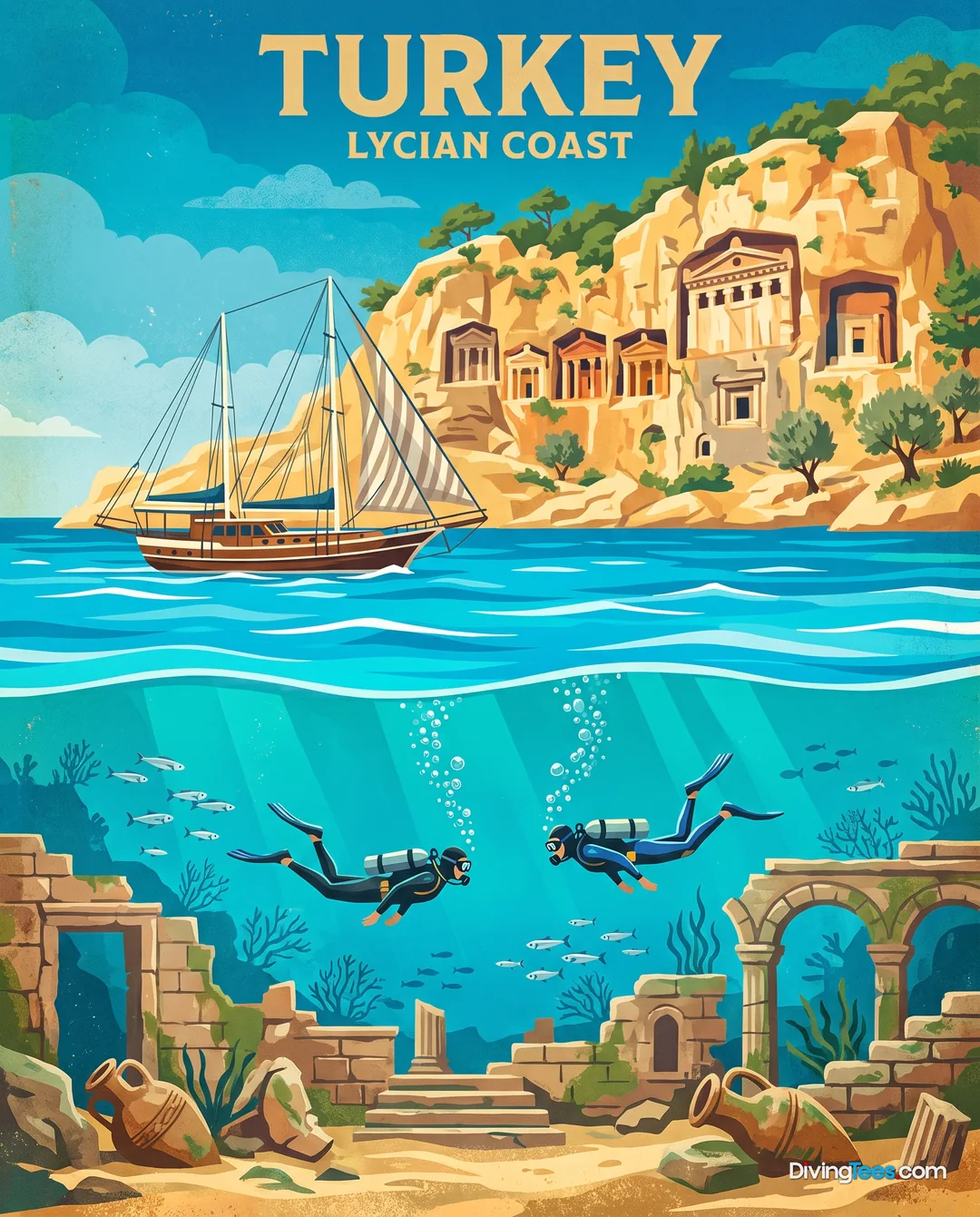
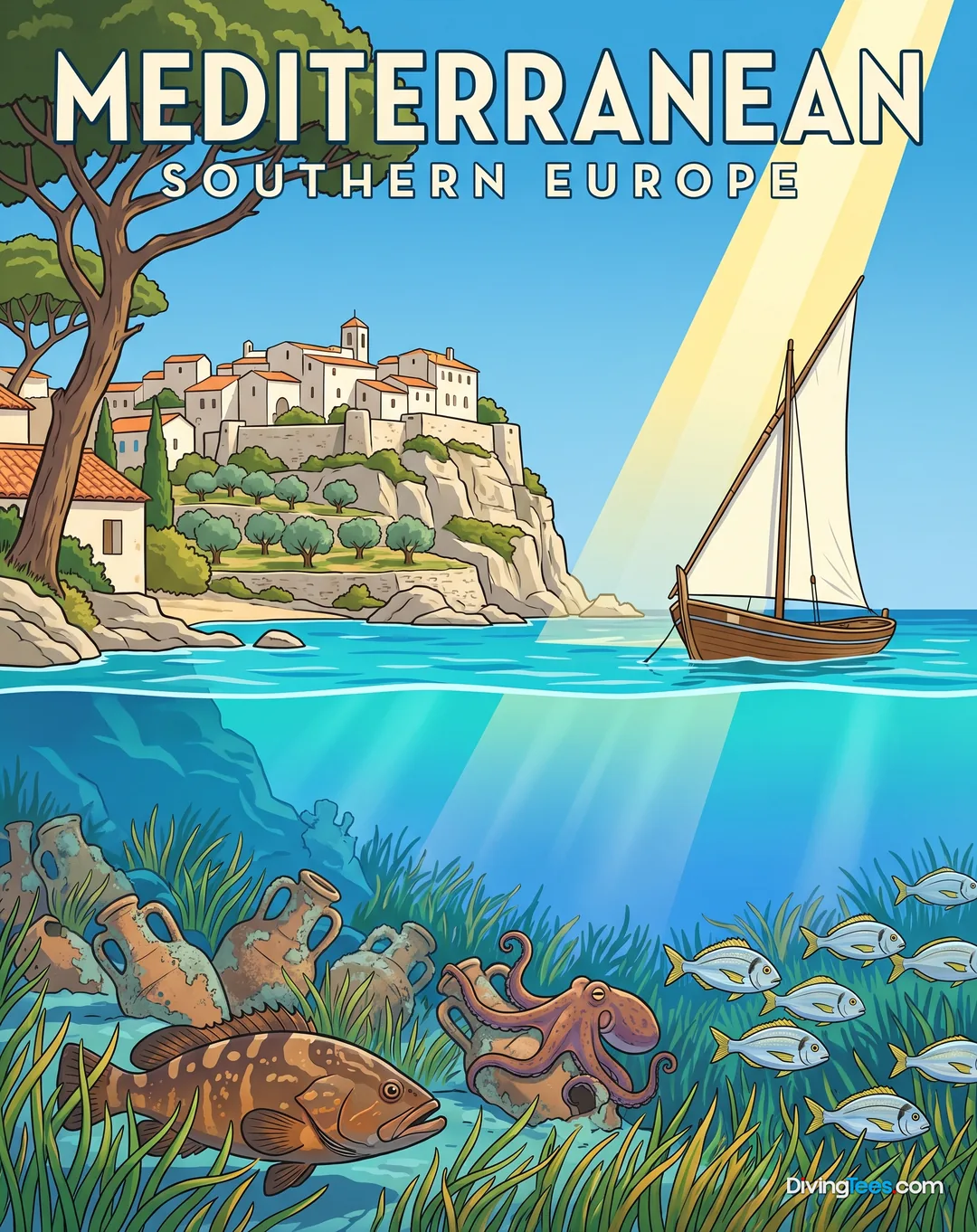
Kovan Adasi · Türkiye · Mediterranean
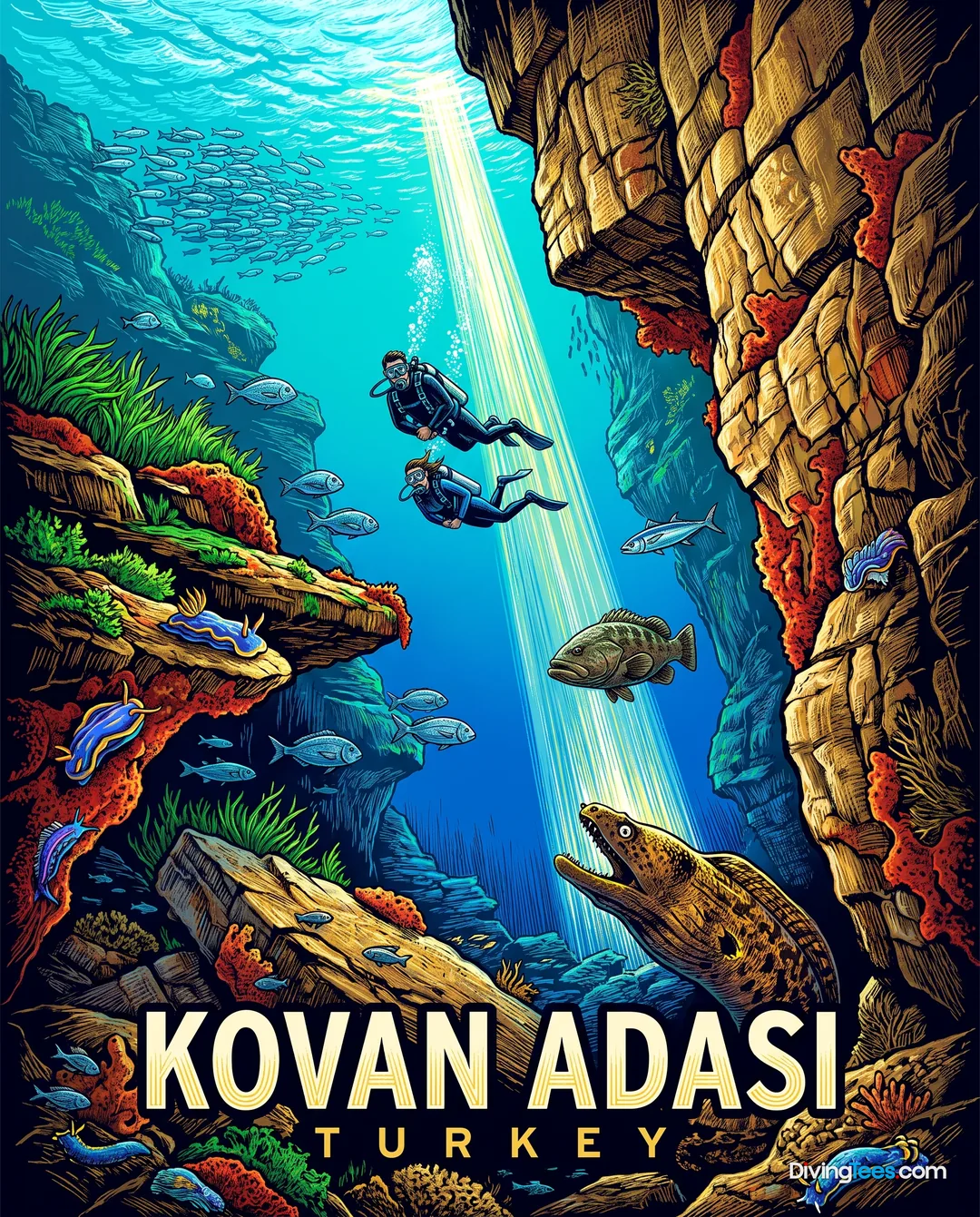
Max. depth · 70 mFlying Fish Reef, Kovan Adasi: Deep wall and WWII aircraft wreck
A prominent rocky reef sits at the edge of the channel between Kaş and Meis, featuring a steep drop-off and a historic torpedo bomber wreck.
What makes this site special
- WWII Savoia-Marchetti SM.79 wreck at 55-70 metres
- Steep wall and deep rocky slopes
- High visibility between 25 and 30 metres
- Presence of large amberjack and dentex
- Located in the Kaş-Meis channel
For subtitles in English: start the video firstthen click the gearat the top right of the video, select “Subtitles/CC”, then “Auto-translate” and choose “English”.
Flying Fish about the site
The topography of Flying Fish begins with a rocky reef top that sits at a depth of approximately 4 to 7 metres. This shallow section forms a small plateau and a rim that serves as the entry point for most dives. From this plateau, the seabed changes character abruptly, dropping away into a steep wall and sloping rocky faces. These faces descend well beyond recreational diving limits, creating a dramatic vertical profile that defines the site's structure.
Positioned in the channel between Kaş and the Greek island of Meis, the reef occupies an exposed location. This placement is the primary reason for the site's high visibility, which frequently reaches between 25 and 30 metres. Because it sits in a transit corridor, the site is subject to the movement of water through the channel. This positioning makes the reef a focal point for both deep-water currents and the passage of larger marine life moving through the region.
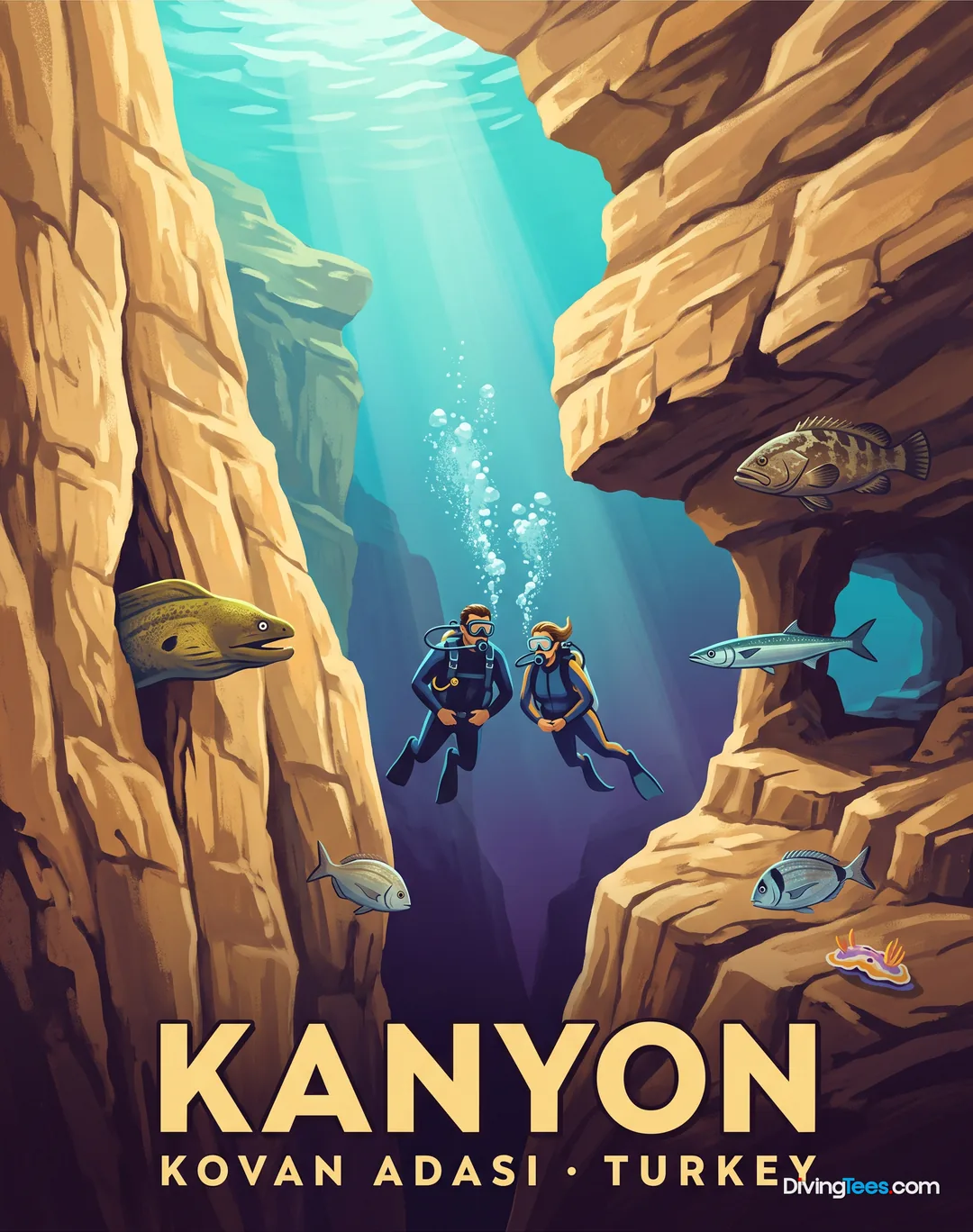
The descent along the seaward side takes you along a steep wall that transitions into deep, sloping rock. As you move past the initial plateau, the light shifts and the depth increases rapidly. This verticality provides numerous ledges and crevices that serve as habitats for various resident species. The transition from the shallow rim to the deep wall is the defining movement of a dive here, offering a clear sense of the site's scale.
A significant feature of this site is the Savoia-Marchetti SM.79, a WWII Italian torpedo bomber wreck. The aircraft rests off the southeast end of the reef at a depth ranging from the mid-50s to approximately 70 metres. Reaching the wreck requires technical training and specific experience with deep, overhead environments. It remains one of the most notable historical landmarks in the Kaş area for those with the appropriate depth certifications.
The current at Flying Fish is highly variable due to its channel location. On calm days, you may find gentle movements along the reef that allow for easy navigation of the plateau. However, when the channel current picks up with the tide or seasonal shifts, the site becomes challenging. Divers must be prepared to manage their buoyancy and positioning against steady flows, making experience in moving water a necessity for a safe dive.
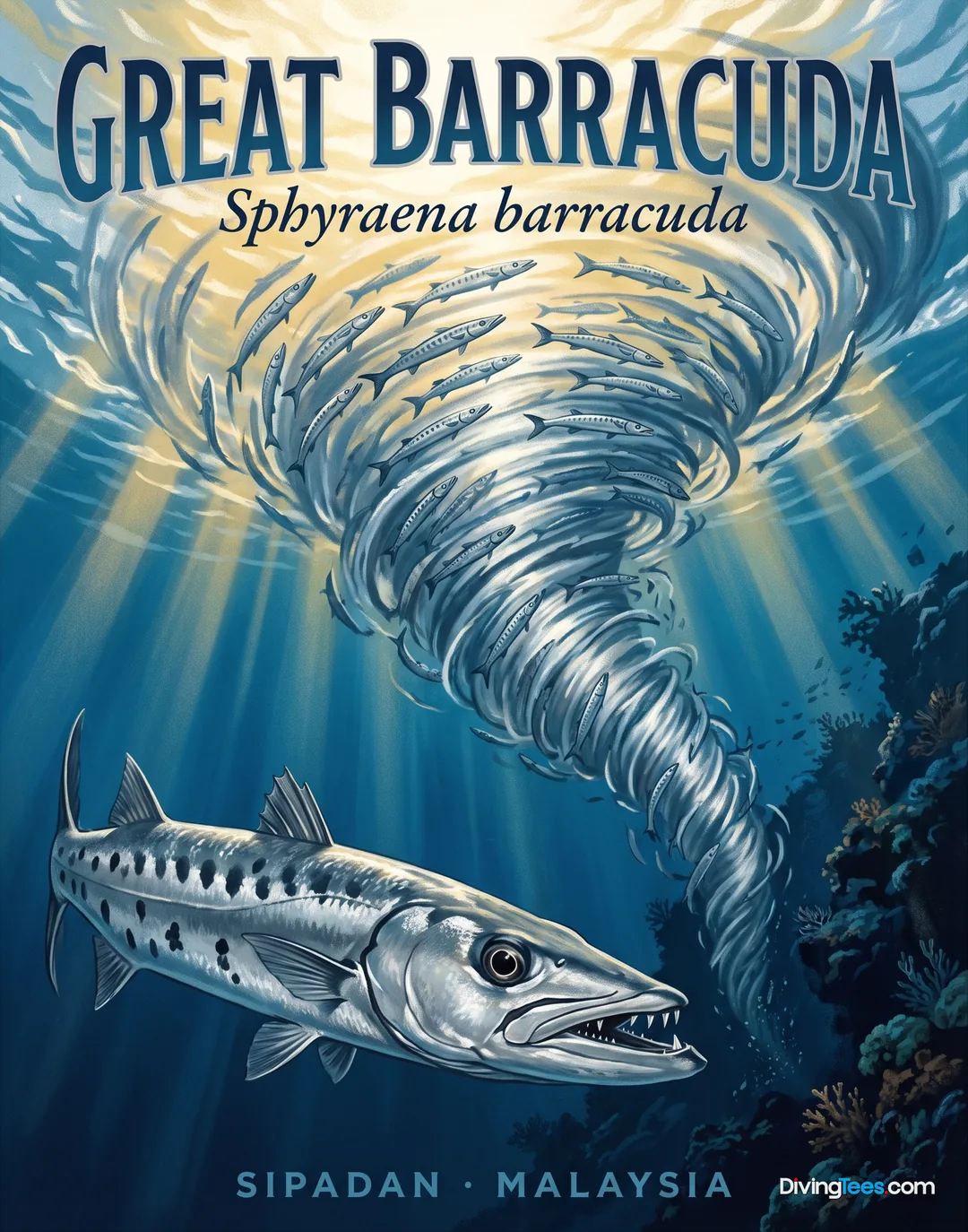
Large pelagic species are frequently drawn to the reef by the nutrient-rich currents of the channel. You can expect to encounter amberjack and dentex patrolling the edges of the wall. Barracuda and large schools of bream are also common sights in the blue. The presence of these predators is a direct result of the site's position as a corridor for marine life passing between the mainland and the islands.
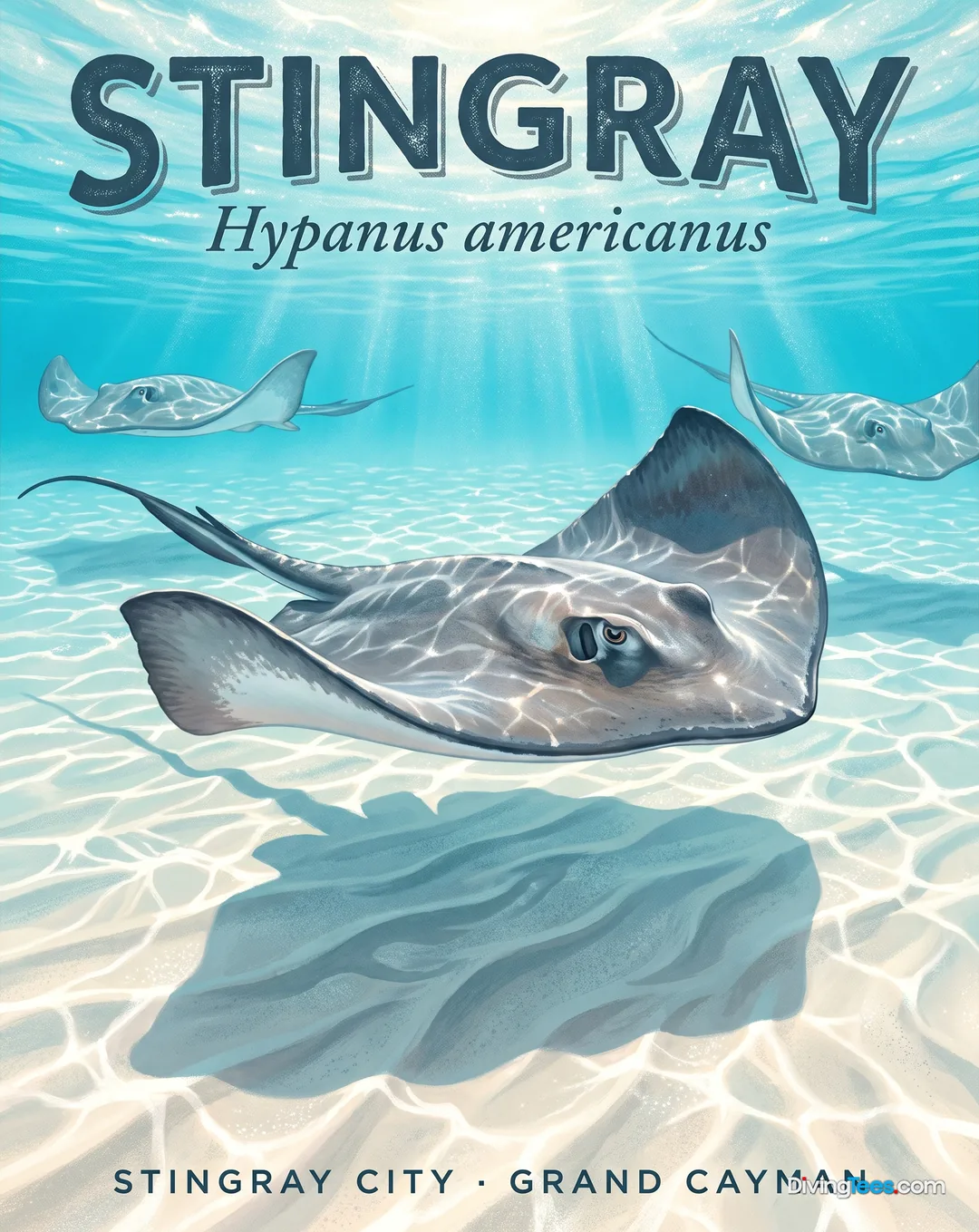
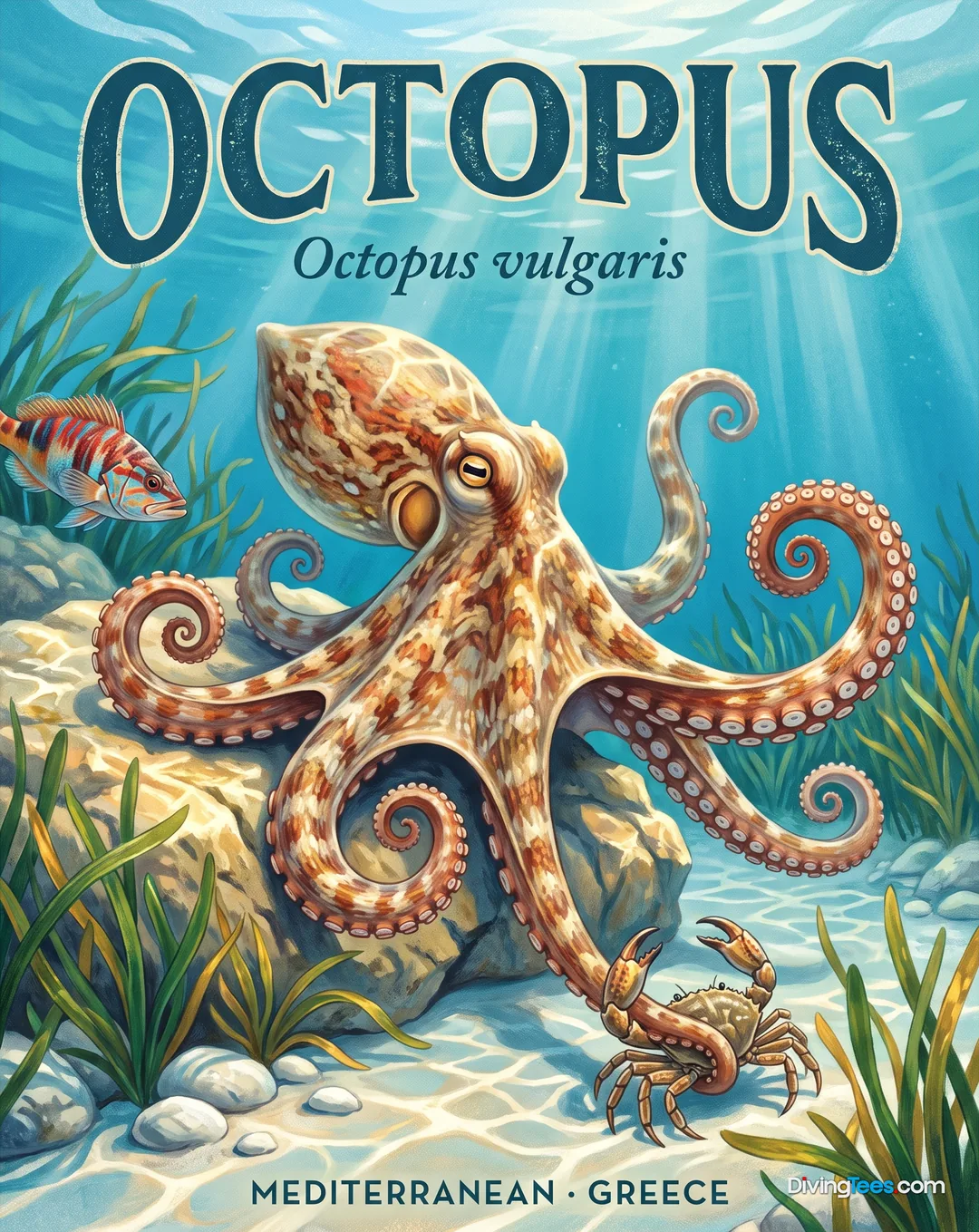
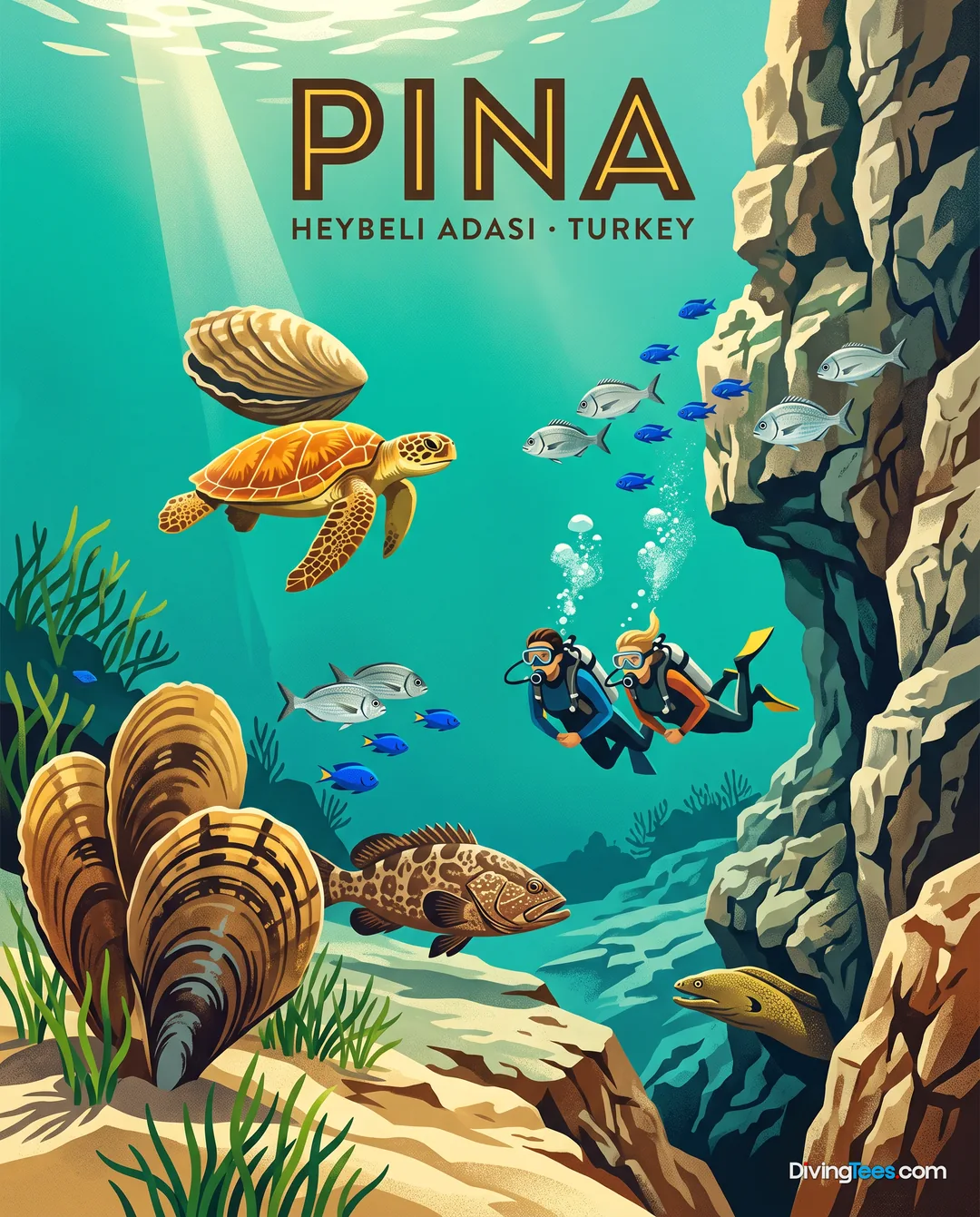
The resident fauna provides constant interest along the rocky surfaces and within the crevices. Dusky grouper often hold position near the reef structures, while moray eels are frequently found tucked into the rocky faces. You might also spot stingrays resting on the bottom or octopus moving through the terrain. Smaller species like wrasse, damselfish, and various bream inhabit the shallower sections of the plateau.
Seasonal conditions influence the experience at Flying Fish, with the best diving typically occurring from May to November. Late spring and autumn often provide the most stable conditions for planning dives. During these periods, the balance between visibility and manageable currents is most reliable. Planning your dive around these windows increases the likelihood of seeing the larger species that frequent the deep wall.
Diving Flying Fish: the marine life you’ll meet
Diving conditions
Depths range from 4 to 70 metres. This site requires an Advanced level with significant experience in currents and deeper dives; technical certification is mandatory to visit the aircraft wreck. Visibility is typically 25 to 30 metres. The best diving period is between May and November, particularly in late spring and autumn. Currents are variable and can become strong due to the site's position in the channel.
Two dives not to miss
Map of hotels, dive sites and dive centres in Kovan Adasi
Frequently asked questions about Flying Fish
When should you dive Flying Fish?
The best period for diving Flying Fish is from May to November, with late spring and autumn offering particularly stable conditions for planning. During these periods, visibility and currents are more manageable, while the channel remains active with larger marine life around the reef and deep wall.
What certification and experience do you need for Flying Fish?
Flying Fish requires an Advanced level and significant experience with currents and deeper dives. Visiting the aircraft wreck also requires technical certification, along with specific experience in deep, overhead environments. You should be comfortable managing buoyancy and positioning when moving water affects the reef.
How deep is Flying Fish, and what currents should you expect?
Flying Fish descends from a shallow rocky plateau through a steep wall and sloping rocky faces to deep areas. The aircraft wreck lies at substantial depth and requires technical training. Currents are variable because the site sits in a channel, and tidal or seasonal flow can become strong and challenging.
What can you see while diving Flying Fish?
At Flying Fish, you can explore a steep wall, rocky slopes, ledges, crevices, and a WWII Savoia-Marchetti SM.79 wreck. Large amberjack, dentex, barracuda, and schools of bream may appear in the blue, while groupers, moray eels, stingrays, octopus, wrasse, and damselfish inhabit the reef.