The Palms Apartments
★★★★
Google 4.8/5 (132 reviews)
Australia · Pacific
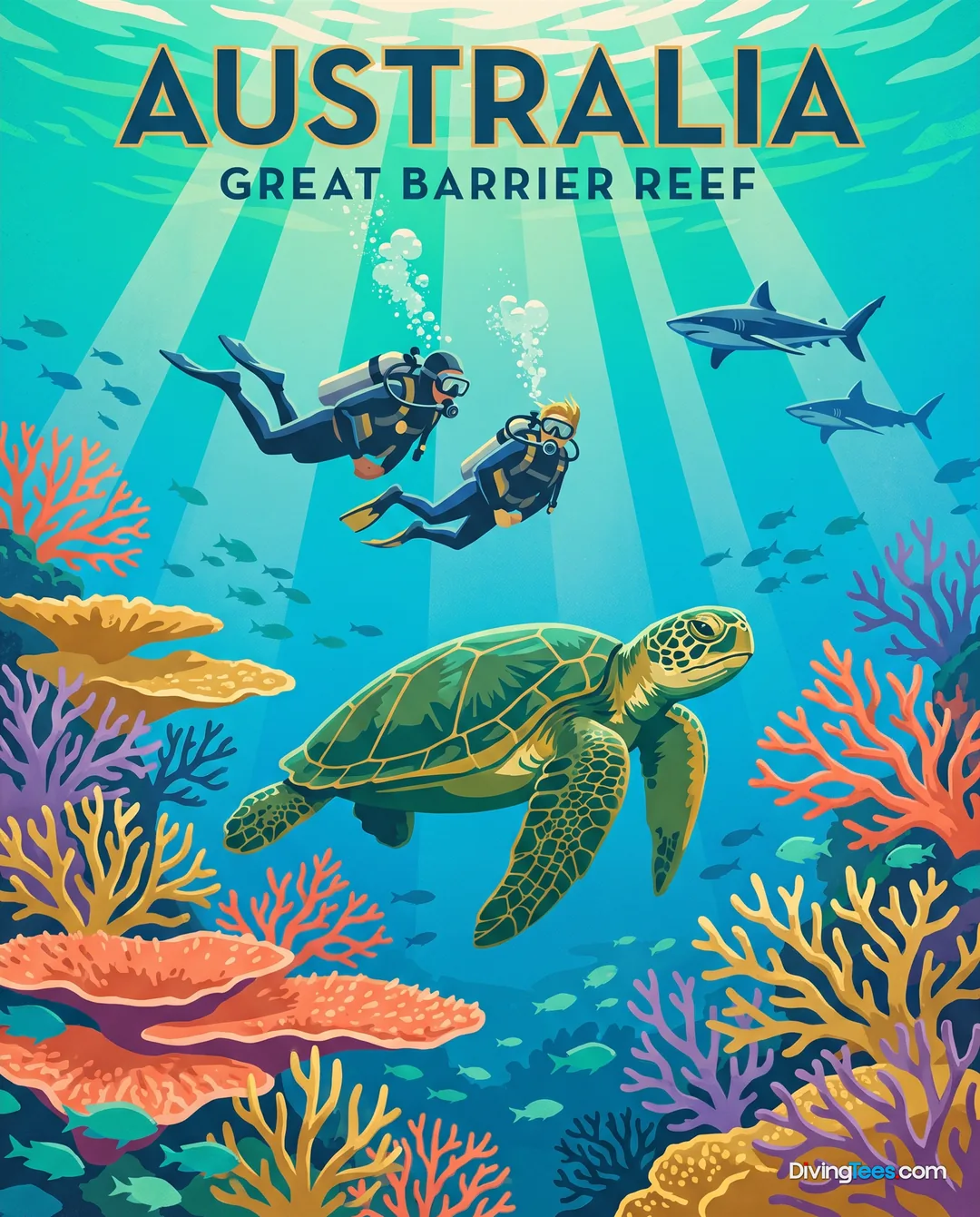
Pylons crowded with fish, leafy seadragons, giant Australian cuttlefish and sponge-covered wrecks give Merimbula its distinctly temperate Australian character.
For subtitles in English: start the video firstthen click the gearat the top right of the video, select “Subtitles/CC”, then “Auto-translate” and choose “English”.
Merimbula is a shore-and-boat diving base on the Sapphire Coast, where the wharf provides a close look at temperate macro life and nearby ports open the way to reefs, walls and wrecks. Under the pylons, sand, seagrass and rock hold rays, octopuses, nudibranchs and schooling fish. Further along the coast, Tathra and Eden add sponge gardens, deeper sites and wrecks such as the Hauler and Empire Gladstone. It suits divers who prefer real variety over a single resort reef.
The diving moves between a rocky shore entry, sheltered-looking structure beneath Merimbula Wharf, and boat trips over exposed reefs and wrecks. Pylons drop into sand, seagrass and broken rock, with cracks and cavities worth searching rather than simply swimming past. Tathra and Eden bring sponge gardens, walls, caves and deeper boat sites, while the Hauler is reached only from a boat. Current is variable, and visibility follows the recent wind and swell rather than a dependable tropical pattern. A south swell can affect both the water and the wharf entry, so a planned boat dive may need to give way to a shore dive, or no dive at all. The result is a destination for patient looking, a useful lamp and sensible surface planning, with deeper wrecks requiring the appropriate qualification and experience.
Merimbula Wharf rewards slow searching beneath the pylons. Rays move over the sand, while octopuses, moray eels, nudibranchs and crustaceans occupy the cracks, cavities and darker corners. Giant Australian cuttlefish are a winter attraction, and leafy seadragons are among the more sought-after encounters along the coast. Wobbegongs and Port Jackson sharks add a larger, distinctly Australian presence, with schooling fish around the structure. Boat sites at Tathra, Eden and Beowa National Park bring sponge gardens, rocky relief and wreck habitat, including the Hauler and Empire Gladstone. Humpback whales pass during winter and spring, while occasional tropical visitor fish appear in summer. The wildlife is not a guaranteed checklist, but the mix of large animals and small subjects makes a torch and macro equipment worthwhile.
There is no single reliable month for every dive here, because wind, swell and sea state decide whether exposed reefs and boat sites are workable. Winter brings giant Australian cuttlefish and the regular passage of humpback whales, while spring keeps the whale season going. Summer can add occasional tropical visitor fish, but it does not turn Merimbula into a tropical destination. Plan five to seven days rather than a tightly packed schedule, leaving room to move between Merimbula, Tathra and Eden and to wait out a poor sea state. The sensible time to go is therefore the period that matches the animals you want, with spare days for the coast to settle.
Some shallow sites can suit beginners with proper supervision, but Merimbula is not uniformly easy. The rocky wharf entry and exit demand an honest assessment of the swell, while variable conditions can make a familiar site feel quite different. PADI, SSI and BSAC qualifications are relevant, with Advanced or an equivalent deep qualification useful for deeper boat dives and wrecks. Anyone planning the Hauler or other deeper sites should have suitable experience, not simply the minimum certification.
From London Heathrow, London Gatwick or Manchester, reach Merimbula by arranging onward domestic travel to the regional Merimbula airport, or travel overland from Sydney or Canberra. The exact routing depends on the connections chosen, so allow practical time between international and domestic legs rather than building the trip around a tight change. No ferry is needed to reach the area. Once there, a car or organised land transfer is the useful link between Merimbula, Tathra and Eden, as these departure points are spread along the Sapphire Coast rather than gathered around one harbour. A car also makes it easier to shift plans when wind or swell changes the day's diving.
Treat Merimbula Wharf as a swell-dependent dive, not an automatic bad-weather option. A south swell can make the rocky entry and exit awkward even when the water beneath the pylons looks inviting, so check the shore access separately before carrying equipment down. Plan around the tide where the local site requires it, particularly for shallow areas and rock access. Carry a lamp for the wharf's cracks, cavities and pylons, and bring macro equipment if nudibranchs, cuttlefish, octopuses and small crustaceans are the aim. Do not book every day on exposed boat sites. Keep a shore day available, but remember that the wharf may also be unsuitable when the swell reaches the rocks. A car or pre-arranged land transfer matters because Merimbula, Tathra and Eden are separate bases, not a walkable single port. For deeper wrecks, check the required qualification and your recent experience before committing. Expect temperate visibility that changes with recent conditions, not a fixed tropical view.
Base yourself in or near Merimbula, then use the town as a practical starting point for the wharf and local support. Set aside days for boat diving from the wider Sapphire Coast, travelling to Tathra and Eden rather than treating them as neighbouring piers. Five to seven days gives enough time to mix shore and boat dives, follow the weather and leave room for a whale-watching trip, coastal walks or Beowa National Park. Companions have beaches, viewpoints, kayaking and wildlife excursions while diving is under way.
Hello, I'm Marina, DivingDeal.com's AI assistant. I guide you through destinations, areas and countries.
Thinking about the whole trip and the flights? Talk it over with Edith →
Marina is an AI. Some links are affiliate links: DivingDeal may earn a commission, at no extra cost to you. Bookings are made with the partner.
Choose the season according to the wildlife you want and leave flexibility for wind, swell and sea state. Winter brings giant Australian cuttlefish and humpback whales, with whales continuing into spring. Summer may bring occasional tropical visitor fish. Plan five to seven days so you can wait for suitable conditions.
Some shallow Merimbula sites can suit beginners with proper supervision, but conditions are not uniformly easy. The rocky wharf entry and exit require careful swell assessment, and visibility and currents vary. Advanced or equivalent deep qualification and suitable experience are useful for deeper boat dives and wrecks, including the Hauler.
Merimbula offers temperate wildlife beneath the wharf and along the Sapphire Coast. You may find rays, octopuses, moray eels, nudibranchs, crustaceans and schooling fish around pylons, plus leafy seadragons, wobbegongs and Port Jackson sharks. Boat sites add sponge gardens and wreck habitat, while winter brings giant Australian cuttlefish.
Base yourself in or near Merimbula, then travel by car or organised land transfer to Tathra and Eden for boat diving. Mix shore and boat days, keep spare time for changing weather, and treat the wharf as swell-dependent. A lamp and macro equipment help, while companions can enjoy beaches, walks and wildlife excursions.