
Tawali Dive Center
Google 4.6/5 (89 reviews)
Milne Bay · Papua New Guinea · Pacific
Max. depth · 150 mLinda's Reef 2 is a vibrant coral mound rising from exceptional depths, presenting a rich tapestry of marine life and photographic opportunities in Milne Bay.
Linda’s Reef 2 emerges from the immense depths of Milne Bay, a singular coral mound that commands attention as it ascends from 150 meters. This geological feature is typical of the region, yet each such formation carries its own unique character and resident populations. As you descend, the sheer scale of the underwater landscape becomes apparent, with the reef stretching upwards like a colossal natural sculpture, hinting at the vastness that lies beneath your fins.
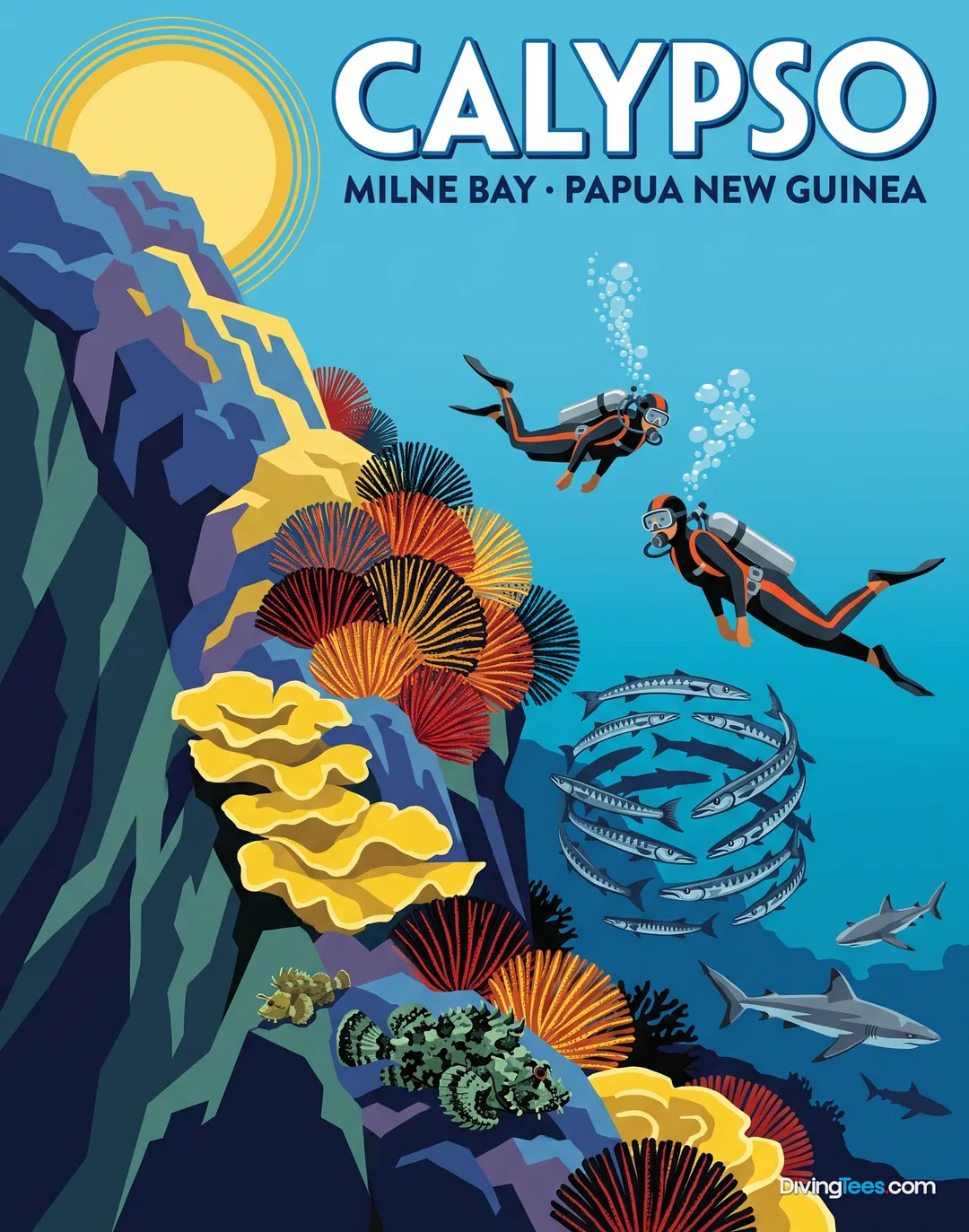
The dive profile here often begins on the dramatic face of the reef, which serves as a bustling highway for pelagic life. Schools of fish, often in impressive densities, swirl and pulse along this front, creating dynamic living walls that shift with the gentle to strong currents. It’s a sensory overload, watching the silver flashes and coordinated movements of these aggregations, a testament to the health and abundance of Milne Bay’s ecosystems.
As you move further along the site, particularly towards the southern-facing slope, you’ll discover expansive gardens of soft corals. These vibrant formations drape the reef in a kaleidoscope of colours, swaying gracefully with the currents that nourish them. The interplay of light and shadow on these living tapestries creates an ever-changing visual spectacle, inviting closer inspection and rewarding divers with intricate details often overlooked in larger scenes.
Photographers will find themselves in a realm of endless subjects at Linda’s Reef 2. Whether your passion lies in capturing the grand vista of a teeming coral mound with a wide-angle lens, or delving into the intricate world of macro subjects nestled within the corals, this site caters to both. The rich biodiversity ensures that every dive uncovers new details, from the largest school of fish to the most minuscule invertebrate hidden among the polyps, promising satisfying results for dedicated lensmen.
The currents at Linda's Reef 2 can vary significantly, ranging from gentle flows that allow for leisurely exploration to periods of strong movement that demand careful positioning and good buoyancy control. These currents are an integral part of the reef's vitality, delivering nutrients that sustain the dense coral growth and attract the large schools of fish. Understanding and working with the current is key to fully appreciating the site, transforming a potential challenge into an exhilarating drift over a thriving ecosystem.
This coral mound rises from depths of 150 meters, offering varied dive profiles. Currents at Linda’s Reef 2 typically range from gentle to strong, dictating the flow of the dive. Divers are required to carry a safety buoy, an essential piece of equipment for this site. The best period to dive in Milne Bay generally spans from June to August for optimal visibility, with good to excellent conditions often extending until mid-December.
You will generally find the best period for diving Linda’s Reef 2 in Milne Bay from June through August, when visibility is considered optimal. Good to excellent conditions often continue until mid-December, giving you an extended period in which to explore the coral mound and its surrounding marine life.
Linda’s Reef 2 is a coral mound that rises from depths of 150 meters. This dramatic foundation creates varied dive profiles as you follow the reef upward. You can experience the scale of the underwater landscape while exploring its face, slopes, coral gardens, and areas populated by schooling fish.
Currents at Linda’s Reef 2 typically range from gentle to strong and determine how your dive flows. Stronger movement requires careful positioning and good buoyancy control, while gentler flows allow more leisurely exploration. You are required to carry a safety buoy, which is essential equipment for diving this site.
At Linda’s Reef 2, you can see large schools of fish along the front face and soft coral gardens covering the south slope. The site offers subjects for both wide-angle and macro photography, from expansive coral-mound scenes and fish gatherings to intricate details among the corals.