



Petra Diving Center
Google 5/5 (320 reviews)
Aqaba · Jordan · Red Sea
Max. depth · 28 mExplore the Lockheed Tristar, a full-size commercial airliner intentionally scuttled and resting upright on the sandy seabed off Aqaba.
For subtitles in English: start the video firstthen click the gearat the top right of the video, select “Subtitles/CC”, then “Auto-translate” and choose “English”.
The Lockheed Tristar, an L-1011 TriStar wide-body airliner, lies upright on a sandy seabed near Aqaba’s old phosphate port. This is not a wreck born of accident, but a deliberate sinking on August 26, 2019, part of Aqaba’s Underwater Military Museum. Its intentional scuttling means the aircraft is largely intact, presenting a unique profile where you can clearly discern its original form, from the cockpit to the tail section, making it an ideal subject for underwater exploration and photography.
As you descend, the sheer scale of the 50-meter long jet becomes apparent. The aircraft is positioned with a slight tail-down slope, meaning the cockpit and forward fuselage are the shallowest points, starting around 13 metres. Following the fuselage towards the stern, you'll find the tail, engines, and rear doors at the deepest part of the site, reaching approximately 28 metres. This depth range allows for a progressive exploration, catering to different certification levels while offering a comprehensive view of the entire structure.
The interior of the Tristar is a key feature of this dive. Stripped of its passenger seats, the main cabin offers a spacious, open environment for penetration. You can navigate through the fuselage, observing the portals and windows that once framed views from above the clouds, now framing the underwater world. This accessible interior provides a distinct experience, allowing you to move within the structure of a commercial aircraft in a way few other wrecks permit, offering a sense of its original design and purpose.
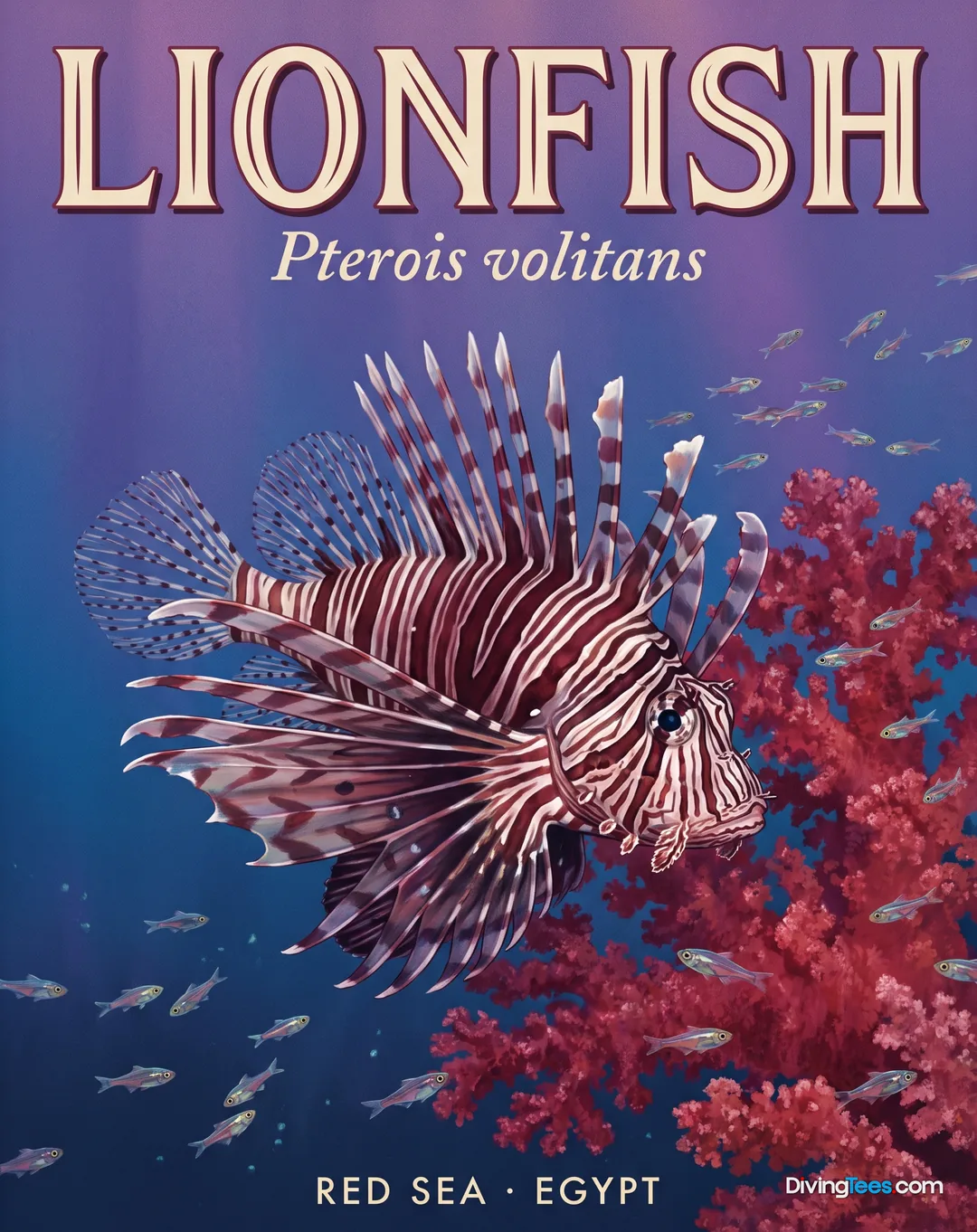
Around the airframe, marine life is actively colonising the new habitat. You will observe pioneer coral growth establishing itself on the hard surfaces of the aircraft, transforming the metal into a living reef. These nascent ecosystems provide shelter and foraging grounds for small reef fish, and you may encounter lionfish, octopus, and various nudibranchs making their home among the structure's crevices and surfaces. The Tristar is a testament to how quickly artificial reefs can attract and sustain marine biodiversity.
The distinct features of the Tristar, such as the three engines and the recognizable tail section, remain largely intact. These components offer detailed points of interest for close inspection, allowing you to appreciate the engineering of the aircraft. The deliberate preparation before sinking ensured that many of the original access points, like doors, are open and accessible, facilitating exploration and providing clear swim-throughs for divers to navigate around and within the wreck.
The site's location in Aqaba contributes to generally calm conditions, with minimal current. This allows for relaxed exploration of the wreck, giving you ample time to appreciate its size and the developing marine life without fighting against strong water movement. Visibility at the Tristar is consistently good, often ranging between 20 and 30 metres or more, which enhances the experience of seeing the entire aircraft materialize as you approach and provides excellent conditions for photography.
Diving the Tristar offers a unique blend of wreck exploration and artificial reef observation. It stands out from typical wreck dives due to its intact nature and the clear purpose of its sinking. The opportunity to explore a commercial airliner underwater, from its cockpit to its tail, and witness the early stages of a thriving marine ecosystem makes this site a distinctive experience in the Red Sea, appealing to those interested in both aviation history and marine biology.
The Lockheed Tristar wreck is accessible from a minimum depth of 13 metres, with the deepest sections reaching 28 metres. Open Water divers can explore the exterior down to approximately 18 metres, while Advanced Open Water certification is recommended to reach the tail at 28 metres and for a full tour of the site. Formal wreck training is required for safe penetration of the interior. Current is generally light, with occasional mild surge, making for easy diving conditions. Visibility typically ranges from 20 to 30 metres or more. Water temperatures in Aqaba generally range from 20°C to 26°C.
At Lockheed Tristar, you can expect Aqaba water temperatures generally ranging from 20°C to 26°C. The site also offers generally calm conditions, with light current and occasional mild surge. These conditions support relaxed exploration of the aircraft and its developing artificial reef life, while visibility typically reaches 20 to 30 metres or more.
Open Water divers can explore the exterior of Lockheed Tristar down to approximately 18 metres. Advanced Open Water certification is recommended for reaching the tail at 28 metres and completing a full tour. Formal wreck training is required if you plan to penetrate the spacious main cabin or cockpit interior.
Lockheed Tristar starts at approximately 13 metres around the cockpit and forward fuselage, while the tail, engines, and rear doors reach about 28 metres. The current is generally light, with occasional mild surge, creating easy diving conditions for exploring the aircraft and its sandy seabed surroundings.
You can explore a full-size, intact Lockheed L-1011 TriStar, including its cockpit, spacious main cabin, three engines, tail, doors, and windows. Early coral growth and reef fish are colonising the airframe, while lionfish, octopus, and nudibranchs may be found among its surfaces and crevices.