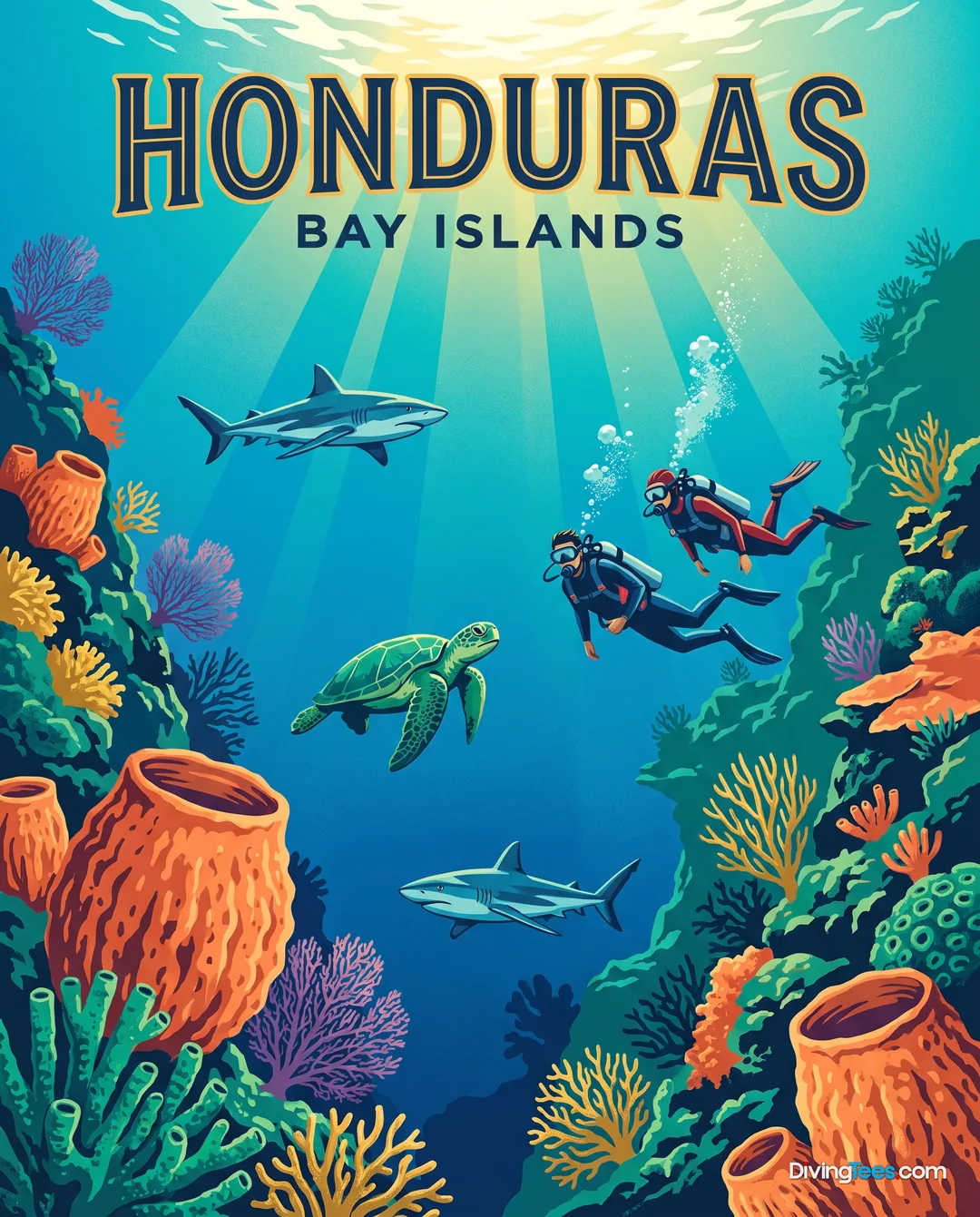
Liveaboards · Honduras
Roatan Aggressor — a dive-first yacht with a strong crew and a wide Caribbean route
For subtitles in English: start the video firstthen click the gearat the top right of the video, select “Subtitles/CC”, then “Auto-translate” and choose “English”.
The invitation
The Roatan Aggressor makes sense for divers who want the Bay Islands as a working dive trip, not simply a week on a boat. The route links Roatan, Utila and Cayos Cochinos, giving the week more range than a cruise built around one reef system: sheer walls, volcanic cuts, wrecks, sandy macro sites and a seamount where schools of barracuda and jacks gather. The boat is especially recommended for the crew and for the diving system itself. That matters here because the itinerary is built around up to five dives a day, not one scenic dip before lunch. A strong crew keeps the equipment moving, the briefings clear and the surface intervals usable. The result is a boat for divers who come with competence and enthusiasm, and who would rather finish the week remembering the people who put them on the right section of wall than the size of the lounge.
Boarding
The Roatan Aggressor presents as a purpose-built dive yacht rather than a vessel dressed up for occasional diving. The route starts and ends at the Roatan Yacht Club and Marina, and boarding puts the diving programme close at hand: shaded work space, a platform, rinse areas and tenders ready for sites away from the hull. Inside, the boat is arranged for a maximum of 18 guests without pretending to be a private yacht. Movement is practical, with a clear separation between the dive operation and the indoor salon, while the terrace and shaded areas give people somewhere to spread out after a dive. Built in 2017, it has the feel of a modern liveaboard designed around repeated gear changes, camera handling and quick returns to the water. The boat's real character is operational. It is there to make a dense week of Caribbean diving run cleanly.
The atmosphere on board
The atmosphere is built less by decoration than by repetition: the same crew handles the dive deck, the meals and the small practical decisions all week. Passengers tend to form a working group quickly when they are gearing up, boarding tenders and comparing what appeared in the last fissure. The crew's role is not just to serve meals or point out a site; it is to keep a demanding sequence of dives from becoming tiring logistics. Briefings come before every dive, and staff may enter the water to support divers, help with photography or find particular points of interest, while buddy teams retain responsibility for their own dives. English is the onboard language. Evenings can hold the usual liveaboard mix of conversation, audio-video entertainment and an adventure video of the week, but the best evenings are usually the ones spent going over the day's sharks, wrecks and small finds.
The sites you’ll dive
The route runs for 8 days and 7 nights from French Harbor to French Harbor, covering Roatan, Utila and Cayos Cochinos. Cara cara is the headline animal dive: descend to a sandy plateau at -25m, where 10 to 20 Caribbean reef sharks may come close, with nurse sharks and large groupers also possible. At Sea mount de Cayos cochinos, between Roatan and Cayos Cochinos, submerged pinnacles drop to -35m and bring barracuda and jacks into view, with turtles, eagle rays and reef sharks adding to the scene. Roatan supplies the variety. Calvin’s Crack reaches -26m through an ancient volcanic fissure before opening onto a life-filled wall; Mandy’s Eel Garden drops to -20m from a shallow reef crest to sand, where garden eels and macro life reward a slow pace. Prince Albert Wreck reaches -18m and combines a purpose-sunk cargo ship with a WWII-era DC-3 aircraft. El Aguila Wreck, a 60-metre cargo ship reshaped by a hurricane, reaches -33m and shelters large groupers. Half Moon Bay Wall, West End Wall, Mary's Place, Hole in the Wall, Spooky Channel, Canyon Reef and Gibson Bight add walls, vertical cuts, caverns, coral gardens and drift diving, with listed maximum depths from -40m to -120m.
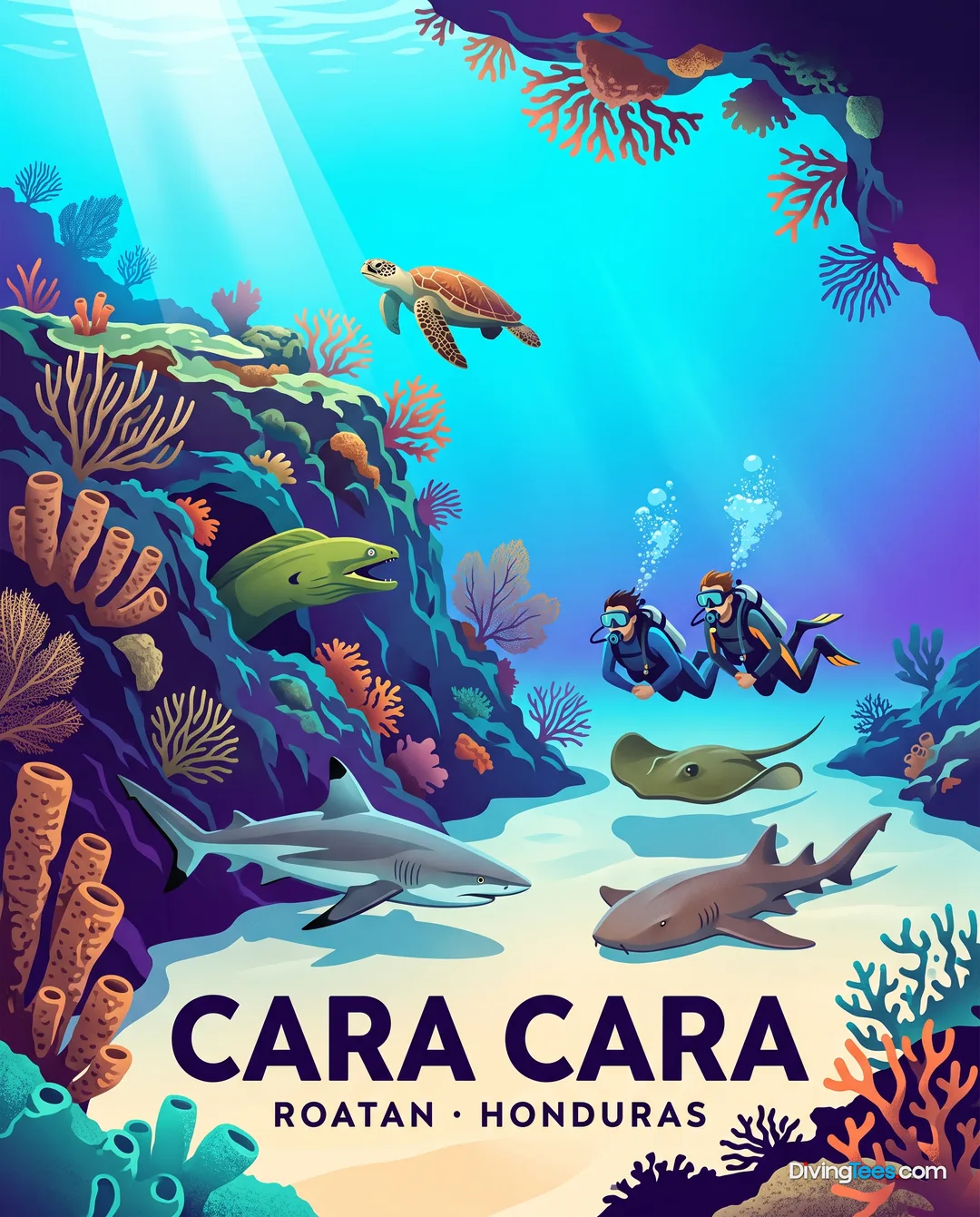
Cara cara →
Max. depth · 25 m
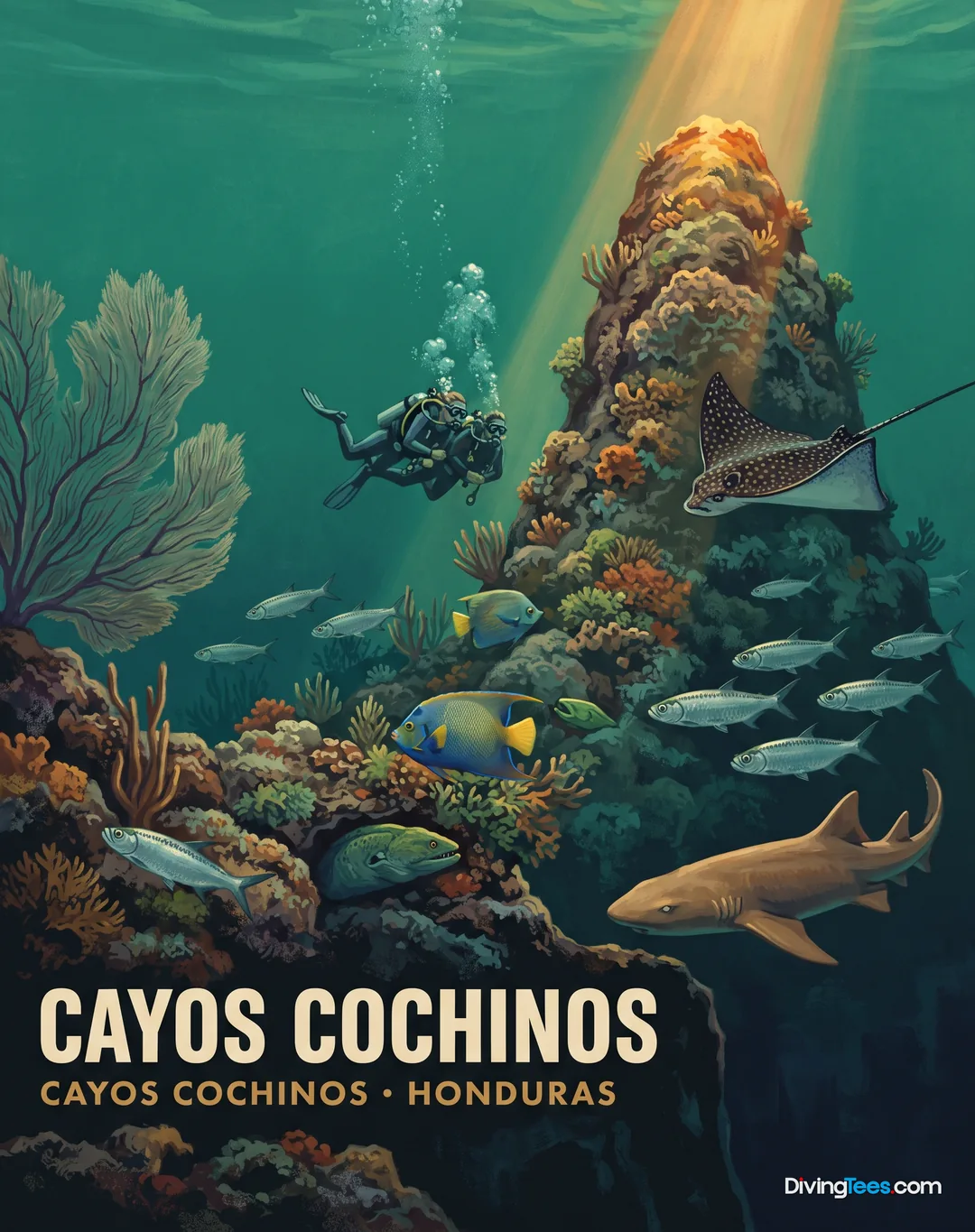
Sea mount de Cayos cochinos →
Max. depth · 35 m
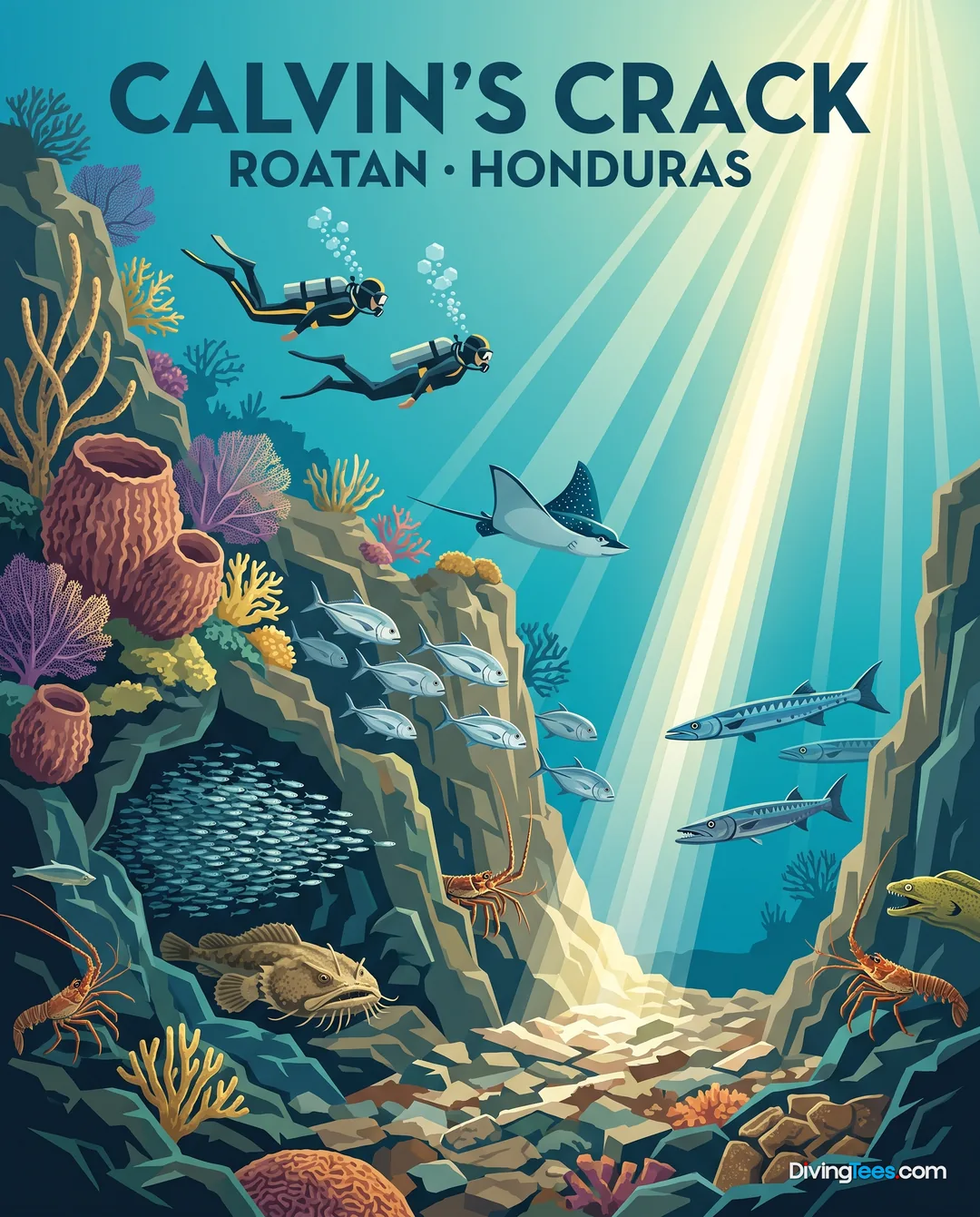
Calvin’s crack →
Max. depth · 26 m
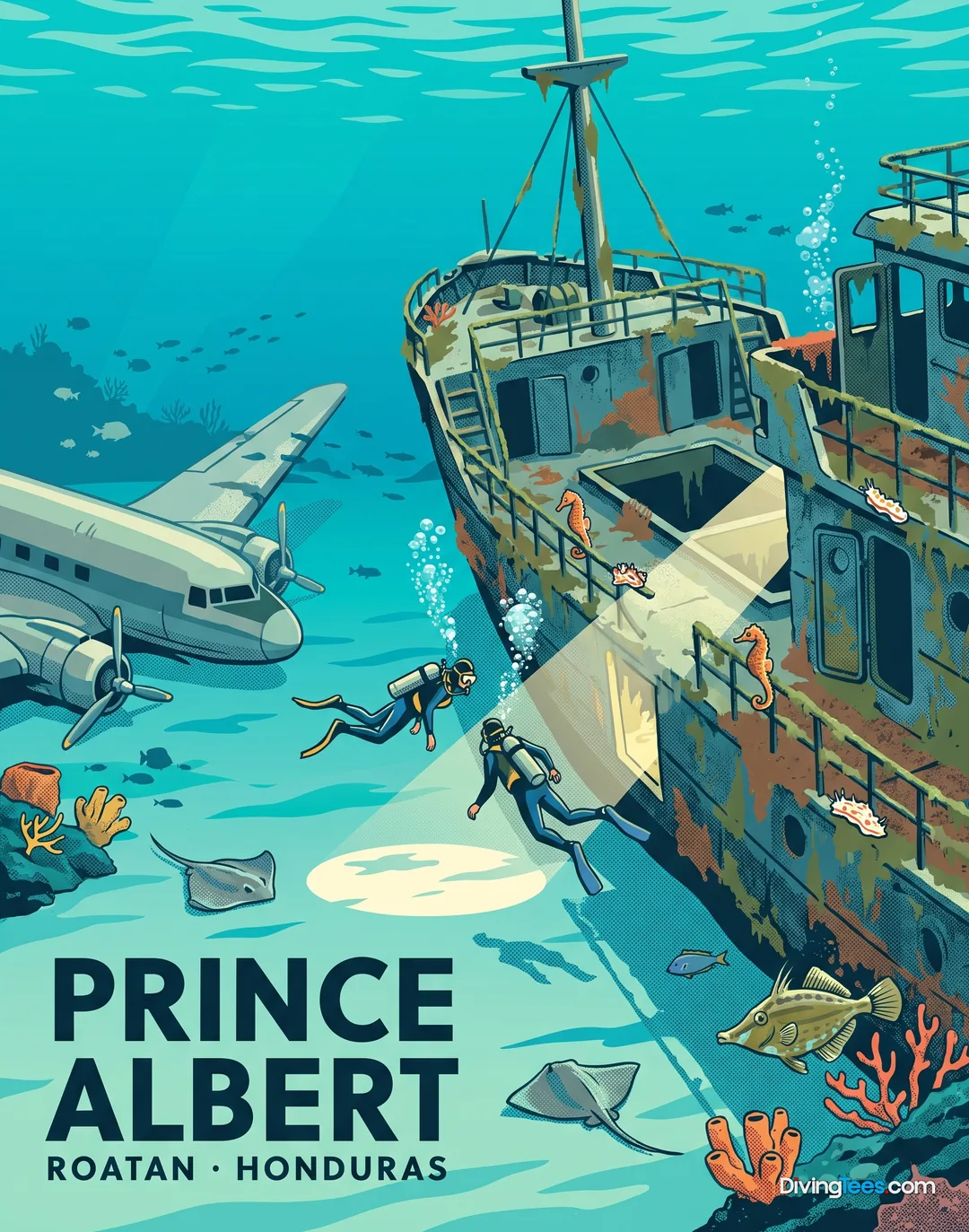
Prince albert wreck →
Max. depth · 18 m
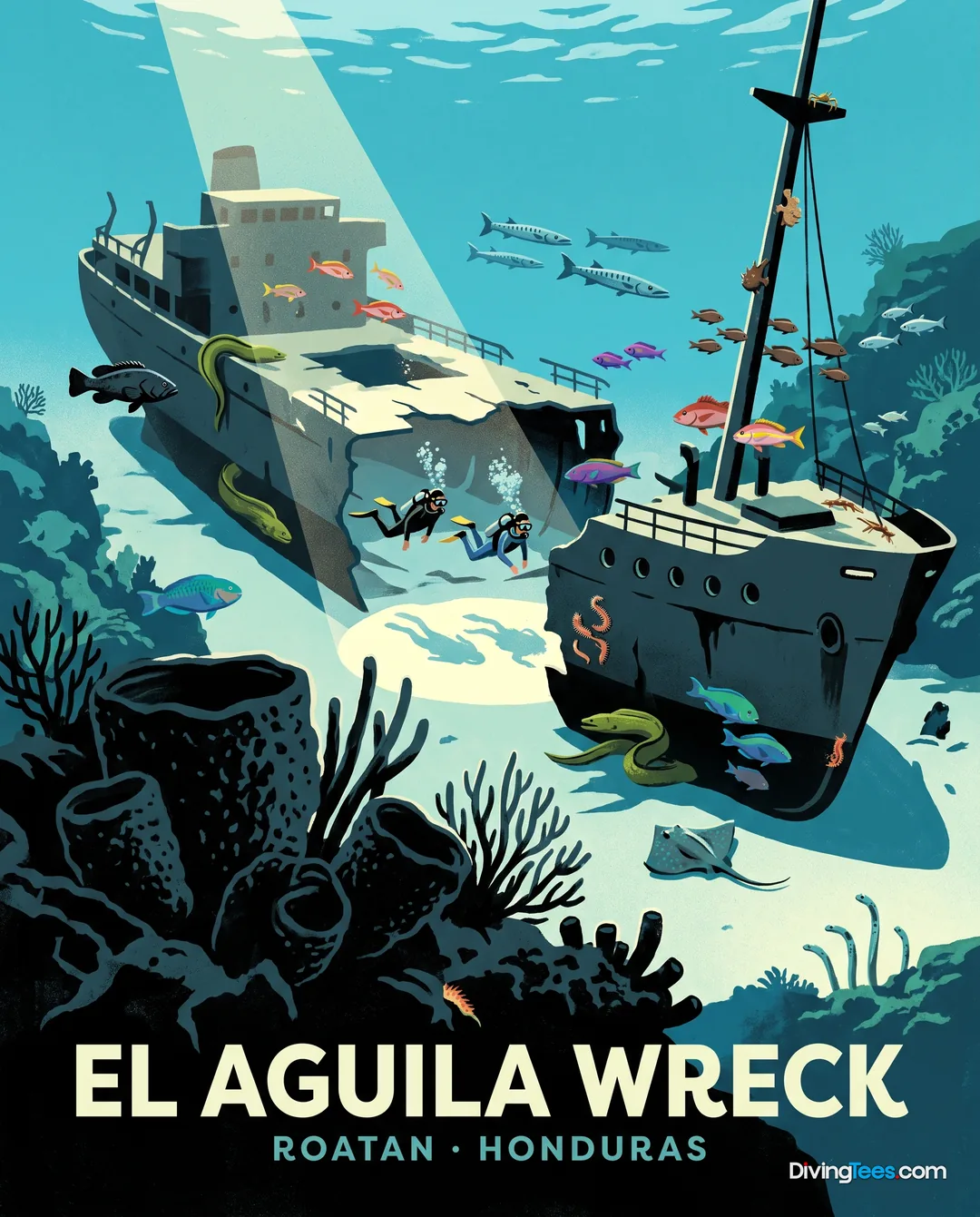
El Aguila Wreck →
Max. depth · 33 m
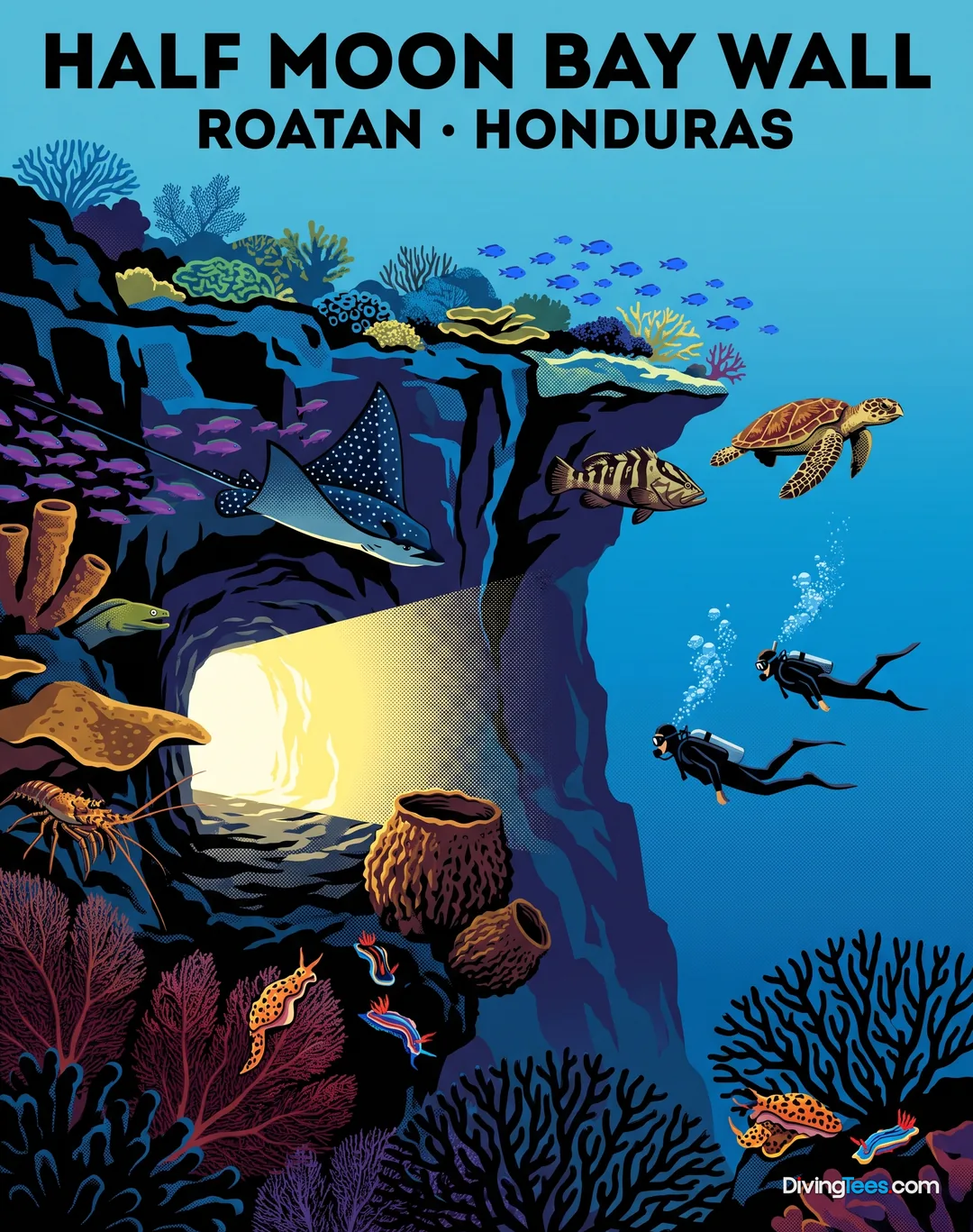
Half Moon Bay Wall →
Max. depth · 120 m
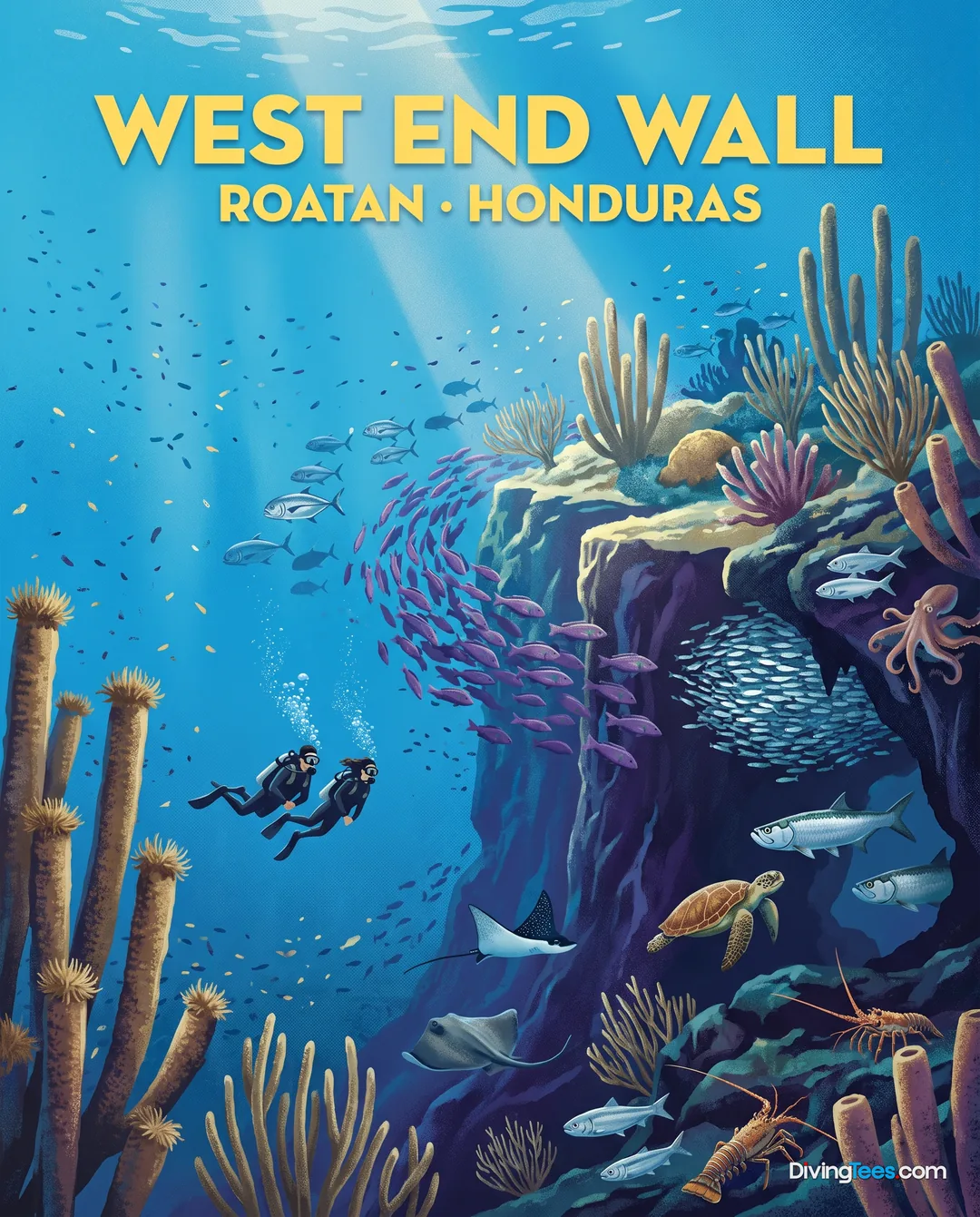
West End Wall →
Max. depth · 90 m
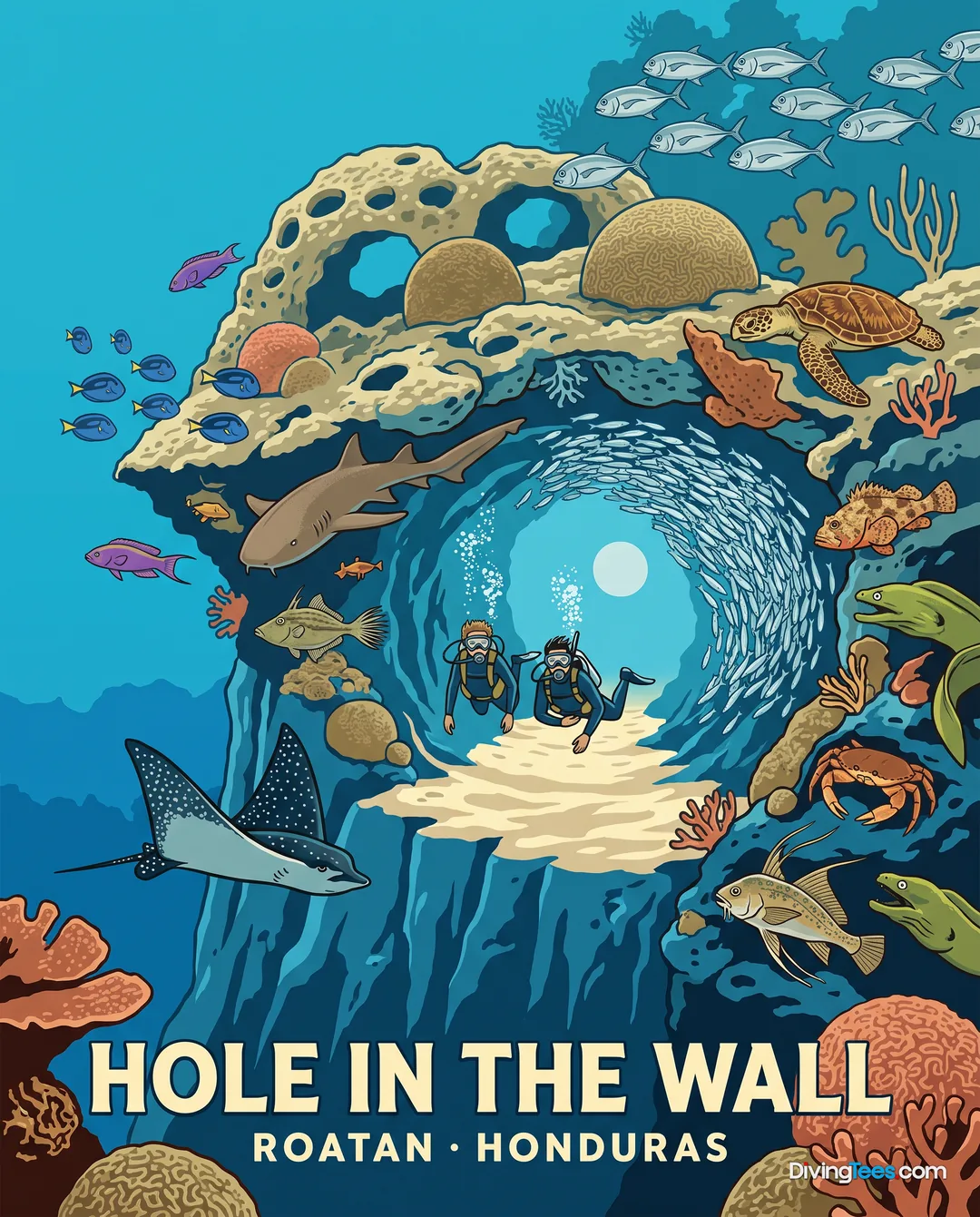
Hole in the Wall →
Max. depth · 100 m
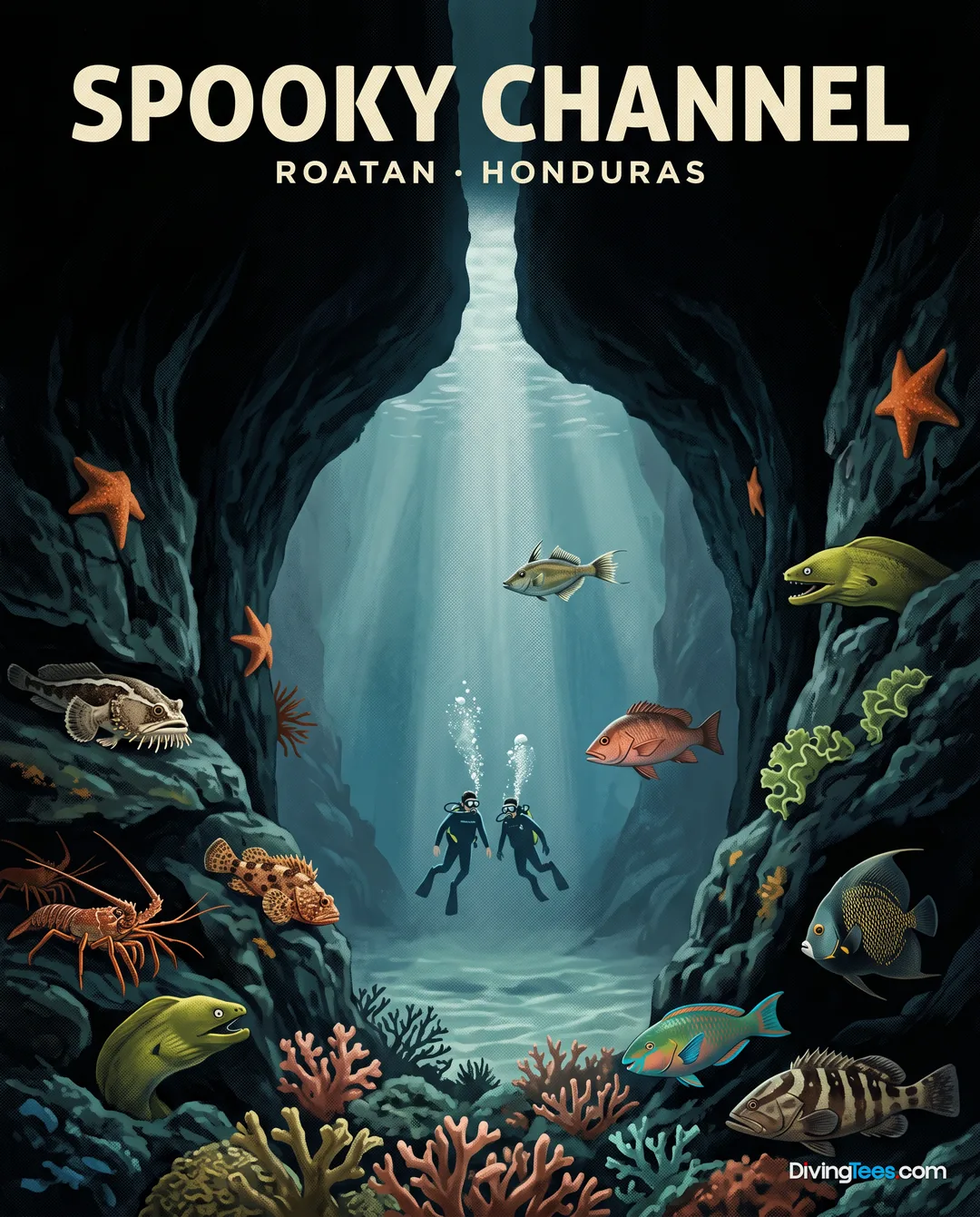
Spooky Channel →
Max. depth · 60 m
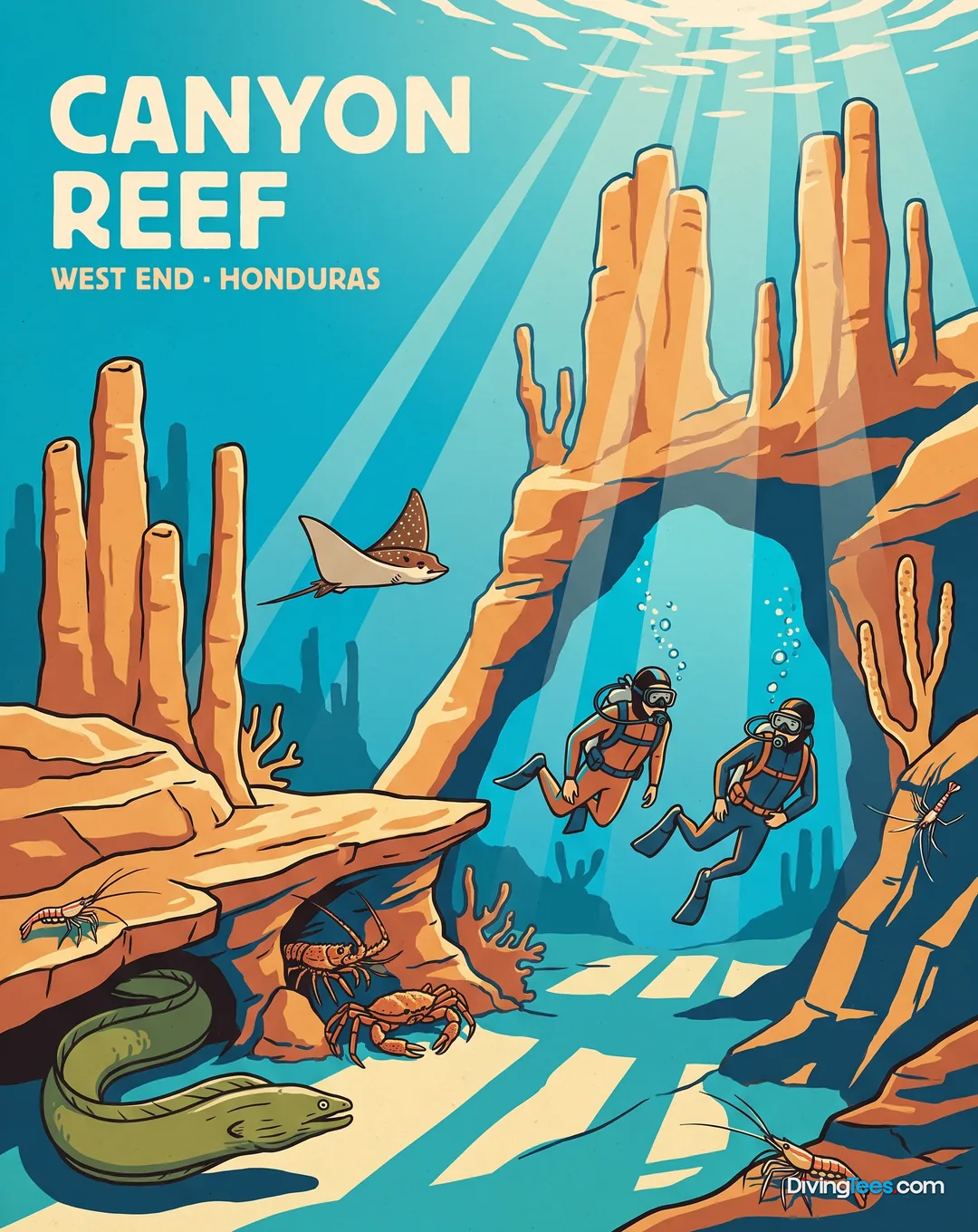
Canyon Reef →
Max. depth · 45 m
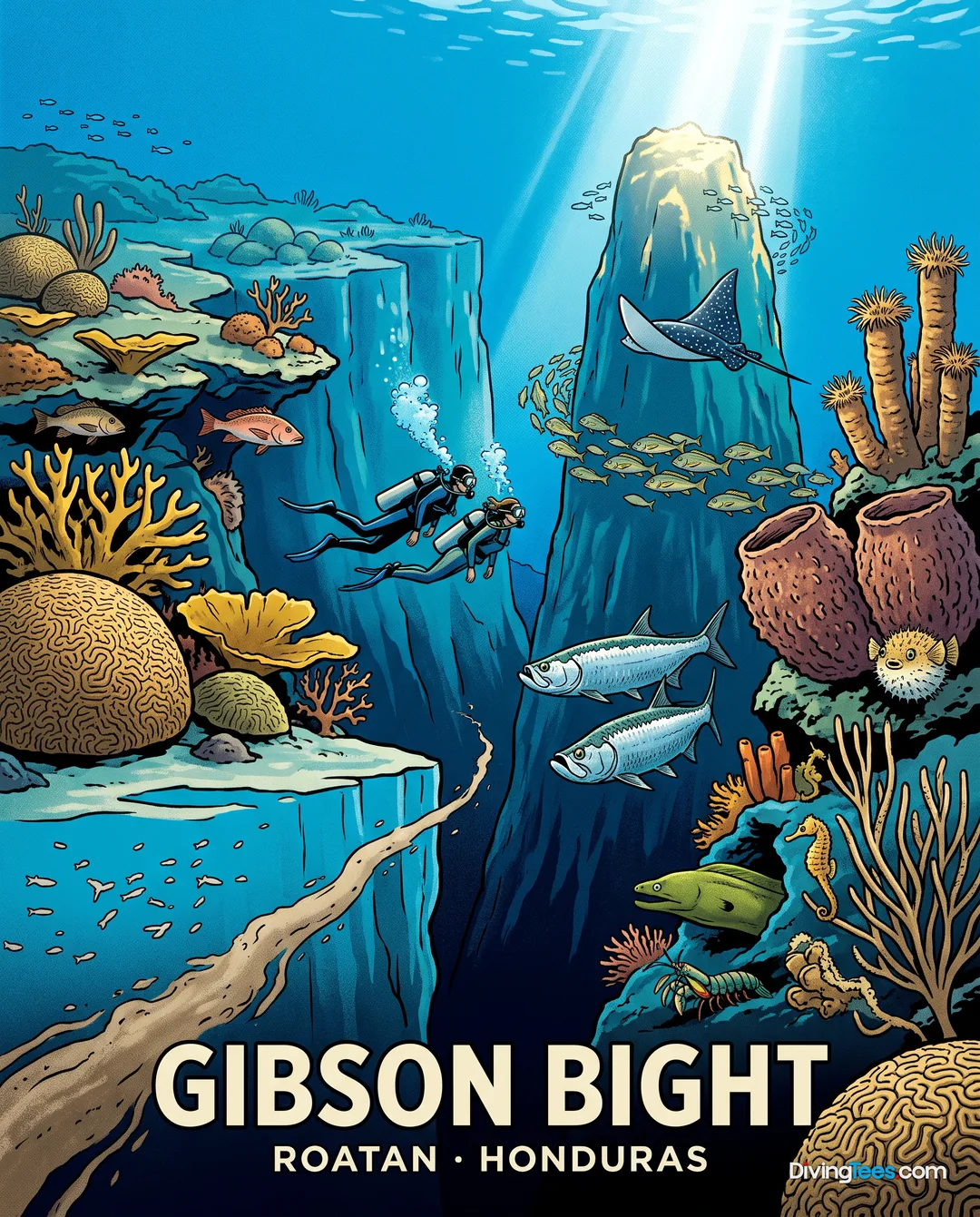
Gibson Bight →
Max. depth · 40 m
What you’ll meet underwater
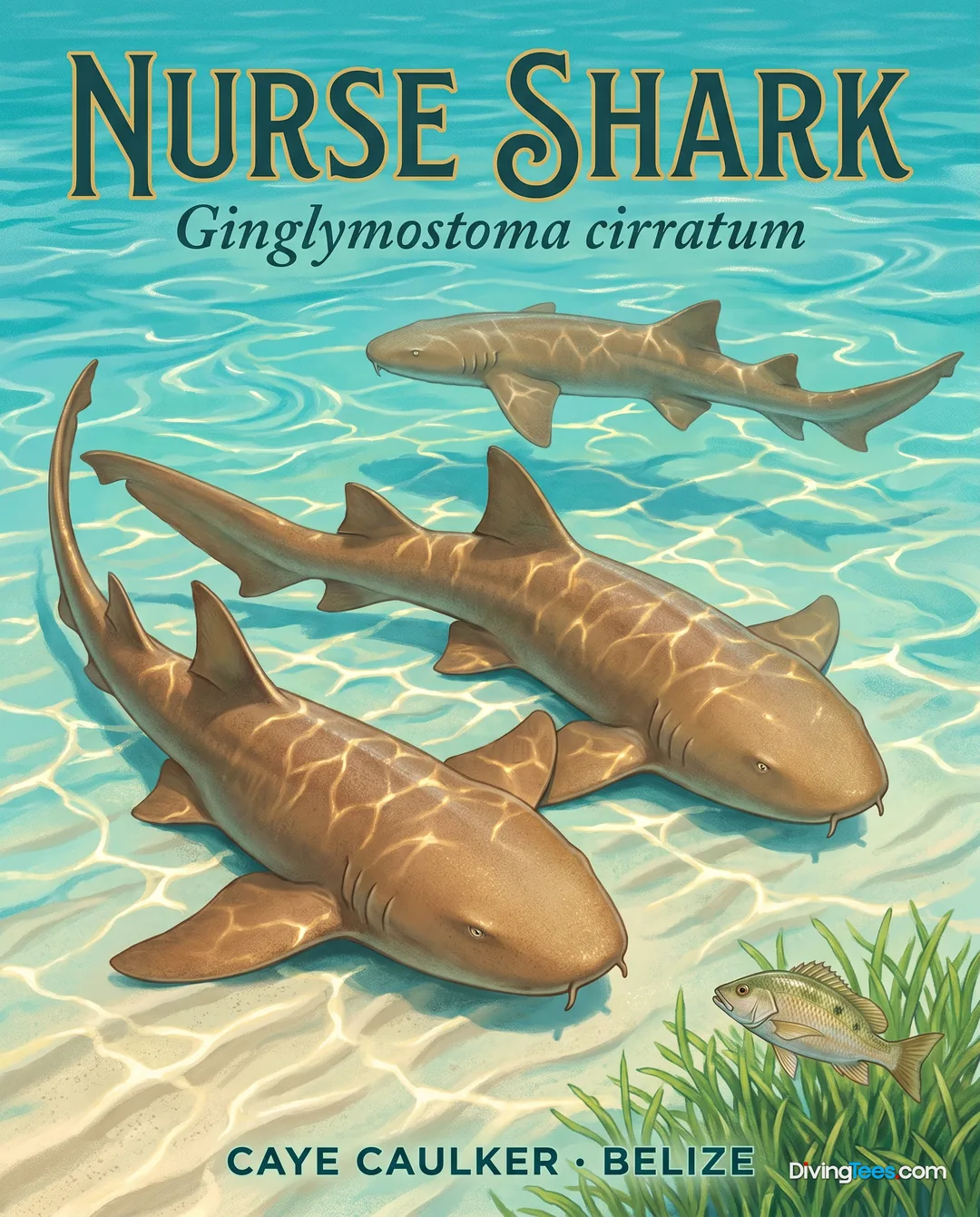
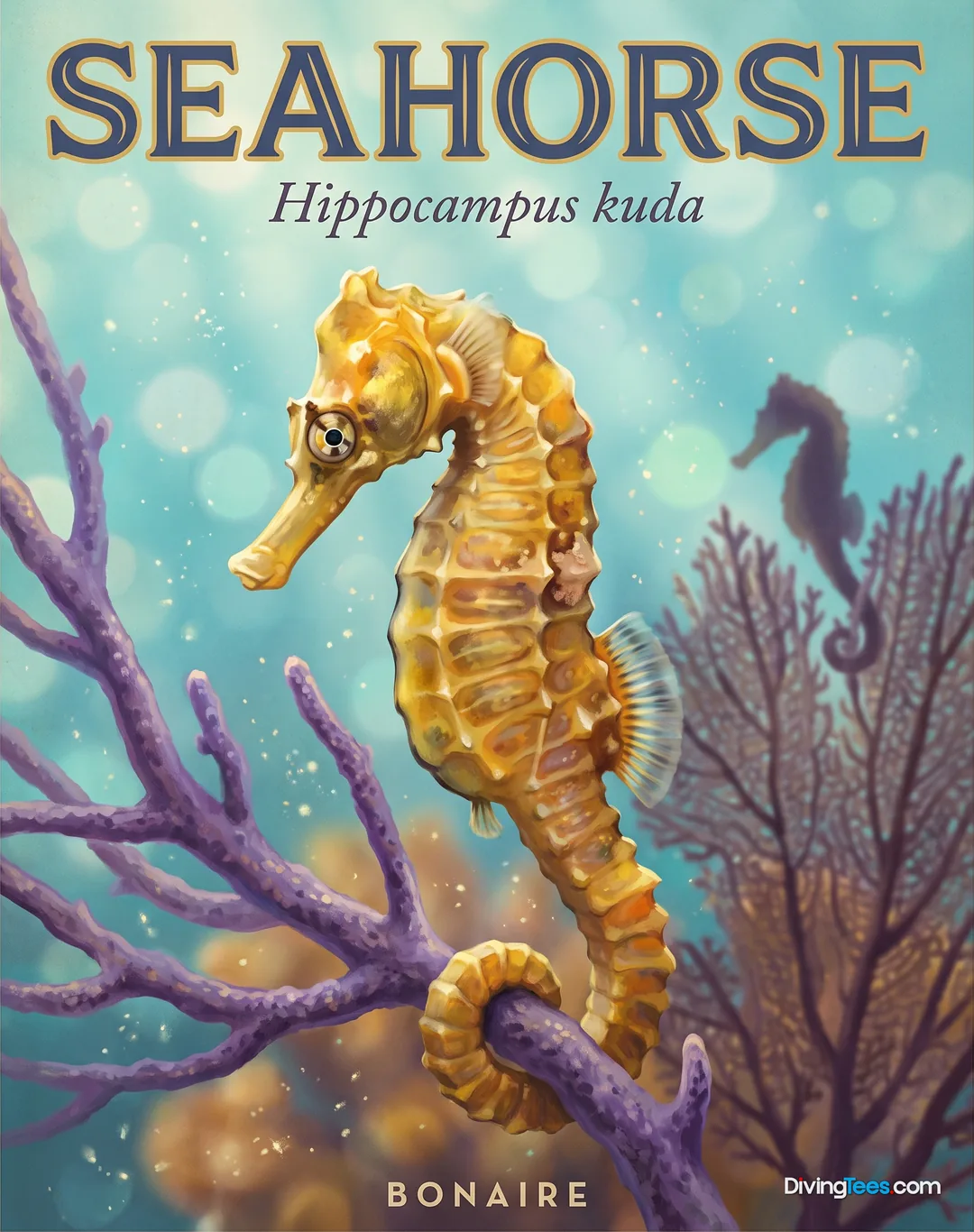
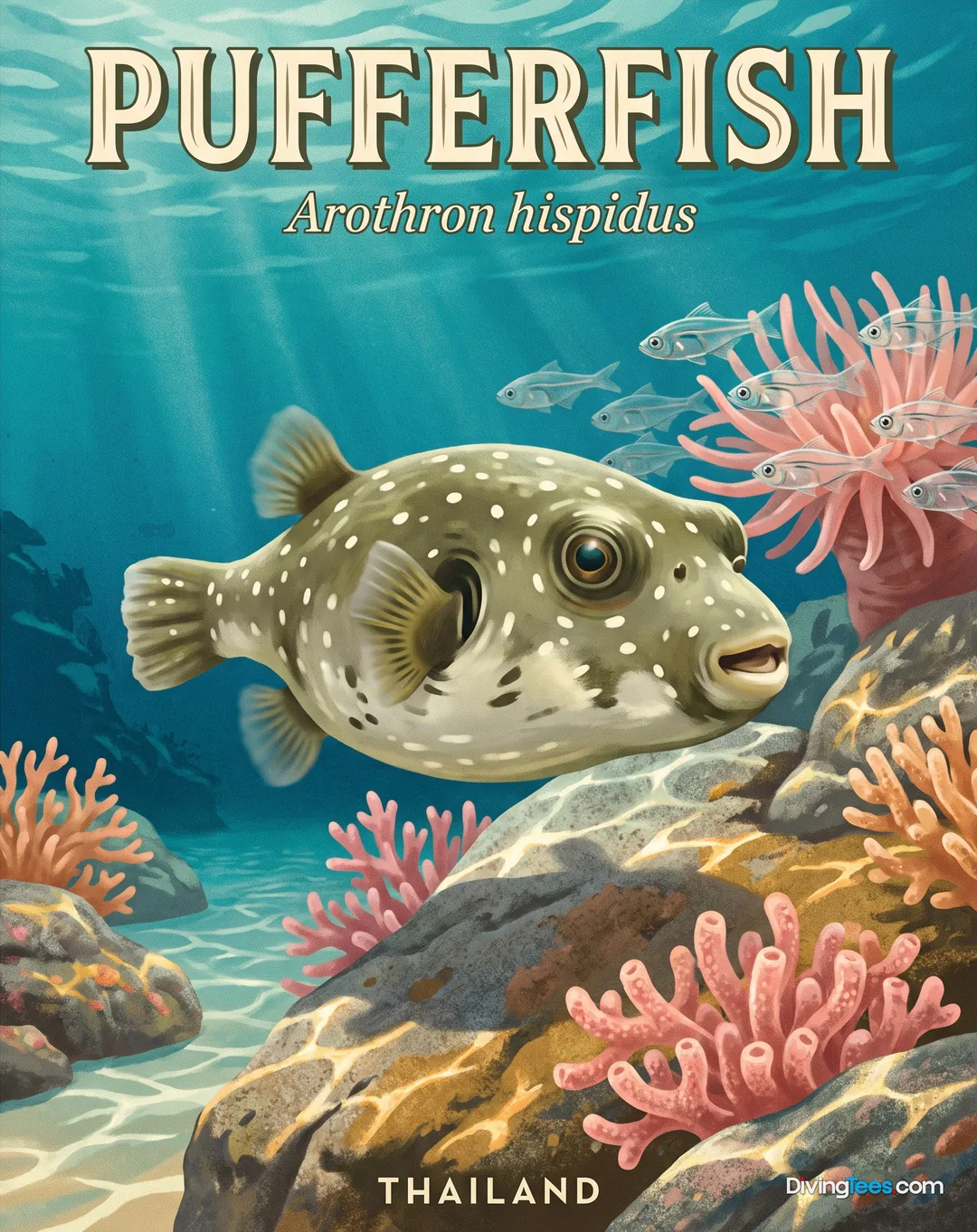
Across the route, moray eels and eagle rays are among the recurring rewards, joined by barracuda, groupers, sea turtles, seahorses, gorgonians, green morays, jacks, lobsters and sponges. The animal list changes with the shape of the site: a wall puts rays and schooling fish into the blue, while a fissure or sandy garden asks for a slower search. Some sightings are tied to one particular stop. Cara cara is the place for a Caribbean reef shark encounter and the route's nurse shark possibility. Mandy’s Eel Garden is the specialised search for garden eels, a scorpionfish and a mantis shrimp. Sea mount de Cayos cochinos is where the itinerary singles out reef sharks, wrasses, angelfish, snappers and the schools of barracuda and jacks. Gibson Bight offers the route's specific chance for shrimp and a pufferfish, while Canyon Reef is the site for cleaner shrimp among morays, lobsters and reef formations. None of these animals is a promise; the reason to visit is that each site gives the search a different setting.
Who puts you in the water
The crew speaks English and gives a comprehensive briefing before every dive. Staff may be in the water when diving directly from the yacht, offering support, photography, videography and help finding selected points of interest; they do not supervise every diver, and buddy teams remain responsible for their own dives. Tender groups may have a staff member in the water to assist and keep the group together. Dives are organised as buddy-team dives of two or three people, not as solo dives, and a staff member is not counted as a buddy unless that staff member and one guest are the only divers. Advanced Open Water and Enriched Air Nitrox courses can be run onboard, subject to the instructor and confirmation after arrival. The boat carries oxygen, first-aid kits, fire equipment, radios, satellite phones and emergency beacons. No minimum logged-dive number or staff-to-diver ratio is given.
The dive deck and the gear
The dive deck is shaded and built for repeated entries, with a platform, rinse tanks and separate camera-rinse space. The supplied tanks are 80 cu ft aluminium tanks filled with air and fitted with K valves; DIN users should bring an adapter, since this yacht is not listed among the Aggressor vessels that accept DIN valves directly. Nitrox is available as an optional extra, at 32% for certified Nitrox divers or for students who complete the onboard course. Larger 100 cu ft or 15-litre tanks may be requested as an optional rental, but availability is not guaranteed. Rental equipment and snorkelling equipment are also optional. Sidemount is accepted only with a single cylinder. Dives use the yacht's tenders when the site calls for them, while the dive platform handles entries and exits from the main boat. Cameras get dedicated working and rinsing space; the dive area itself has the shade that matters more than another lounge chair.
Between dives
Between dives, the boat gives divers two useful kinds of space: shade for the people who have had enough sun, and the terrace for those who want air and a view. The air-conditioned salon is the fallback when cameras, wet gear and heat have made the outside less attractive. A jacuzzi, bar and outdoor dining area provide places to sit without forcing the whole group into one room. Photographers have a dedicated area and a separate camera rinse, so a housing can be dealt with without competing with masks and fins. When there is no dive, the same spaces carry the day: a quiet drink, a camera check, a swim or time on the sun deck. The boat also welcomes non-diving snorkellers, which makes it workable for a mixed group without turning the diving programme into an afterthought.
A day on board
The day is organised around the first briefing, the first descent and the meals that make the next dive possible. Diving begins Sunday morning after the Saturday-to-Saturday charter has started, and the programme can reach up to five dives in a day, including a night dive. A typical sequence is therefore less a clockwork timetable than a series of short resets: return from the water, secure the gear, eat, hydrate, check the camera, attend the next briefing and go again. Tenders extend the programme beyond the yacht when a wall, fissure or wreck is the better choice. Daylight dives carry the main sightseeing, while the night dive changes the same reef into a search for movement in the beam. Friday around noon, diving ends and the Aggressor returns to port. The last stretch is for rinsing gear, packing and realising how many separate dives have fitted into one week.
What you eat aboard
Food is one of the boat's strong points. The galley combines Western and local cooking, with buffet service, gourmet meals and snacks available throughout the day. Breakfast, lunch and dinner are not minor pauses between dives here: they are the fixed points that keep a five-dive day possible. Non-alcoholic drinks, water, tea and coffee are included, as are alcoholic drinks and wine with dinner; beer is available onboard. Dinner is the point at which the day slows down, with wine on the table and enough food to replace what the water and repeated gear handling have taken out of the diver. The mix of local dishes and familiar Western plates suits a group with different habits without turning the menu into a hotel buffet with no sense of place.
Nights at sea
All nine cabins sit on the lower deck, with a porthole, private bathroom and air conditioning. The choice is between a Master Cabin, Deluxe Cabins and a Twin Cabin, but the common point is the same: the cabins are compact sleeping quarters below the main living spaces, not rooms designed for spending the afternoon. A porthole gives daylight and a sense of where the boat is, while the air conditioning matters after several dives in warm water. The private bathroom removes one of the usual liveaboard compromises. At night, the useful luxury is simple—darkness, cool air and a door that lets the body shut down before the next round of diving. Anyone sensitive to machinery or motion should choose the cabin with care before boarding; the cabin deck is where the engine-room question matters most, and the published cabin details do not identify individual noise differences.
Master Cabin
Deluxe Cabins
Twin Cabin
What to know before boarding
The cruise departs from and returns to the Roatan Yacht Club and Marina in French Harbor. Airport and hotel transfers are optional rather than included, and transfer arrangements should be made through the booking process. The operator advises arriving in Roatan at least one day before the charter. The itinerary runs Saturday to Saturday, with diving beginning Sunday morning and ending Friday around noon.
Deck plan
- Year built
- 2017
- Length
- 31 m/31.1 m
- Beam
- 6 m/6.4 m
- Maximum number of passengers
- 18
- Number of cabins
- 9
- Number of bathrooms
- 9
- Website
- aggressor.com ↗
Hello, I'm Marina, DivingDeal.com's AI assistant. I answer in detail about hotels, dive centres and liveaboards.

Thinking about the whole trip and the flights? Talk it over with Edith →
Marina is an AI. Some links are affiliate links: DivingDeal may earn a commission, at no extra cost to you. Bookings are made with the partner.