

Best Dive Roatan
Google 5/5 (89 reviews)
4.1 km away as the crow flies
Roatan · Honduras · Americas
Max. depth · 120 mHalf Moon Bay Wall offers a diverse dive experience, transitioning from a shallow coral garden into a dramatic vertical drop adorned with massive sponges and black corals.
For subtitles in English: start the video firstthen click the gearat the top right of the video, select “Subtitles/CC”, then “Auto-translate” and choose “English”.
Half Moon Bay Wall is positioned directly off West End, making for an easily accessible entry into a varied underwater landscape. The dive begins on a shallow reef top at around 4.5 to 5 metres, which serves as a vibrant, sunlit area teeming with marine life. This initial section provides ample opportunity for divers to acclimate and observe the intricate coral structures before the topography shifts dramatically.
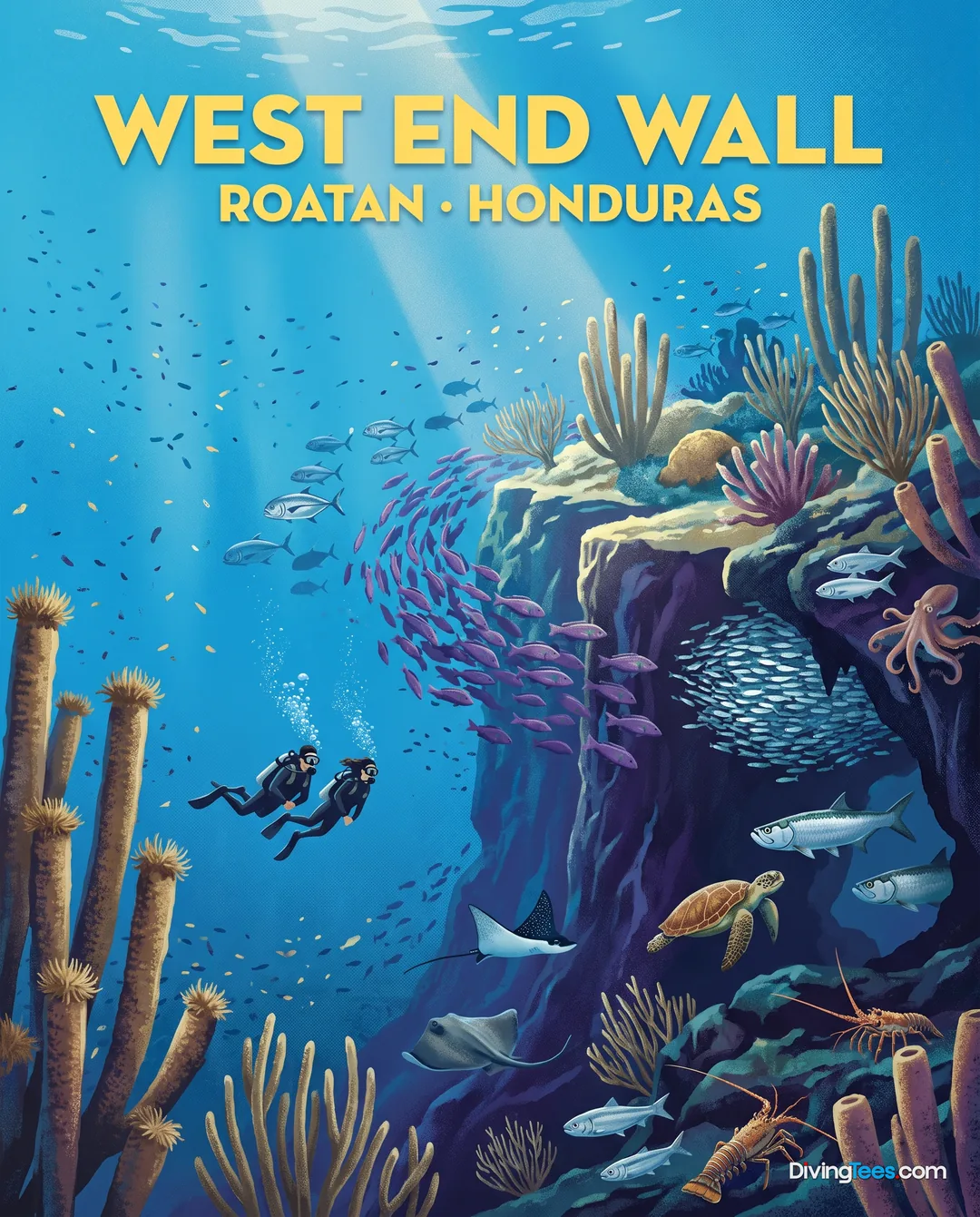
As you move away from the reef top, the site transitions into a distinctive semi-circular wall that plunges steeply to depths exceeding 45 metres. Along this vertical face, you'll find impressive formations of gorgonians, the deep purple and dark textures of black corals, and large, orange elephant ear sponges. This vibrant display of sessile life creates a striking contrast against the blue water column, drawing your eye further into the depths.
A notable feature of Half Moon Bay Wall is a tunnel located around 21 metres deep, which provides an alternate path to shallower areas. Traversing this tunnel leads you out onto an expanse of white sand, dotted with coral heads. This transition from the vertical wall to a more open, sandy environment often brings opportunities to encounter pelagic species, particularly eagle rays (Aetobatus narinari), which are frequently seen gliding over the sandy bottom.
The site caters to a wide range of dive interests, with the shallower sections offering excellent visibility for observing the colorful reef and its inhabitants. The upper reef is alive with schools of blue chromis (Chromis cyanea) and creole wrasse, along with grouper (Serranidae) moving through the corals. Keep an eye out for flamingo tongue snails (Cyphoma gibbosum) camouflaged on gorgonians and various moray eels (Muraenidae) and lobsters (Nephropidae) tucked into crevices.
Venturing deeper along the wall, the environment changes, revealing larger barrel sponges and different species of black corals that thrive in the reduced light. While the shallow reef provides a kaleidoscope of colour, the deeper wall offers a sense of dramatic scale and the chance to observe larger, more mature reef formations. The interplay of light and shadow along the wall's contours highlights the unique geological structure of this site.
The area around Half Moon Bay Wall also supports a healthy population of green sea turtles (Chelonia mydas) and hawksbill turtles (Eretmochelys imbricata), which are often seen grazing or resting on the reef. The density of marine life and the sheer size of the different sections mean that a single extended dive can still leave you with plenty to explore, making repeat visits rewarding.
The site's proximity to West End and its diverse topography mean you'll find multiple mooring points, like Dixie's and Dive Master's Choice, indicating the sheer size of the reef system here. This allows for various entry and exit points, spreading out diver impact and ensuring different parts of the overall area can be appreciated fully, depending on the dive plan.
This site is accessible for all certification levels, with a minimum depth of 4.5 metres extending to a maximum of 45 metres. Current is generally mild and visibility is consistently good year-round, making it a reliable destination. The dry season, from February to September, offers the calmest waters and best visibility.
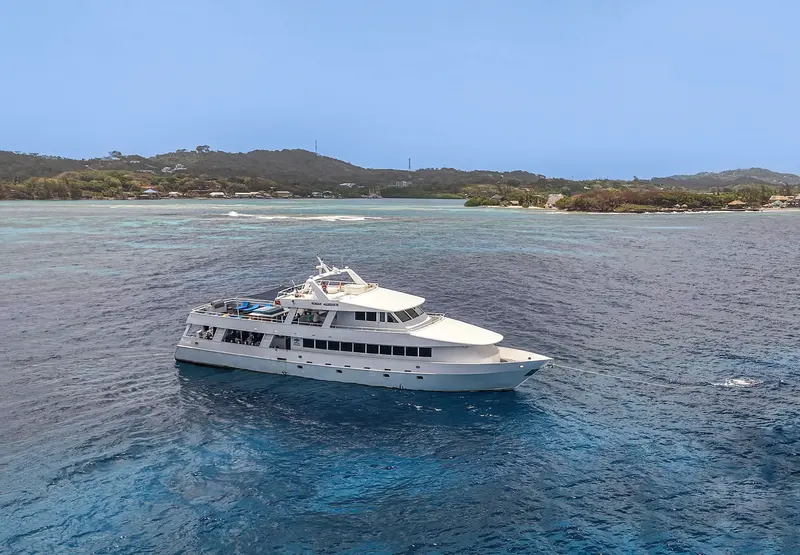
1 liveaboard departs from Roatan another way to explore the region, over several days at sea.
You can dive Half Moon Bay Wall year-round, with visibility consistently good. From February to September, the dry season brings the calmest waters and best visibility. This timing may suit you if you prefer calmer conditions while exploring the shallow reef, vertical wall, and tunnel.
Half Moon Bay Wall is accessible to all certification levels. You can expect a generally mild current, making the site suitable for divers with different experience levels. The shallow reef also gives you room to acclimate before moving toward the wall, depending on your dive plan.
At Half Moon Bay Wall, the dive begins on a shallow reef at about 4.5 to 5 metres. The wall descends beyond 45 metres, while a tunnel lies around 21 metres. You can choose between the upper reef, the tunnel route, and deeper sections according to your certification level and plan.
At Half Moon Bay Wall, you can see gorgonians, black coral, barrel sponges, elephant ear sponges, blue chromis, creole wrasse, moray eels, lobsters, and turtles. Eagle rays are frequently seen over the white sand near the tunnel, while grouper and flamingo tongue snails occur around the reef.