

Roatan Divers
Google 5/5 (408 reviews)
1 km away as the crow flies
Roatan · Honduras · Americas
Max. depth · 100 mHole in the Wall offers a unique blend of dramatic geological formations, intricate caverns, and diverse marine life, making it a truly exceptional dive site.
For subtitles in English: start the video firstthen click the gearat the top right of the video, select “Subtitles/CC”, then “Auto-translate” and choose “English”.
Hole in the Wall, located just outside Mangrove Bight, presents a complex and unique topography that caters to various dive plans, setting it apart from typical reef dives. Your descent begins above a distinctive sand tunnel, the site's namesake, which breaches the reef wall. This tunnel starts at about 12 meters, providing a controlled entry into the deeper sections of the dive, with light filtering down into the opening, illuminating its initial contours.
Emerging from the tunnel, you'll find yourself at approximately 30 meters, directly at the edge of an impressive abyss. The main wall drops off dramatically here, stretching into depths well beyond recreational limits, reaching up to 100 meters at its extreme deep end. For those not continuing into deeper explorations, the wall to your right offers a rich visual, where you might spot eagle rays (Aetobatus narinari) and various turtle species, including green sea turtles (Chelonia mydas) and hawksbill sea turtles (Eretmochelys imbricata).
Shallower sections of Hole in the Wall, above the main drop, form an intricate network often described as 'Swiss cheese' due to its numerous passages, caverns, and horseshoe-shaped rock formations. These areas are bathed in sunlight, allowing for vibrant color appreciation and diverse marine life observation. Creole wrasse (Clepticus parrae) and blue tangs (Acanthurus coeruleus) frequently populate these shallower reef structures, creating a dynamic, colorful display.
The site extends beyond the immediate wall, incorporating extensive reef sections, sand channels, and additional cave systems. These upper parts are full of activity, providing sheltered environments for various smaller species. You might encounter spotted scorpionfish (Scorpaena plumieri), various groupers, filefish, and even nurse sharks (Ginglymostoma cirratum) tucked away in crevices or under ledges, showcasing the site's diverse ecosystem.
During the summer months, the site undergoes a transformation as large schools of silversides (Atheriniformes) move into the area. These shimmering fish fill the caverns and shallower passages, creating a dynamic, reflective environment as they catch the sunlight. This seasonal event adds another layer to the site's allure, concentrating marine predators looking to feed on the abundant baitfish, offering a spectacular natural phenomenon.
For divers with advanced training looking to extend their depth experience, Hole in the Wall offers a natural progression. Beyond the commonly explored recreational depths, further caverns exist with multiple darker passages. These deeper explorations require specific training and should only be attempted with an experienced guide, providing an opportunity to experience more confined environments and reach depths of 55 to 60 meters for technical divers.
The ascent from the deeper sections guides you through an adjacent crevasse, revealing a series of interconnected caverns along the way. Navigating these overhead environments requires careful finning and an appreciation for the enclosed spaces, where the light changes dynamically with each turn. It's during this phase of the dive that the site's smaller inhabitants come into focus, clinging to the walls and hidden crevices, adding another layer of discovery to the experience.
Within the intricate network of the ascending crevasses and caverns, a treasure hunt for microcosm life begins. Your eyes will adjust to spot the delicate anemone shrimps, the cleverly camouflaged arrow crabs, and the vibrant nudibranchs, each a tiny marvel in its own right. Keep a keen watch for scorpionfish blending seamlessly with their surroundings, their cryptic appearance a testament to their mastery of camouflage, providing ample photographic opportunities for macro enthusiasts.
After progressing through these twin crevasses, the dive profile leads you slightly further along to a distinct, beautiful grotto. This final, often brightly lit cavern presents itself as a natural conclusion to the geological journey, offering a space to orient yourself and reflect on the complexities of the formations you've just explored. The grotto provides a perfect backdrop for capturing underwater photographs, especially as the light plays across its walls, a quiet reward after the earlier deep exploration.
This site is accessible starting from an Advanced Open Water Diver certification due to the rapid depth progression and the potential for a deeper profile along the wall. The dive typically ranges between 12 meters at the tunnel entrance and up to 100 meters at the extreme deep end of the wall, with technical divers exploring to 55-60 meters. Visibility generally ranges from 12 to 30 meters. While currents are typically mild, the specific topology around the wall drop-off can create localized movements. The best period for diving this site extends from March to November, with summer months offering the best chance to witness large schools of silversides.
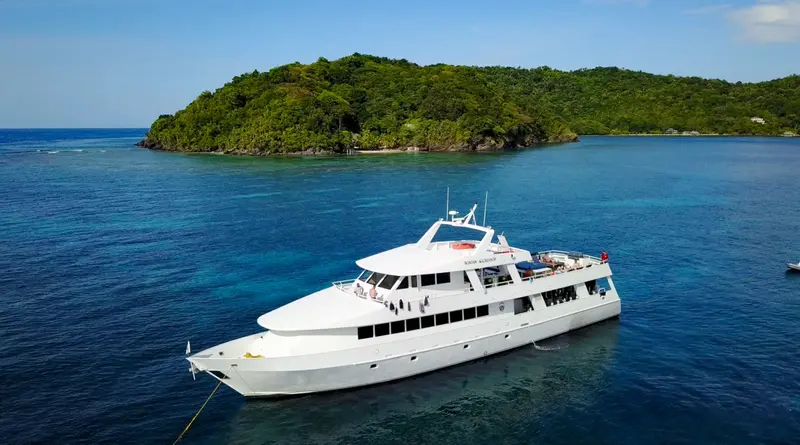
1 liveaboard departs from Roatan another way to explore the region, over several days at sea.
The best period for diving Hole in the Wall extends from March to November. Summer offers the best chance to witness large schools of silversides filling the caverns and shallower passages. Their presence can also attract predators, adding activity to the site’s reef, sand channels, and cavern environments.
Hole in the Wall is accessible starting from an Advanced Open Water Diver certification because the site progresses rapidly in depth and can involve a deeper wall profile. Deeper caverns and darker passages require specific training and should only be attempted with an experienced guide, particularly by technical divers.
The sand tunnel entrance at Hole in the Wall begins at about 12 meters and exits at approximately 30 meters. The wall then drops beyond recreational limits, reaching up to 100 meters at its extreme deep end. Technical divers explore to 55 to 60 meters in deeper sections and caverns.
Currents at Hole in the Wall are typically mild, although the wall drop-off’s topology can create localized movements. You may encounter eagle rays, turtles, nurse sharks, groupers, filefish, and reef fish, while caverns and crevices shelter anemone shrimps, arrow crabs, nudibranchs, and camouflaged scorpionfish.