
Beyond Land Adventures, Inc.
Google 4.6/5 (104 reviews)
United States · Americas
Giant kelp, leopard sharks and offshore wrecks define San Diego, where La Jolla shore entries sit alongside Point Loma walls and Wreck Alley boat dives.
For subtitles in English: start the video firstthen click the gearat the top right of the video, select “Subtitles/CC”, then “Auto-translate” and choose “English”.
San Diego puts temperate-water diving within an urban holiday. La Jolla supplies shore entries, kelp and rocky reefs, while Point Loma adds deeper reefs and canyons, and Wreck Alley takes the trip offshore by boat. The water demands more thermal planning than its Californian setting might suggest, and the shore diving can be dictated by surf rather than the calendar. In return, diving can sit comfortably beside beaches, museums, parks and coastal walks.
The diving ranges from La Jolla shore entries through giant kelp and canyons to deeper Point Loma reefs and wrecks offshore. Current is variable, but swell, shorebreak and rapidly changing visibility are usually the more decisive factors. Underwater, navigation beneath the kelp matters: keep the route to the exit in mind, avoid entanglement and retain enough gas for the return. Visibility commonly falls somewhere between three and fifteen metres, and can become very poor after swell, coastal run-off or plankton blooms. La Jolla Cove and La Jolla Shores are practical shore outings when conditions cooperate, although a calm-looking beach does not guarantee a safe entry. Wreck Alley is a separate boat day, not an extension of a beach dive, with deeper profiles and conditions that reward appropriate planning.
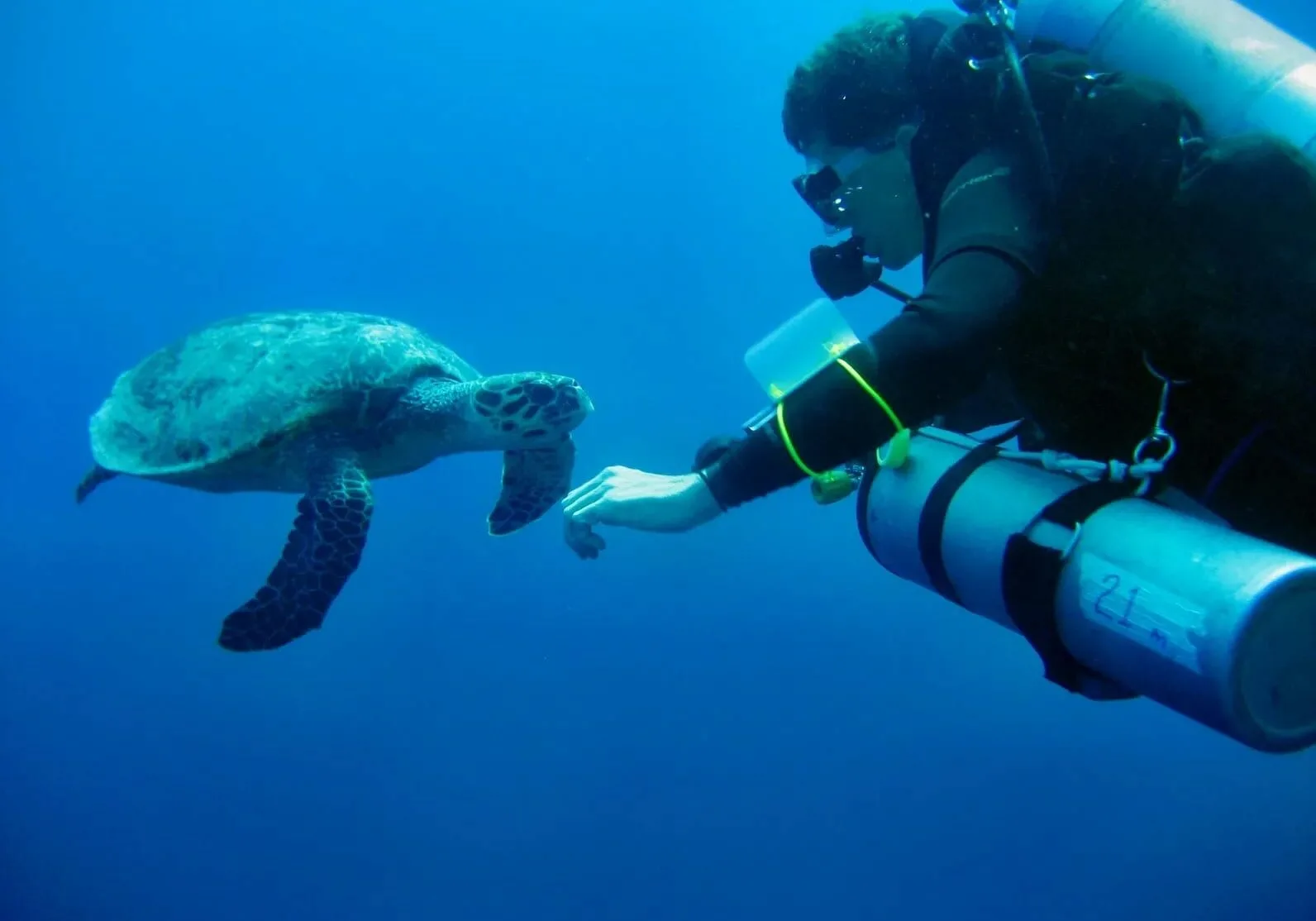
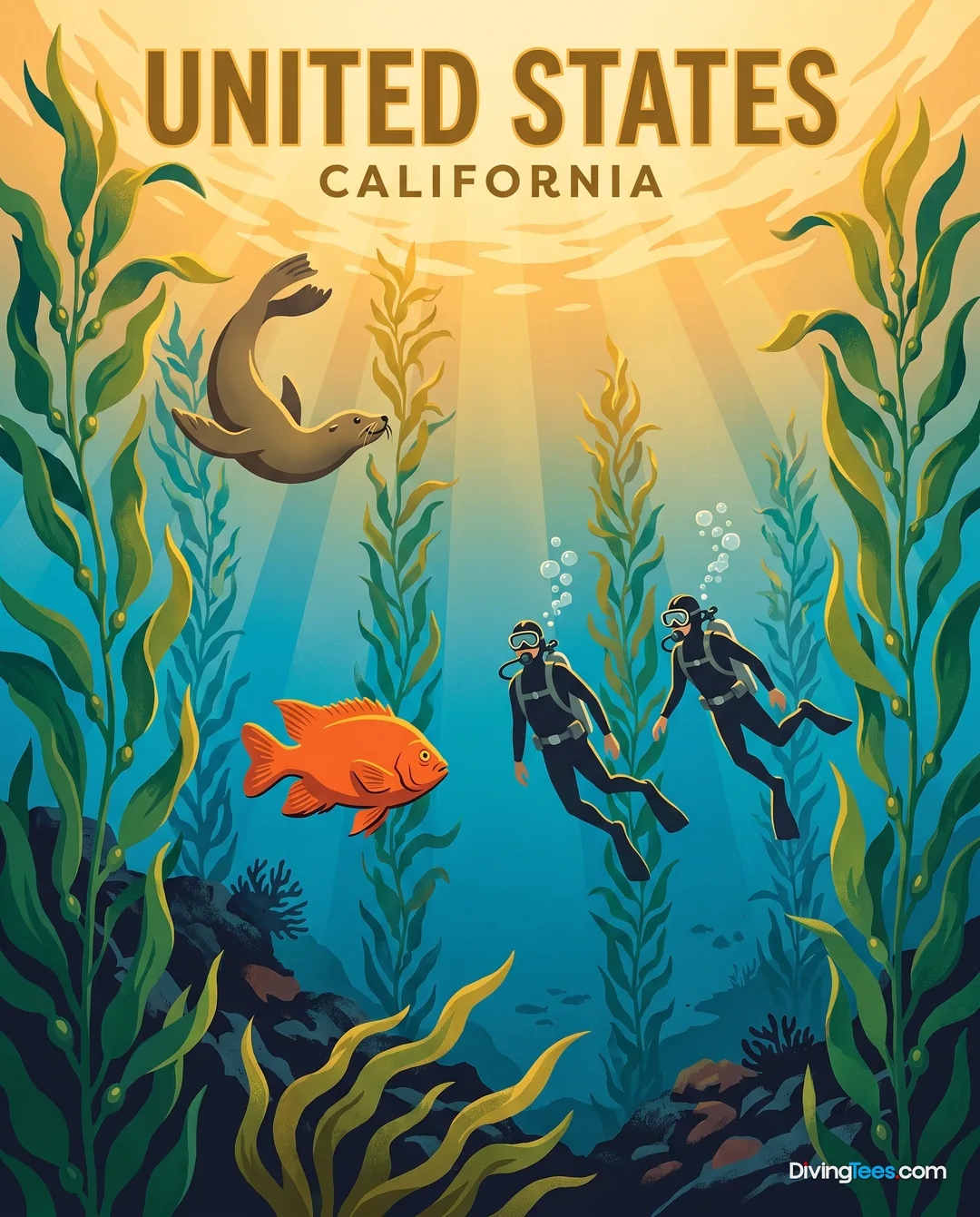
Giant kelp is the defining feature, forming underwater forests whose density changes through the year. Around La Jolla's protected reefs, bat rays are a regular possibility, while leopard sharks are encountered regularly from July to September. California giant sea bass are an occasional winter encounter, and sevengill sharks can appear at any time, with sightings varying with conditions. The marine park and associated protected areas help maintain abundant life around La Jolla, but this is a temperate rocky ecosystem rather than a tropical reef. Expect the animals to share the scenery with kelp fronds, rock and changing visibility, not a permanently clear-water display.
Late summer, autumn and early winter are the most useful window, broadly from August through January. Visibility is often better from July into January, with autumn commonly offering the steadiest compromise between sea conditions and underwater sight. Spring, particularly April to June, can bring plankton blooms that turn shore dives into very limited-visibility outings. Winter may bring California giant sea bass, but larger swell can make beach entries difficult. Autumn is therefore a sensible centre of gravity for a first trip, while a flexible plan matters in every season.
Some guided La Jolla shore dives can suit beginners when surf and entry conditions are favourable, but this is not a destination where a basic qualification removes the need for judgement. Experience with shorebreak, cold water, kelp navigation and changing visibility is valuable. A Wreck qualification is useful, and may be required, for Wreck Alley. Advanced-level experience suits deeper Point Loma and La Jolla Canyon profiles. BSAC, PADI and SSI divers should arrive comfortable managing several cold-water dives.
From London Heathrow, London Gatwick or Manchester, reach San Diego with the journey shaped by connections and waiting time rather than a simple direct hop. Allow roughly fourteen to twenty hours overall from western Europe, depending on the itinerary. British Airways, Lufthansa, Air France, KLM, Iberia and Aer Lingus are among the European airlines serving possible itineraries. Once in San Diego, La Jolla and Point Loma are reached by car or taxi. A hire car is generally the practical choice when carrying kit between shore sites and boat departure points. Wreck Alley requires a dive boat, so allow for the scheduled harbour departure and do not treat it as a shore excursion.
Treat La Jolla as a surf entry every time. Check swell and shorebreak on the day, preferably before loading the car, because a placid surface can conceal an awkward or unsafe exit. Early morning usually means fewer swimmers, snorkellers and divers, and often calmer surface conditions. Keep a reserve of gas for the return beneath the kelp, and avoid a bulky configuration or poor buoyancy that can leave you snagged in the fronds. Around six metres of visibility is already a worthwhile shore-diving day here, so do not build the trip around exceptional forecasts. Keep one day flexible for swell or poor visibility, with a boat dive or land activity as the alternative. At La Jolla, do not touch, chase or remove anything, and check which protected sector you are in before assuming fishing or collecting is allowed. Book Wreck Alley as its own boat day, rather than as a fallback beach dive.
Plan on five to seven days based on land, with several shore opportunities, a separate Wreck Alley boat day and at least one weather reserve. Staying in La Jolla can put the shore sites close at hand, although a car remains useful for equipment, Point Loma and harbour departures. From elsewhere in San Diego, expect to drive or take a taxi to the coast. Non-divers have beaches, coastal wildlife, Torrey Pines, Balboa Park, museums and historic neighbourhoods to explore.
Hello, I'm Marina, DivingDeal.com's AI assistant. I guide you through destinations, areas and countries.
Thinking about the whole trip and the flights? Talk it over with Edith →
Marina is an AI. Some links are affiliate links: DivingDeal may earn a commission, at no extra cost to you. Bookings are made with the partner.
Late summer, autumn and early winter are useful windows, broadly from August through January. Visibility is often better from July into January, with autumn offering a steady balance between sea conditions and underwater sight. Spring plankton blooms can severely limit visibility, while winter may bring giant sea bass but larger swell at shore.
Guided La Jolla shore dives can suit beginners when surf and entry conditions are favourable, but you still need judgement around shorebreak, cold water, kelp navigation and changing visibility. Wreck Alley requires suitable wreck experience, while deeper Point Loma and La Jolla Canyon profiles suit advanced-level divers comfortable managing several cold-water dives.
San Diego offers giant kelp forests, rocky reefs, canyons, deeper Point Loma reefs and offshore wrecks. Around La Jolla, you may encounter bat rays throughout the year and leopard sharks regularly from July to September. Sevengill sharks can appear at any time, while California giant sea bass are an occasional winter encounter.
Plan several shore opportunities around La Jolla, a separate Wreck Alley boat day and at least one flexible day for swell or poor visibility. Staying in La Jolla keeps shore sites close, but a car helps with equipment, Point Loma and harbour departures. Non-diving options include beaches, Torrey Pines, Balboa Park, museums and historic neighbourhoods.