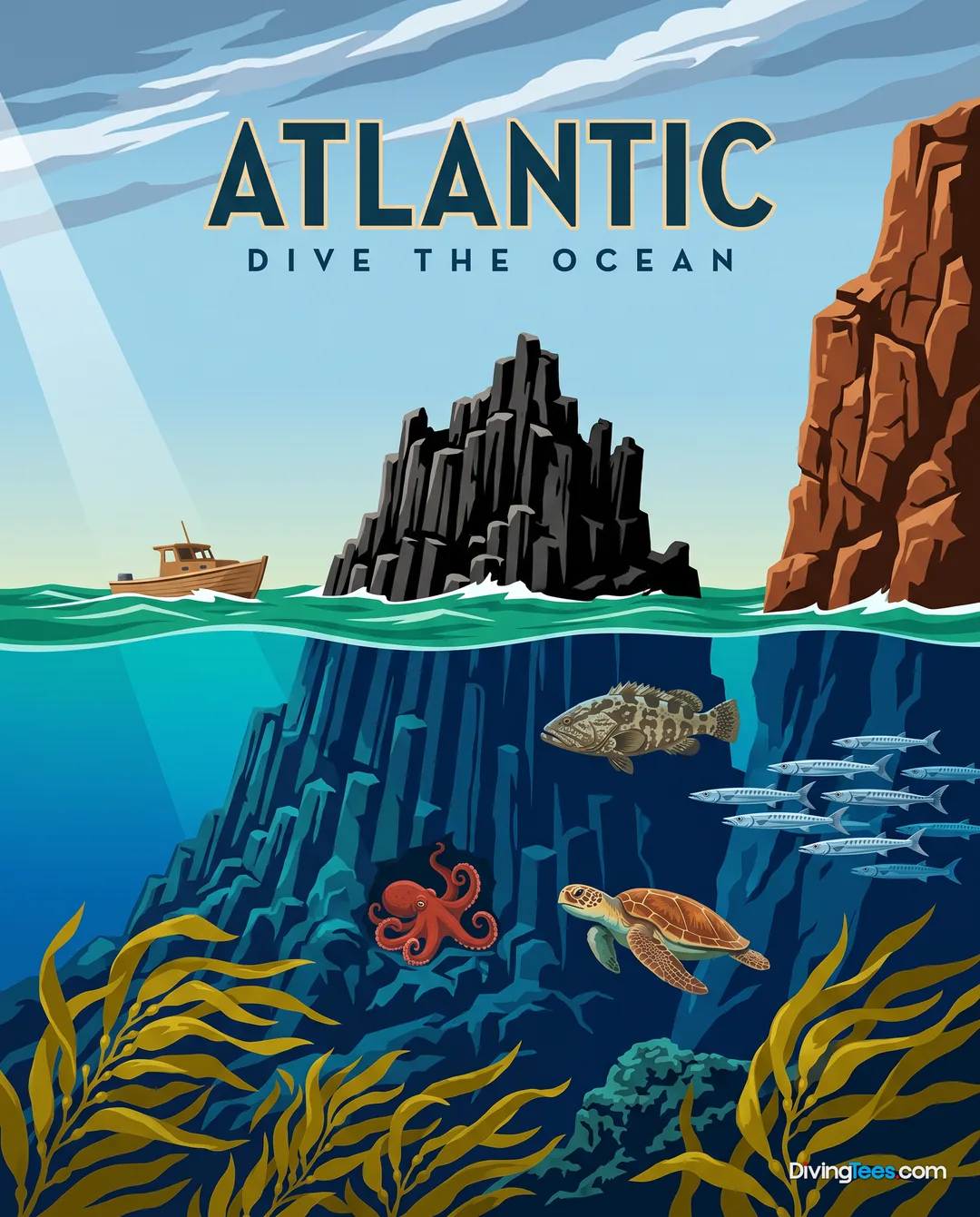
Santa Cruz · Azores · Atlantic
Max. depth · 30 mGrotte de Carapacho, Azores: Exploring a Volcanic Cave System
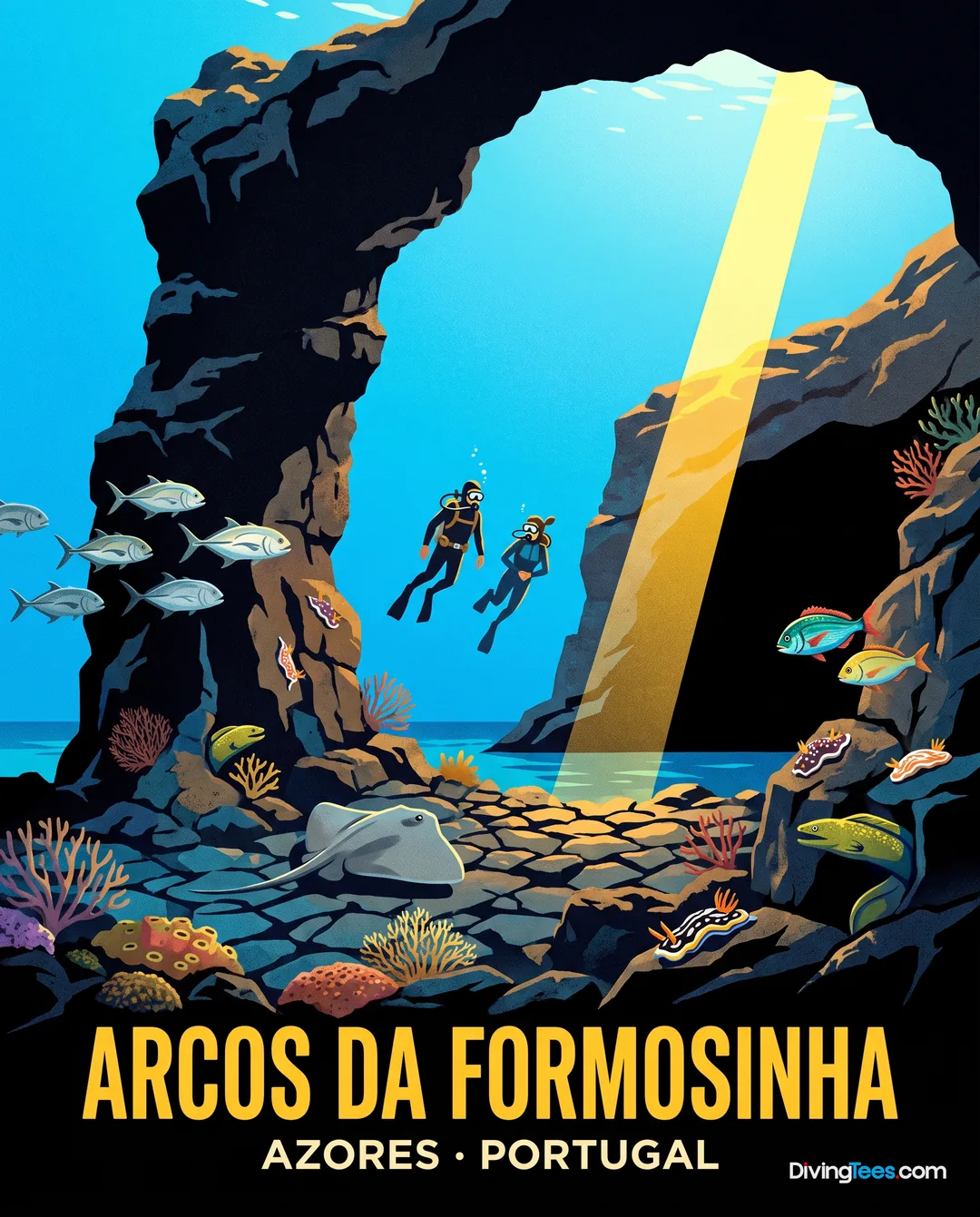
Descend into the Grotte de Carapacho to navigate vaulted chambers and corridors carved by volcanic activity, where light plays across ancient rock formations.
What makes this site special
- Explore a natural volcanic cave system.
- Navigate vaulted chambers and corridors.
- Observe dramatic natural light effects.
- Encounter moray eels and octopus.
- Discover diverse nudibranchs and schooling fish.
- Experience unique underwater geological formations.
Grotte de Carapacho about the site
Approaching the Grotte de Carapacho means heading towards one of the smaller Carapacho islets, a journey that offers a clear view of the Atlantic's raw power before you even enter the water. The site is a highlight of Graciosa Island, known for its unique geological formations. As you prepare for descent, the submerged extensions of the imposing rock formations become visible, hinting at the complex underwater landscape that awaits.
The entrance to the cave is a natural opening, wide enough for comfortable entry, allowing ambient light to guide your initial exploration. As you move deeper into the system, the light transitions from a bright oceanic blue to more subdued hues, painting the colossal rock formations in shades of grey and indigo. This shift creates a sense of entering a quiet, ancient space, distinct from the open ocean.
Inside, the Grotte de Carapacho unfolds as a series of vaulted chambers and corridors, sculpted by millennia of volcanic activity and ocean currents. Each turn reveals new perspectives on the rock, with contours shaped by the same powerful forces that formed the Azores themselves. This dive emphasizes the earth's structure, offering a direct connection to the geological history of the region.
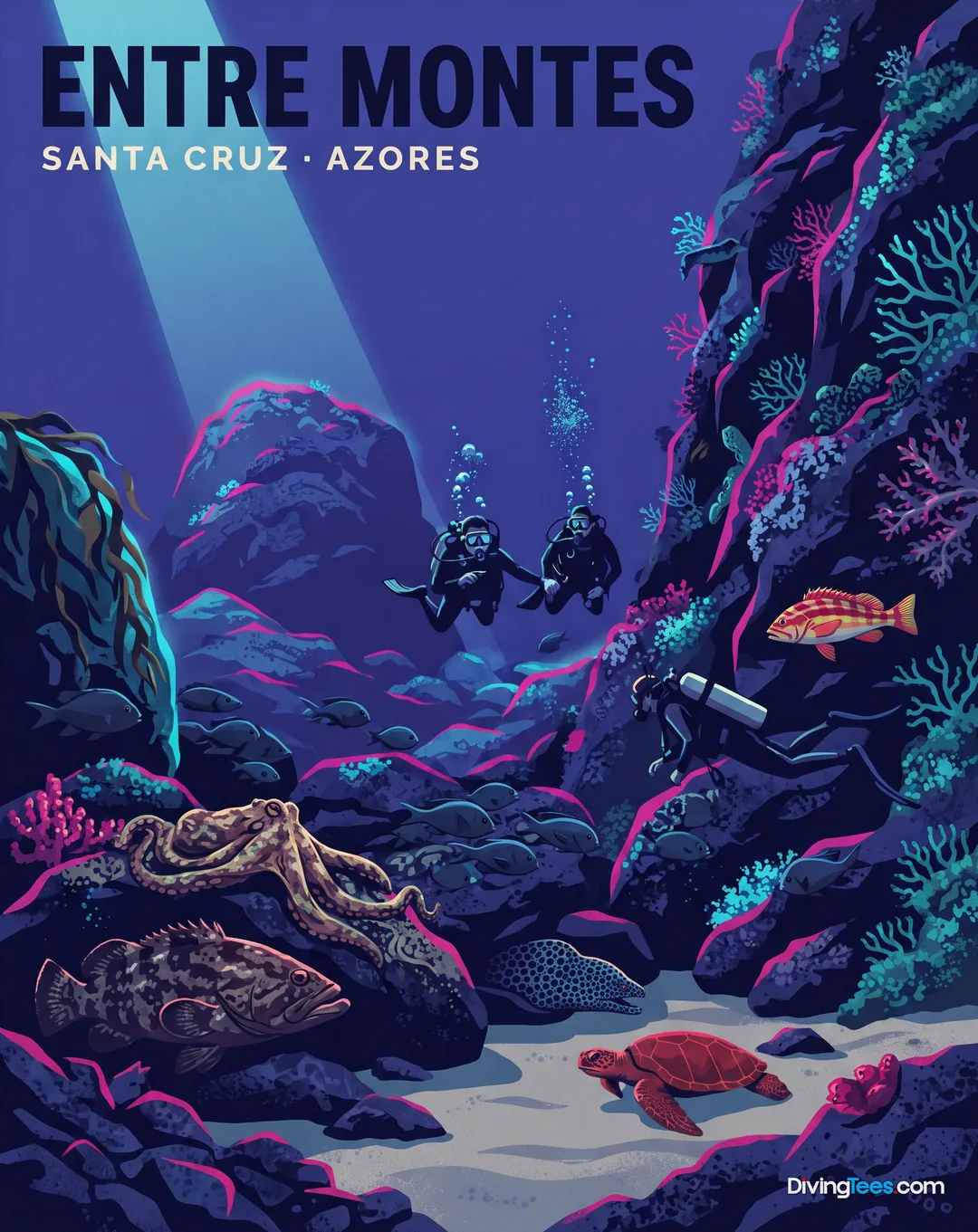
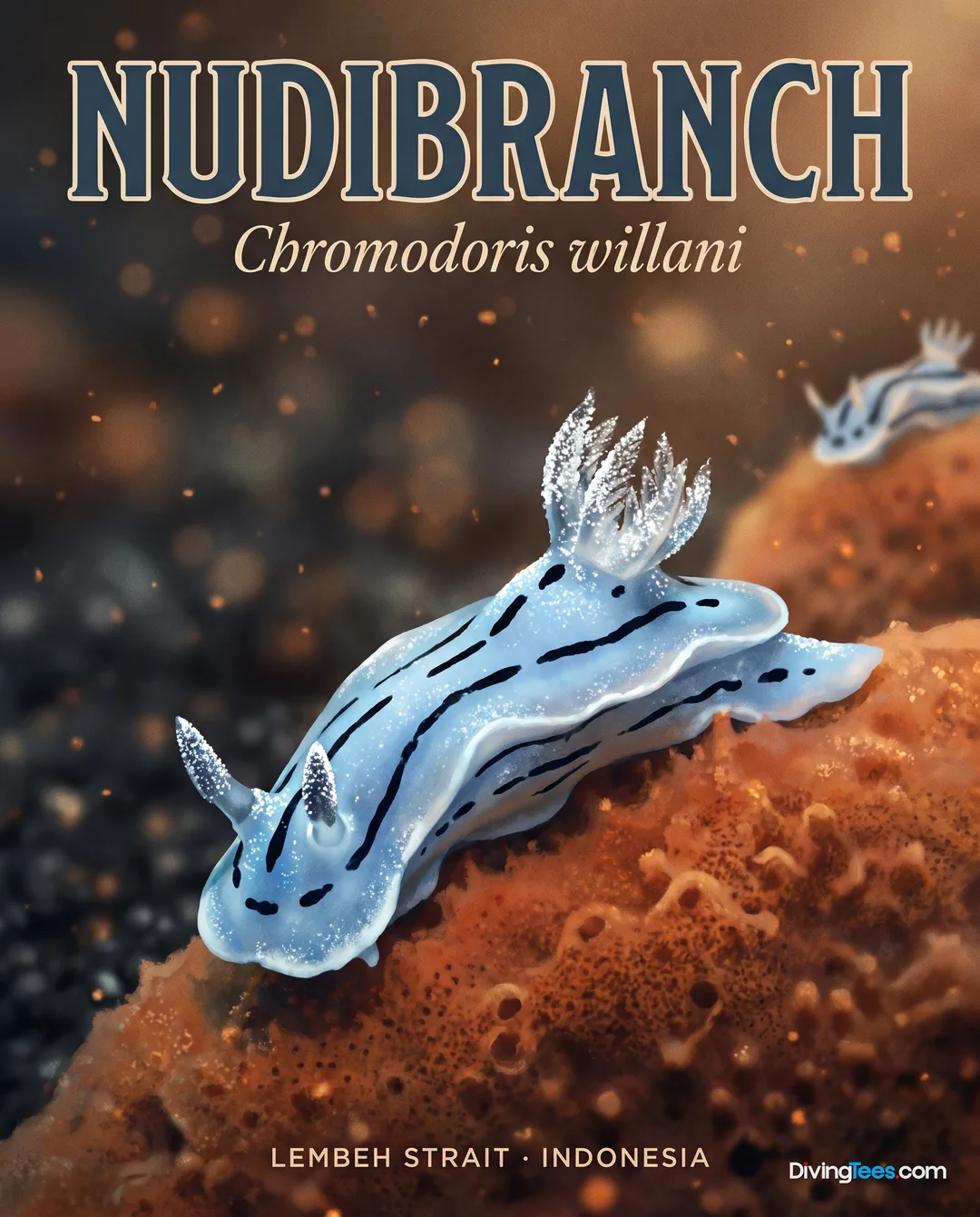
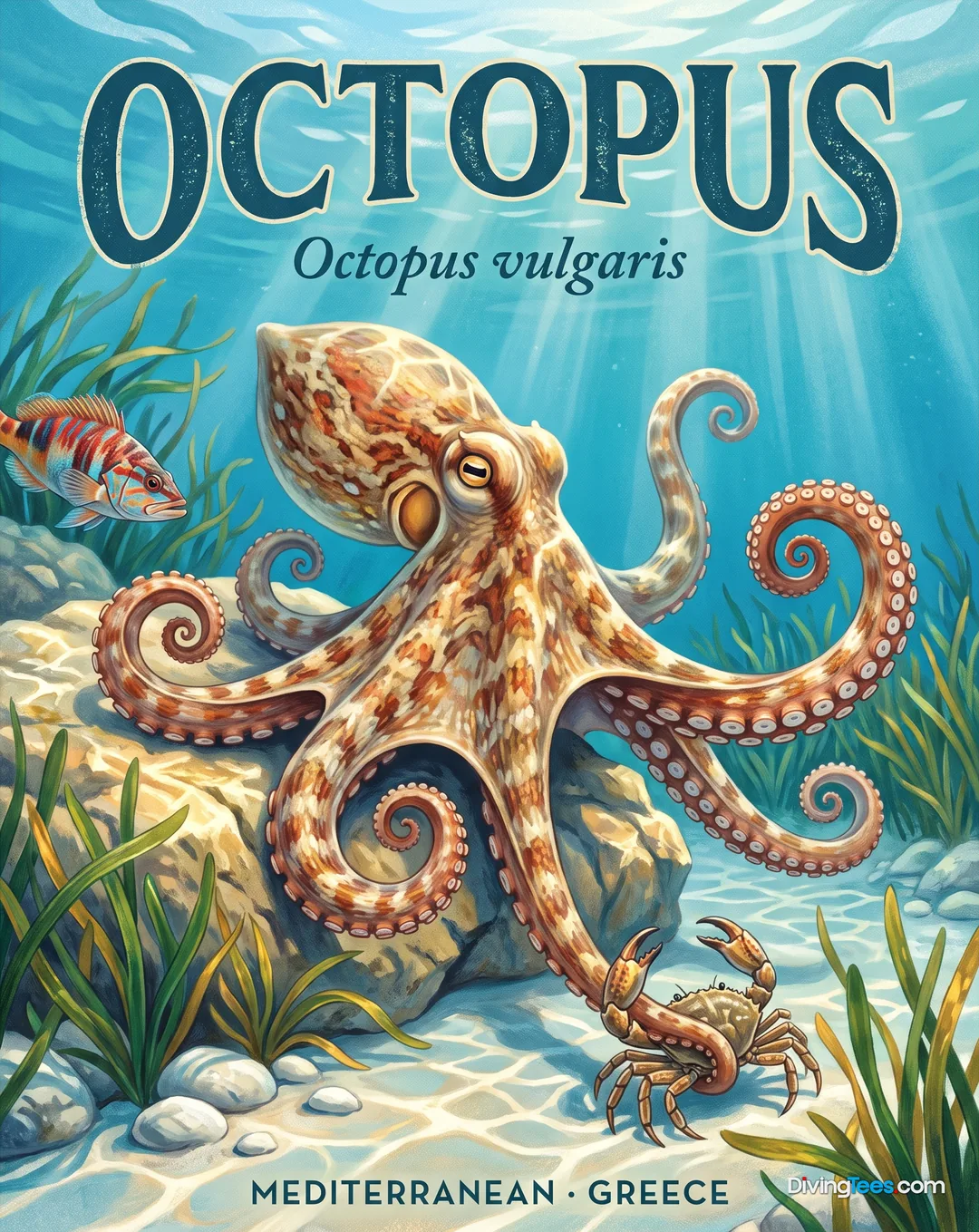
While the primary draw of Grotte de Carapacho is its geology, the calmer, sheltered waters within the cave system provide habitat for resident marine life. You can expect to find moray eels (Muraenidae) tucked into crevices, octopus (Octopoda) camouflaged against the rock, and various nudibranchs (Nudibranchia) clinging to the walls. Schooling fish (Actinopterygii) also seek refuge in the cave's protected areas, adding life to the dramatic interplay of light and shadow.
The site is particularly noted for its high biodiversity within the cave environment, with a range of invertebrates and fish utilizing the volcanic structures as habitat. The complex rocky formations and caverns, combined with the penetrating light effects, make it an attractive location for underwater photography. It's a dive that rewards careful observation of both the macro and the grand scale of the underwater architecture.
Diving Grotte de Carapacho: the marine life you’ll meet
Diving conditions
The Grotte de Carapacho is a recreational dive with a maximum depth of 30 metres, though you can explore shallower sections starting from 5 metres. While specific training levels are not universally documented, the cave structure and potential for variable current mean it is best suited for divers with experience in overhead environments or those diving with a local guide. Current can be variable due to the site's open Atlantic exposure near small islets, so be prepared for changing conditions, particularly at the entrance.