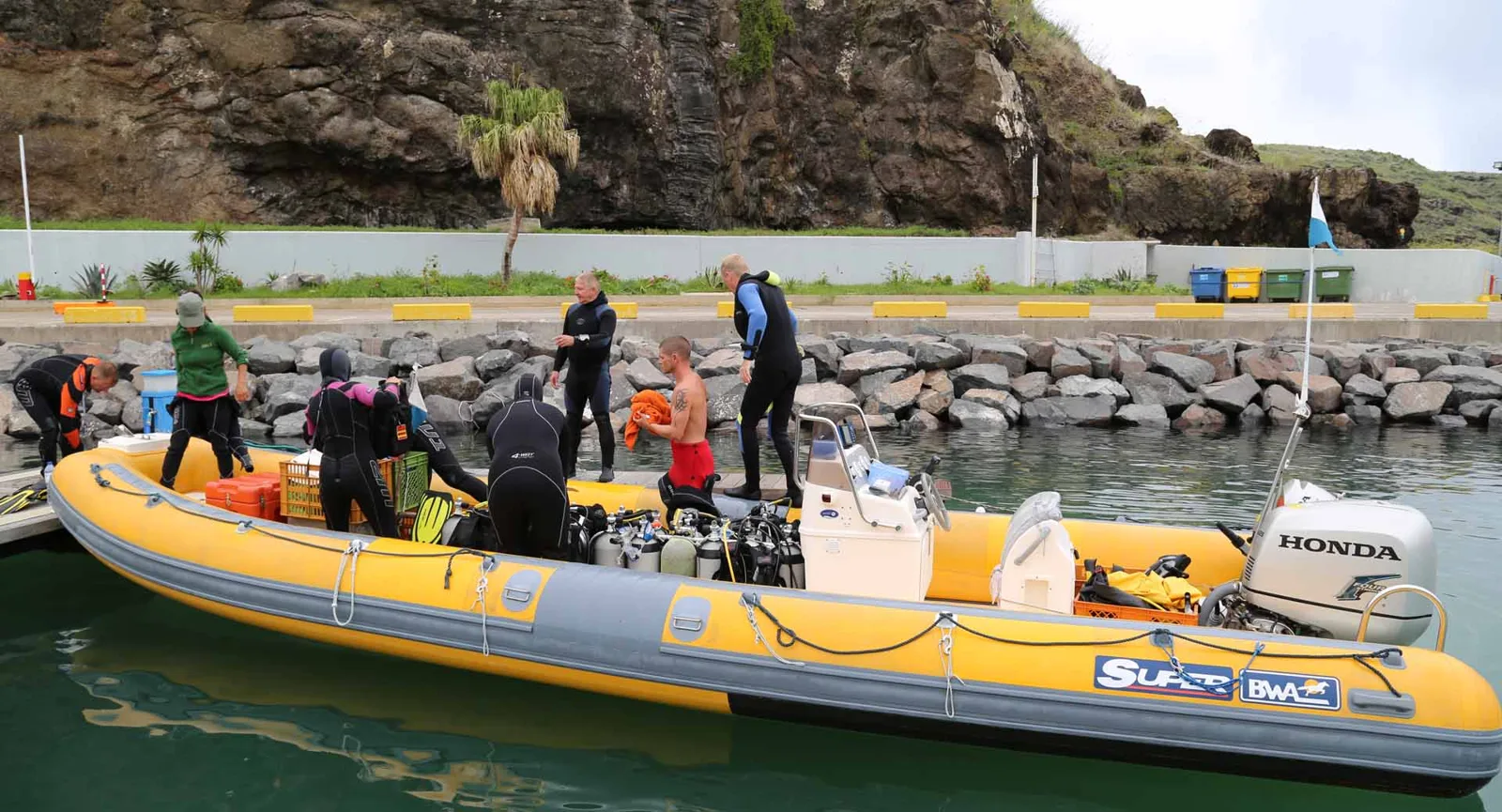
Wahoo Diving
Google 4.8/5 (194 reviews)
9.4 km away as the crow flies
Santa Maria · Azores · Atlantic
Max. depth · 46 mDescend onto a submerged seamount in the Azores where pelagic giants converge, particularly dozens of Mobula rays during the summer months.
For subtitles in English: start the video firstthen click the gearat the top right of the video, select “Subtitles/CC”, then “Auto-translate” and choose “English”.
Baixa do Ambrósio rises from the deep, a true submerged seamount in the Atlantic that beckons divers with its unique underwater topography and vibrant marine ecosystem. As you descend, the sheer scale of this underwater mountain becomes apparent, a vibrant oasis in the open ocean. The plateau alone spans 50 metres, providing an expansive stage for the drama of marine life, an area rich in biodiversity that justifies its status as one of the most sought-after dive sites globally. This specific geological formation acts as a natural magnet for pelagic species, drawing them in from the vast expanse of the surrounding ocean.
The dive profile at Baixa do Ambrósio caters to a wide spectrum of experience, with depths ranging from a shallow 5 metres all the way down to a challenging 46 metres. For those seeking a more relaxed experience or needing to conduct a safety stop, the anchor line provides a stable reference point between 5 and 15 metres, often teeming with smaller reef species and presenting interesting photographic opportunities. However, for the experienced diver, the allure of the deeper sections is undeniable, promising encounters with larger, more elusive creatures that inhabit the lower reaches of this impressive seamount.
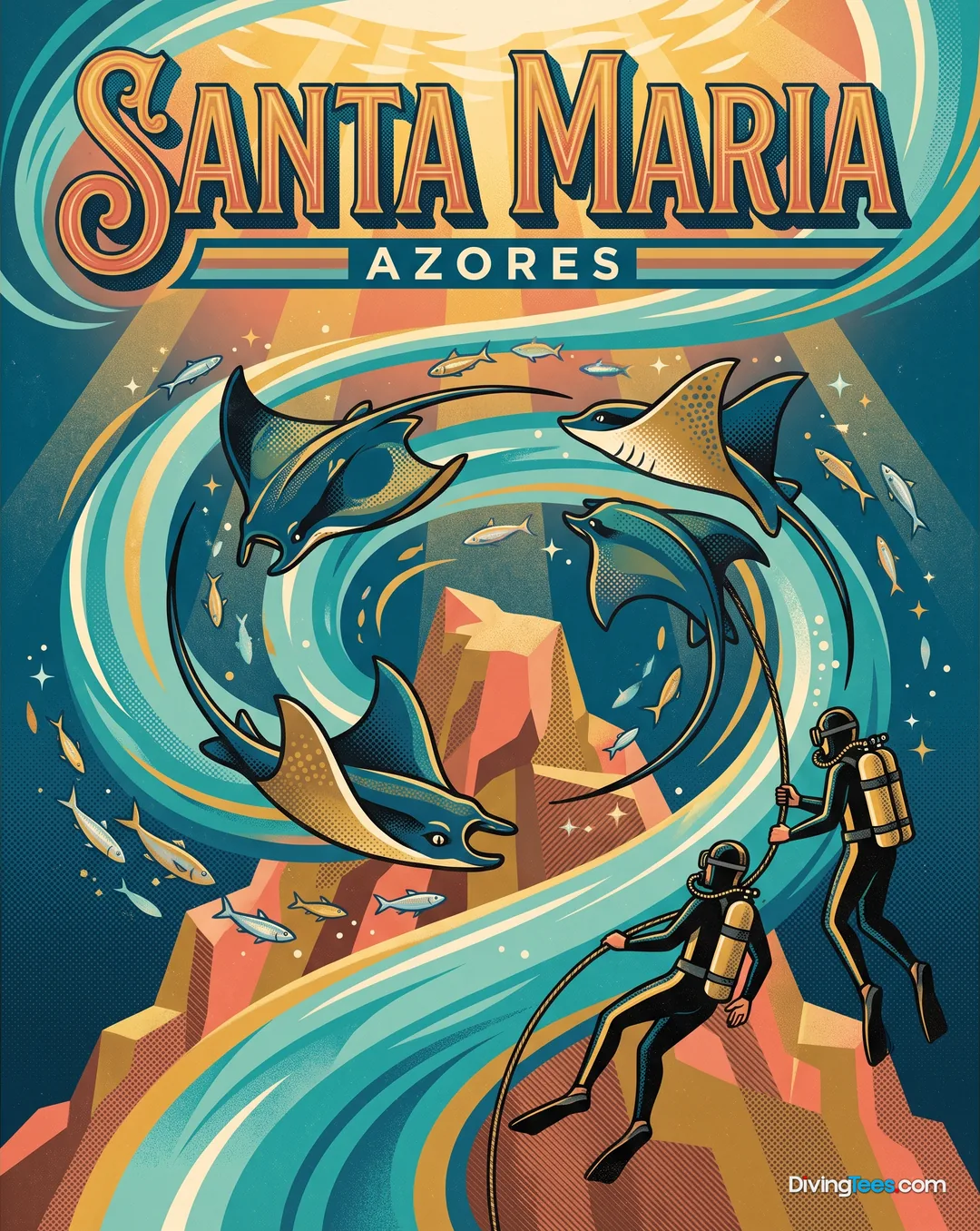
During the summer, Baixa do Ambrósio truly lives up to its reputation as a pelagic hotspot, becoming a primary gathering point for dozens of Mobula rays (Mobula tarapacana). These majestic creatures glide effortlessly through the water column, often seen in large aggregations, a truly humbling spectacle that defines the experience during this season. Beyond the Mobula rays, the open water around the seamount is frequently patrolled by other pelagic species, including fast-moving Jacks (Caranx ignobilis), various Tuna species (likely Thunnus thynnus or similar), and even occasional Sunfish (Mola mola) making an appearance.
While the primary draw is the pelagic action, the 50-metre platform at Baixa do Ambrósio is itself a thriving ecosystem, bustling with a variety of resident reef fish and invertibrates. Though the focus here is often on the larger visitors, taking time to observe the smaller inhabitants reveals a complex and interconnected community. The current, which can range from moderate to strong, plays a crucial role in delivering nutrients to this thriving platform, sustaining the rich food web that supports both the resident and visiting marine life.
Navigating Baixa do Ambrósio requires an understanding of the prevailing currents, which can be moderate to strong, especially for those venturing deeper or off the main anchor line. This dynamic environment, while demanding, is also precisely what makes the site so vibrant, channeling nutrient-rich waters and attracting the larger predators. Careful dive planning and a good briefing from your dive guide are essential to maximise your time and safely explore the different facets of this awe-inspiring seamount. The currents shape the encounters, often directing where and how you will observe the various species that call this area home.
Baixa do Ambrósio is accessible for divers of all levels, with depths ranging from 5 to 46 metres. Divers should be prepared for currents that can range from moderate to strong. The best period to experience the site, particularly for significant encounters with Mobula rays (Mobula tarapacana), is during the summer months.
Summer is the best period to experience Baixa do Ambrósio, particularly if you want to encounter Mobula rays. During this season, dozens of Mobula tarapacana may gather around the seamount. Other pelagic species, including Jacks and Tuna, may also patrol the open water surrounding the site.
Baixa do Ambrósio is accessible to divers of all levels, offering both shallower and deeper options. You can remain on the anchor line between 5 and 15 metres for a more relaxed dive or a safety stop, while experienced divers can explore the deeper sections of the seamount.
Baixa do Ambrósio ranges from 5 to 46 metres. The anchor line provides a stable reference between 5 and 15 metres, while deeper areas descend to 46 metres. A 50-metre plateau offers an expansive underwater area rich in marine life, with options suited to different dive profiles.
You should be prepared for currents ranging from moderate to strong, particularly when going deeper or moving away from the anchor line. These currents support the site’s marine life and attract pelagic species such as Mobula rays, Jacks and Tuna. The plateau also contains resident reef fish and invertebrates.