Martinique Plongée
Google 5/5 (564 reviews)
32 km away as the crow flies
Les Trois Ilets · Martinique · Caribbean
Max. depth · 60 mExplore the dramatic volcanic canyons of Babody, where ancient lava flows have carved a labyrinth of narrow passages and deep ravines perpendicular to the coast.
Approaching Les Canyons de Babody, you immediately sense the raw power of geological forces at play. This site is defined by its deep, narrow canyons, cut perpendicular to the coastline, forming a natural underwater maze. The topography is the undeniable highlight here, offering an immersive dive experience where each turn reveals a new perspective on these impressive rock formations, inviting methodical exploration.
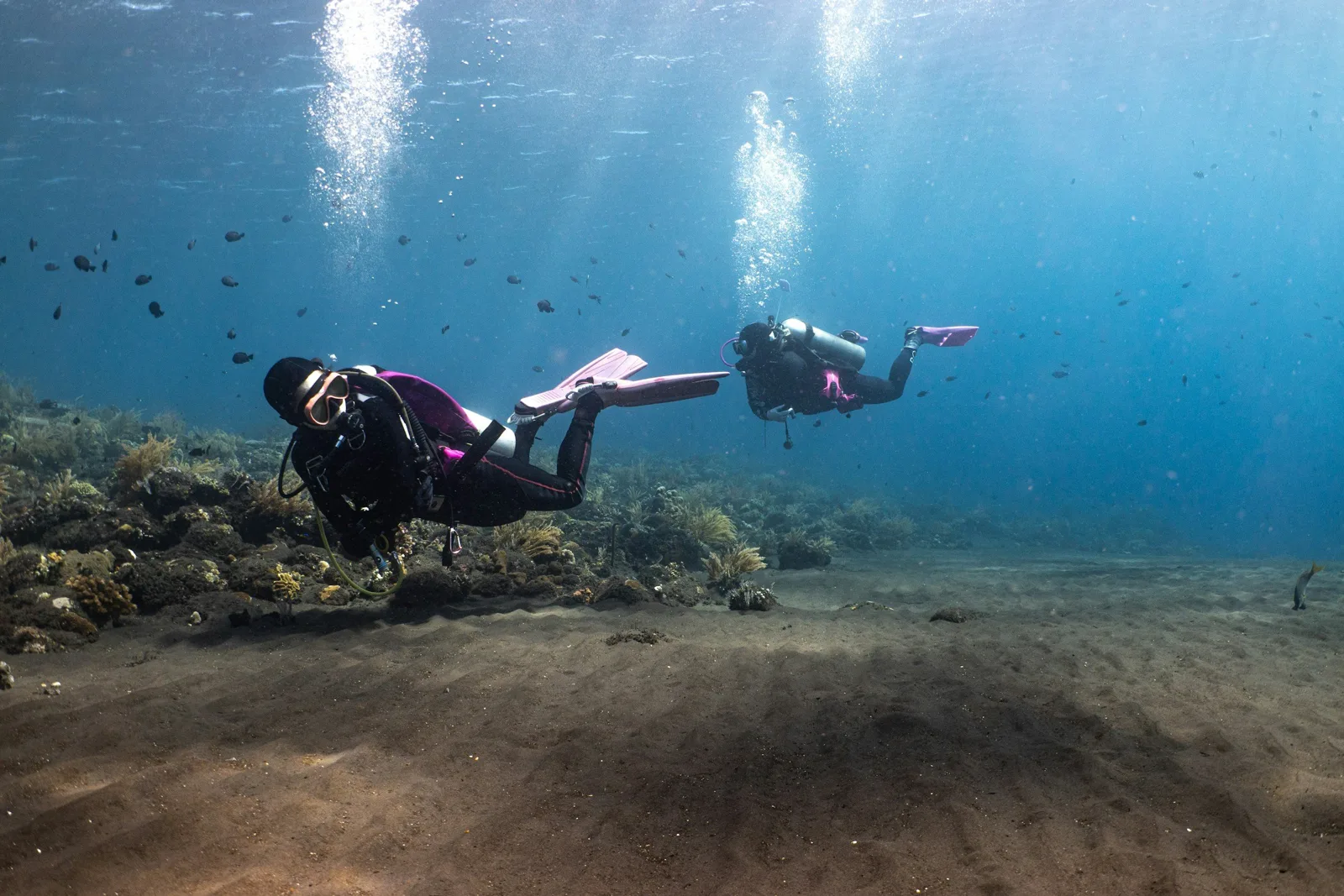
The descent into the canyons guides you through passages where sunlight filters unexpectedly, creating dynamic plays of shadow and light on the walls. These underwater crevices and fractures provide discreet refuges, distinct from what you find on typical reefs or drop-offs. You navigate the curves of the relief, moving between rocky cliffs that rise and fall, an experience akin to traversing a terrestrial gorge, but in weightlessness.
The dive profile at Babody is marked by significant depth variations, allowing for progressive immersion. You can begin your exploration in the shallower sections, starting around 9 metres, then drift or ascend along the walls that plunge down to 62 metres. This stratification allows you to tailor the adventure to your experience level, from the more illuminated zones to the deeper, darker abysses.
The canyons themselves are spectacular volcanic gorges, carved by Mount Pelée’s eruptions. These ravines stretch over 100 metres in length and can be up to 30 metres wide, creating a dramatic backdrop for both deep and photographic dives. The site is widely regarded in local dive literature as one of the most impressive underwater landscapes on Martinique's north Caribbean coast.
Beyond the geological formations, the exploration of Les Canyons de Babody is also a quest to discover the marine life that calls it home. Each nook and cranny, every crevice, offers a potential shelter for various species adapted to this environment. While the site isn't known for massive pelagic gatherings, its richness lies in the details, encouraging the diver to develop a keen sense of observation to spot the discreet inhabitants of the relief.
Among the resident fauna, you can find yellow scroll coral, delicate sea pens, and intricate wire coral clinging to the canyon walls. Large gorgonians and sponges add to the vibrant tapestry of life, providing shelter for soldierfish and other reef fish. Keep an eye out for barracuda patrolling the open water sections and sea turtles making their way through the canyons.
Adding a layer of historical interest, the site hosts old anchors, remnants left by captains who once used Babody as an unauthorized landing stage. These artifacts are integrated into the geological features, providing a tangible link to the past amidst the natural grandeur. This blend of natural and historical elements makes for a dive that engages on multiple levels.
Access to Les Canyons de Babody is flexible, available both from shore near Le Prêcheur/Babody for shallower entries and by boat. Dive centres, including those based at Trois-Îlets, frequently make day trips to this northern coast site, often anchoring on the sandy plateau for deeper explorations. This accessibility ensures various entry points depending on the planned dive profile.
Les Canyons de Babody are accessible from a minimum depth of 9 metres, with the site extending down to 62 metres. For full canyon exploration to 50 metres, a French Level 2 certification or equivalent advanced diver experience is required. Less experienced divers can explore the shallower coastal parts and upper plateau when guided appropriately. Current conditions at this coastal canyon site can be variable, influenced by weather and swell, so a good command of buoyancy is essential, especially when navigating the narrow passages. Visibility is generally excellent, but local conditions should always be confirmed before diving.
Before diving Les Canyons de Babody, you should confirm local weather, swell, current conditions, and visibility. Conditions at this coastal canyon can vary, while visibility is generally excellent. Plan only when the conditions suit your experience and you can maintain good buoyancy through the narrow passages.
For full canyon exploration at Les Canyons de Babody, you need a French Level 2 certification or equivalent advanced diver experience. Less experienced divers can explore the shallower coastal sections and upper plateau when guided appropriately, allowing you to enjoy the site without committing to its deeper profile.
Les Canyons de Babody offers a progressive profile, beginning at around nine metres and extending down to sixty-two metres. You can explore illuminated shallower sections or follow the walls toward deeper areas. Full canyon exploration reaches fifty metres, so your planned route should match your training and experience.
At Les Canyons de Babody, you can explore volcanic underwater canyons, narrow passages, ravines, and changing light across the rock formations. Look for yellow scroll coral, sea pens, wire coral, gorgonians, sponges, soldierfish, barracuda, sea turtles, and historical anchors integrated into the canyon walls.