
Scuba Nosy Be
Google 4.8/5 (195 reviews)
21 km away as the crow flies
Nosy Be · Madagascar · Indian Ocean
Max. depth · 43 mDescend into Nosy Be's Atnam to explore its distinctive dual topography, where sandy patches meet intricate canyons and two prominent high-fissures mark the underwater landscape.
For subtitles in English: start the video firstthen click the gearat the top right of the video, select “Subtitles/CC”, then “Auto-translate” and choose “English”.
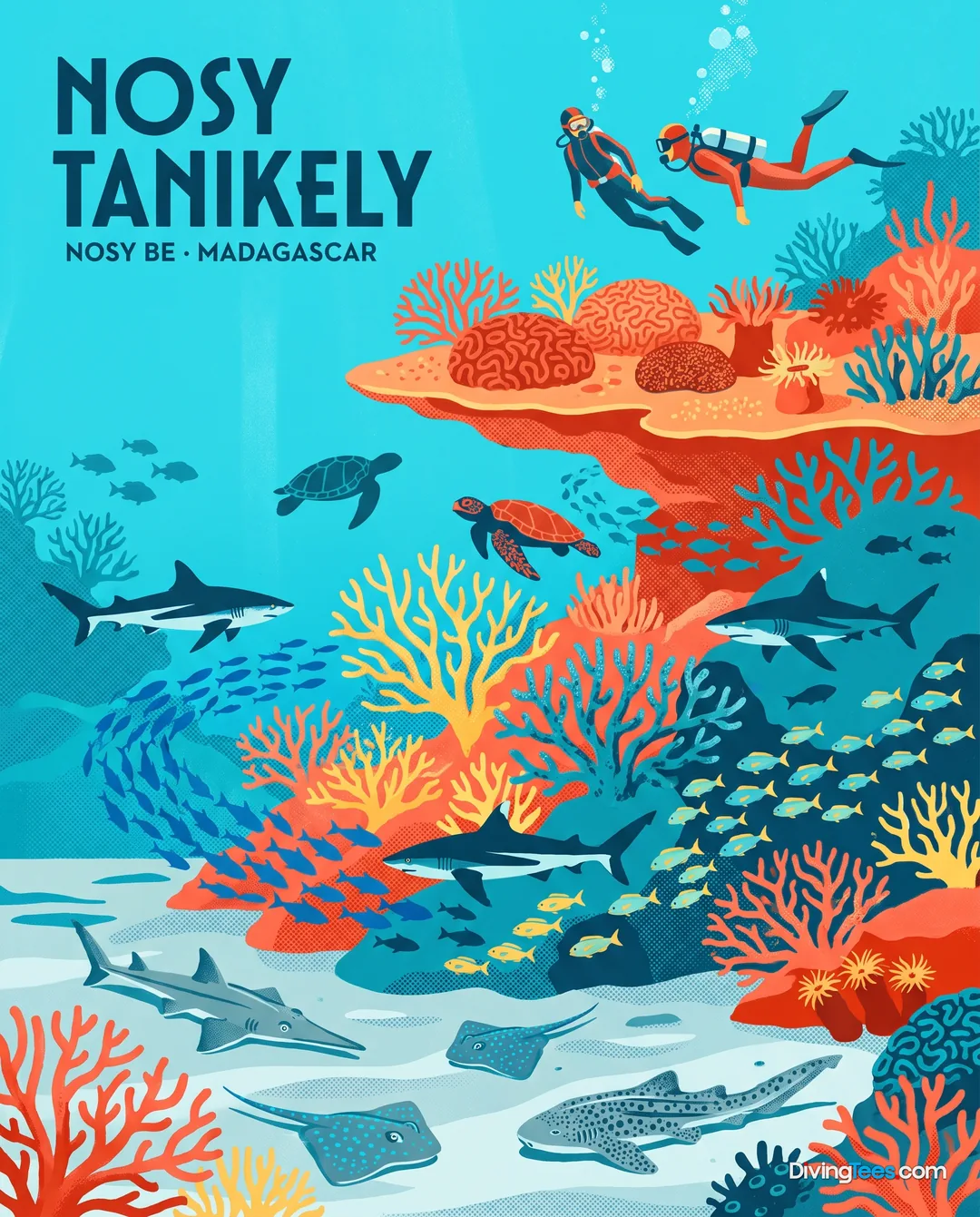
Diving Atnam brings you to a site defined by two distinctive high-fissures rising from the seabed, giving the location its name. As you descend, the sandy bottom around these rocky ascents quickly comes into view, often patrolled by white-tip sharks (Triaenodon obesus). This initial stage of the dive offers a clear vantage point into the site’s topography, preparing you for the more intricate formations that lie ahead.
Between these two prominent structures, you'll find a stable resident population: schools of snapper (Lutjanidae) and fusiliers (Caesionidae) have made this central area their home. Their presence adds a dynamic layer to the underwater scenery, often forming shimmering clouds of fish that swirl and move with the gentle surge. Keep an eye out for blue spotted stingrays (Neotrygon kuhlii) as they often forage in the sandy channels and depressions in this intermediate zone.
While the high-fissures and their immediate surroundings offer a classic reef experience, Atnam also holds a deeper secret: a canyon, rich in structural beauty. Unlike sites primarily known for pelagic encounters, the draw here is the topography itself. This canyon dives deeper, revealing an altogether different environment as you penetrate its geological folds.
Within the canyon, the light shifts, and you're immediately struck by the sheer scale of the gorgonian sea fans. These enormous, intricately branched corals dominate the walls and overhangs, creating a surreal, living tapestry. The density and size of these gorgonians are what truly set this section of Atnam apart, offering a palpable sense of immersion into an ancient, sculpted landscape that feels far removed from the sunlit high-fissures above.
Visibility here allows for appreciation of the grand scale of the canyon's structure, where every turn reveals new formations. While large schools of fish might not be the primary attraction, the intimate details of leafy scorpionfish (Taenianotus triacanthus) camouflaged among the rocks and corals are a testament to the diverse, albeit discreet, macro life that thrives in these sheltered crevices. It's a dive that rewards careful observation as much as broad-stroke appreciation.
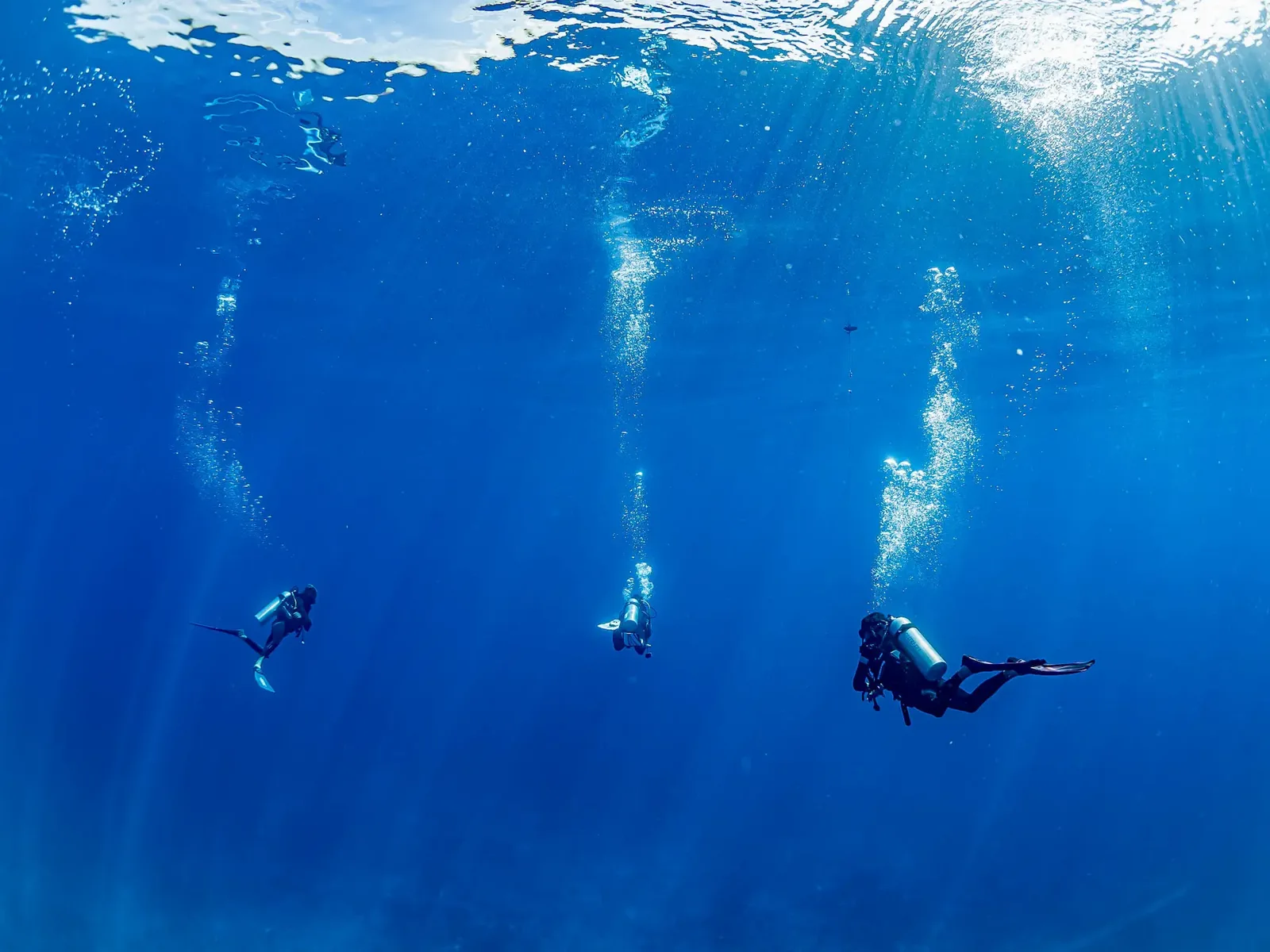
The Atnam dive site can be explored to a minimum depth of 14 meters, extending down to a maximum of 43 meters. It is accessible for divers of all levels, offering both shallower reef sections and deeper canyon explorations. The best period for diving Atnam is generally from March to January, outside of the rainy season.
1 liveaboard departs from Nosy Be another way to explore the region, over several days at sea.
You can generally dive Atnam from March to January. This period falls outside the rainy season and is identified as the preferred time to visit the site. Planning your dive within this window lets you explore the high fissures, sandy channels, and deeper canyon in the stated seasonal conditions.
Atnam is accessible to divers of all levels. Shallower reef sections provide an option for exploring the site at reduced depth, while deeper canyon explorations offer a different setting. The site combines high fissures, sandy areas, and a canyon, allowing you to experience its varied topography according to your level.
Atnam can be explored from a minimum depth of fourteen meters down to a maximum of forty-three meters. The shallower sections include reef around the distinctive high fissures, while the canyon extends into the deeper part of the site. Your route can therefore include different depth zones and formations.
Atnam features two distinctive high fissures, sandy channels, and a deeper canyon filled with enormous gorgonian sea fans. You may encounter white-tip sharks, schools of snapper and fusiliers, blue spotted stingrays, and leafy scorpionfish camouflaged among rocks and corals. Gentle surge moves through areas where fish gather.