
Scuba Nosy Be
Google 4.8/5 (195 reviews)
Nosy Be · Madagascar · Indian Ocean
Max. depth · 28 mDescend onto a series of vibrant seamounts at Crab N/W, where a sandy seafloor ensures a close encounter with dozens of inquisitive garden eels.
Crab N/W presents itself as a substantial, shallow bank, forming the central stage for an engaging dive profile. As you descend, you’ll find this central plateau surrounded by several smaller, life-rich seamounts, or 'secs', that beckon deeper exploration. The topography here creates a natural amphitheater, where hard coral structures rise from the seabed, providing shelter and hunting grounds for a variety of reef fish. You can choose your path, tracing the contours of the main bank or venturing towards the deeper pinnacles that punctuate the surrounding waters.
The journey through Crab N/W guides you from the shallower reaches of the main bank, starting at 12 metres, down to the maximum explorable depth of 28 metres. It's a dive that rewards methodical exploration, allowing you to gradually uncover the hidden corners and vibrant ecosystems nestled within the rock formations. The light changes subtly as you move deeper, highlighting the intricate details of the corals and the iridescent scales of the fish that patrol these waters. The varied depths cater to different dive plans, whether you prefer a longer bottom time on the plateau or a quick descent to circumnavigate the deeper secs.
What truly sets Crab N/W apart is the expansive sandy bottom that stretches between these distinct geological formations. This isn't just a barren expanse; it's a living canvas, specifically designed by nature for a particular resident. As you glide over this sandy substrate, keep your eyes keen. This is where you’ll begin to spot the first signs of the site's most charming inhabitants, their rhythmic swaying movements a distinct characteristic of this particular environment.
It is here, in the relatively sheltered sandy channels, that you are guaranteed to encounter dozens of friendly garden eels (Heteroconger hassi). These elongated, curious creatures emerge from their burrows, swaying in unison with the gentle surge, their heads facing into the subtle current to snatch passing plankton. Their collective presence creates a mesmerizing underwater garden, a visual spectacle as they retract into their sandy safe haven with swift, coordinated movements if you approach too rapidly. Observing their natural behaviour in such numbers is a highlight unique to Crab N/W.
The diverse seascape, with its interplay of shallow banks and deeper pinnacles, provides a rich habitat not just for garden eels, but also for a great variety of other marine life. While the eels command the sandy floors, the coral structures of the secs are home to a host of regular reef dwellers, making every turn a discovery. The transition from sandy bottom to coral-covered rock provides a dynamic contrast, ensuring a dive that is both varied and captivating in its offerings.
This dive is suitable for all levels of divers, making it accessible from Open Water Diver certification onwards. Dives here typically range from a minimum depth of 12 metres, extending to a maximum of 28 metres, offering plenty of scope for exploration. The best time to experience Crab N/W is between April and December, when the waters around Nosy Be generally offer clearer and calmer conditions, enhancing the overall dive experience.
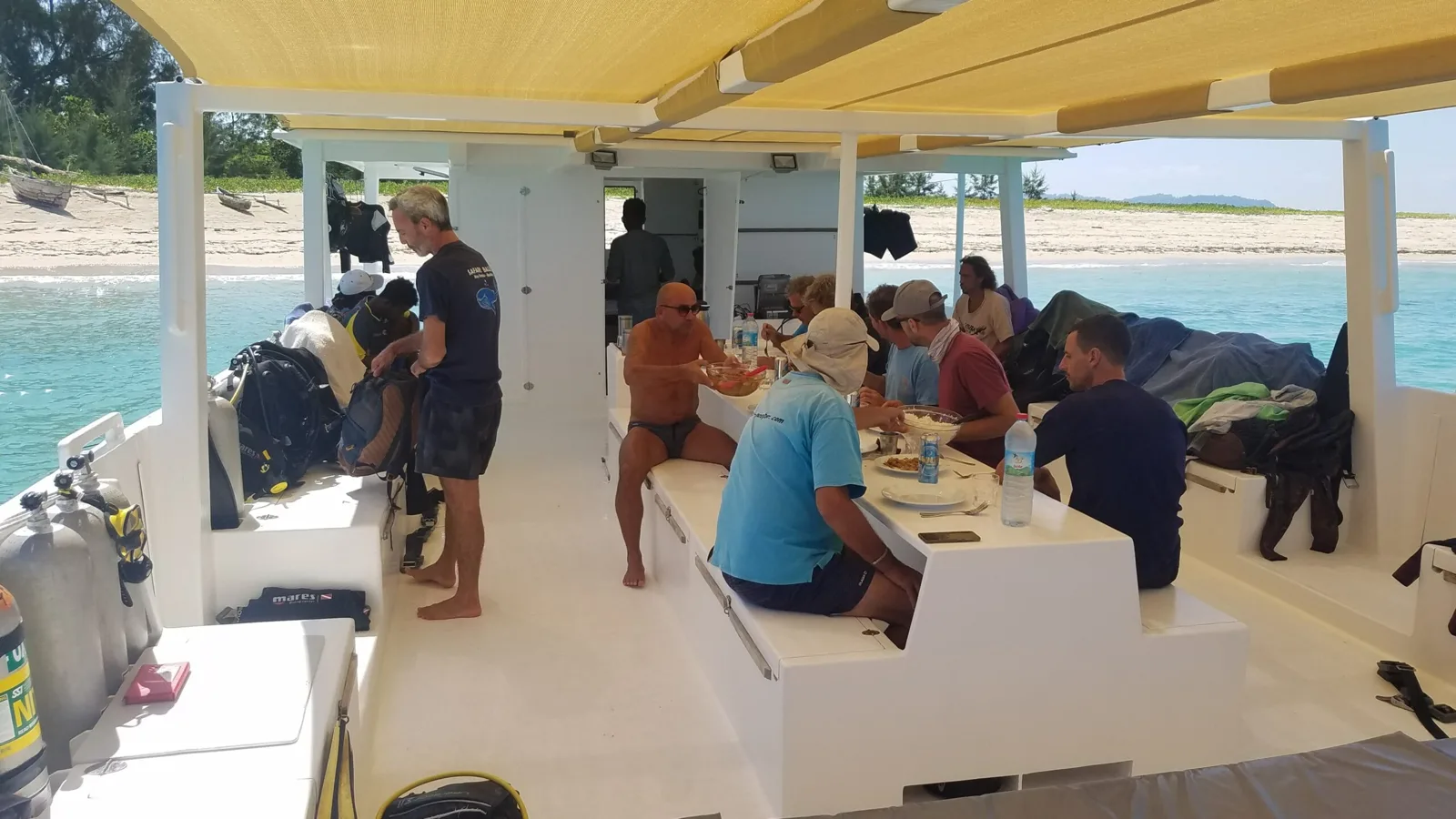
1 liveaboard departs from Nosy Be another way to explore the region, over several days at sea.
You can dive Crab N/W throughout the year, but the period from April to December generally brings clearer and calmer waters around Nosy Be. These conditions can enhance your experience as you explore the shallow main bank, surrounding seamounts, sandy areas, coral structures, and resident garden eels.
Crab N/W is suitable for divers of all experience levels, from Open Water Diver certification onwards. Its varied profile allows you to choose between exploring the shallower main bank, following the contours of the rock formations, or descending toward the deeper surrounding seamounts according to your dive plan.
Crab N/W ranges from 12 to 28 metres. You can spend more time exploring the shallow central bank or descend gradually toward the surrounding seamounts and deeper pinnacles. This range offers different ways to plan the dive, from a longer exploration of the plateau to a deeper circuit around the rock formations.
At Crab N/W, garden eels face the subtle current in the sandy channels, moving with the gentle surge as they feed. You can encounter dozens of Heteroconger hassi among expansive sandy areas, while hard coral structures and surrounding seamounts shelter a variety of reef fish and other regular reef dwellers.