
Scuba Nosy Be
Google 4.8/5 (195 reviews)
7.1 km away as the crow flies
Nosy Be · Madagascar · Indian Ocean
Max. depth · 20 mDescend onto Olaf, a thriving rocky pinnacle rising from 20 meters to just 6 meters, a perfect miniature world teeming with unique bottom dwellers and schooling fish.
Diving Olaf brings you to a vibrant rocky pinnacle, a singular underwater landmark situated strategically between the islands of Nosy Sakatia and Nosy Be. This formation rises from a maximum depth of 20 meters, cresting dramatically at a shallow 6 meters, creating a diverse range of habitats across its slopes and summit. As you descend, the light shifts, revealing the intricate textures of the rock face, a canvas for the smaller, more elusive residents that make this site particularly special. The overall geography of Olaf ensures a focused dive, allowing you to thoroughly explore its contours and hidden crevices.
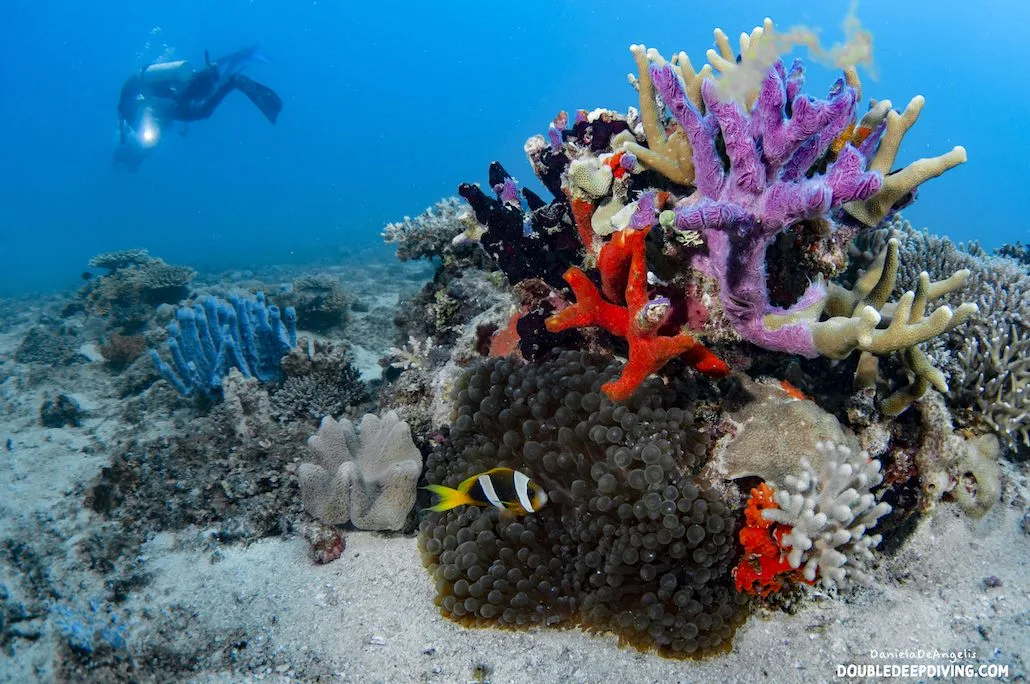
The journey along Olaf's slopes is a masterclass in uncovering the ocean's intricate details. Starting your descent, you'll find yourself amidst a particularly rich concentration of 'smaller' fish, an indication that this site rewards a slower, more observational approach. Keep your eyes peeled for the expertly camouflaged leaf fish, masters of disguise that sway gently with the water's movement, blending seamlessly into their surroundings. You will also encounter the captivating scorpionfish and the highly sought-after nudibranchs, which add bursts of vibrant colour against the reef's natural palette.
Olaf is a haven for the macro enthusiast, but it also caters to a broader spectrum of marine life. As you explore, you will frequently come across crocodilefish, perched motionless on the substrate, their flattened bodies perfectly adapted for ambush. The site pulsates with life, notably with large schools of fusiliers, their iridescent scales flashing as they sweep across the pinnacle in synchronized movements. These schools often create an impressive swirling spectacle, drawing your attention to the abundance of biomass that this rocky outpost supports in the open water.
Beyond the bustling schools, Olaf is also known for its resident population of large lobsters, which you may spot tucked into the safety of ledges and rocky overhangs, especially as you explore the deeper fringes of the pinnacle. Additionally, you can expect to encounter schools of captains, adding another layer of visual interest to the vibrant ecosystem. The combination of its varied depths and the abundance of both macro and schooling species makes Olaf a site that appeals universally, whether you are honing your observational skills or simply enjoying the rich biodiversity.
Olaf offers diving opportunities from a minimum depth of 6 meters down to a maximum of 20 meters, making it accessible for a wide range of diver experience levels. The best time to experience this site, and indeed the entire region of Nosy Be, is between March and January, avoiding the rainy season from January to March for optimal conditions. This extended period offers consistent and enjoyable diving.
1 liveaboard departs from Nosy Be another way to explore the region, over several days at sea.
You can dive Olaf between March and January, the period recommended for diving in Nosy Be. You should avoid the rainy season from January to March for more suitable conditions. This extended diving period offers consistent and enjoyable opportunities to explore the rocky pinnacle between Nosy Sakatia and Nosy Be.
Olaf suits a wide range of diver experience levels because the rocky pinnacle spans varied depths. You can explore from six meters down to twenty meters, with the formation rising from its deepest point to a shallow crest. Its slopes and summit provide different habitats during a focused dive.
You can look for leaf fish camouflaged among the coral, scorpionfish, nudibranchs, and crocodilefish blended with the reef. Large schools of fusiliers and captains move around the pinnacle, while large lobsters may be tucked into rocky crevices, ledges, and overhangs, particularly around the deeper fringes.
Olaf rewards a slower, observant approach across its rocky slopes, contours, and hidden crevices. You can focus on smaller fish and macro life, including camouflaged leaf fish, scorpionfish, and nudibranchs, while also watching schooling fusiliers and captains. Its varied depths support both detailed searching and broader reef viewing.