
Maldivers Dhiffushi
Google 4.4/5 (218 reviews)
Maldives · Indian Ocean
Stairs’ reef ledges, the West Rock Wreck and seasonal manta encounters sit within reach of a lived-in island base in North Malé Atoll.
For subtitles in English: start the video firstthen click the gearat the top right of the video, select “Subtitles/CC”, then “Auto-translate” and choose “English”.
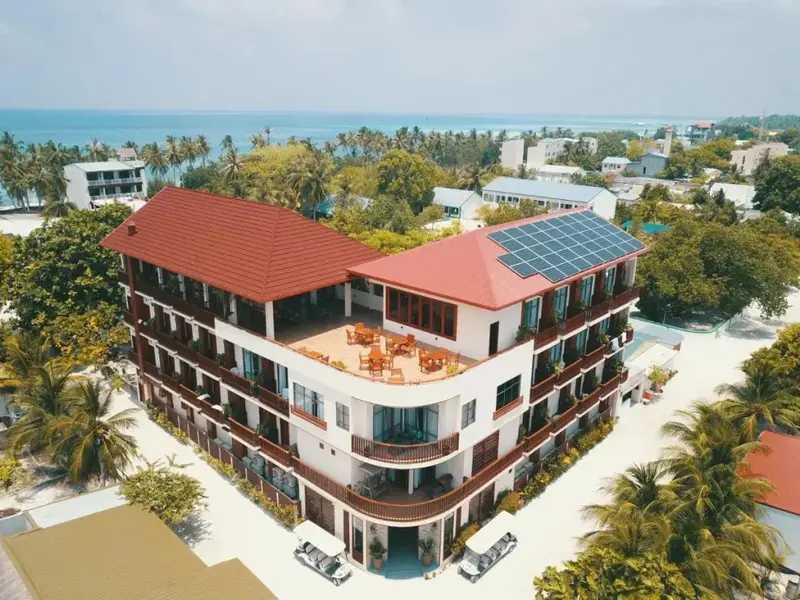
Dhiffushi is a small, inhabited island where diving is fitted around local life rather than separated from it. Guesthouse accommodation, beaches and a village setting provide the base, while boats carry divers to reefs and wreck sites around North Malé Atoll. Stairs brings stepped reef contours, and West Rock Wreck adds a different shape to the day. It suits a five-to-seven-day stay, with enough time for several boat trips and a weather margin.
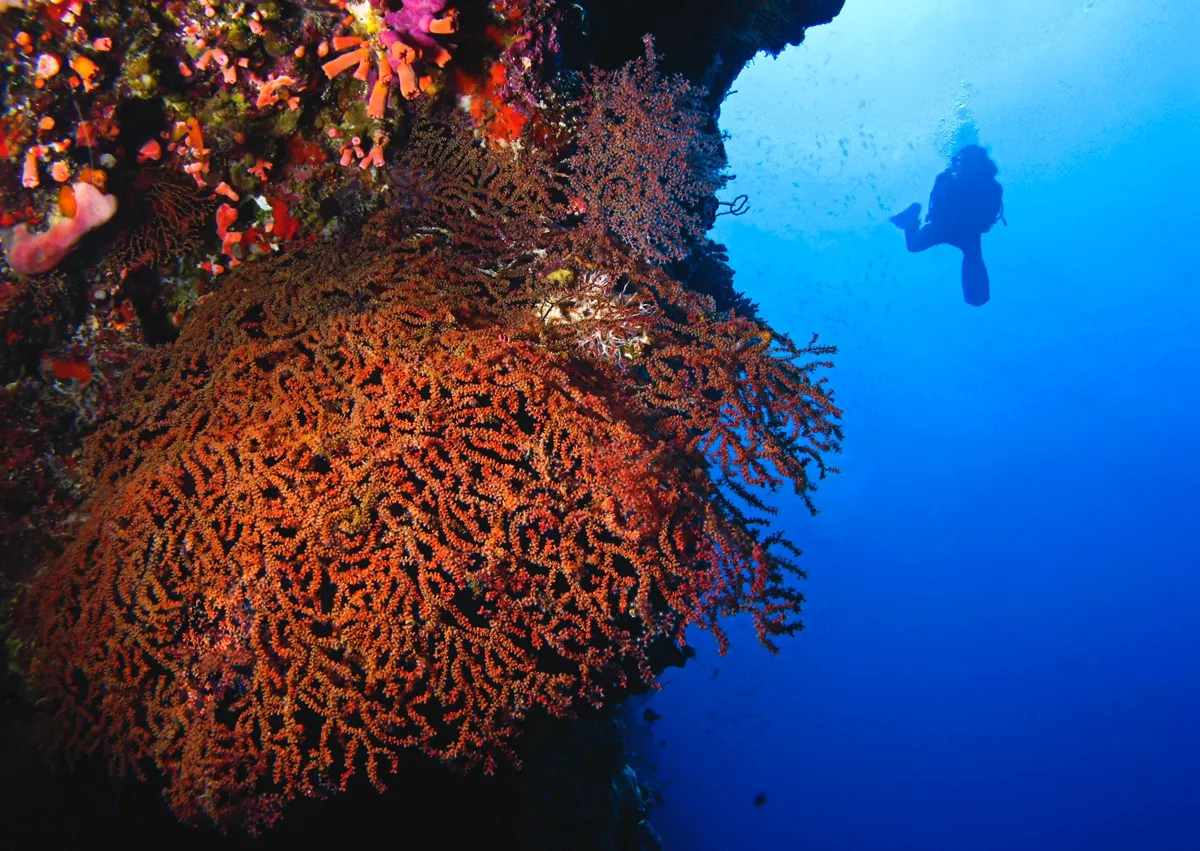
This is predominantly boat diving, not a shore-diving holiday. Local and regional sites fall broadly between five and thirty metres, with the exact profile, current and sea state changing from one outing to the next. At Stairs, the dive follows successive reef ledges rather than a flat wall. West Rock Wreck gives the plan a wreck component. Current may be mild or strong enough to turn a planned reef tour into a drift dive, so the briefing matters more than any fixed itinerary. December to April generally brings calmer water and better visibility. During the south-west monsoon, swell, current and plankton can reduce visibility, while some sites become more interesting for manta encounters. Advanced Open Water training is useful when deeper or more current-affected dives are offered.
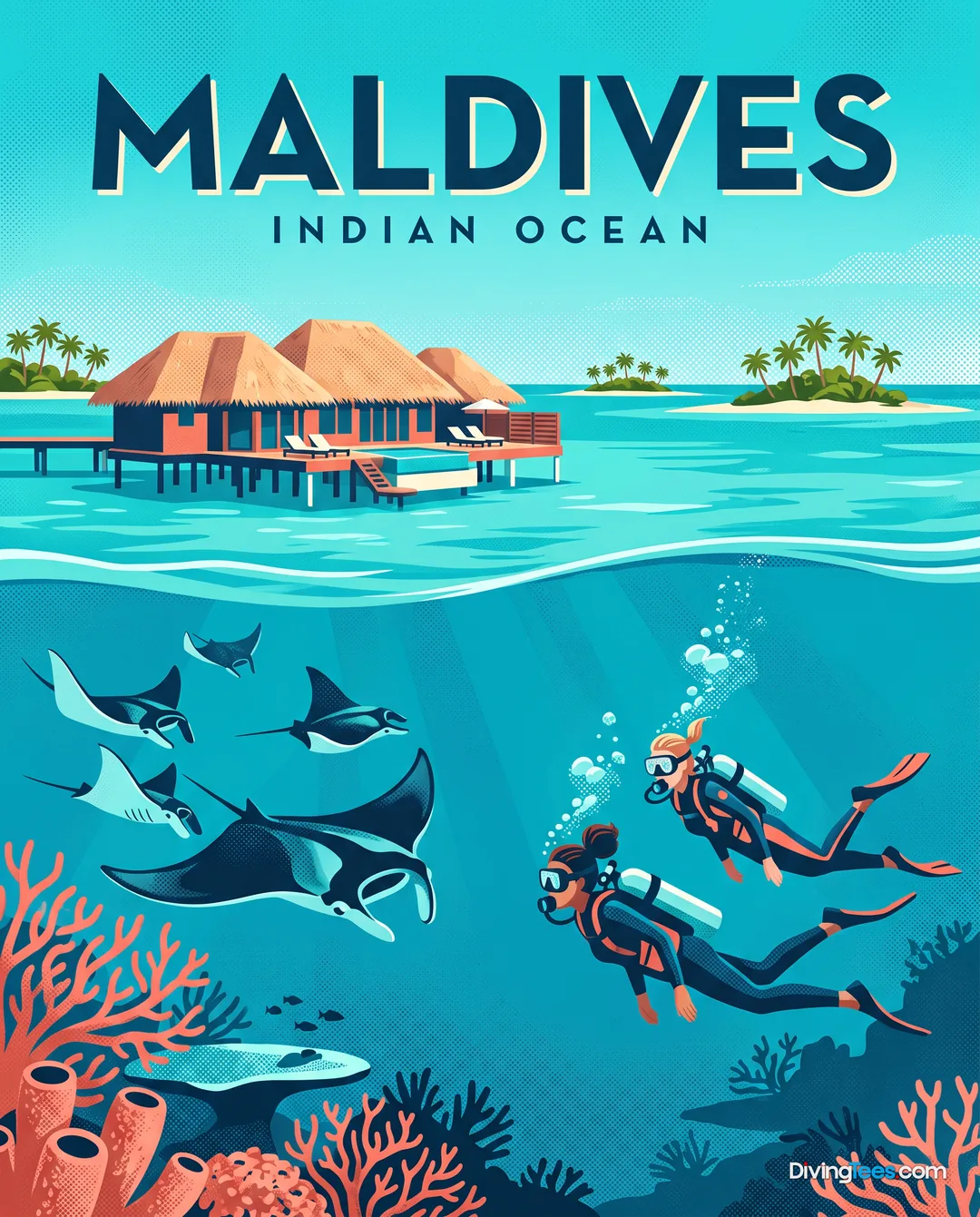
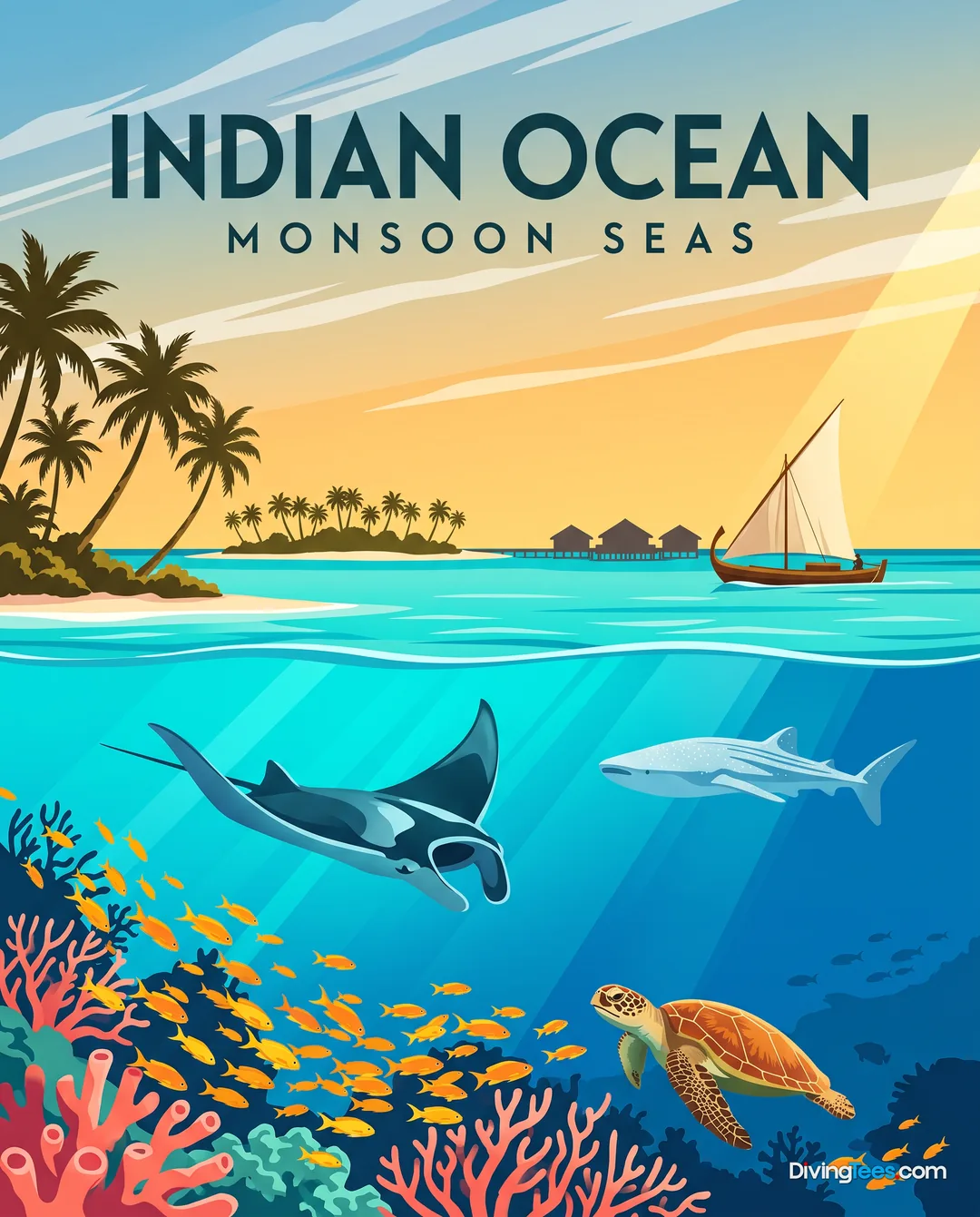
Manta rays are the clearest seasonal draw around Dhiffushi. Their appearances are occasional, not a fixture of every departure, but the chance generally improves from May to November, when the south-west monsoon can bring more plankton to parts of North Malé Atoll. That same plankton may make the water less clear, so a manta-focused trip involves accepting more variable conditions. On ordinary reef dives, the encounter is with the structure itself: Stairs’ successive ledges, sloping reef sections and the form of West Rock Wreck. The appeal is therefore not a guaranteed species list, but the contrast between reef terrain, an underwater wreck and the possibility of a passing manta.
December through April is the sensible choice when calm boat trips and clearer water matter most. The north-east monsoon normally brings more settled conditions in this period, making it easier to plan several outings around reefs and wreck sites. It is also the busier season, so popular departures may carry more divers and boats. From May to November, the south-west monsoon makes the sea less predictable and visibility can fall with swell, current and plankton. In return, the seasonal manta possibility becomes more relevant. Dhiffushi works in both periods, but the priority is different: choose the calmer months for dependable diving, or the rainy season for a better chance of mantas.
Dhiffushi can suit beginners when the centre selects sheltered, manageable sites, and the area’s published depth range includes relatively shallow dives. Conditions are not uniform, however. Current can change the character of a boat dive, and deeper or more exposed sites are better matched to an Advanced Open Water diver. A Drift Diver speciality is useful where the plan involves moving with the water. The same applies whether the qualification is PADI, SSI or BSAC: comfort with boat procedures, current and a controlled safety stop matters more than the agency name.
From London Heathrow, London Gatwick or Manchester, the journey continues through Velana International Airport or Malé before the final sea transfer. A shared speedboat normally takes about thirty to sixty minutes, depending on the service and sea conditions. The public ferry is much slower, around two and a half to three hours, with stops, limited operating days and a timetable that needs checking before departure. Shared speedboats should be booked ahead rather than treated as a permanent turn-up-and-go service. Once on Dhiffushi, the island is small enough for most guests to walk between their accommodation, the village and the diving area. Leave room in the connection plan, particularly if relying on the ferry.
Do not build the holiday around one named dive. Weather, swell and current can make the planned site unsuitable, and several Malé North dives advertised for the area require a longer boat outing rather than a quick local run. Ask about early departures if you want quieter boats and a better chance of avoiding the busiest manta meeting points. Book the maritime transfer before arriving: the public ferry does not run every day, while a shared speedboat is not a guaranteed regular service. If using the ferry, keep the schedule flexible because stops and sea conditions can stretch the journey. Most importantly, protect the final day. A return boat from Dhiffushi can be delayed, so do not schedule a dive immediately before an onward flight. December to April is the safer bet for a calmer, clearer programme; May to November makes more sense when mantas matter more than predictable visibility.
A typical stay is organised around daily boat departures, with non-diving time spent on the beach, in the village or in the water with mask, snorkel and fins. Five to seven days allows several diving days, a reserve for poor conditions and a proper interval before flying home. An accompanying non-diver has straightforward alternatives: shore snorkelling, swimming, sandbank or wildlife trips, light watersports and walks through the inhabited island. Dhiffushi feels more like a small local community than a large resort.
Hello, I'm Marina, DivingDeal.com's AI assistant. I guide you through destinations, areas and countries.
Thinking about the whole trip and the flights? Talk it over with Edith →
Marina is an AI. Some links are affiliate links: DivingDeal may earn a commission, at no extra cost to you. Bookings are made with the partner.
Choose December through April if calmer boat trips and clearer water are your priority. From May to November, swell, current and plankton can reduce visibility, but manta encounters become more relevant. Dhiffushi suits either season, depending on whether you value more predictable conditions or a seasonal chance of seeing mantas.
Dhiffushi can suit beginners when the dive centre chooses sheltered, manageable sites, including relatively shallow options. Conditions vary, and current can turn a reef dive into a drift dive. Advanced Open Water training is useful for deeper or more current-affected outings, while comfort with boat procedures and controlled safety stops matters.
Diving around Dhiffushi includes Stairs’ successive reef ledges, sloping reef sections and the West Rock Wreck on a boat dive. Sites broadly range from five to thirty metres, with profiles and conditions changing between outings. From May to November, manta appearances are occasional and may become more likely.
Plan around daily boat departures and allow five to seven days for several diving days, a weather margin and time before flying. Book your maritime transfer ahead, especially if using the public ferry. Keep the final day free of diving because return boats can be delayed before your onward flight.