
Extreme Dive Fuvahmulah
Google 4.9/5 (321 reviews)
Maldives · Indian Ocean
Tiger sharks, blue-water channels and reef slopes dropping towards thirty metres define Fuvahmulah’s demanding, boat-based diving.
For subtitles in English: start the video firstthen click the gearat the top right of the video, select “Subtitles/CC”, then “Auto-translate” and choose “English”.
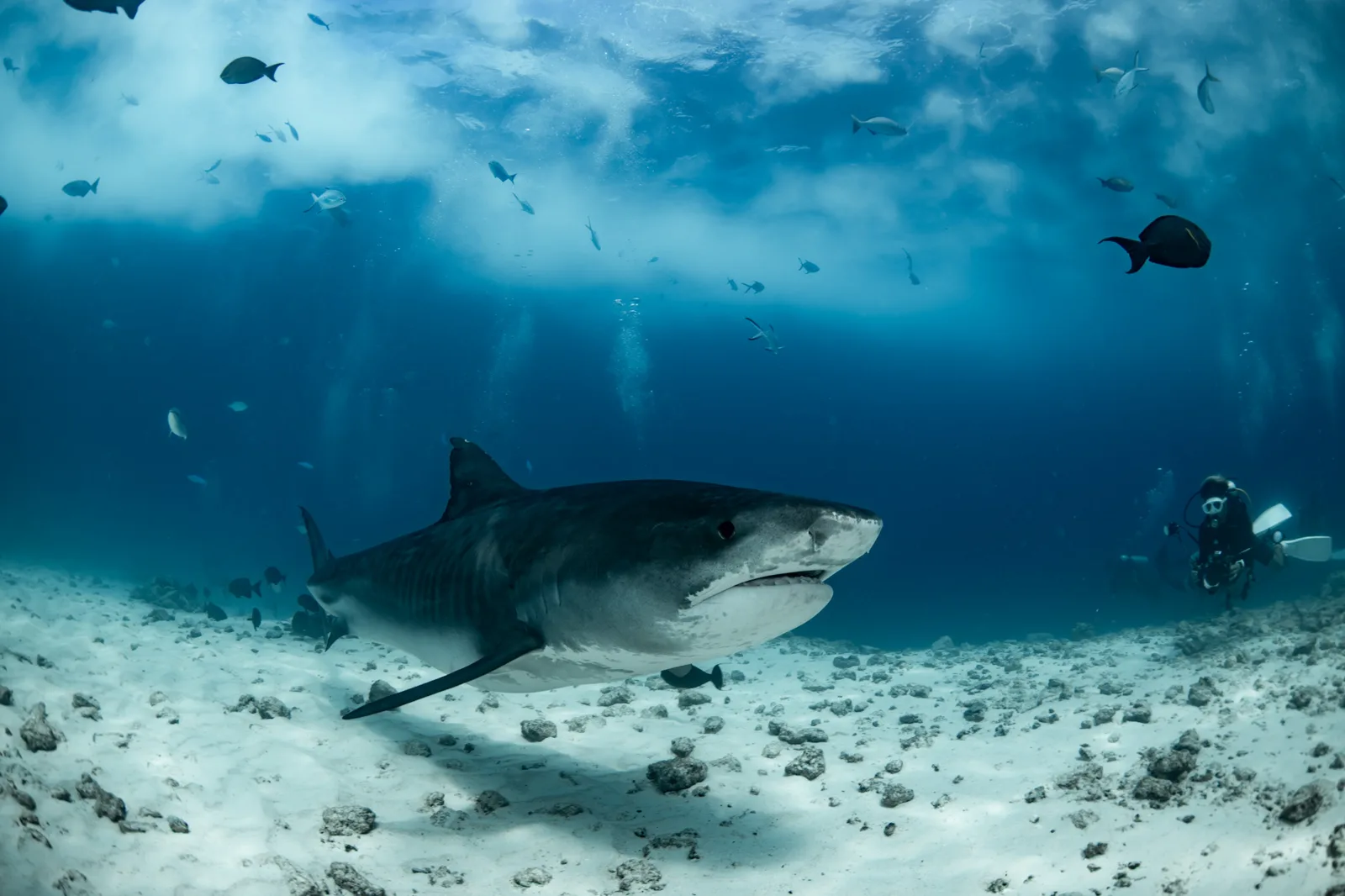
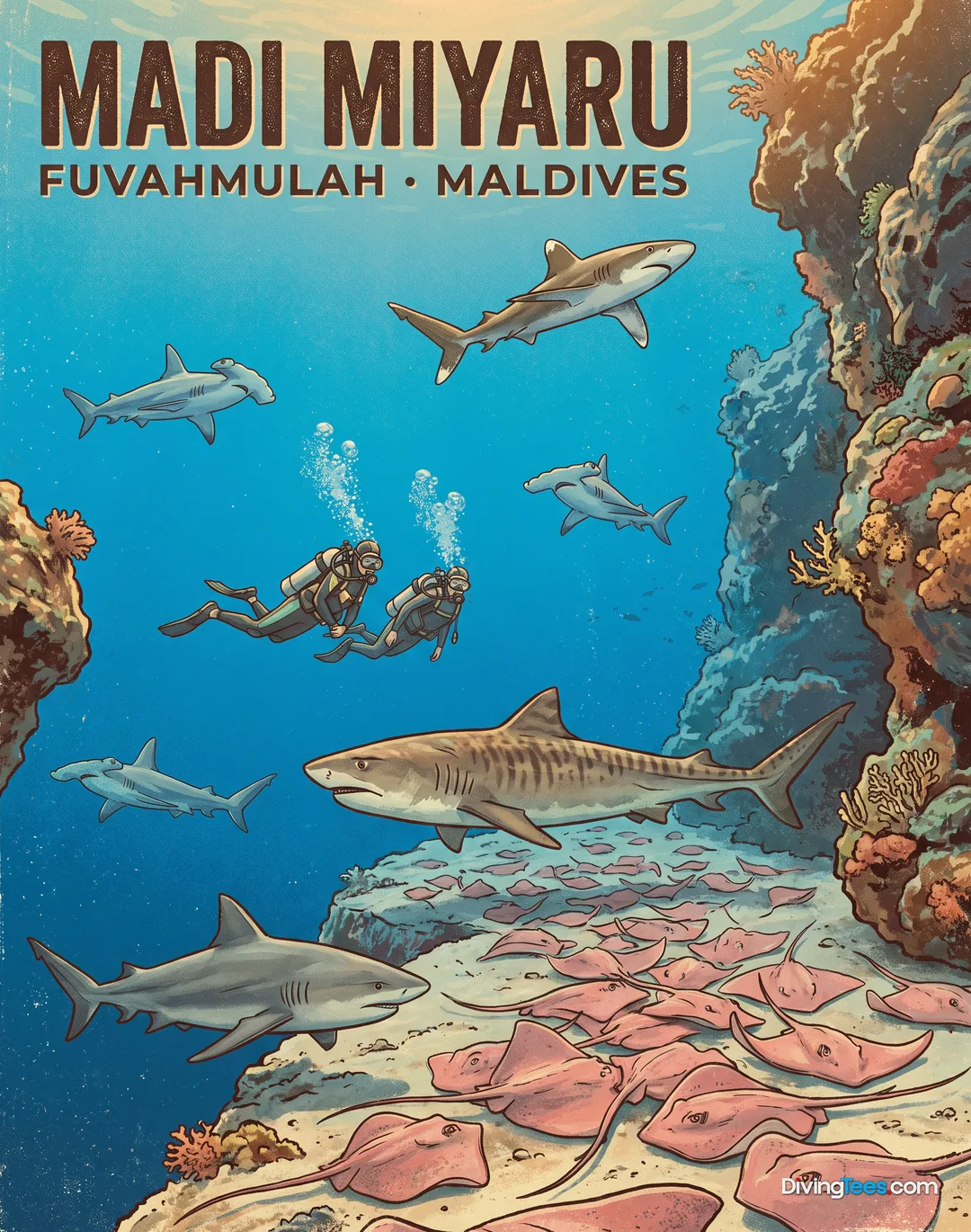
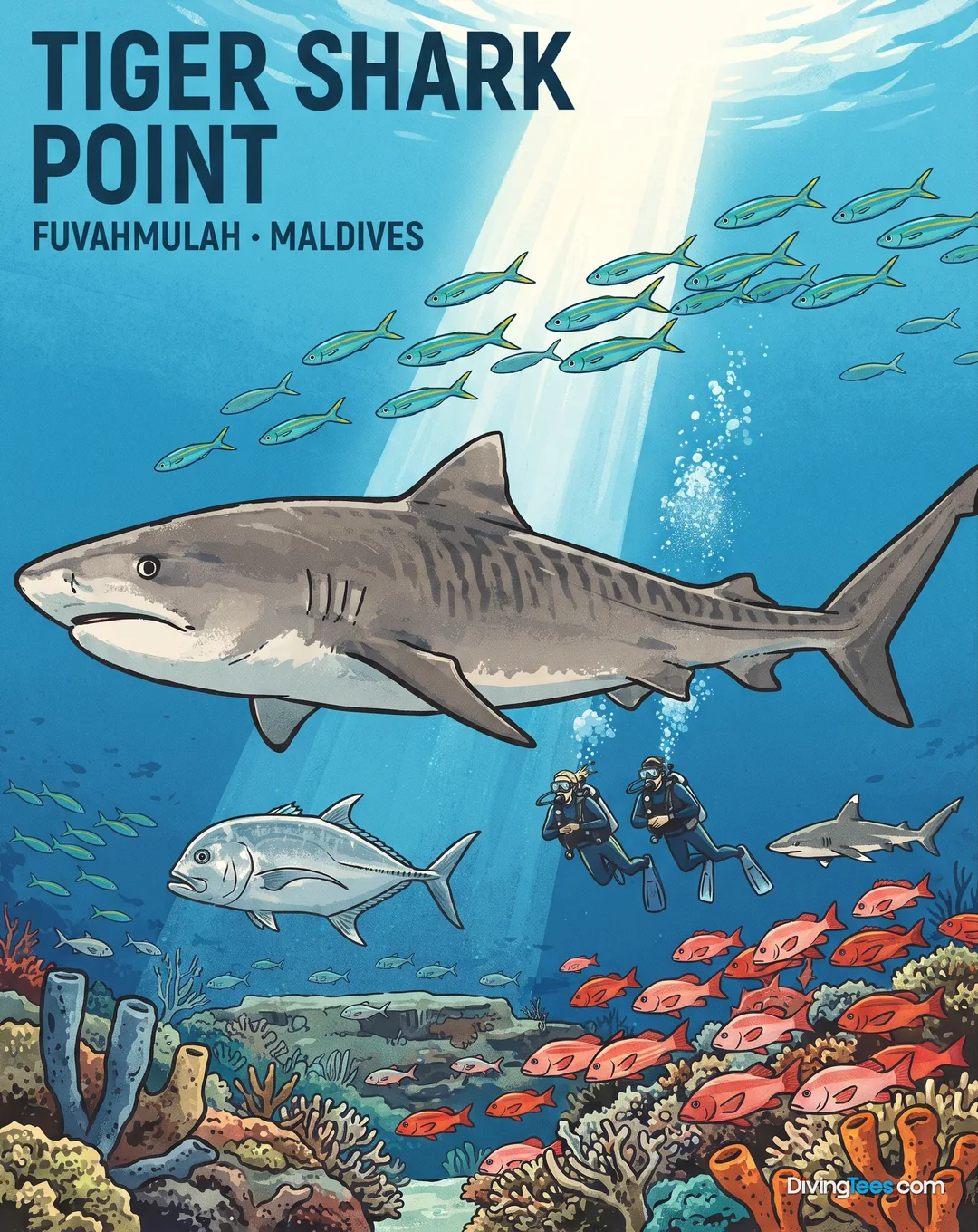
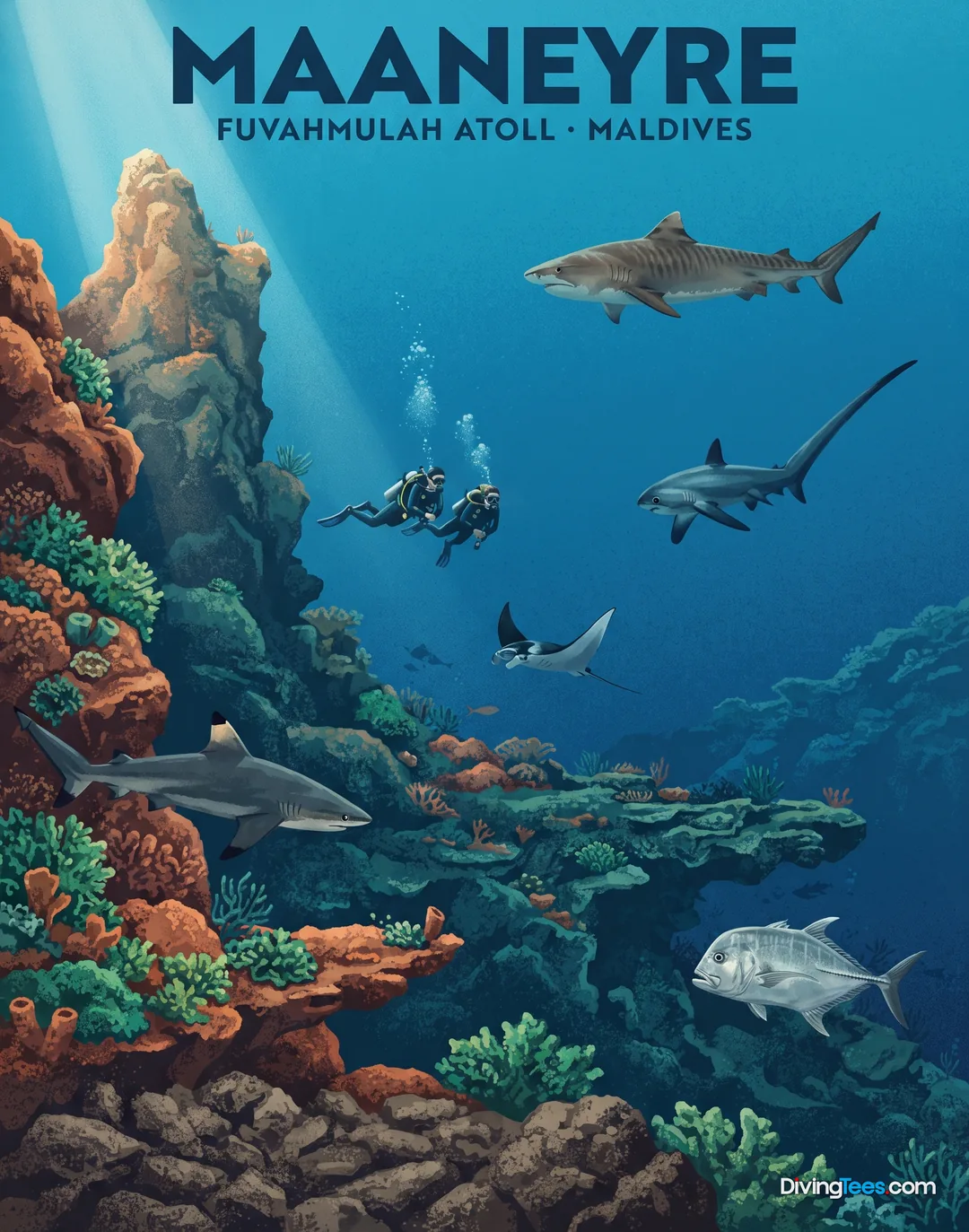
At Tiger Shark Point, divers descend to about ten metres and watch tiger sharks moving through the water at the harbour entrance. Elsewhere, Fuvahmulah is built around exposed reef edges and offshore water rather than sheltered lagoon scenery. Maaneyre follows a coral-dense slope from twelve metres into deeper water, while Farikede opens from the southern tip towards the blue. This is a destination for experienced divers who are prepared to make the boat, the current and the animals the centre of the trip.
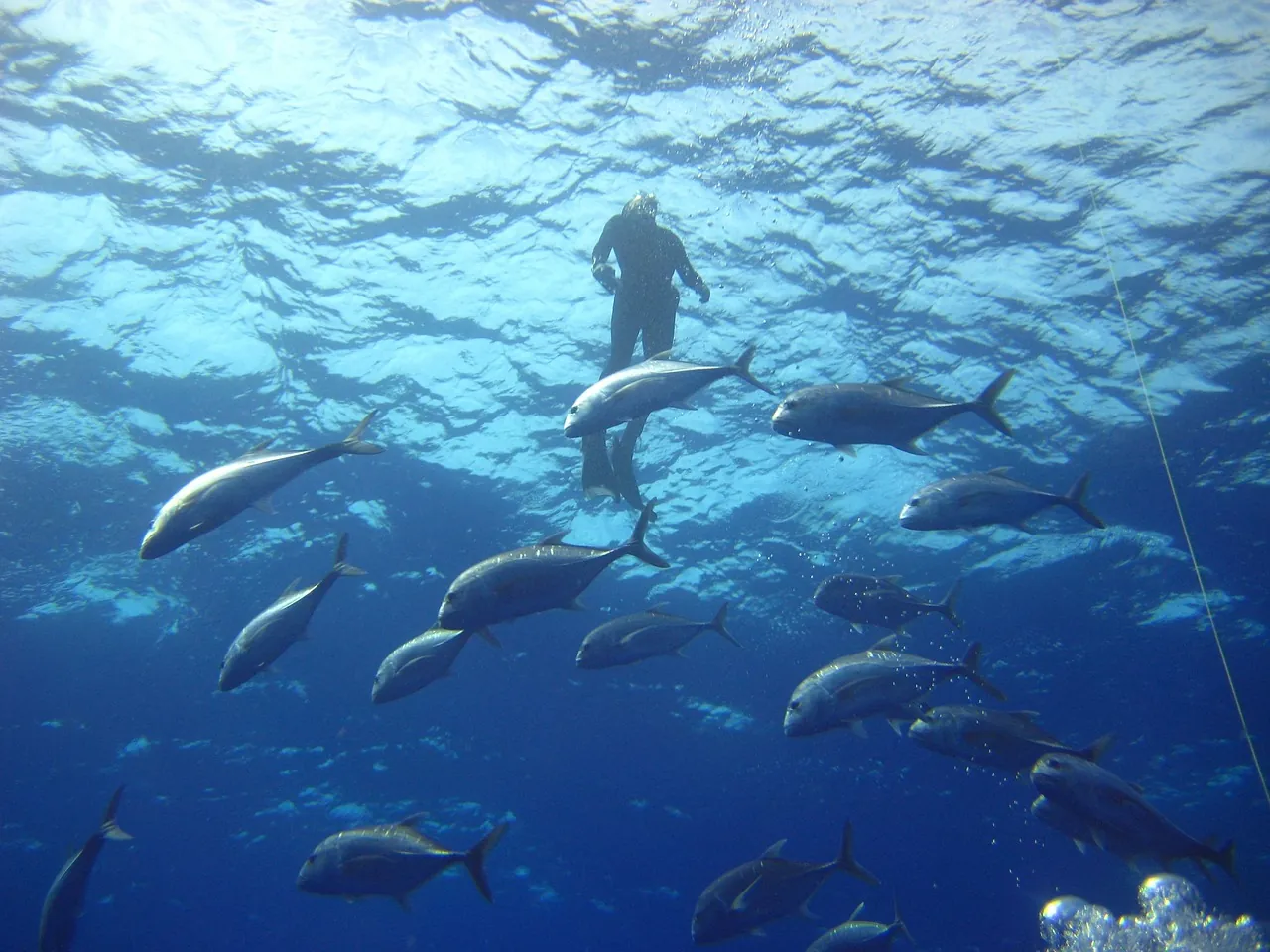
The diving is predominantly from day boats, with reef tops commonly beginning between ten and fifteen metres before dropping into deeper water. At Maaneyre, the slope starts at around twelve metres and can lead towards thirty; Farikede reaches thirty metres and beyond, with strong, changeable currents. Those currents carry nutrients and help bring pelagic life close to the reef, but they are not a minor detail in the dive plan. Maaneyre is often clear, with visibility frequently exceeding twenty metres, although conditions remain tied to season and sea state. Tiger Shark Point is the more controlled profile, at roughly ten metres with generally weak to manageable current. The practical rhythm is repeated boat diving on exposed sites, with blue-water positioning and disciplined depth management rather than relaxed lagoon circuits.
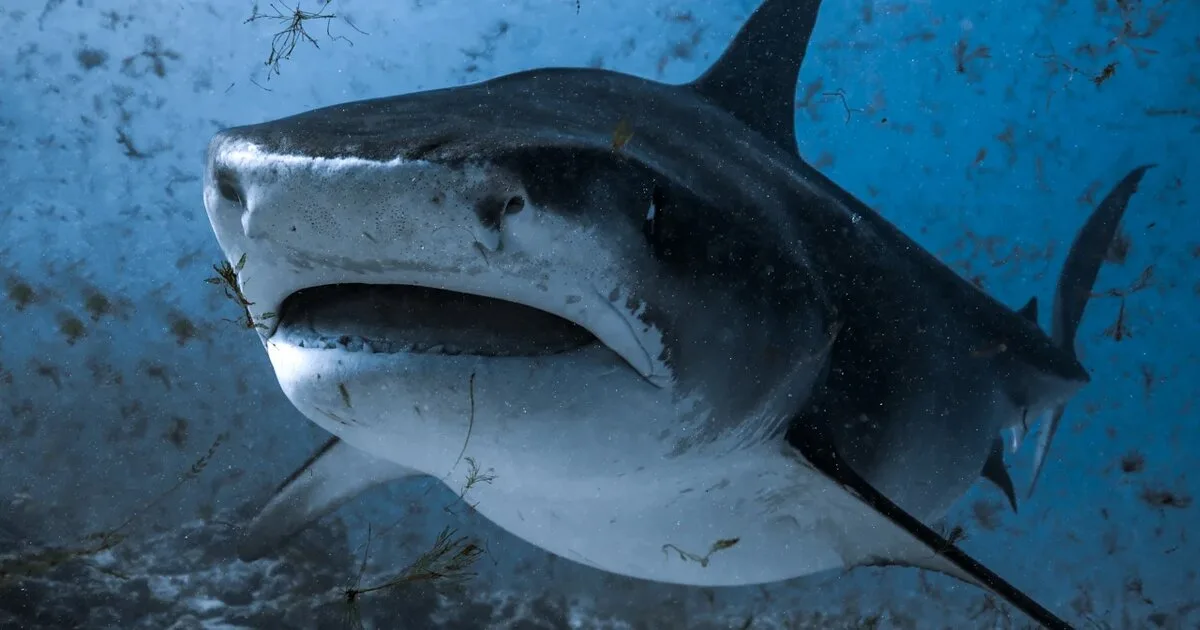
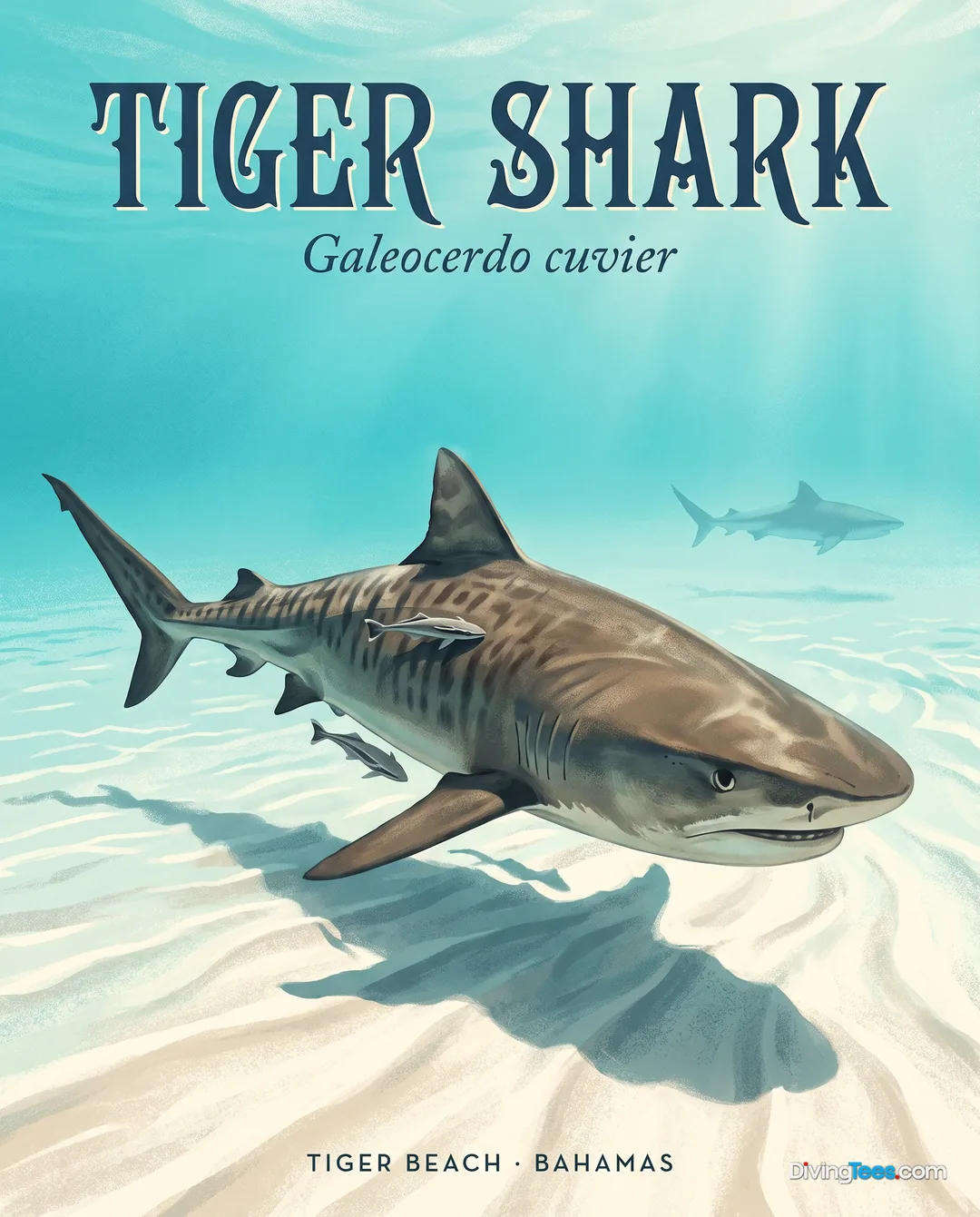
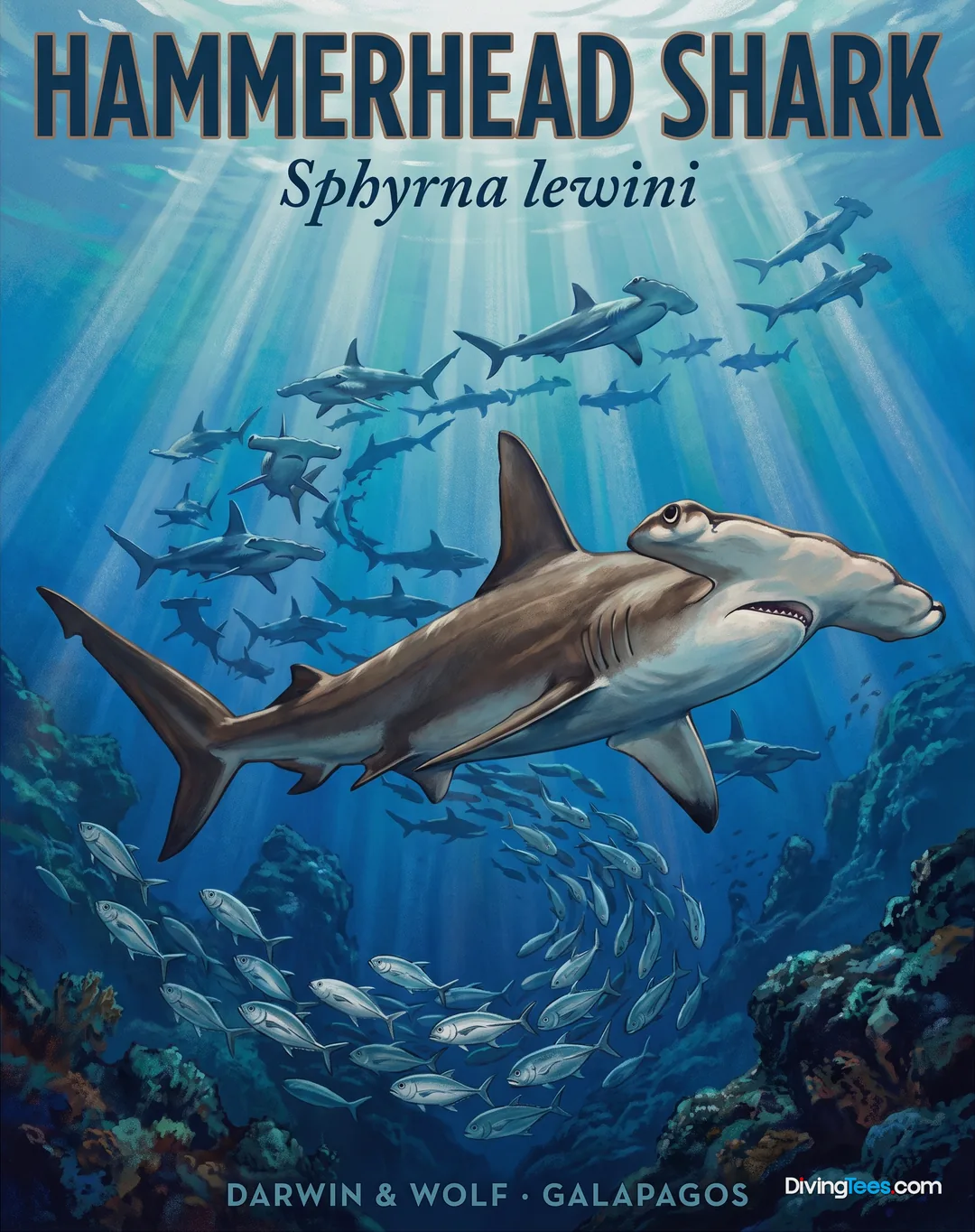
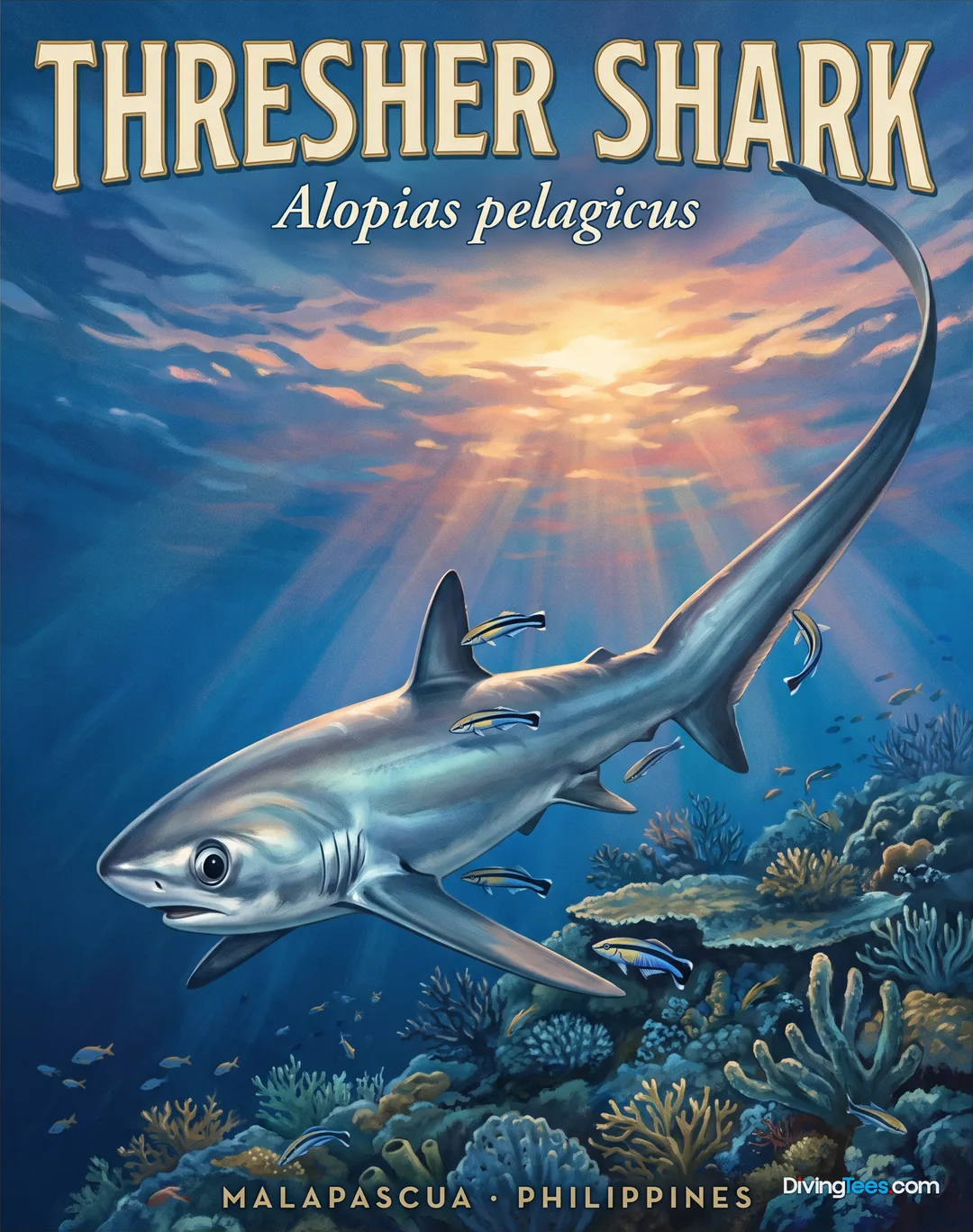
Tiger sharks are Fuvahmulah’s defining encounter, and Tiger Shark Point is used for close observation in relatively shallow water. The species is present year-round, so the trip does not need to be built around a narrow calendar window. Farikede adds the possibility of seeing tiger sharks while drifting along a deeper, current-affected reef edge, where the open water is part of the attraction. Hammerhead sharks, thresher sharks, oceanic manta rays and whale sharks are recorded as occasional encounters, but they should be treated as fortunate additions rather than fixed appointments. The sensible expectation is a wildlife dive first and a coral dive second: divers spend attention on the water column, the outer slope and whatever arrives from the deeper blue.
The most favourable period is November to April, when the sea is generally at its calmest. The measured pattern also points to the lightest rainfall from January to March, making those months particularly practical for a boat-based itinerary. Calmer water matters here because Farikede and similar exposed sites depend on getting divers safely to the reef edge and back from it; a rougher surface can remove a demanding site from the day’s plan. Tiger sharks remain a year-round possibility, so the seasonal choice is mainly about sea conditions and usable boat days rather than waiting for a particular shark migration.
Fuvahmulah suits confident divers rather than anyone learning basic buoyancy or current procedures. Advanced Open Water, PADI, SSI or an equivalent BSAC level is useful for the deeper sections of Maaneyre and the profiles at Farikede, which can reach thirty metres and beyond. Experience in variable or strong current is more important than the certificate alone. Nitrox is useful for repetitive boat diving, but it does not replace sound depth control, a calm response in blue water and comfort with exposed ocean conditions.
From London Heathrow, Gatwick or Manchester, the journey involves reaching the Maldives through the international gateway used for the connection, then taking a domestic flight to Fuvahmulah’s airport. The domestic leg is the structural point to plan around: the best international fare is not necessarily the simplest overall itinerary, and the onward connection needs sensible allowance. Once on the island, a local ground transfer takes divers to their accommodation or dive centre. Diving then runs from the island base on local boats, rather than from a liveaboard moving between atolls. Exact routing depends on the international gateway and the available domestic connection, so the return journey deserves the same planning attention as the outward trip.
Treat Fuvahmulah as a boat-diving trip from the outset. Expecting an easy house reef or a string of sheltered shore entries sets the wrong benchmark; the island’s value lies around exposed reef slopes and the open water beyond them. Book consecutive diving days rather than arriving for one or two isolated attempts, because weather and current can cancel or alter a boat day and shark encounters reward repetition. Farikede calls for genuine experience in strong, changeable current, while the deeper sections of Maaneyre demand careful depth management. Bring small, reliable equipment spares, as a small island offers less margin if a personal item fails. Anyone travelling specifically for tiger sharks should keep the schedule flexible enough for repeated attempts at Tiger Shark Point. Finally, leave room for a non-dive day before flying out and do not assume liveaboard-style mobility: the island base is the fixed point for the whole stay.
A five- to seven-day stay gives the weather and sea state some room to interrupt the programme without wasting the journey. The usual pattern is several consecutive boat-diving days, with Tiger Shark Point and the deeper outer-reef sites fitted around local conditions. Non-diving time is low-key: walking around the island and exploring the coast suit a rest day better than trying to turn Fuvahmulah into a resort-style beach holiday. A quieter final day is sensible before the flight home.
Hello, I'm Marina, DivingDeal.com's AI assistant. I guide you through destinations, areas and countries.
Thinking about the whole trip and the flights? Talk it over with Edith →
Marina is an AI. Some links are affiliate links: DivingDeal may earn a commission, at no extra cost to you. Bookings are made with the partner.
Visit Fuvahmulah between November and April, when seas are generally calmer for boat diving. January through March usually brings the lightest rainfall, which can make a boat-based itinerary easier to operate. Tiger sharks are present year-round, so choosing your dates is mainly about sea conditions and keeping exposed sites accessible.
Fuvahmulah suits confident divers who are comfortable with variable or strong currents, blue-water positioning and exposed ocean conditions. Advanced Open Water, PADI, SSI or an equivalent BSAC level is useful for deeper profiles, but experience matters more than certification alone. You also need calm buoyancy control and disciplined depth management.
Tiger sharks are the defining encounter, especially at Tiger Shark Point, where they pass through relatively shallow water. Reef slopes and open water may also bring hammerhead sharks, thresher sharks, oceanic manta rays and whale sharks, although these are occasional sightings. Expect wildlife-focused dives, with coral scenery supporting the action.
Plan a land-based trip with consecutive boat-diving days, allowing flexibility for weather and currents to change the schedule. A stay of several days gives more room for repeated tiger shark attempts and outer-reef dives. Arrange the domestic connection carefully, pack reliable equipment spares, and leave a quiet non-diving day before flying home.