
Canareef Resort
Google 4.5/5 (905 reviews)
Maldives · Indian Ocean
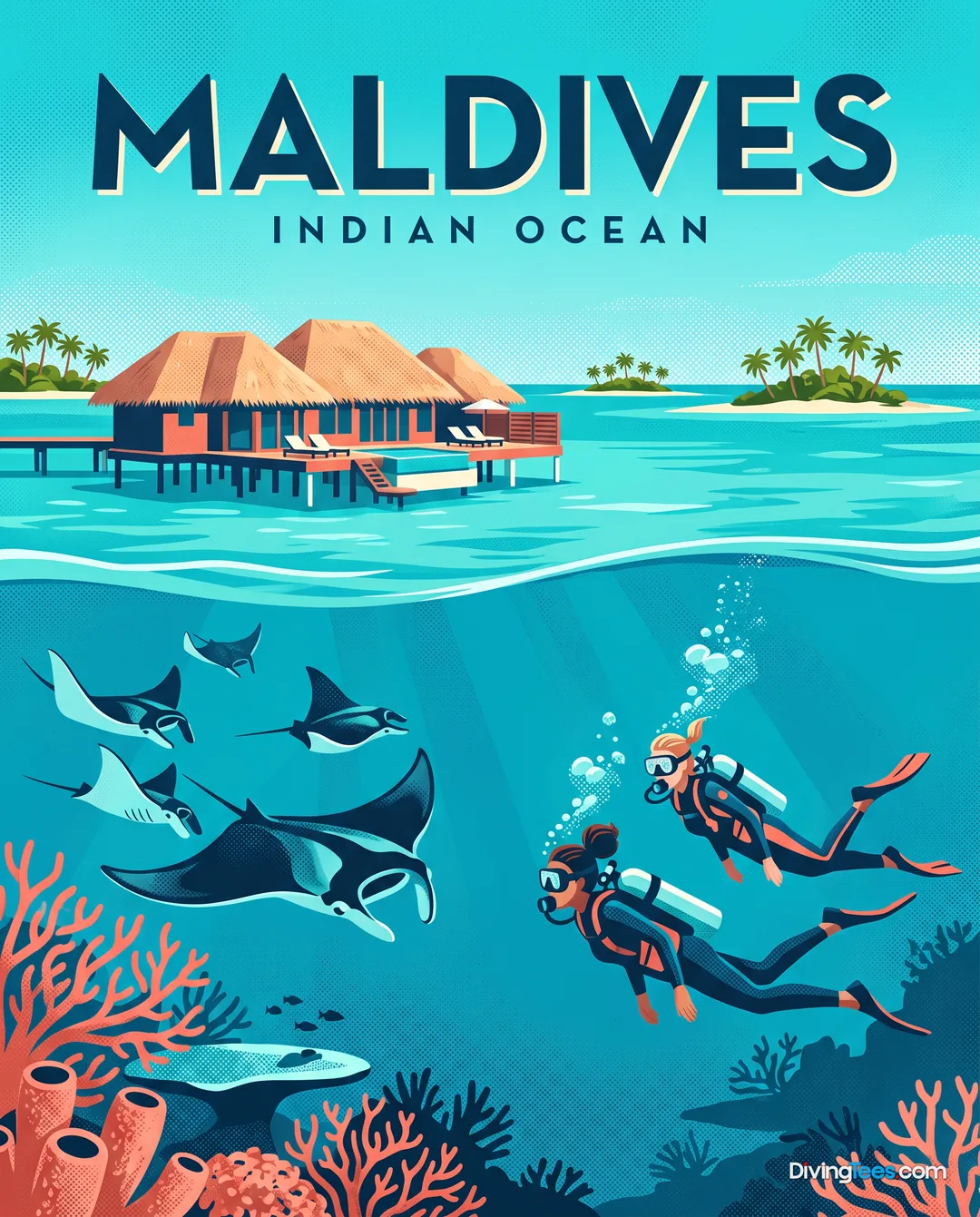
Manta rays at cleaning stations, the 140-metre British Loyalty, cave walls and current-shaped channels make Addu a shore-based southern Maldives base.
For subtitles in English: start the video firstthen click the gearat the top right of the video, select “Subtitles/CC”, then “Auto-translate” and choose “English”.
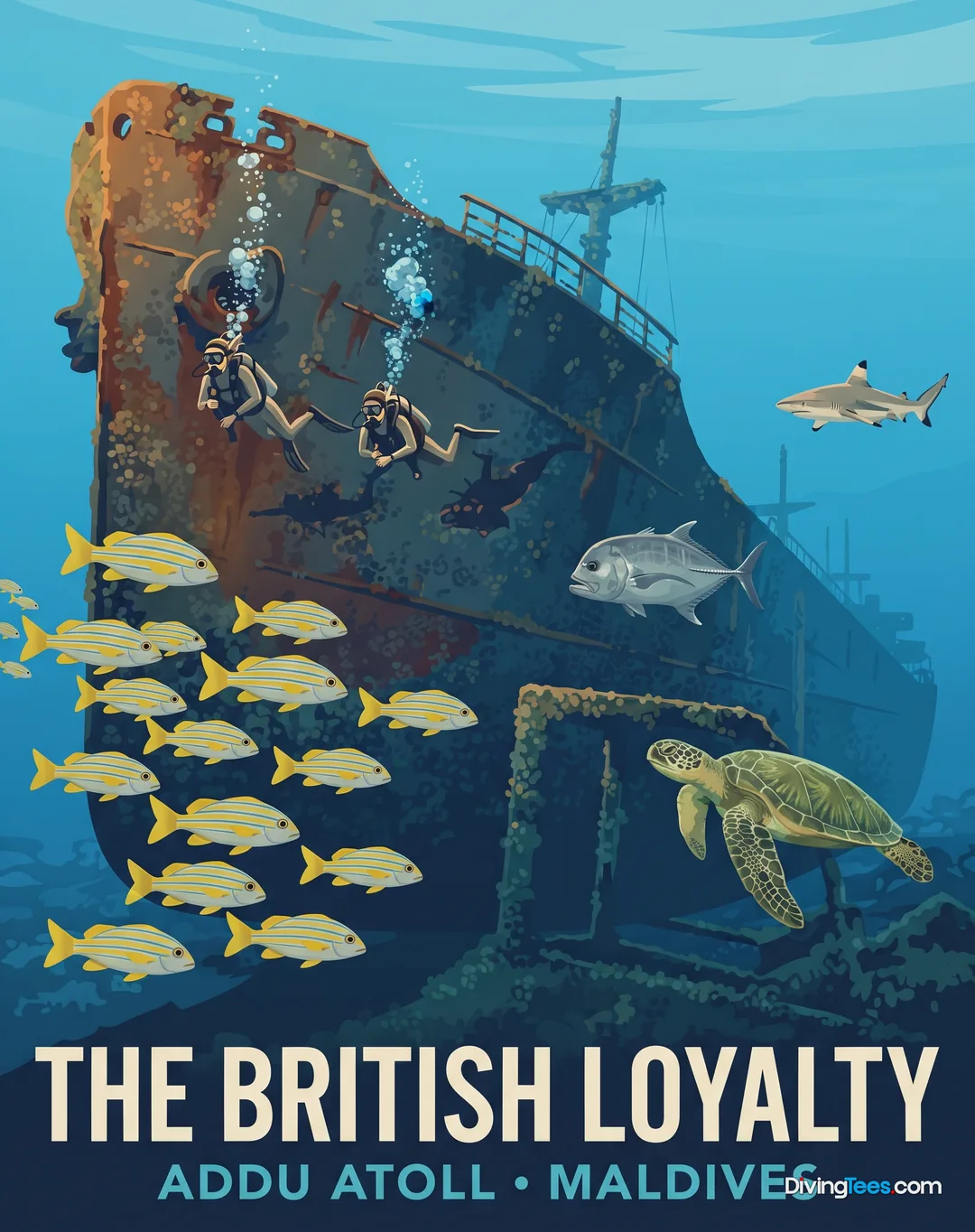
The 140-metre British Loyalty, resting between 17 and 33 metres, sets the tone for Addu Atoll: this is not simply a resort-reef destination. The southern Maldives atoll combines outer reefs, channel dives, a submerged cave system and a substantial wartime wreck, all approached from inhabited islands rather than only from a liveaboard. Islands are linked locally, giving the stay a more lived-in feel. Reef condition is mixed after regional bleaching, but attractive diving remains, with enough variety for a week on land.
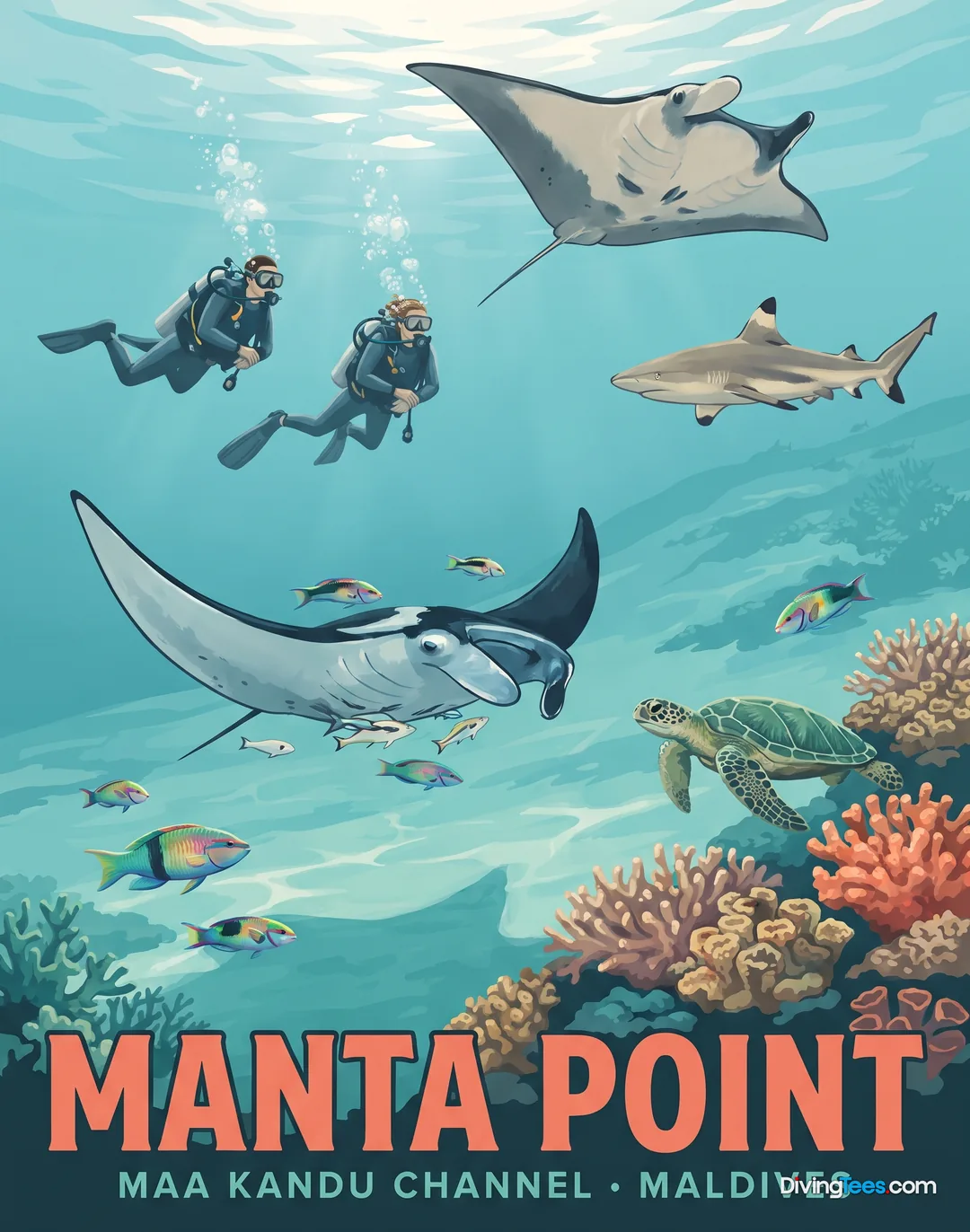
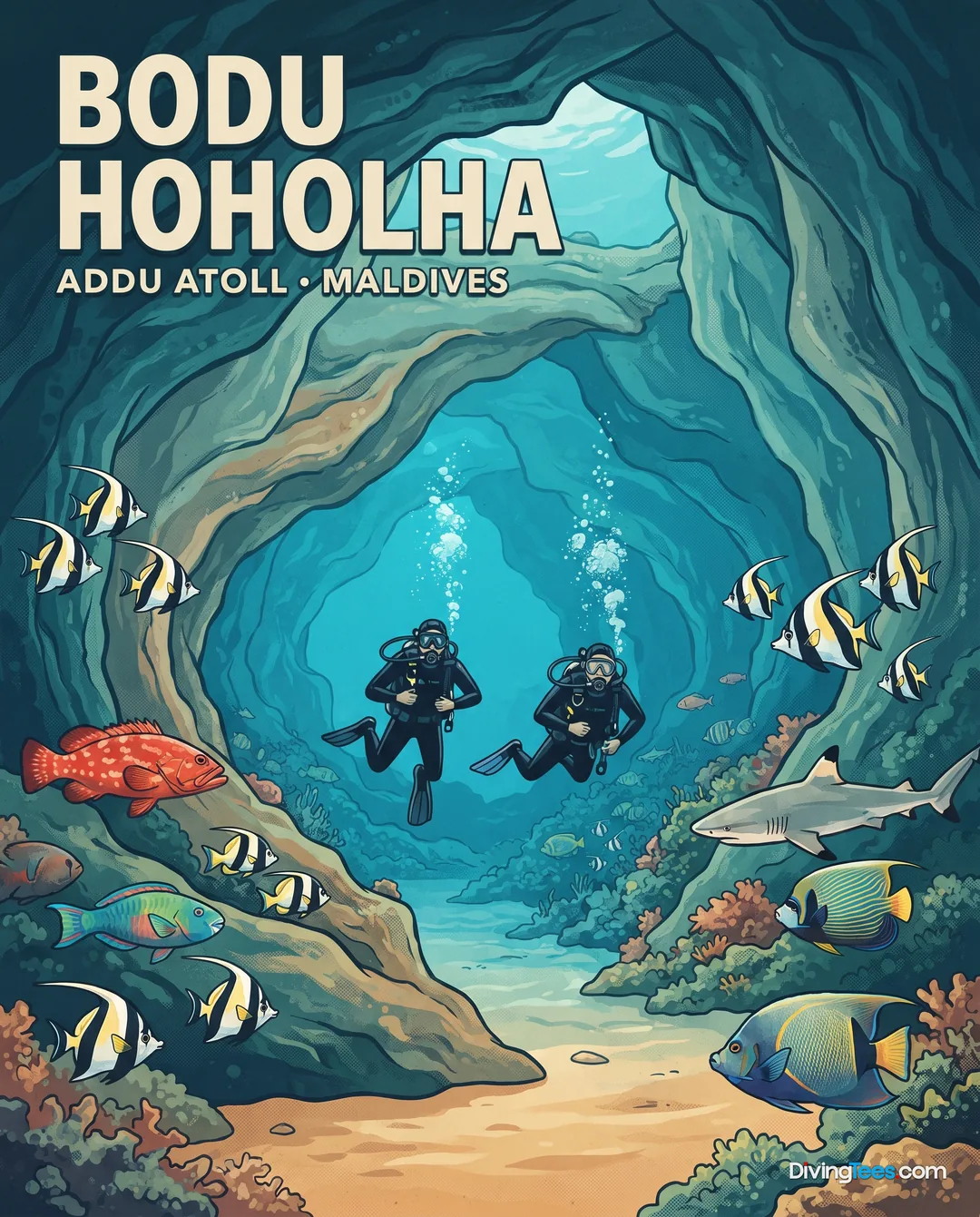
Addu's diving shifts between reef walls, open channels and wreck structure. Gan Kandu, Vilingili Kandu, Maa Kandu and Kuda Kandu bring moving water, generally moderate and manageable but variable with tide and weather. That flow is part of the appeal: channel dives can put larger marine life in the frame, while sheltered sections allow a less hurried look at reef life. Manta Point, within the Maa Kandu channel, is a cleaning station where mantas may settle above the divers. The British Loyalty begins at 17 metres and reaches 33 metres, with torpedo damage, large exposed sections and artificial-reef growth; deeper areas and any penetration call for sound buoyancy and wreck experience. Bodu Hoholha is a different proposition, opening into a huge submerged cave system from about five metres, with visibility reported from 10 to more than 35 metres. Nitrox is useful for repeated reef and wreck profiles.
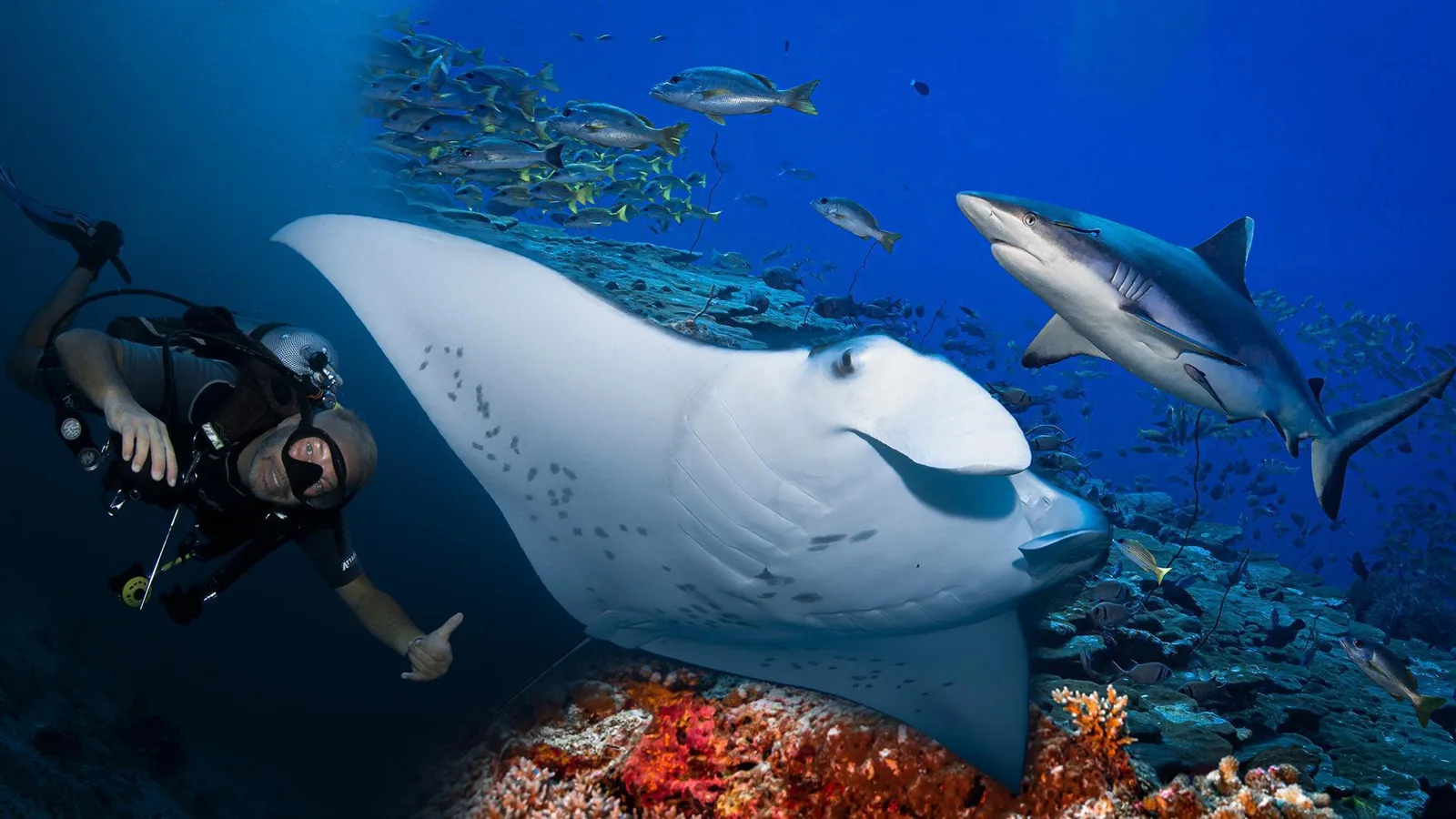
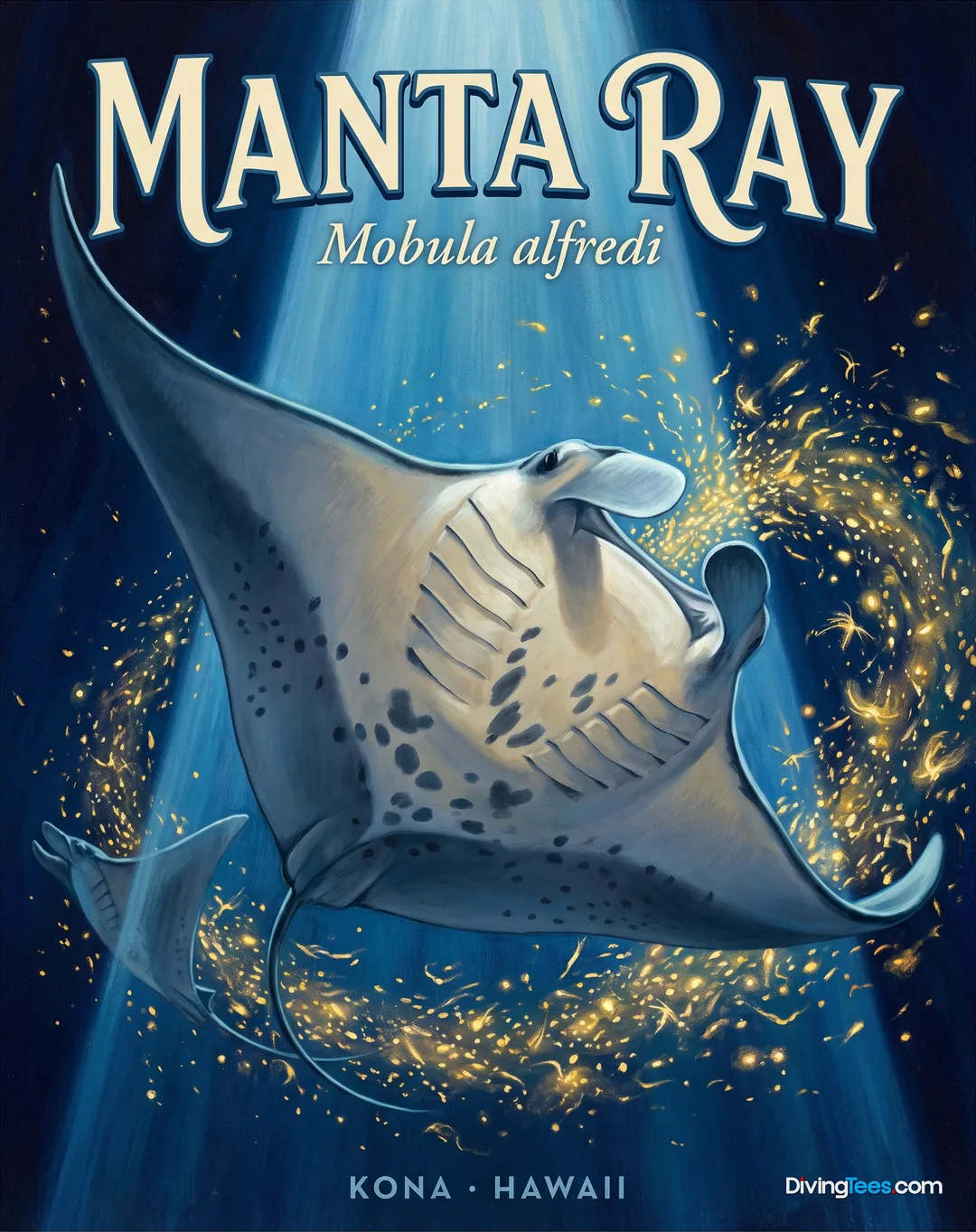
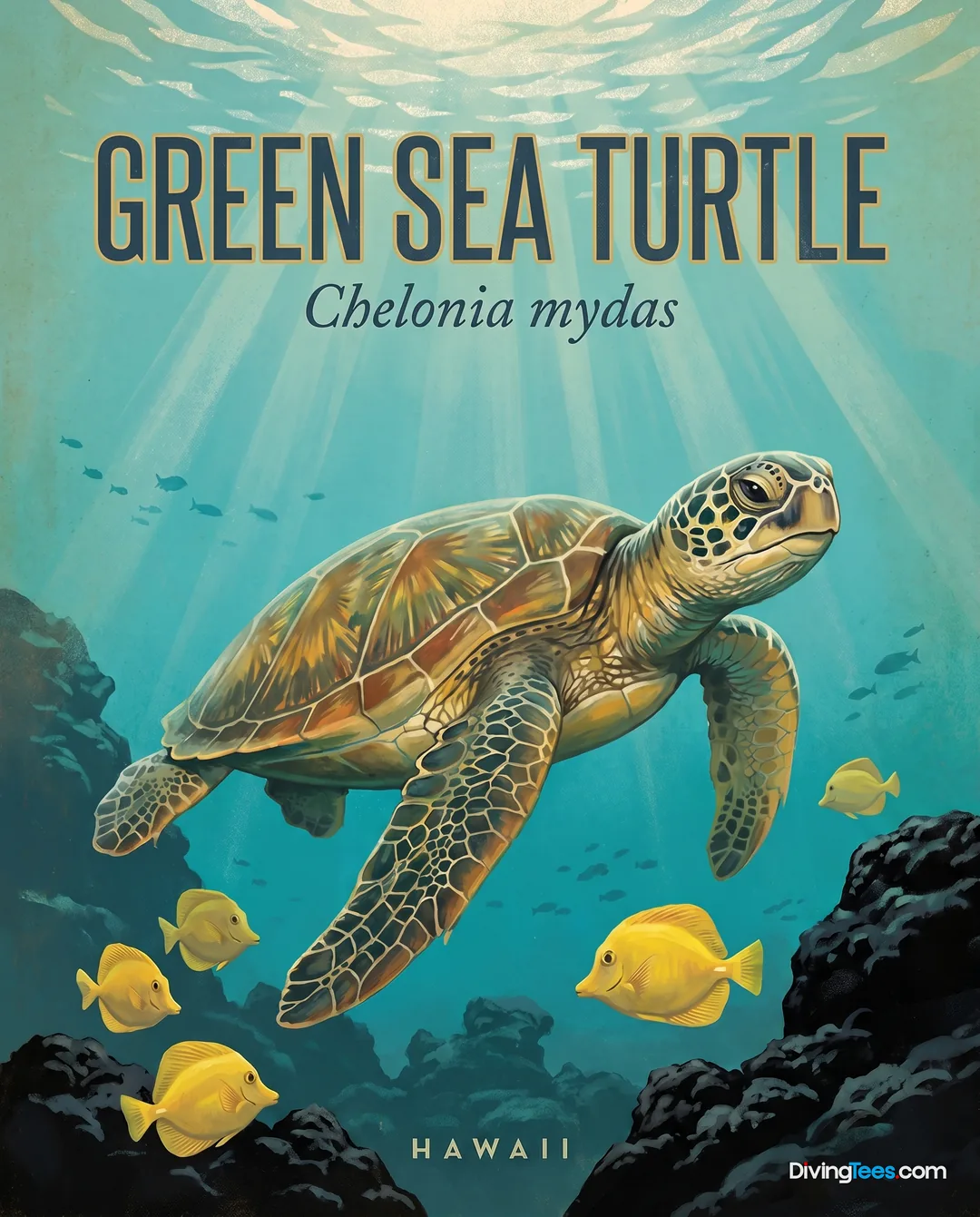
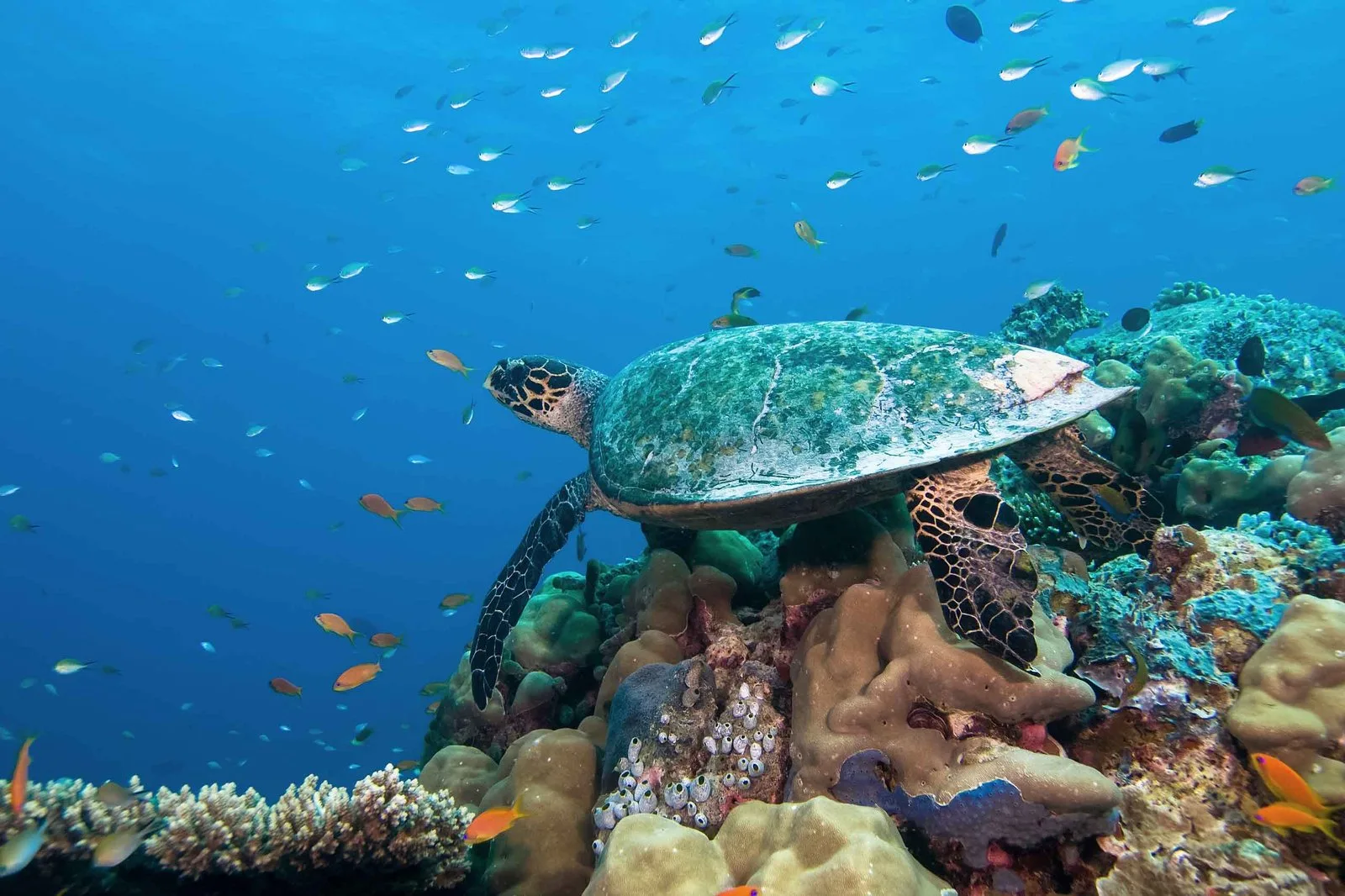
Manta rays are the signature encounter, and Manta Point can produce sightings throughout the year because the site functions as a cleaning station. The strongest manta period is reported from May to September, when the southwest monsoon brings more plankton into the area. That seasonal advantage comes with a greater chance of rain and less settled sea conditions, so it is a trade-off rather than a simple best-time rule. Green sea turtles belong to the regular reef cast, while batfish add interest around structures such as the British Loyalty. Channel dives at Gan Kandu, Vilingili Kandu, Maa Kandu and Kuda Kandu also offer opportunities for sharks and other larger Maldivian species, particularly when the current is running. Encounters remain wildlife encounters, not a timetable.
For the most settled general diving conditions, November to April is the practical window: the sea is usually calmer, and December to April is associated with sunnier channel-diving conditions. Rainfall is lowest from January to March. The southwest monsoon, from May to October, can bring tropical rain and more changeable sea conditions, although it also carries plankton that improves the manta outlook from May to September. A trip in the calmer months therefore favours reliable movement between reef, channel and wreck; a monsoon-season visit may offer stronger manta possibilities but needs more flexibility in the programme.
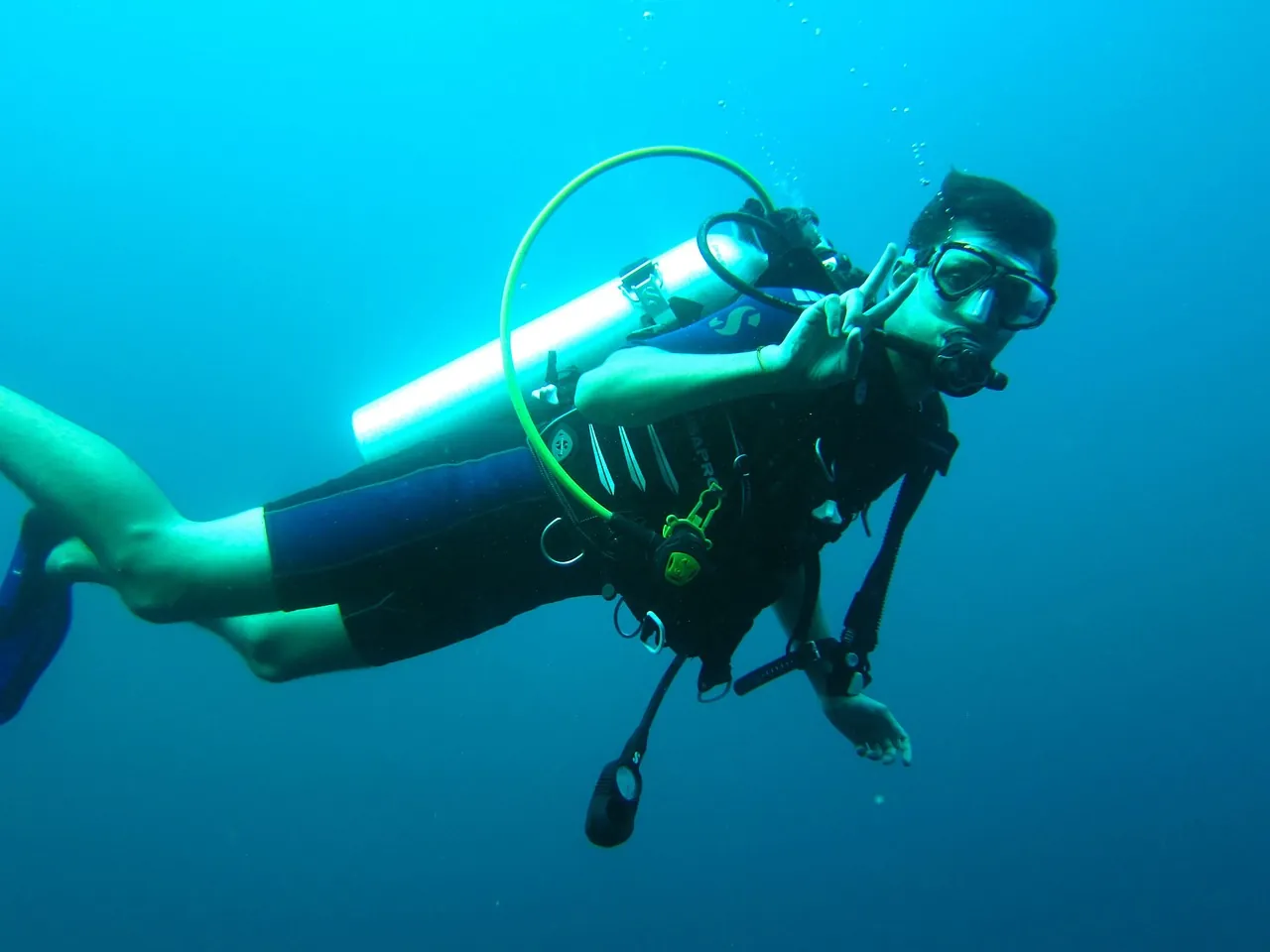
Addu suits all levels when the itinerary includes easier reef dives, but channel entries and some wreck sections become more demanding as current, depth and exposure increase. Advanced Open Water, or an equivalent BSAC or SSI qualification, is useful for the British Loyalty, which reaches 33 metres. Good buoyancy is important around the wreck, especially below 30 metres and near any penetration. Nitrox training is worthwhile for divers planning repeated dives over several days.
From London Heathrow, London Gatwick or Manchester, the journey requires an international flight to Malé followed by an internal flight to Gan in Addu Atoll, or a sea transfer from the southern Maldives depending on the chosen itinerary. Addu is not reached without that additional domestic or maritime leg. The practical risk is not the island itself but the handover between segments: flight times, boat departures and baggage arrangements need checking as one continuous journey. Once in the atoll, accommodation is normally on an inhabited island, with the dive centre reached on foot, by bicycle or through a local transfer. The linked-island layout can make local movement straightforward, but it still affects the day's diving schedule.
Build the diving around the day's current rather than around a fixed list of names. At Addu, the difference between a worthwhile channel dive and a frustrating one can be the timing at Gan Kandu, Maa Kandu, Vilingili Kandu or Kuda Kandu. Keep the programme mixed: alternating an outer reef, a passage and the British Loyalty shows what the atoll can do, whereas repeating one profile leaves out much of its character. Nitrox makes practical sense during a week of repeated reef and wreck diving. Ask before boarding whether the plan relies on anchoring; the reef should not be used as an anchor point. Leave a weather buffer, particularly if the itinerary includes exposed channels or a wreck day. Inter-island transfers also deserve attention when booking accommodation, since poorly matched local transport can remove a dive from the day. On a non-diving day, an inhabited-island base is more useful than an isolated arrangement, with beaches, lagoons and local crossings close at hand.
Allow seven to ten days to combine reef dives, channel work and the British Loyalty without forcing every day around the sea state. A sensible rhythm alternates more exposed current dives with reef or Bodu Hoholha, leaving at least one day uncommitted as a weather margin. Staying on an inhabited island makes the arrangement work well for travelling companions: they have beaches, lagoons, kayaking and linked-island excursions while the diving schedule changes with conditions.
Hello, I'm Marina, DivingDeal.com's AI assistant. I guide you through destinations, areas and countries.
Thinking about the whole trip and the flights? Talk it over with Edith →
Marina is an AI. Some links are affiliate links: DivingDeal may earn a commission, at no extra cost to you. Bookings are made with the partner.
Choose November to April for calmer seas and generally settled diving, with December to April linked to sunnier channel conditions. Rainfall is lowest from January to March. Visit from May to September if mantas are your priority, but allow for more rain and changeable sea conditions.
Addu Atoll suits all levels when easier reef dives are included. Channel entries vary with current, tide and weather, while deeper wreck areas and penetration require stronger preparation. Advanced Open Water, or equivalent training, is useful for the British Loyalty. Good buoyancy matters around the wreck, especially near penetration.
Addu Atoll offers manta rays at Manta Point, a cleaning station within the Maa Kandu channel, along with green sea turtles across reef sites. Channel dives may bring sharks and other larger species. The British Loyalty includes batfish and artificial-reef growth, while Bodu Hoholha provides cave walls and submerged passages.
Base yourself on an inhabited island and allow flexibility for current, weather and inter-island transfers. Mix outer reefs, channel dives, the British Loyalty and Bodu Hoholha instead of repeating one profile. Build in a weather buffer, check flight, boat and baggage connections, and consider Nitrox for repeated reef and wreck diving.