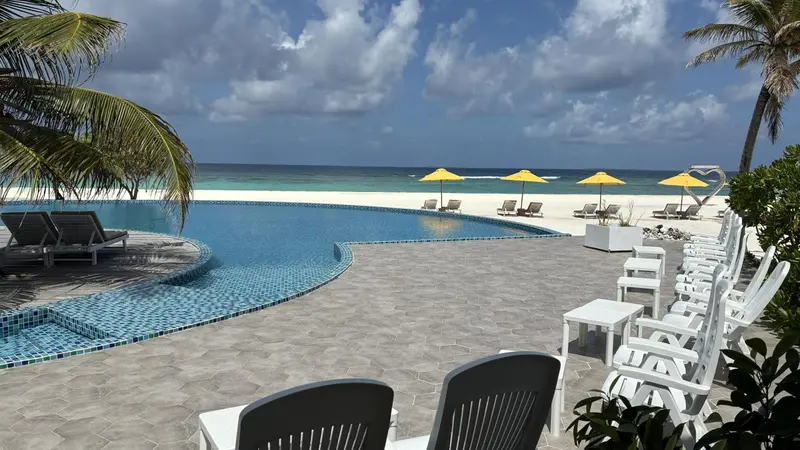
Hondaafushi Island Resort
Google 4.5/5 (138 reviews)
Maldives · Indian Ocean
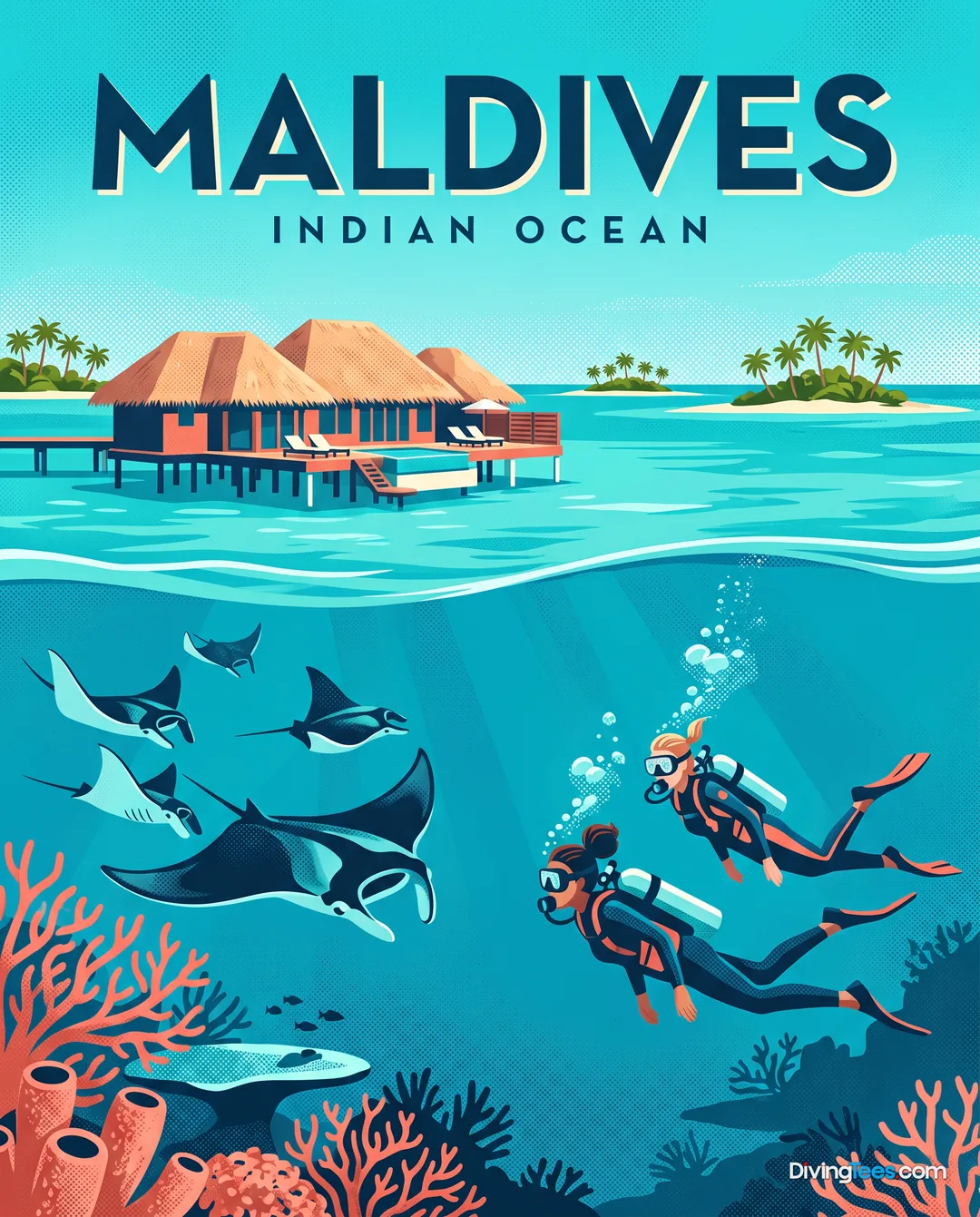
Open-ocean thilas, white sandbanks, overhangs and seasonal manta rays shape Haa Dhaalu’s quieter, boat-based northern Maldivian diving.
For subtitles in English: start the video firstthen click the gearat the top right of the video, select “Subtitles/CC”, then “Auto-translate” and choose “English”.
Haa Dhaalu Atoll suits divers who would rather follow a local boat into a channel than join the traffic of the central Maldivian resort belt. The underwater landscape is built around outer reefs, thilas and passes, with quieter sites spread around the island where the diver is staying. Malhoos Thila brings three pinnacles and soft-coral-covered overhangs down to 30 metres. Elsewhere, white sand, caves, walls and pelagic sightings give the week useful variety.
This is predominantly boat diving, with the exact pattern shaped by the accommodation island and the day’s sea conditions. Thilas and channel edges provide the main structure. At Malhoos Thila, three pinnacles rise through open water, while large overhangs reward a careful look at the deeper sections. Tamala Thila adds coral-covered caves and sheltering ledges, and Panettone uses a white sandbank as a striking visual reference in the channel. Current is variable rather than constant, but exposed passes can change the character of a dive quickly. Good buoyancy, a controlled drift and attention to the local briefing matter more here than chasing a fixed site plan. Depths are not uniform across the atoll; Malhoos Thila reaches 30 metres, while several other descriptions leave the maximum depth open.
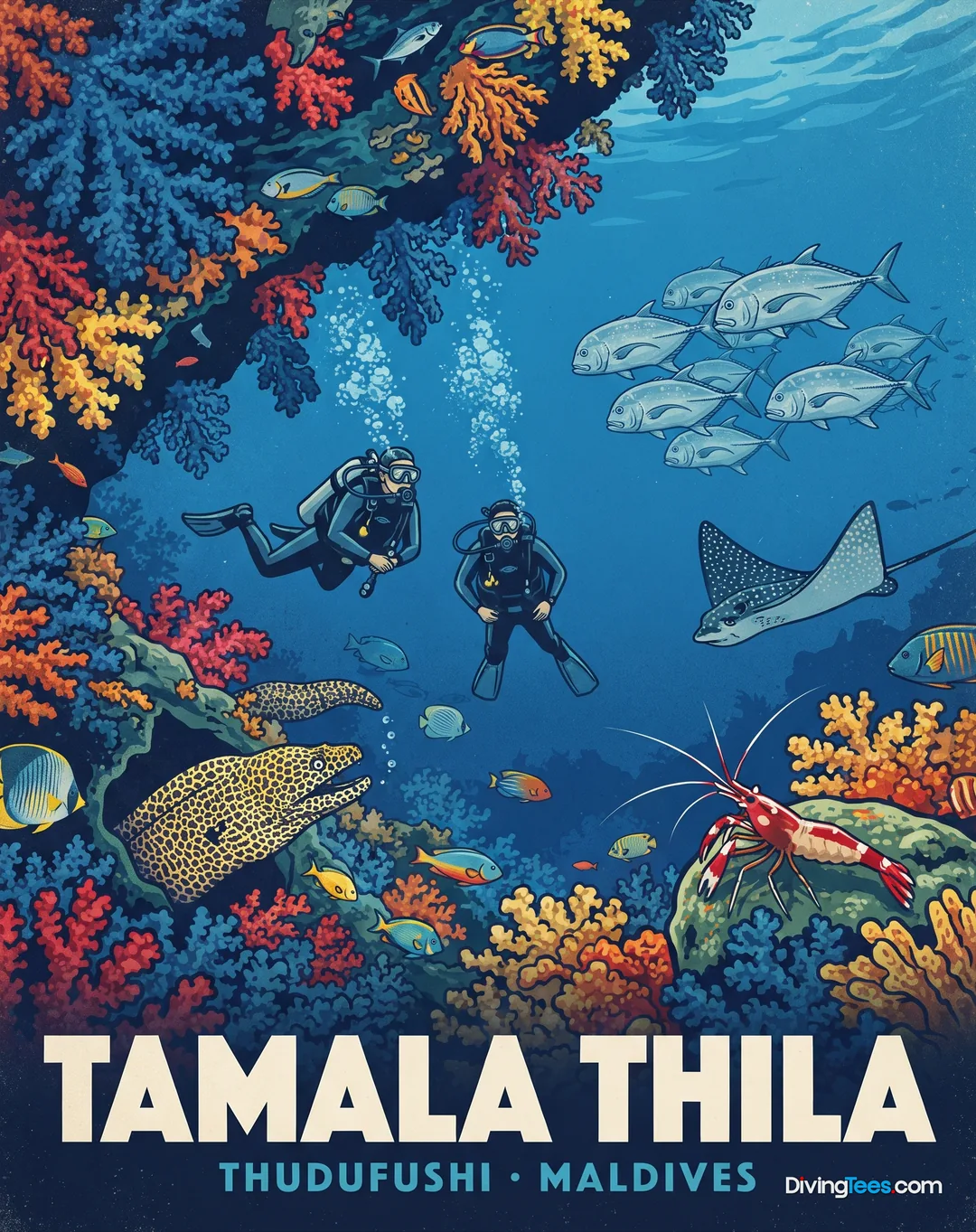
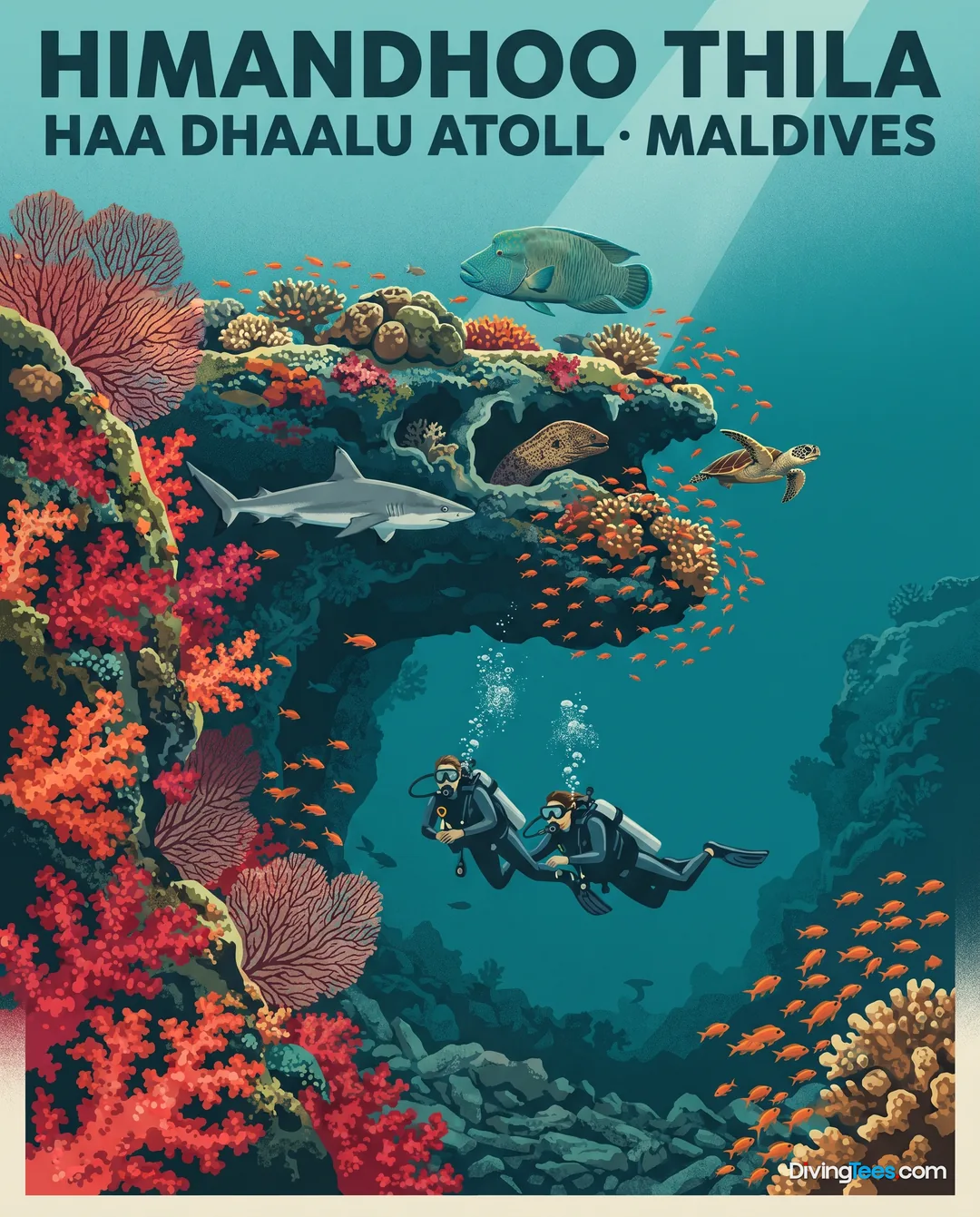
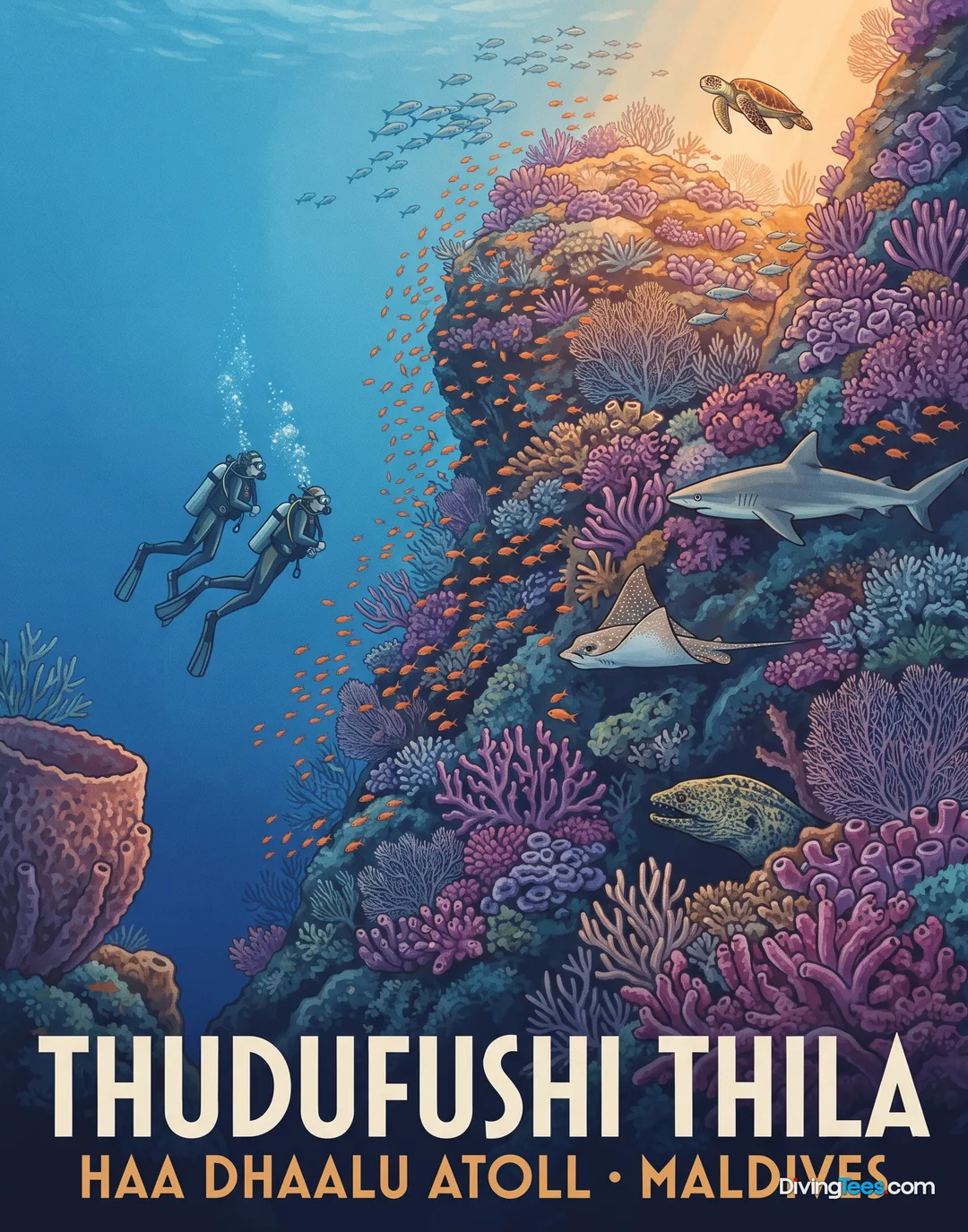
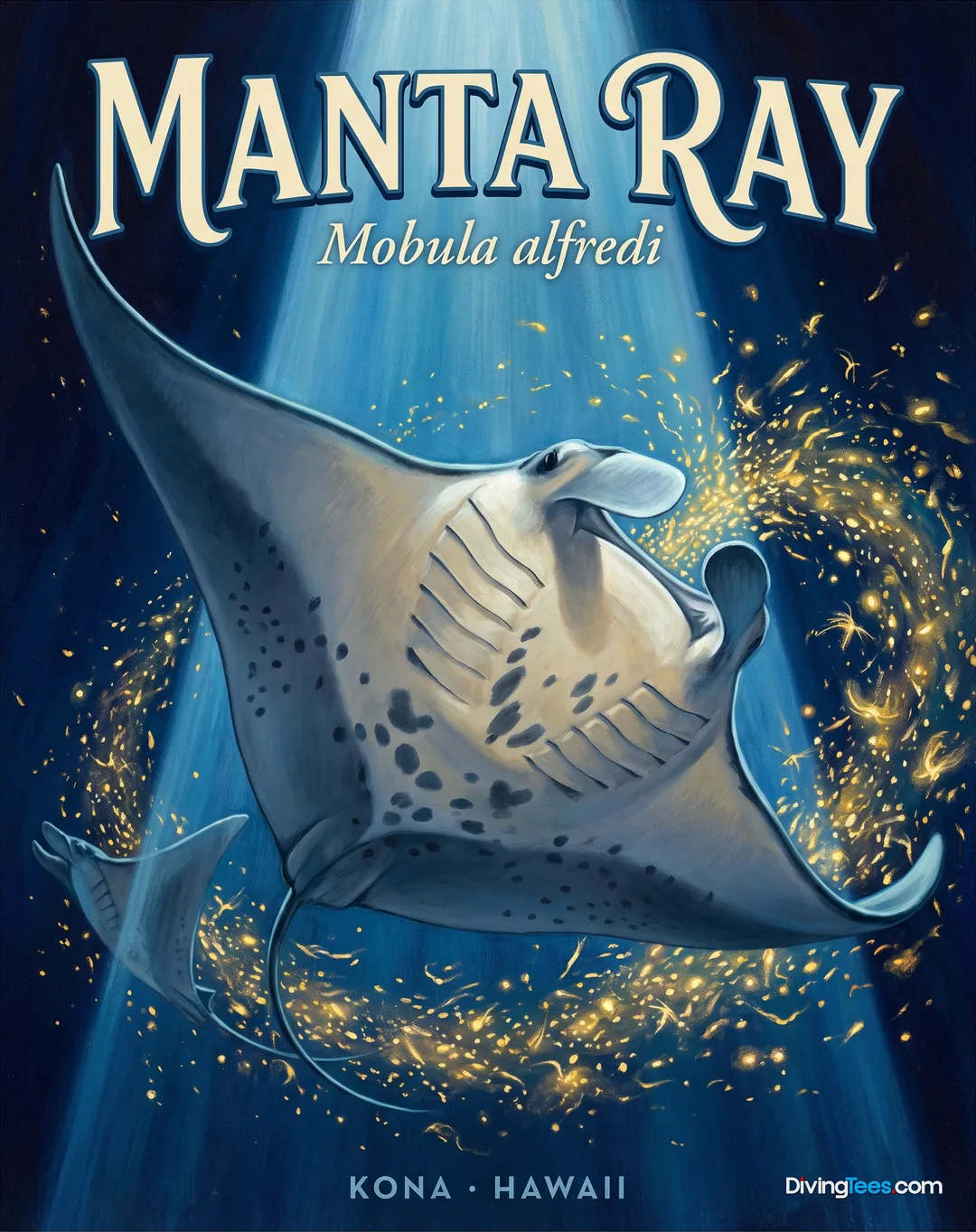
The animal encounters are closely tied to the shape of each reef. Himandhoo Thila is known for butterflyfish and regular whitetip reef sharks, with manta ray sightings described as seasonal. Thudufushi Thila offers another chance of manta rays when the current runs in the right direction, alongside delicate butterflyfish around its rock formations. Tamala Thila brings large schools of trevally, with manta rays and eagle rays appearing seasonally. Panettone’s white sandbank concentrates attention on the channel and may produce manta encounters at the right time. These are not sightings to schedule like a museum visit: current direction, season and the operator’s choice of exposed site all affect what appears.
Haa Dhaalu is best planned around a flexible run of sea days rather than a rigid promise of one perfect month. The reason is practical: exposed channels become more or less comfortable according to wind, sea state and current, while manta and eagle ray appearances are seasonal. A local operation can shift the programme towards protected reef when the passes are awkward, then return to sites such as Panettone, Himandhoo Thila or Thudufushi Thila when conditions line up. Divers specifically hoping for manta rays should allow enough days for that flexibility instead of building the whole trip around a single departure.
All levels can find suitable diving here, but the atoll is more rewarding for divers comfortable with boat procedures, changing current and an exposed reef environment. Advanced certification is useful rather than compulsory, particularly for channel dives where a controlled drift and accurate response to the briefing are important. BSAC, PADI and SSI qualifications should be accompanied by a clear account of recent experience, depth comfort and current-diving ability. Less experienced divers can still enjoy protected reef sections if the daily plan is matched sensibly to their confidence.
From London Heathrow, London Gatwick or Manchester, the journey begins with arrival in Malé. Haa Dhaalu then requires at least one domestic connection, followed by a sea transfer to the island where the stay is based; the final boat leg is an essential part of the route, not a minor hotel detail. Exact arrangements depend on the island and the operator, so connection times need checking before flights are committed. A missed domestic link can remove a full day of diving. Once there, movement is generally on foot within a resort island or by a short boat shuttle on an inhabited-island setup. There is no road access into the atoll’s dive area.
Book the diving around the island where the accommodation is actually located. Haa Dhaalu is not a single marina with every reef equally close, and a distant operator can turn a simple dive day into an awkward transfer exercise. Before committing to several days, ask whether the programme mixes protected reef with exposed channels; repeating the same current profile is unnecessary and may not suit every diver in the group. Keep certification and recent-diving details readily available so site choice can be matched to real experience, not just the qualification card. Do not assume that a Maldivian island holiday means easy shore diving: the principal interest here is reached by boat. If travelling with a non-diver, confirm beach and lagoon access on the accommodation island before booking. Finally, protect the day before the flight for rest and keep the domestic connection generous, because the last transfer can be the part of the itinerary most likely to disrupt diving.
Allow seven to ten days, including the transfer, so the schedule has enough sea days to revisit exposed sites when the current and weather cooperate. A sensible week alternates thilas and channels with more sheltered reef rather than making every outing a test of drift experience. Between dives, the accommodation island provides beach and lagoon time, while permitted island walks and local settlement visits add a change of pace. A quiet final day suits the journey home better than another long boat outing.
Hello, I'm Marina, DivingDeal.com's AI assistant. I guide you through destinations, areas and countries.
Thinking about the whole trip and the flights? Talk it over with Edith →
Marina is an AI. Some links are affiliate links: DivingDeal may earn a commission, at no extra cost to you. Bookings are made with the partner.
Plan Haa Dhaalu Atoll around a flexible run of sea days rather than a fixed month. Wind, sea state and current affect exposed channels, while manta and eagle ray appearances are seasonal. Allow enough time to shift between protected reefs and exposed sites when conditions cooperate, especially if manta rays are important to you.
Haa Dhaalu Atoll offers suitable diving for all levels, although you will get more from it if you are comfortable with boat procedures, changing current and exposed reefs. Advanced certification is useful but not compulsory. Less experienced divers can enjoy protected sections when the daily plan matches your confidence, recent experience and current-diving ability.
In Haa Dhaalu Atoll, you can explore thilas, pinnacles, caves, overhangs, walls, channels and white sandbanks. Encounters may include butterflyfish, whitetip reef sharks, schooling trevally, eagle rays and seasonal manta rays. Malhoos Thila reaches thirty metres, while its three pinnacles and soft-coral-covered overhangs add structure to open-ocean dives.
Choose accommodation on the island where your diving is based, because the main sites are reached by boat. Build in flexible sea days, generous connection times and a quiet final day before flying. A stay of seven to ten days, including transfers, allows protected reefs and exposed channels to be mixed sensibly.