Diving Fulhadhoo: Local island reefs and seasonal mantas
Fulhadhoo combines boat dives on Baa Atoll reefs with reef mantas in the plankton-rich season and regulated snorkelling at Hanifaru Bay.
What makes this destination special
Boat dives across Baa Atoll reef sites
Seasonal reef mantas around Hanifaru Bay
Regulated manta snorkelling inside Hanifaru Bay
July to October plankton and manta activity
Local-island evenings and walks on Fulhadhoo
Domestic flight to Dharavandhoo, then local boat
Variable currents around Baa Atoll reefs
For subtitles in English: start the video firstthen click the gearat the top right of the video, select “Subtitles/CC”, then “Auto-translate” and choose “English”.
01
Overview
Baa Atoll’s reefs are the working scenery here, reached by boat from a small inhabited island rather than an isolated resort. Fulhadhoo suits divers who want conventional reef diving combined with a seasonal wildlife outing to Hanifaru Bay. The attraction is the contrast: underwater excursions around the atoll, then a regulated snorkelling visit where mantas gather in plankton-rich water. On land, the pace is local and unhurried, with beaches, sandbanks, fishing and island life rather than a large resort complex.
02
Diving here
Diving from Fulhadhoo is mainly boat-based, with reef sites around Baa Atoll and occasional longer outings towards seasonal manta areas. Expect reef diving rather than named wrecks or a fixed shore-diving routine, with conditions changing according to the site, wind and monsoon. Currents are variable, so a dive may involve a gentle drift or a more attentive descent and ascent, followed by a proper safety stop. Visibility is not a fixed feature of the destination: plankton, wind and monsoon swell can alter the view. Hanifaru Bay belongs to a different part of the day’s plan. It is a protected gathering place where scuba diving is not allowed, so the experience there is regulated snorkelling at the surface. Ask whether a proposed trip stays near Fulhadhoo or crosses the wider atoll.
03
The underwater wildlife
Reef manta rays are the signature encounter, with gatherings in Baa Atoll generally reported from May to November and a stronger pattern from July to October. The reason is the seasonal concentration of plankton, which draws mantas into the atoll and makes Hanifaru Bay particularly important. These are wild-animal encounters, not scheduled performances, so tides, weather, access rules and the animals themselves all matter. Whale sharks are an occasional possibility on regional Baa Atoll excursions during the same broad May to November period, but they should not be treated as the purpose of every trip. Around Fulhadhoo itself, the most honest expectation is reef diving plus a chance to join the manta programme when conditions line up.
04
When to go
July to October is the most compelling period for a manta-focused visit. The south-west monsoon helps concentrate plankton through Baa Atoll, which is why seasonal manta activity is commonly strongest then. It also brings a trade-off: wind, swell and boat schedules can become less predictable, and a planned Hanifaru outing may need to move. May and June, plus November, can still fall within the wider manta season. There is no need to rule out the other months absolutely, but outside the main window the specific reason for choosing Fulhadhoo is less pronounced. Build spare days into a rainy-season itinerary rather than trying to fit every excursion into a tight schedule.
05
Level required
Fulhadhoo is suitable for beginners as well as experienced divers, with training and introductory dives available locally. The qualification route is less important than comfort in changing conditions: BSAC, PADI and SSI divers should be ready to follow the day’s site briefing and current plan. Beginners will benefit from staying with sheltered, straightforward reef dives before joining more exposed boat outings. Experienced divers may prefer the flexibility of repeated boat trips and a Nitrox option, if the local operation provides it.
06
On the ground
From London Heathrow, London Gatwick or Manchester, the journey continues through Malé or the airport harbour area. The usual final transfer is a fast boat taking about two hours, sometimes up to two and a half depending on the route and sea conditions. An alternative is a domestic flight of roughly thirty minutes to Dharavandhoo, followed by a local boat journey of about forty-five minutes. Public ferry services are reported on some days but should not be treated as a dependable connection. Boat departures are not necessarily daily, so check the sailing day before fixing the rest of the itinerary. A late arrival may mean spending a night in Malé. On Fulhadhoo, accommodation and diving are normally within walking distance.
07
Local tips
Treat Hanifaru Bay as a snorkelling excursion, not a scuba dive. Underwater diving is prohibited there, and the visit follows local rules designed around the manta gatherings. Leave enough days for the animals, weather and access arrangements to align, because a manta sighting is never guaranteed. Before booking trips, ask which outings remain in Fulhadhoo’s waters and which involve a wider Baa Atoll run. That distinction affects both time on the boat and your reserve days. Confirm the fast-boat departure day before arriving, particularly if the alternative is an unexpected night in Malé. Comparing the direct boat with the Dharavandhoo flight and local boat can make sense if long periods at sea are a concern. Bring any personal equipment that would be awkward to replace on a local island, especially a well-fitting mask, computer and specialist consumables. Do not plan the final dive too close to the return transfer.
08
Planning your stay
Allow seven to ten days for a sensible Fulhadhoo stay. That gives room for several reef outings, a seasonal manta excursion and spare days when monsoon weather affects boats. The island is small enough to cross on foot, and an accompanying non-diver can spend time on the beach, snorkel nearby reefs, visit sandbanks, fish or observe local life. A liveaboard can cover Baa Atoll, but staying ashore keeps Fulhadhoo’s local rhythm and transfer point at the centre of the trip.
A question about this destination?
Hello, I'm Marina, DivingDeal.com's AI assistant.
I guide you through destinations, areas and countries.
When should you visit Fulhadhoo for manta encounters?
Choose July to October if manta activity is your main reason for visiting Fulhadhoo, as plankton commonly concentrates through Baa Atoll then. Manta gatherings may also occur from May to November, including May, June and November. During the south-west monsoon, wind, swell and boat schedules can be less predictable, so keep spare days available.
What diving experience do you need for Fulhadhoo?
Fulhadhoo suits beginners and experienced divers, with local training and introductory dives available. Beginners should start with sheltered, straightforward reef dives before trying more exposed boat outings. Divers with BSAC, PADI or SSI qualifications should follow the briefing and current plan carefully, because Baa Atoll conditions can change and currents are variable.
What can you see while diving and snorkelling around Fulhadhoo?
You can explore Baa Atoll reef sites by boat and may encounter reef manta rays during the seasonal plankton-rich period. Whale sharks are an occasional possibility on regional excursions. Hanifaru Bay offers a separate, regulated snorkelling experience where mantas gather, but scuba diving is prohibited there and sightings depend on wildlife, weather, tides and access rules.
How should you plan a diving stay in Fulhadhoo?
Allow seven to ten days for reef outings, a seasonal manta excursion and spare days when monsoon weather affects boats. Compare the direct fast boat with a domestic flight to Dharavandhoo followed by a local boat, and confirm departure days before fixing your itinerary. Ask which trips stay near Fulhadhoo and which cross Baa Atoll.


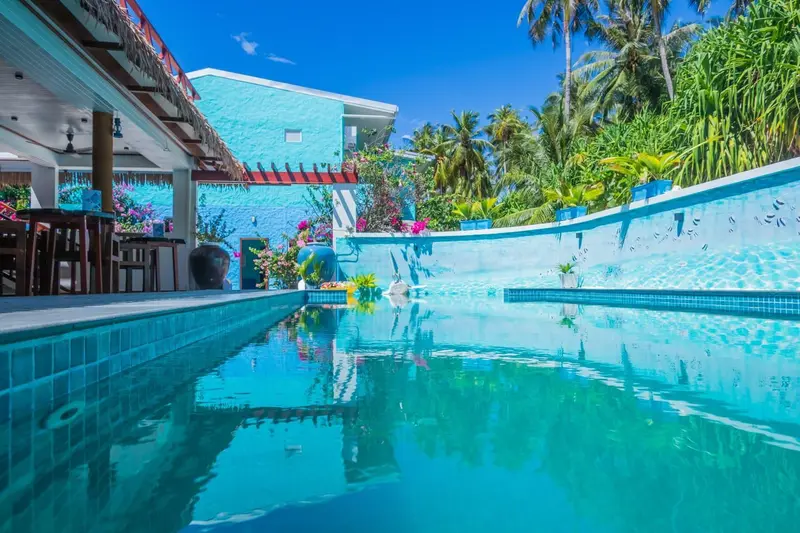 Dive centre in the hotel