
Bigorno Diving Center
Google 5/5 (558 reviews)
Trou aux biches · Mauritius · Indian Ocean
Max. depth · 22 mDescend along the southern flank of Coin de Mire, where massive schools of fusiliers swirl over a dynamic reef, often shadowed by darting bluefin trevally.
Diving Coin de Mire-Head begins on the southwest side of Coin de Mire island, as you trace the contour of the southern reef from west to east. This dive truly comes alive as the reef gradually transforms into an impressive drop-off, a vertical challenge that draws you deeper into the blue. Your descent will reveal a thriving ecosystem, where the shelf transitions into the wall at varying depths, creating clear zones for exploration.
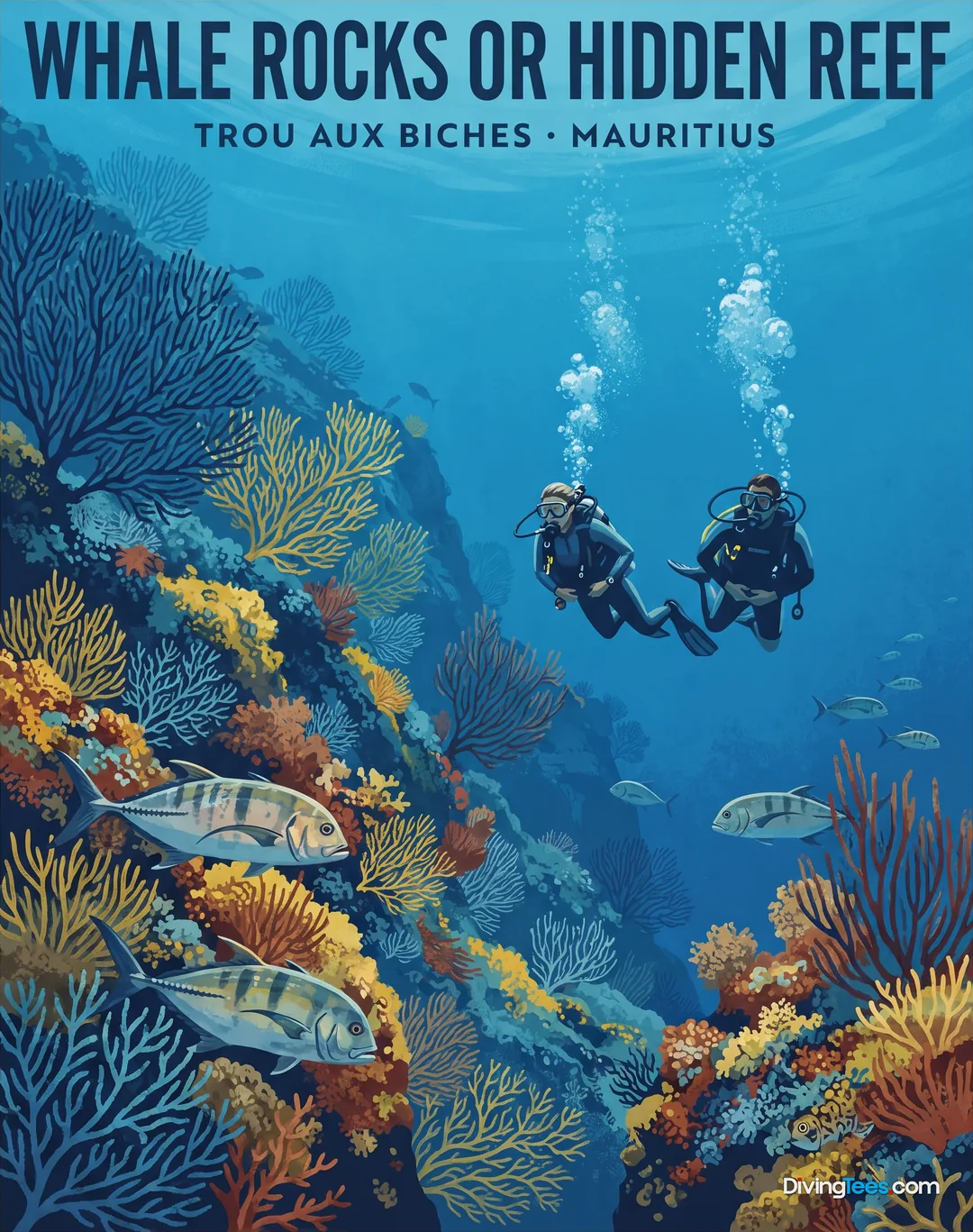
The topography here is dynamic, characterized by the sheer volume of schooling fish. You'll likely find yourself enveloped by massive quantities of fusiliers (Caesionidae), their synchronized movements a living spectacle. This abundance of smaller fish naturally attracts larger predators, with bluefin trevally (Caranx ignobilis) frequently observed hunting through the shimmering masses, offering a real insight into the food chain in action.
Beyond the fusiliers, the reef itself supports a diverse community. Expect to encounter large parrotfish (Scaridae) grazing on the coral, their powerful beaks constantly reshaping the reefscape. Schools of pilotfish (Naucrates ductor) often cruise alongside, adding to the pelagic feel of the dive. This site’s position and the currents it experiences also make it a transit point for open-ocean hunters.
Keep a keen eye on the open water; barracudas (Sphyraena) are not uncommon here, often lurking at the edge of visibility or patrolling the reef structure. The presence of dogtooth tuna (Gymnosarda unicolor) adds another exciting dimension to the dive, their streamlined forms a testament to the powerful currents that can sweep through this area. These encounters underscore the healthy, predator-rich environment of Coin de Mire-Head.
One of the site's unique features, when conditions allow, is a beautiful cavern system. If the sea is calm, you can explore a captivating grotto that lies no deeper than 6 metres and extends for 30 metres or more underneath the island. Navigating this overhead environment requires careful buoyancy control and the ability to operate effectively in low light. This distinct element distinguishes Coin de Mire-Head from other reef dives in the area.
This site is accessible to divers of all levels, with depths ranging from 9 to 22 metres. However, to explore the grotto, a Level 2 certification or higher is required, and you must be equipped with a dive torch. Diving here is possible throughout the year, but note that the Northern Islands region, including Coin de Mire, generally offers the best conditions from October to April.
Diving Coin de Mire-Head is possible throughout the year. In the Northern Islands region, including Coin de Mire, conditions generally suit diving from October to April. If you want to explore the grotto, calm seas are needed, so conditions may influence whether this feature is accessible during your dive.
Coin de Mire-Head is accessible to divers of all levels, with depths from 9 to 22 metres. Exploring the grotto requires Level 2 certification or higher, a dive torch, careful buoyancy control and the ability to operate in low light. The grotto lies no deeper than 6 metres.
Coin de Mire-Head experiences currents that help make it a transit point for open-ocean hunters. Powerful currents can sweep through the area, while the reef changes into a wall drop-off as you follow its southern contour. These conditions contribute to encounters with bluefin trevally, barracudas and dogtooth tuna.
At Coin de Mire-Head, you can see massive schools of fusiliers, large parrotfish and pilotfish. Bluefin trevally may hunt through the fusiliers, while barracudas and dogtooth tuna can appear in open water. When conditions allow, you can also explore an expansive underwater grotto beneath the island.