
Bigorno Diving Center
Google 5/5 (558 reviews)
2.8 km away as the crow flies
Trou aux biches · Mauritius · Indian Ocean
Max. depth · 25 mDescend to a 17th-century anchor nestled in a vibrant pinnacled reef, where large pelagics often cruise past resident morays and camouflaged predators.
For subtitles in English: start the video firstthen click the gearat the top right of the video, select “Subtitles/CC”, then “Auto-translate” and choose “English”.
Just west of Peter Holt's Rocks, the Lost Anchor dive site unveils a fascinating blend of history and thriving marine life. Your descent brings you to the top of a prominent pinnacle, where a cavernous crevasse holds the star attraction: a large, antique 17th-century anchor. The wooden stock, long since surrendered to the corrosive embrace of time and decay, has vanished, leaving behind only the iron clips that once secured it, now strewn across the surrounding seabed.
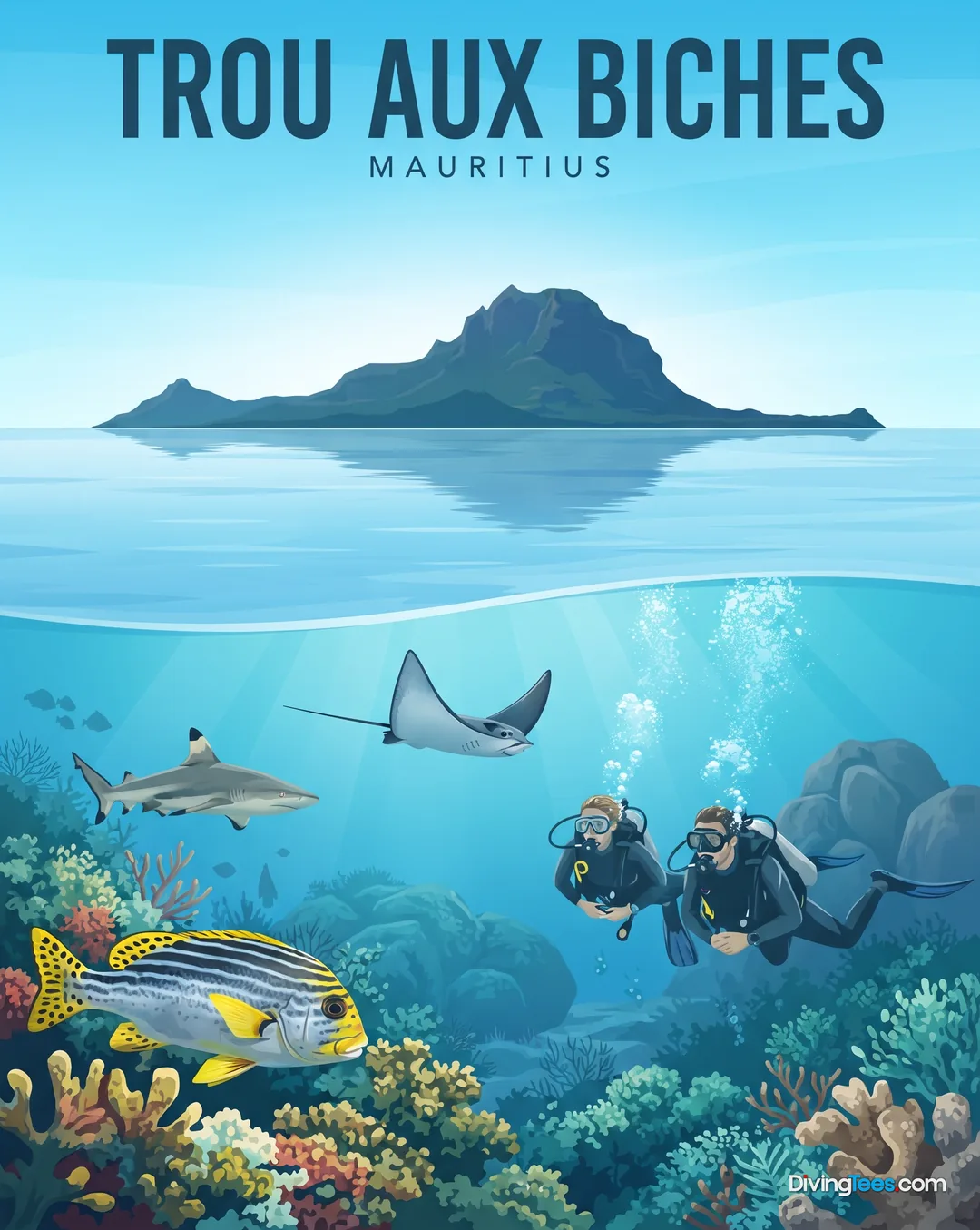
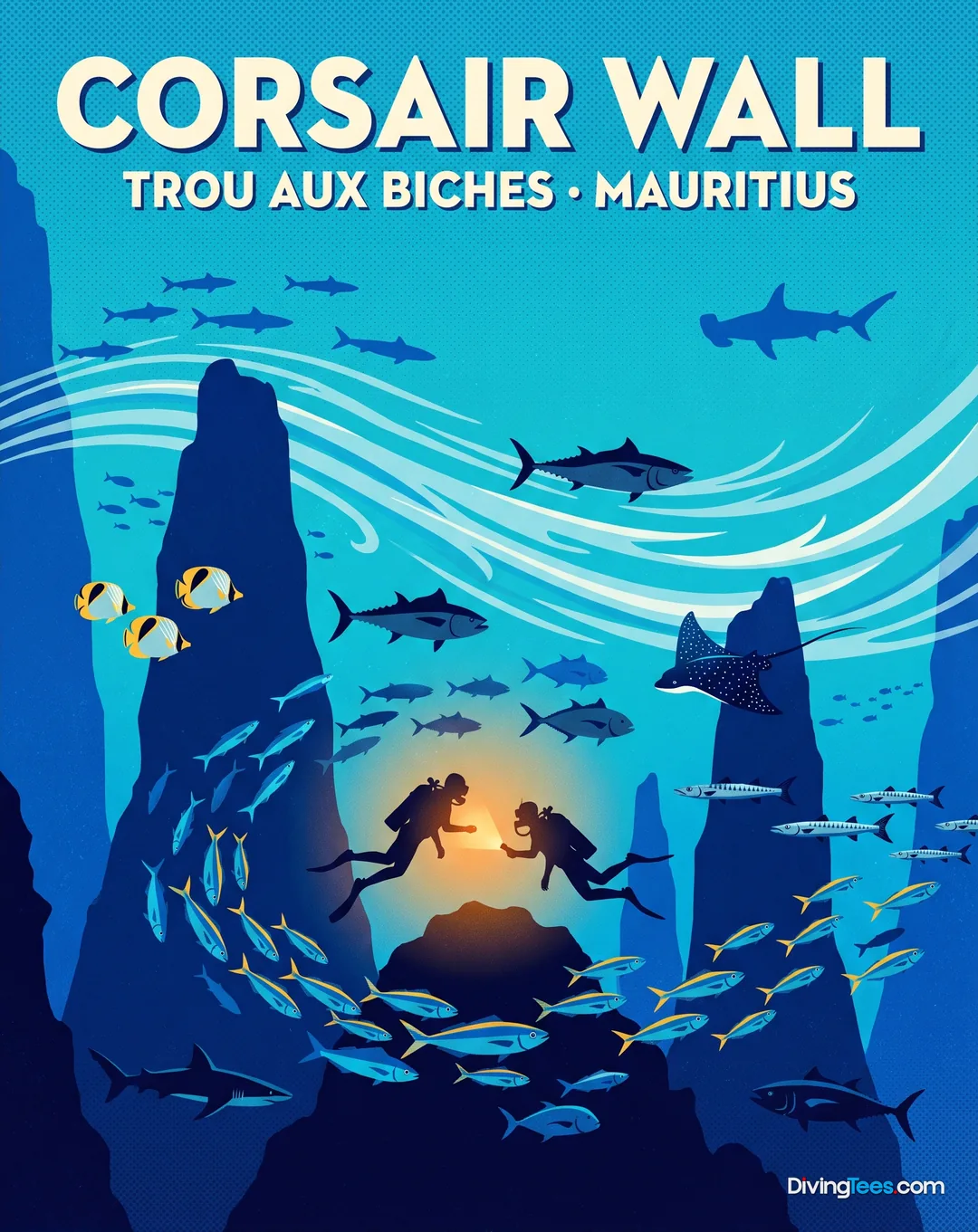
The journey around this pinnacle is one of dynamic encounters. Schools of fusiliers cascade through the water column, often joined by swift squadrons of bluefin trevally. Keep a keen eye on the blue, as eagle rays occasionally glide past with effortless grace, and the powerful forms of dogtooth tuna can be seen patrolling the deeper edges of the reef, adding a thrilling pelagic dimension to the dive.
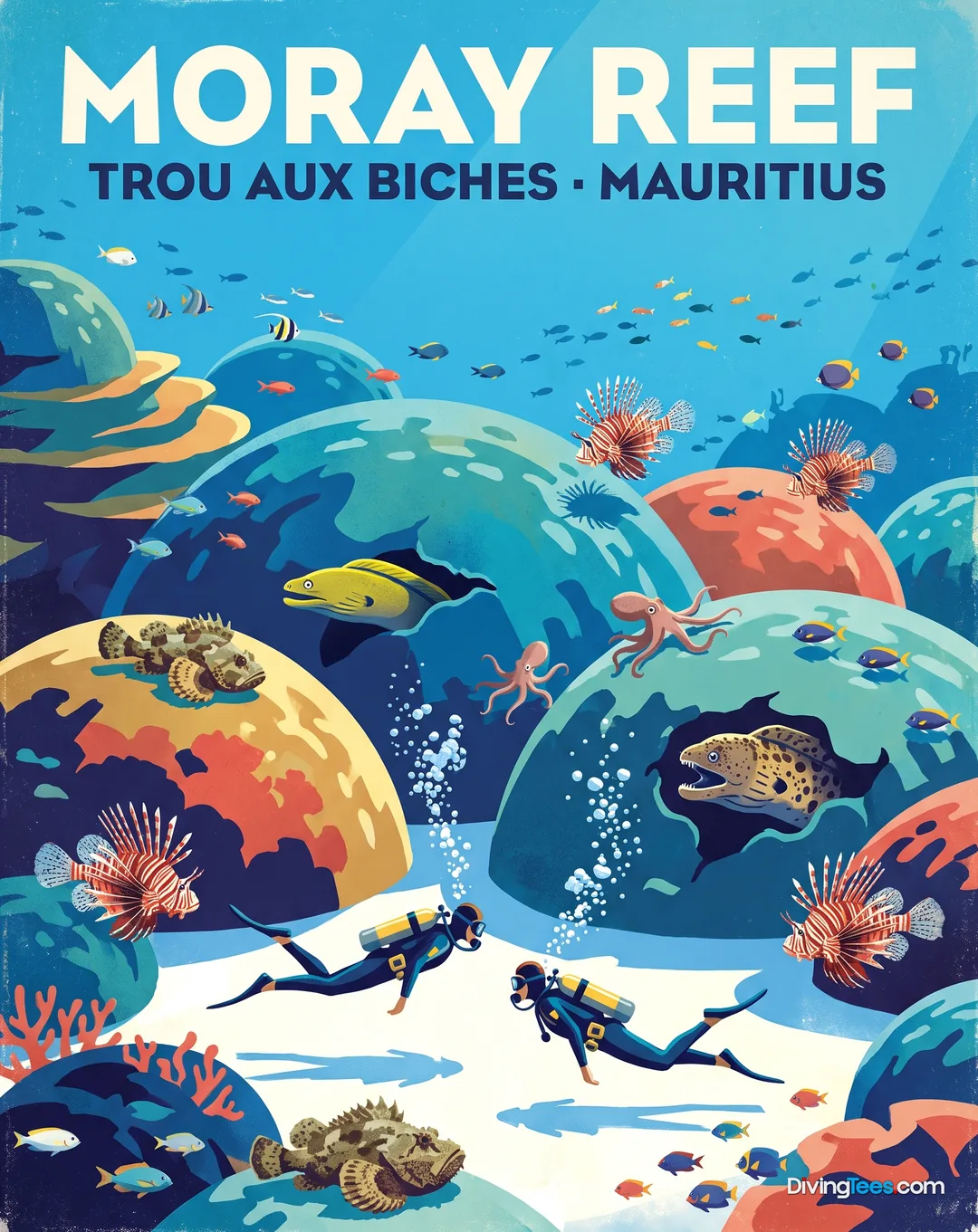
Below the lively open water, the reef's crevices hold their own ancient secrets. Two enormous Javanese moray eels (Gymnothorax javanicus) have made their home here, their impressive forms often visible as they peek from their rocky sanctuaries. Their sheer size is a testament to the rich food sources and protected environment that this particular pinnacle provides, offering a compelling focal point for your dive.
Beyond the prominent residents, the Lost Anchor demands a sharp eye for the masters of camouflage. Giant scorpionfish (Scorpaenopsis bouldai) blend seamlessly with the reef, their stony textures offering a challenging search for observant divers. Even more elusive is the deadly stonefish (Synanceia verrucosa), a creature of dangerous beauty, often found perfectly disguised among the detritus, and for those with an expert eye, a pair of frogfish (Antennarius commerson) can be spotted lurking, masters of stealth that they are.
The Lost Anchor site is accessible to divers of all levels, with a minimum depth of 18 metres and a maximum of 25 metres. The best period for diving on Mauritius' north-west coast, where this site is located, is year-round. Water temperatures typically range between 23°C and 30°C.
You can dive at Lost Anchor year-round. The site is on Mauritius’ north-west coast, where water temperatures typically range between 23°C and 30°C. This makes the site available throughout the year, while the stated temperature range helps you understand the conditions you may encounter during a dive there.
Lost Anchor is accessible to divers of all levels. You can explore the site whether you are a beginner or an experienced diver, provided you are prepared for its depth range. The site reaches a minimum depth of 18 metres and a maximum depth of 25 metres.
Lost Anchor ranges from 18 to 25 metres deep. Your descent reaches the top of a prominent pinnacle, while the site’s deeper edges include areas where dogtooth tuna may patrol. The anchor rests in a cavernous crevasse, adding historical interest within this depth range.
At Lost Anchor, you can see a historic 17th-century anchor in a crevasse, schools of fusiliers, and bluefin trevally. Eagle rays and dogtooth tuna appear occasionally. Two Javanese moray eels live in the reef, while camouflaged giant scorpionfish, stonefish, and potentially frogfish reward careful observation.