
Ikaria Diving Center
Google 5/5 (46 reviews)
Greece · Mediterranean
Underwater hot springs, Posidonia meadows, dark caverns and aircraft or cargo wrecks shape Ikaria’s unhurried, weather-dependent diving.
For subtitles in English: start the video firstthen click the gearat the top right of the video, select “Subtitles/CC”, then “Auto-translate” and choose “English”.
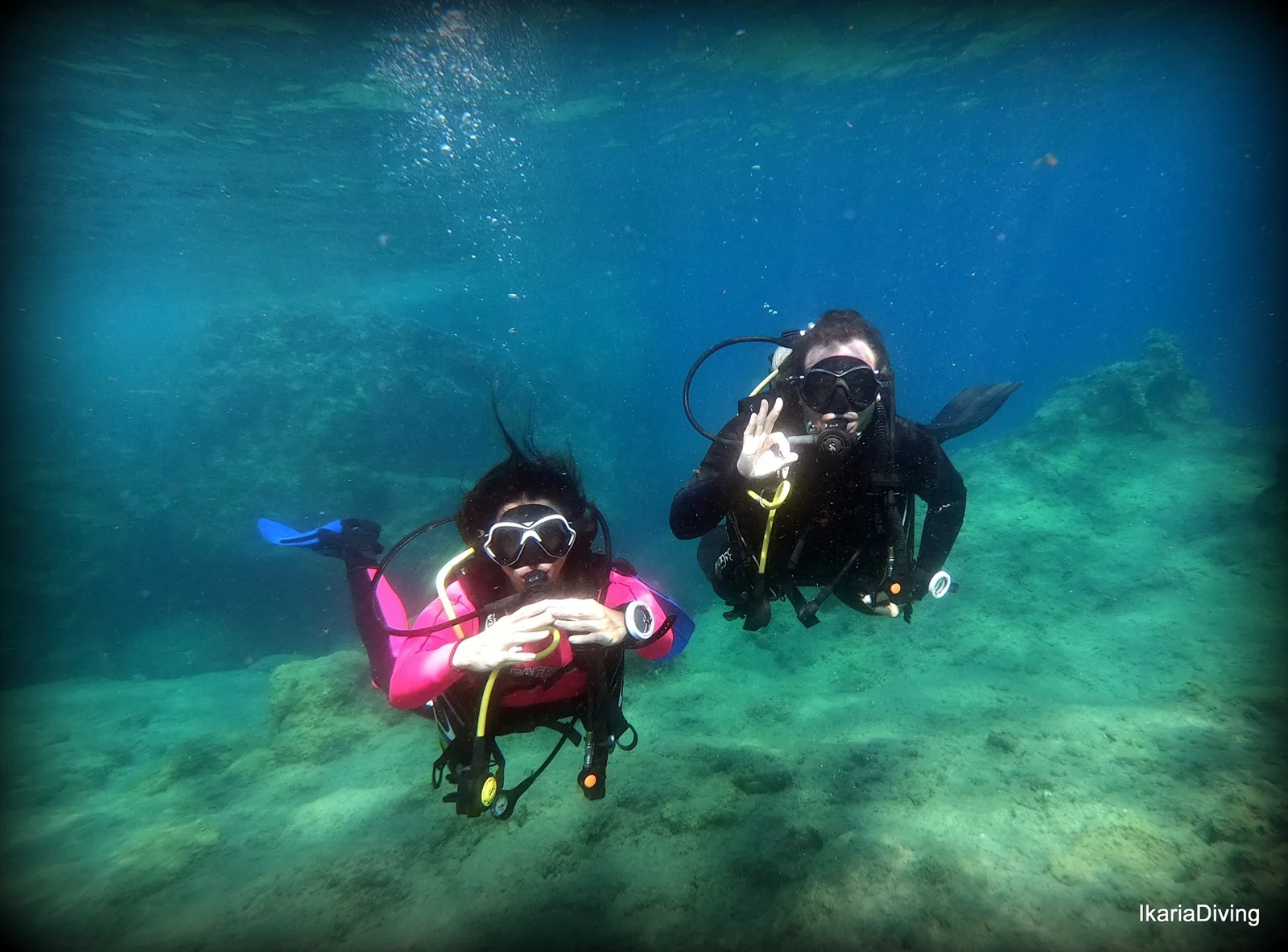
Ikaria suits divers who want an island holiday with diving woven into it, rather than a timetable packed with boat departures. Along the southern and eastern coast, rocky walls, boulder slopes, caverns, Posidonia meadows, underwater hot springs and wrecks provide the substance. Some dives begin from shore, while local boats open up harder-to-reach sections around Faros, Agios Kirykos, Therma and Magganitis. Leave room for wind, road journeys and days spent exploring above water.
The diving shifts between shore entries and small-boat outings. Expect rock shelves, broken boulders, caves and coastal walls, with Posidonia meadows in calmer bays and unusual warm-water features around Therma. Faros, Agios Kirykos, Magganitis and the waters near Therma are recurring bases for exploring different parts of the coast. Visibility can be around 8 to 10 metres in Therma Bay, but may reach 30 metres when the sea settles. Wind and swell make exposed coasts less clear and can change the plan. Currents are variable, particularly around exposed rocks such as Karavopetra, so a dive may involve managing position rather than simply following a fixed route. Wreck outings add a different shape to the day, with depth and conditions depending on the individual wreck. Shore dives can be straightforward, but allow time for a controlled ascent and safety stop.
Ikaria’s underwater interest lies as much in habitat as in a species checklist. Rocky ground, boulder fields, caverns and Posidonia meadows create changing surfaces through a single coastal dive, while the underwater hot springs around Therma add an unusual local feature. The island’s reefs support local biodiversity, although the character of the encounter will vary with the bay, visibility and weather. An occasional monk seal is mentioned around Ikaria, but it is not a sighting to schedule a trip around. Wrecks bring their own atmosphere and can reveal a different group of surfaces and shelter from the natural coast. Look closely, take the conditions as they come, and treat wildlife as part of the setting rather than a guaranteed seasonal performance.
May to October is the practical diving season, with May, June, September and October offering the most comfortable balance between workable sea conditions and fewer visitors. July and August bring the busiest period, both on land and on the water, and limited boat capacity makes advance planning sensible. September and early October are particularly attractive for a quieter island stay. In winter, rougher seas and less predictable organised outings make plans more fragile. The wind matters throughout the season: keep several possible diving days rather than tying every dive to a departure or flight.
Ikaria can work for beginners, particularly in sheltered, shallow coastal areas with local instruction. It also gives experienced divers enough variation through exposed rocks, stronger or changing currents, deeper sections and wreck outings. Advanced Open Water is useful for deeper sites and some wreck trips. A Wreck certification is appropriate where penetration or wreck-focused diving is offered, although the exact plan depends on the individual site. Ask specifically about current, depth and exposure before joining a trip to Karavopetra or another open rock.
From London Heathrow, Gatwick or Manchester, plan to travel via Athens, then continue by domestic flight or ferry. The domestic flight from Athens takes about an hour, apart from the connection and onward transfer. Ferries from the port of Piraeus take several hours, and inter-island services provide other possible routes, but schedules vary by season. Allow a full day for the journey from western Europe rather than building a tight connection around a dive or ferry departure. Ikaria’s main ports are Agios Kirykos and Evdilos. Once on the island, Therma and Agios Kirykos are the practical bases, while a hire car is useful for reaching distant bays and shore entries. Some diving transport is arranged locally, so confirm where the boat or vehicle departure will be.
Pick your base with the diving sector in mind. Therma and Agios Kirykos do not give the same road access to the southern and eastern coast, and a beach chosen for its looks may mean awkward early drives. Ask which outings are genuinely shore-based, which require a boat, and which depend on the wind that day. Reserve boat places ahead in July and August, when capacity is limited. Keep several spare diving days, and never place a ferry or flight immediately after a planned dive day. If exposed sites such as Karavopetra are on the programme, ask directly about current and required experience rather than relying on a general grade. The sheltered south-eastern bays around Therma can provide a useful alternative when open coasts are rough. Treat aircraft and cargo wrecks separately, check access and archaeological restrictions with the local team, and do not touch artefacts, formations or wreckage.
Allow five to seven days, using the island’s flexibility rather than trying to fill every day with diving. Stay near Therma or Agios Kirykos if walking to local services and meeting points matters, but expect road transfers for more distant coastlines. Mix shore dives with boat days, leaving sheltered bays or land-based exploration for unsettled weather. Non-divers have beaches, thermal baths, mountain walks, traditional villages, historic towers and calm-water kayaking or paddleboarding to fill the gaps.
Hello, I'm Marina, DivingDeal.com's AI assistant. I guide you through destinations, areas and countries.
Thinking about the whole trip and the flights? Talk it over with Edith →
Marina is an AI. Some links are affiliate links: DivingDeal may earn a commission, at no extra cost to you. Bookings are made with the partner.
May to October is the practical diving season. May, June, September and October offer a comfortable balance between workable sea conditions and fewer visitors. July and August are busier, with limited boat capacity. Wind and swell can change plans, so keep several possible diving days rather than tying every dive to a departure.
Ikaria can suit beginners in sheltered, shallow coastal areas with local instruction. Experienced divers can explore exposed rocks, changing currents, deeper sections and wrecks. Advanced Open Water is useful for deeper sites and some wreck trips. Ask about current, depth and exposure before diving at Karavopetra or another open rock.
Ikaria offers rocky walls, boulder fields, caverns, coastal shelves and Posidonia meadows in calmer bays. Around Therma, underwater hot springs add an unusual feature. Aircraft and cargo wrecks bring different surfaces and shelter. Local biodiversity varies with the bay, visibility and weather, while an occasional monk seal may appear without being predictable.
Allow five to seven days and mix shore dives with boat outings, leaving sheltered bays or land exploration for unsettled weather. Therma and Agios Kirykos are practical bases, while a hire car helps reach distant entries. Reserve boat places in July and August, confirm departure points, and keep ferries or flights separate from dive days.