
Mykonos Diving Center
Google 4.9/5 (384 reviews)
Greece · Mediterranean
Rocky walls, amphora fields, Anna II and the caves of Tragonisi make Mykonos a practical base for varied Mediterranean day-boat diving.
For subtitles in English: start the video firstthen click the gearat the top right of the video, select “Subtitles/CC”, then “Auto-translate” and choose “English”.
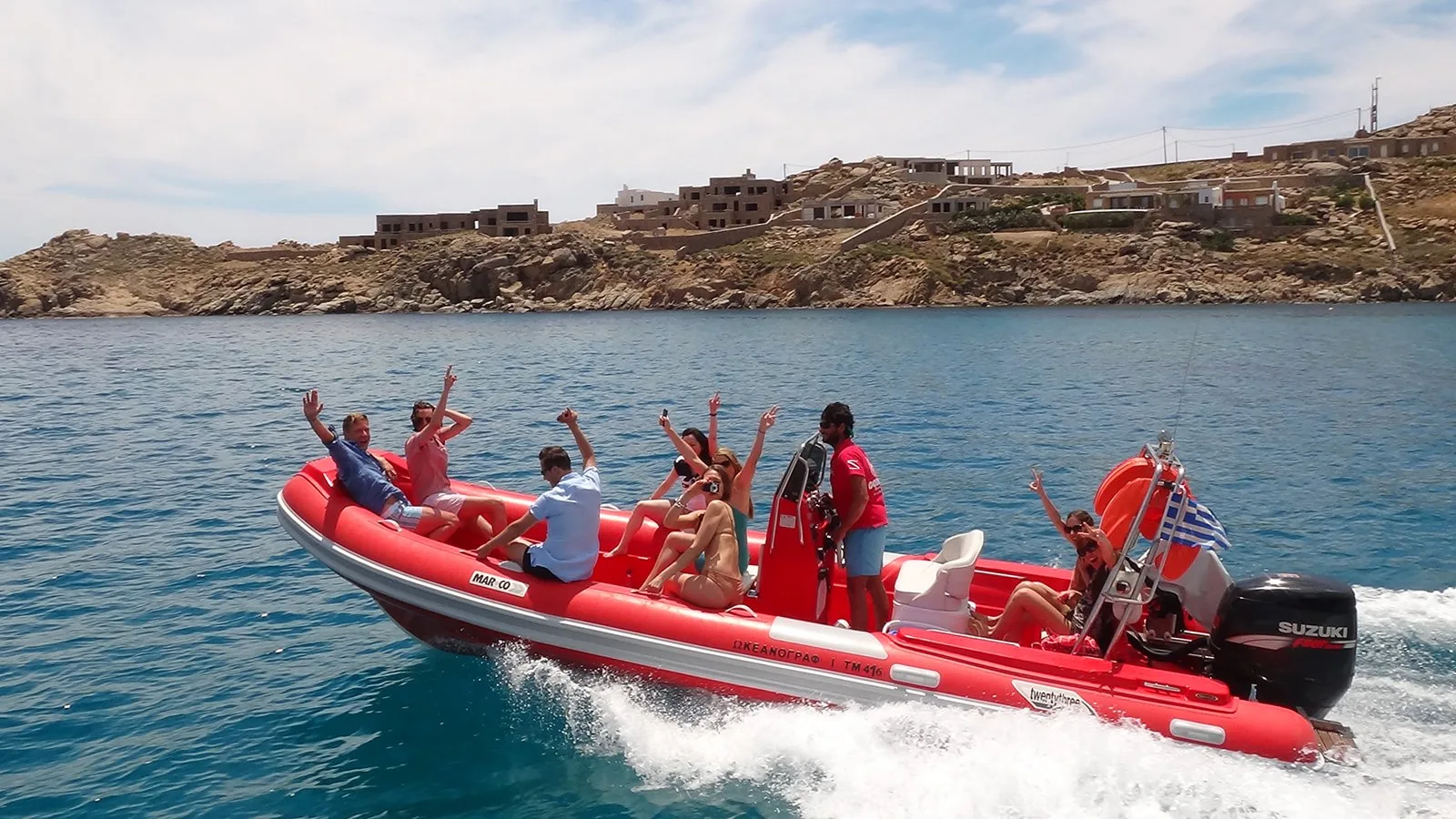
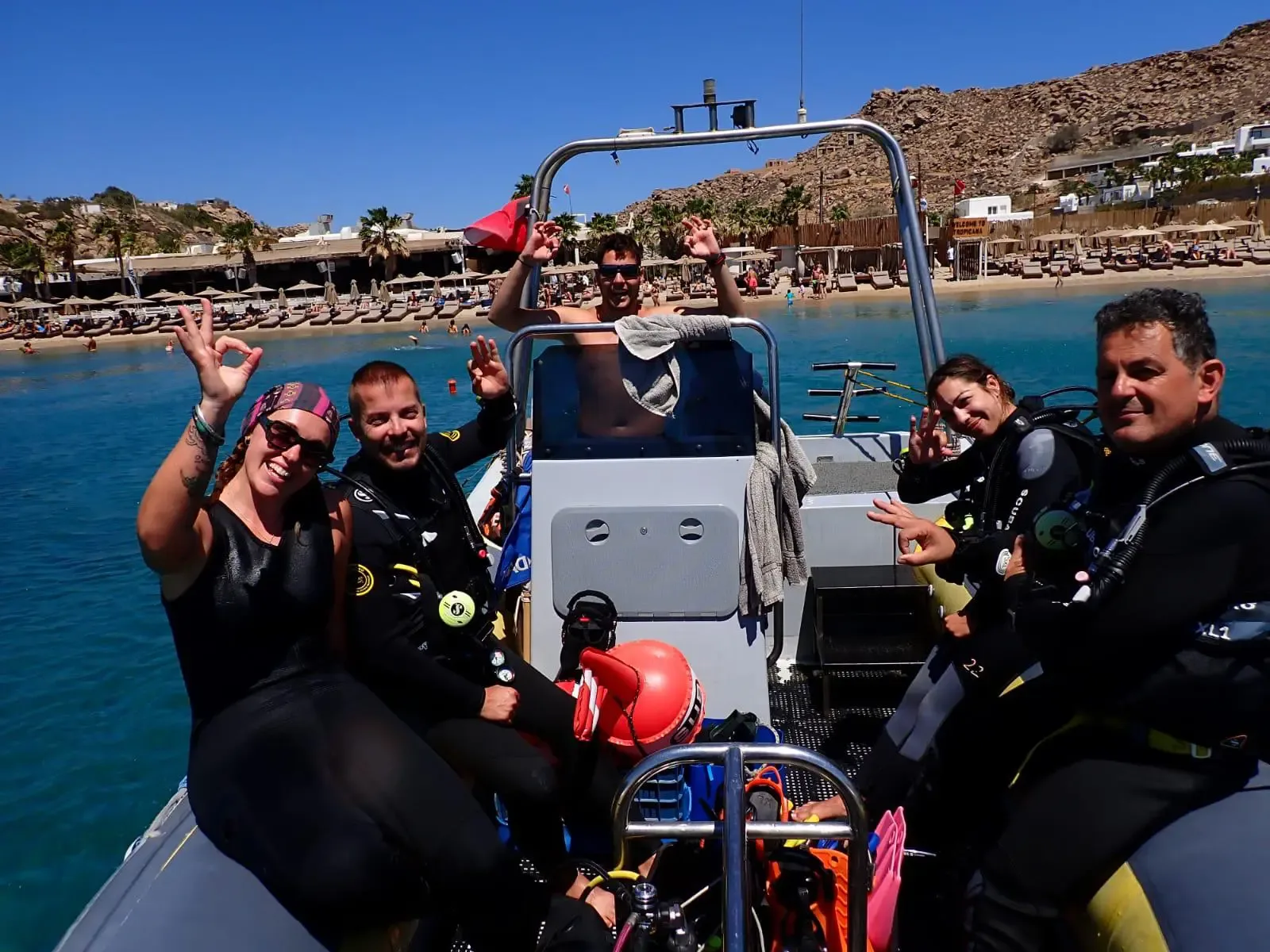
Mykonos works best as a shore-based diving holiday, not a liveaboard destination. Boats leave the island’s southern beaches for rocky reefs, walls, overhangs, cavities, amphora fields and wrecks including Anna II and Peloponisos. Tragonisi adds a different outing, with its rocky island relief and caves reached when wind and sea conditions allow. You can combine several days underwater with Chora, beaches and a trip to Delos, making the island a sensible choice when a travelling companion wants more than diving.
The underwater scenery is built from rock rather than coral: walls, ledges, overhangs and cavities create the shape of most dives. Around the wrecks, the character changes again, with Anna II and Peloponisos providing recognisable structure and a reason to discuss depth before booking. Amphora fields add another Mediterranean detail to the seabed. Visibility commonly falls somewhere between 10 and 35 metres, but wind, swell and site exposure can change the picture. Currents are variable rather than a defining feature, so a planned route may be altered for a more sheltered reef. Most diving is by day boat from the south coast, with morning departures particularly useful during the meltem. Tragonisi is a guided relief dive, not an invitation to swim into an unbriefed passage.
Mykonos is more about meeting the underwater landscape than ticking off a guaranteed list of animals. Rocky reef, vertical faces, amphora fields, wreck structure and the shadowed spaces beneath overhangs provide the places where Mediterranean life is encountered. Anna II and Peloponisos bring man-made surfaces into the scene, while Tragonisi concentrates attention on rock, openings and changing light. The clearest conditions are generally found from June into October, when visibility can make the relief easier to read. Wind and swell still matter more than the calendar on any particular day, and a sheltered reef may offer a better look than an exposed objective. Expect the character of the dive to come from what the rock, wreck and amphorae reveal at close range.
The main diving season runs from May to October, with May, June, September and October offering the most agreeable balance for a diving holiday. July and August bring busier beaches and boats, even when visibility is good. The meltem is the reason to keep plans flexible: it can make an exposed route unsuitable, shift the boat towards shelter or stop a trip altogether. Early departures usually give the best chance of settled conditions before the day develops. September and October are particularly attractive for combining diving with time ashore, as the island is less crowded while the diving season continues.
Beginners can dive here through the usual introduction and training routes, and straightforward reef outings can suit divers who are still building experience. The qualification matters more when the plan includes Anna II, another deeper wreck or a demanding Tragonisi profile. Advanced Open Water is useful for the wrecks and deeper sites, but the planned depth and penetration limits should be agreed with the guide. Cavities are not automatically suitable for every certified diver: entering a passage needs an appropriate qualification, briefing and comfort with overhead relief.
From London Heathrow, London Gatwick or Manchester, reach Mykonos by air via Athens, or travel by ferry from Piraeus and other Cycladic islands. The domestic flight from Athens is roughly half an hour in the air, while the ferry takes several hours, with airport procedures and connections added to either option. Ferry schedules are especially vulnerable to the meltem, so a change of plan is possible when the wind is strong. Once on Mykonos, diving is organised from beaches and centres on the southern coast rather than from one universal departure point. Depending on where you stay, reach that beach on foot, by taxi or with a transfer arranged through the diving operation.
Do not build the holiday around one named outing. Ask specifically whether the intended plan is Tragonisi, Anna II or a sheltered reef, because each responds differently to wind and offers a different profile. Keep several diving days available, and leave a spare day before the flight home rather than putting a final boat trip against a fixed departure. During the meltem, take the first available morning departure where possible, since conditions may worsen later in the day. For Tragonisi, treat every cavity as a relief feature: stay out of any passage unless the briefing, qualification and planned route all support it. Before reserving Anna II, confirm the planned maximum depth and whether it fits your certification. Also check exactly where the boat leaves, as a southern beach may mean a taxi, a walk or a centre transfer from your accommodation.
Allow five to seven days, giving the weather room to move a boat outing without consuming the whole holiday. Staying near the southern beach used for departure reduces transfers, but the right location depends on the operation and your accommodation. A practical rhythm is a morning dive, an afternoon ashore and a flexible day for Tragonisi or an exposed wreck. On non-diving days, combine Chora’s lanes and windmills with Delos, a beach or an inland village.
Hello, I'm Marina, DivingDeal.com's AI assistant. I guide you through destinations, areas and countries.
Thinking about the whole trip and the flights? Talk it over with Edith →
Marina is an AI. Some links are affiliate links: DivingDeal may earn a commission, at no extra cost to you. Bookings are made with the partner.
Choose Mykonos during the diving season from May to October. May, June, September and October offer quieter shores, while July and August bring busier beaches and boats. Keep plans flexible because the meltem can redirect boats, cancel outings or make exposed routes unsuitable. Early morning departures generally offer the best chance of settled conditions.
Beginners can use standard introduction and training routes, and straightforward reef dives can suit divers building experience. Your qualification matters more for Anna II, deeper wrecks and demanding Tragonisi profiles. Advanced Open Water is useful for wrecks and deeper sites. Enter cavities only with suitable qualification, a briefing and comfort with overhead relief.
Expect Mediterranean underwater scenery shaped by rocky walls, ledges, overhangs and cavities rather than coral. Amphora fields, Anna II and Peloponisos add distinctive seabed and wreck structure, while Tragonisi offers rocky relief, caves and changing light. Visibility is often clear from June into October, but wind, swell and exposure can alter conditions.
Plan Mykonos as a shore-based holiday with day boats leaving from southern beaches, rather than as a liveaboard trip. Keep several diving days flexible, confirm the departure beach and leave a spare day before flying home. Staying near the departure area can reduce transfers, while afternoons and non-diving days suit Chora, beaches or Delos.