
Dive2gether
Google 4.9/5 (807 reviews)
Greece · Mediterranean
Sheltered coves, rocky gorges, seagrass beds and a large cave define Plakias, reached through beach entries and local boat dives along Crete’s southern coast.
For subtitles in English: start the video firstthen click the gearat the top right of the video, select “Subtitles/CC”, then “Auto-translate” and choose “English”.
Rocky gorges begin close to the shore around Plakias, with sheltered coves, seagrass beds and deeper reliefs adding variety as your experience grows. This is a land-based diving holiday rather than a liveaboard destination, with Plakias as the practical base and Damnoni, Schinaria, Kalypso and nearby coastal areas reached by short road journeys or local boat. Beginners have calm, shallow places for an introduction, while certified divers can look towards tombants, boat-only reefs and the large cave.
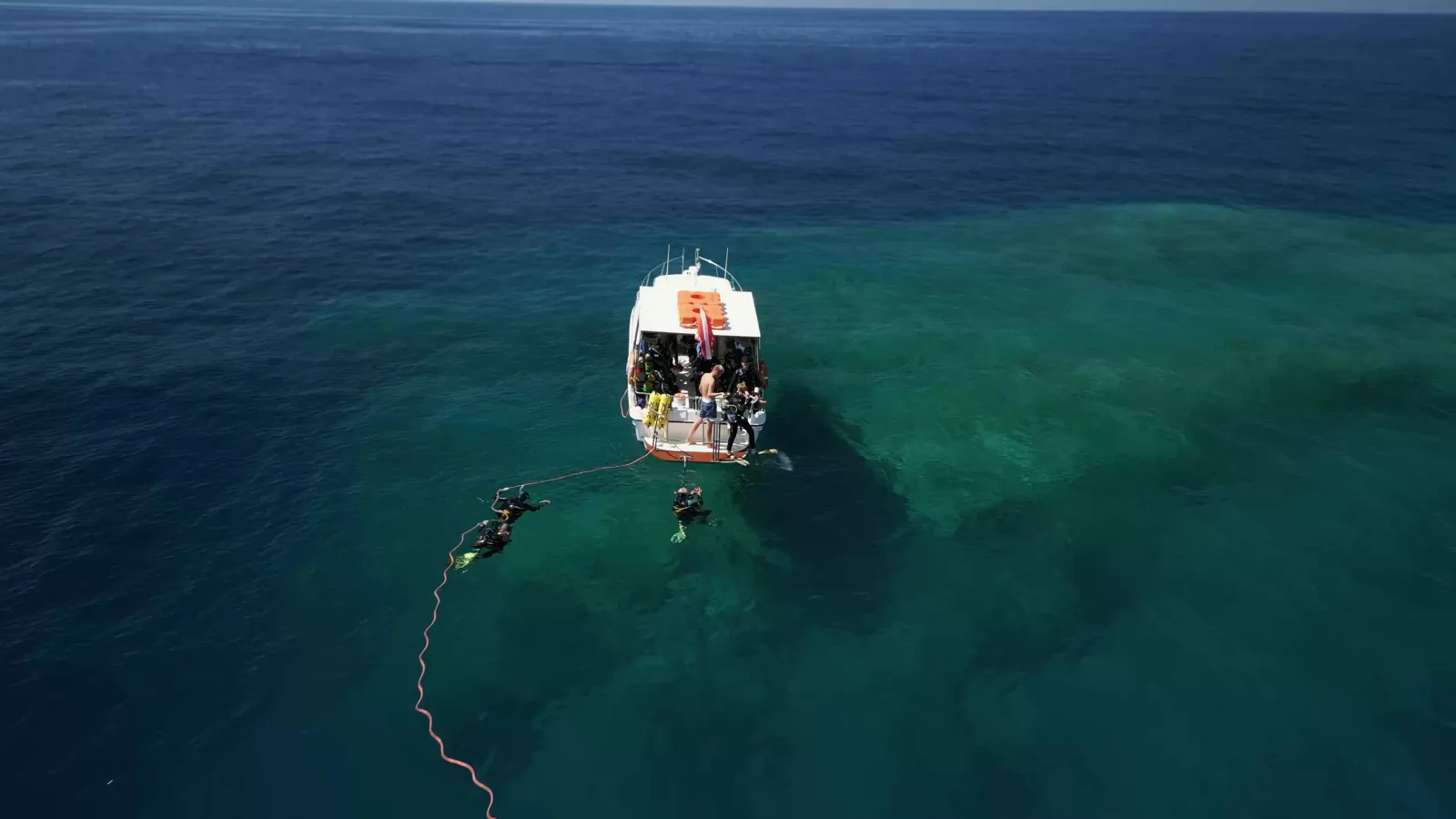
Plakias combines beach diving with local boat outings, so the day can involve an easy entry from a sheltered cove or a longer run to a drop-off and offshore relief. Underwater, expect rocky gorges, coastal reefs, seagrass beds and cave terrain rather than a single uniform landscape. Some sites are shallow and pool-like, while others offer deeper rock formations for certified divers. Currents are variable, and a site that feels protected from the beach is not automatically suitable for an independent penetration or a drift dive. Water is often very clear, with operators sometimes reporting visibility beyond 30 metres, but that is a condition rather than a promise. Ask for the day’s current plan, particularly if a downcurrent could complicate the return to the boat or the safety stop.
The marine interest here lies in the meeting of habitats. Rocky walls and gorges give shelter to small marine life, while seagrass beds provide a different underwater setting from the bare rock around the coves. At Schinaria, the large cave adds shade, changing angles of light and a more enclosed environment, subject to the guide’s assessment of conditions. Damnoni, Peristerovolakas and the coast around Souda bring further combinations of reef, relief and open water. There is no single guaranteed wildlife encounter to build the trip around. What you see will depend on the site, visibility and timing, so allow room in the programme to move between habitats rather than repeating the easiest cove.
April, May, June, September and October offer the most attractive balance for a diving stay. The local season runs from spring into late autumn, and the southern coast can remain workable when conditions disrupt the more exposed northern coast. Spring and early summer suit divers who want several days in the water before the busiest beach period, while September and October keep the diving season open after the height of summer. Summer remains possible, but the beaches and boat programmes are likely to feel busier. The right reason to come outside the main holiday peak is not a promised visibility figure, but the chance to combine sheltered sites, boat diving and quieter days on land.
Plakias works for first-time divers, refresher dives and certified divers who want straightforward coastal access without giving up deeper rock formations. Beginners can start in the shallow, sheltered areas around Plakias, Damnoni or Schinaria. PADI, SSI and BSAC divers should find the general format familiar, but agency certification alone does not make the cave suitable for penetration. A guide should match the cave, deeper reliefs and changing current to your logged experience, buoyancy and comfort in confined spaces.
From London Heathrow, London Gatwick or Manchester, the journey is built around reaching Crete first, then continuing by road to the south coast. Plakias is not an airport-side resort, and the final approach comes over an inland mountain road, so allow sensible time for the connection rather than treating the arrival as a simple transfer from the runway. The area can also be reached by road from Crete’s ports. Once based in Plakias, the nearby beaches and coves are linked by short road journeys, while the local boat covers sites that are impractical from shore. Check the day’s beach or boat departure before assuming every dive begins in the village.
Start with a sheltered beach dive around Plakias, Damnoni or Schinaria, especially if this is your first day in the water or you are returning after a break. These sites show the character of the coast without committing you immediately to the deeper reliefs or the cave. Then ask for a programme that mixes beach entries with a boat day. Staying only in the easy coves misses the tombants and more distant reefs that make the boat worthwhile, while expecting every dive to leave from the village creates unnecessary logistical friction. Treat the large cave as a guided objective, not an obvious self-led swim-through. Confirm the required experience and the planned route before signing up. Do not take an advertised visibility figure as a daily guarantee. Finally, keep a flexible day in the schedule. Conditions on the southern coast can be more usable when the north is affected, but local exposure still varies, and the best site may change with the day’s wind and sea state.
A five- to seven-day stay gives Plakias room to work as a holiday rather than a sequence of transfers. Base yourself in the village or close to one of the diving beaches, combine coastal entries with a boat outing, and leave non-diving days for the gorges, beaches and inland landscapes. Damnoni, Schinaria, Souda and Kalypso provide easy alternatives when you want to swim, snorkel or simply change the view. The area suits non-diving companions because the shore-based holiday is not built entirely around the dive timetable.
Hello, I'm Marina, DivingDeal.com's AI assistant. I guide you through destinations, areas and countries.
Thinking about the whole trip and the flights? Talk it over with Edith →
Marina is an AI. Some links are affiliate links: DivingDeal may earn a commission, at no extra cost to you. Bookings are made with the partner.
April, May, June, September and October offer a useful balance for a diving stay. Spring and early summer provide several days in the water before the busiest beach period, while September and October extend the season after peak summer. Summer remains possible, though beaches and boat programmes may feel busier.
Plakias suits first-time divers, refresher dives and certified divers. Beginners can start in shallow, sheltered areas around Plakias, Damnoni or Schinaria. Certified divers can consider deeper rock formations, boat-only reefs and the large cave. Your guide should match each site to your logged experience, buoyancy, comfort in confined spaces and current conditions.
You can explore rocky gorges, coastal reefs, seagrass beds, cave terrain and deeper rock formations. Schinaria has a large cave with shade and changing light, while Damnoni, Peristerovolakas and Souda offer different combinations of reef, relief and open water. Wildlife varies with the site, visibility and timing, so habitats may be worth mixing.
Use Plakias as a land-based base and combine sheltered beach entries with a local boat outing. Nearby sites are reached by short road journeys, while the boat accesses distant drop-offs and reefs. Allow time for the inland mountain-road approach from Crete, confirm each departure, and keep a flexible day for changing conditions.