
Lepia Dive Centre
Google 4.9/5 (524 reviews)
5 km away as the crow flies
Rhodes · Greece · Mediterranean
Max. depth · 30 mExplore a complex cave system featuring two large interconnected domes off the Lindos headland.
For subtitles in English: start the video firstthen click the gearat the top right of the video, select “Subtitles/CC”, then “Auto-translate” and choose “English”.
The Cleobulus Tomb is defined by its unique underwater topography, which sets it apart from the typical open walls found around the Rhodes coastline. Located off the northern headland of Lindos Bay, this site consists of a large submerged cave system. The structure is characterized by two massive, dome-like chambers that are joined together by a central underwater corridor. This configuration creates a sense of volume and architectural complexity that is rare for the local diving area.
Approaching the site is best done by boat, typically via a RIB departing from Lindos or St Paul's Bay. Once you descend, you will find the main entrance located between 20 and 25 metres. The orientation of the caves allows for a controlled exploration of the cavernous spaces, provided the diver follows the specific guidelines for their certification level. The entry point serves as the gateway to a much more intricate environment than the surrounding seabed.
The dive profile moves through distinct depth zones as you transition from the entrance into the cave interior. While the main cavernous areas sit between 20 and 25 metres, the outer wall surrounding the cave system drops significantly deeper. However, standard recreational dives at this site focus on the cave's interior and the immediate structure. This allows you to experience the scale of the domes without venturing into the much deeper drop-offs located further out.
The layout of the cave system requires careful navigation and a solid understanding of your surroundings. The connection between the two main domes via a submerged corridor provides a unique sense of movement and spatial awareness. Divers often find themselves transitioning from the openness of the larger chambers into the more enclosed, intimate feeling of the connecting tunnel. This variation in light and space is the site's defining characteristic.
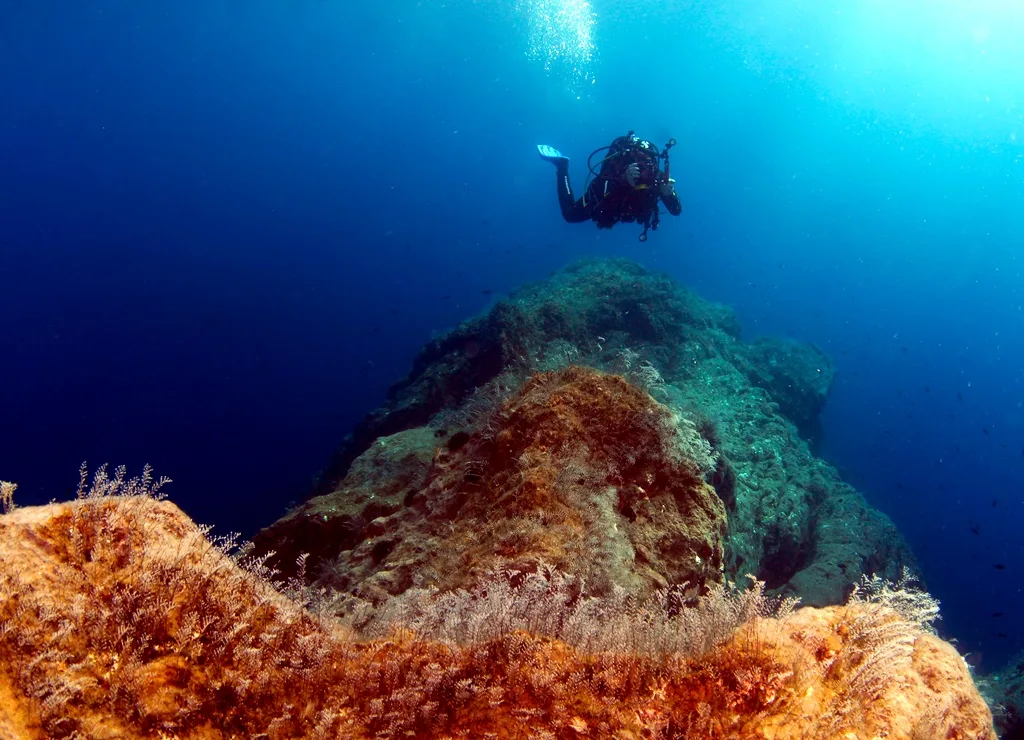
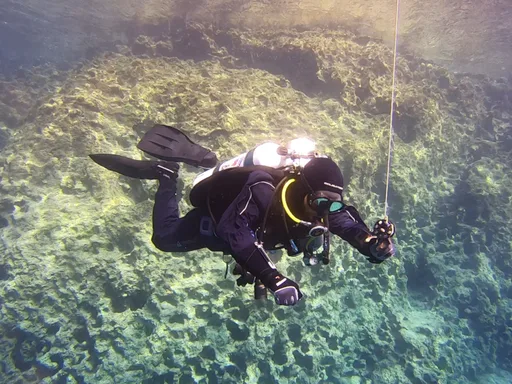
Visibility at Cleobulus Tomb is consistently high, frequently exceeding 20 metres. This clarity is essential for navigating the cave's internal structure and for seeing the details of the rock formations within the domes. The light filtering through the entrance creates moving patterns on the floor of the chambers, adding to the visual experience of the cave's interior. This clarity ensures that the boundaries of the corridor and the dome entrances remain clearly visible during the dive.
The technical requirements for this site depend heavily on which part of the system you intend to explore. For those wanting to navigate the deeper sections of the domes, an Advanced Open Water certification is necessary. Some operators may offer a shallower version at approximately 18 metres for active Open Water divers, but this limits the scope of the exploration. Successful navigation within the cave system requires not just the correct certification, but a high level of buoyancy control and situational awareness.
The site is best accessed when the conditions allow for safe penetration of the cave openings. Because the topography involves submerged chambers, your ability to maintain a steady position is critical as you move between the domes. The presence of a large, enclosed structure means that the diver's focus must remain on their surroundings and gas management while exploring the corridors. This complexity is what makes Cleobulus Tomb a standout location for those seeking something more technical than a simple reef dive.
Depth ranges from 18 to 30 metres. Advanced Open Water is required for the deeper sections; Open Water divers should stick to the 18m profile. Visibility is typically 20 metres or more.
You should choose Cleobulus Tomb when conditions allow safe penetration of the cave openings. The submerged chambers require you to maintain a steady position, stay aware of your surroundings, and manage your gas while moving between the domes and through the connecting corridor.
Cleobulus Tomb suits Open Water divers only on the shallower profile at approximately eighteen metres. Advanced Open Water certification is required for deeper sections of the domes. Whichever route you take, you need strong buoyancy control and situational awareness for the cave system.
Cleobulus Tomb ranges from eighteen to thirty metres. The main entrance lies between twenty and twenty-five metres, while the cave’s main interior occupies similar depths. Open Water divers should remain on the eighteen-metre profile, while deeper sections require Advanced Open Water certification.
At Cleobulus Tomb, you will explore two large, dome-like chambers linked by a submerged corridor. High visibility reveals the rock formations and changing light patterns across the chamber floors. The enclosed spaces create a different experience from open reefs, with movement between broad domes and a more intimate corridor.