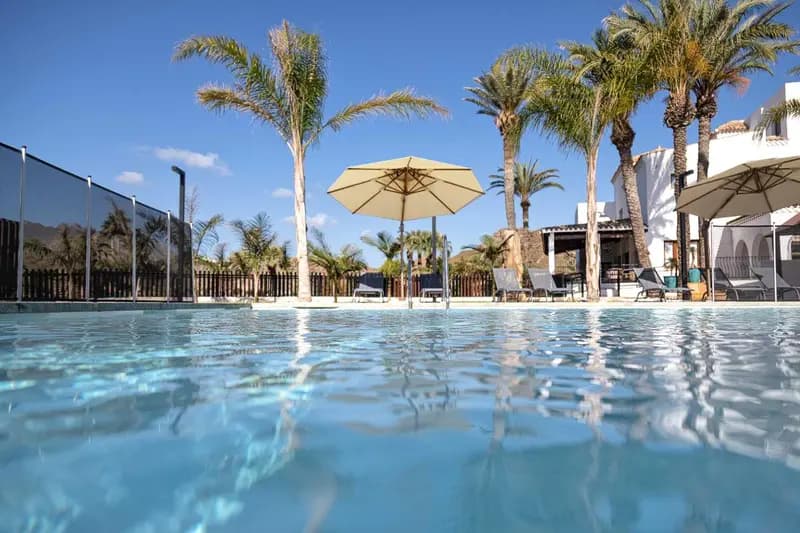
Jardines de la Mata Boutique Beach
★ 9.1/10 (693 reviews)
12 km away as the crow flies
Dive centre · Vera · Spain
4.945 Google reviewsExplore the volcanic islets and intentional wreck sites of the Almería coast with an experienced SSI diving team.
For subtitles in English: start the video firstthen click the gearat the top right of the video, select “Subtitles/CC”, then “Auto-translate” and choose “English”.
Buceo Calamar Gigante is situated in the coastal town of Villaricos, serving as a gateway to the diverse marine environments of the Almería coast. The centre's operations span from the protected waters of Cabo Cope to the volcanic formations of Isla de San Andrés.
Whether you are looking to take your first breaths underwater or are an experienced diver seeking technical challenges, the centre provides access to a variety of underwater topographies. The area is characterised by a mix of submerged mountains, rocky walls, and historic wreck sites that offer something for every level of experience.
The team at Buceo Calamar Gigante is composed of instructors with over 10 years of experience. They operate as an SSI Dive Centre, providing a structured environment for both recreational and professional training.
Beyond standard diving, the centre is actively involved in environmental awareness and marine conservation. They organise seabed clean-ups and educational programmes, ensuring that the local ecosystems are respected by the diving community.
The training programme is extensive, covering the full spectrum of SSI certifications. Beginners can start with Try Scuba or Open Water Diver, progressing through Adventure Diver, Advanced Open Water Diver, and Rescue Diver.
For those looking to turn diving into a career, the centre offers Divemaster and professional-level training. Technical and specialty courses are also available, including Nitrox, Deep Diver, Wreck Diver, Dry Suit, Diver Propulsion Vehicle, and specialized training in Search and Recovery, Peak Performance Buoyancy, and Underwater Navigation.
The centre provides full equipment hire for those not travelling with their own kit, including wetsuits, masks, fins, BCDs, regulators, and dive computers. For night dives, torches are available to help navigate the darker habitats.
Nitrox is available for use, allowing divers to extend their bottom times on many of the local sites. The centre also functions as a pressure cylinder inspection facility, a service supported by European Union modernisation projects to ensure high safety and compliance standards.
Isla de Terreros is a volcanic islet that offers clear waters and spectacular marine life, making it a favourite for night dives. While the exterior can experience strong currents, the site is a highlight for underwater photographers.
Los pecios de Cabo Cope is a dedicated wreck site within a regional park, featuring approximately 18 wrecks, including anchors and aircraft tails. These vessels were intentionally sunk and are connected by cables, providing a unique thematic diving experience.
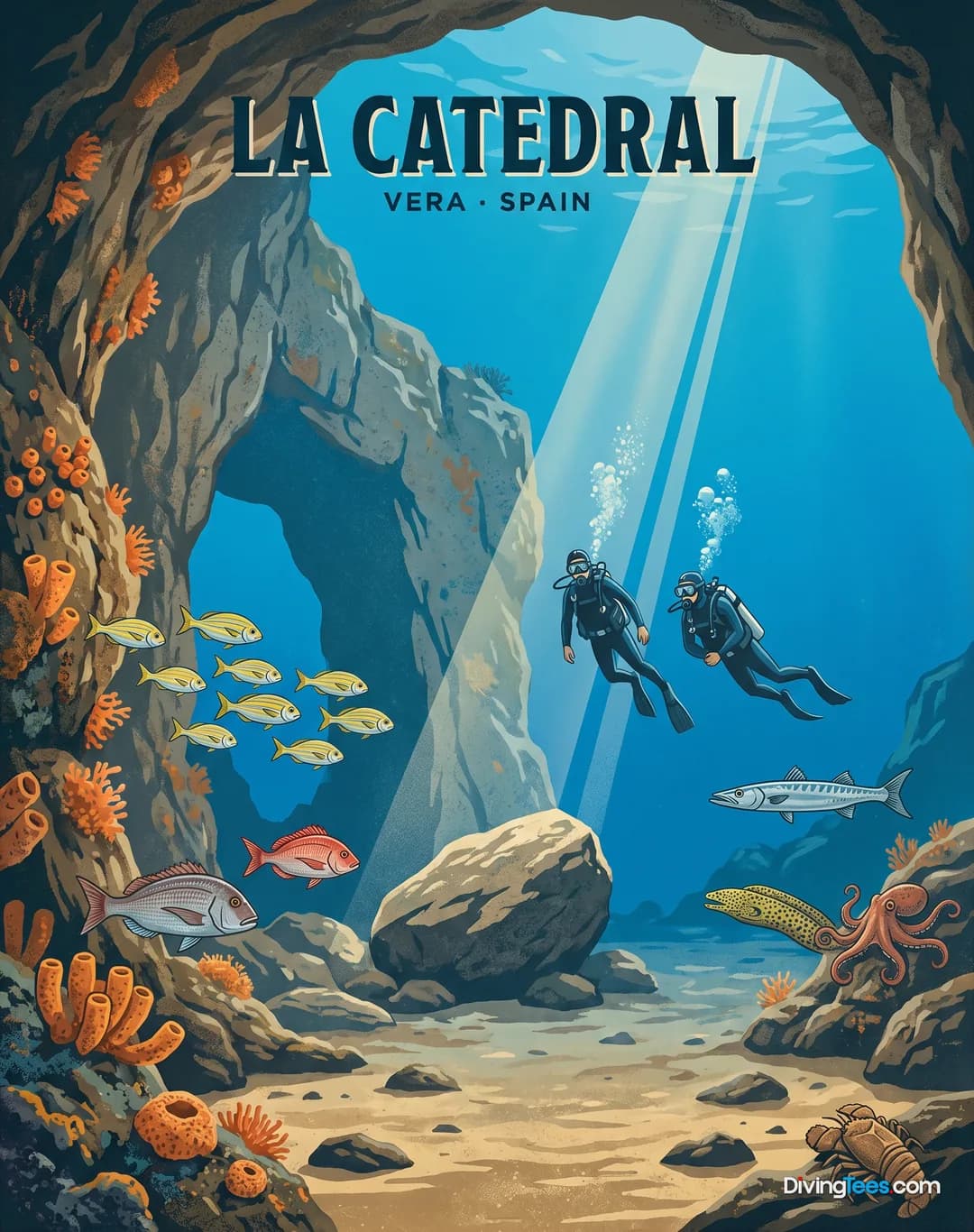
La Catedral is an underwater mountain with a large cave at 30 metres that can accommodate several divers. The site is known for its interesting light effects and the presence of large fish like dentex and sea breams near the exit.
Pecio Fire is an advanced wreck dive located at 34 metres on a sandy bottom. This 15-metre vessel is known for its well-preserved structure and the abundance of moray eels and groupers that inhabit its many cavities.
And some of the dive sites the centre runs.
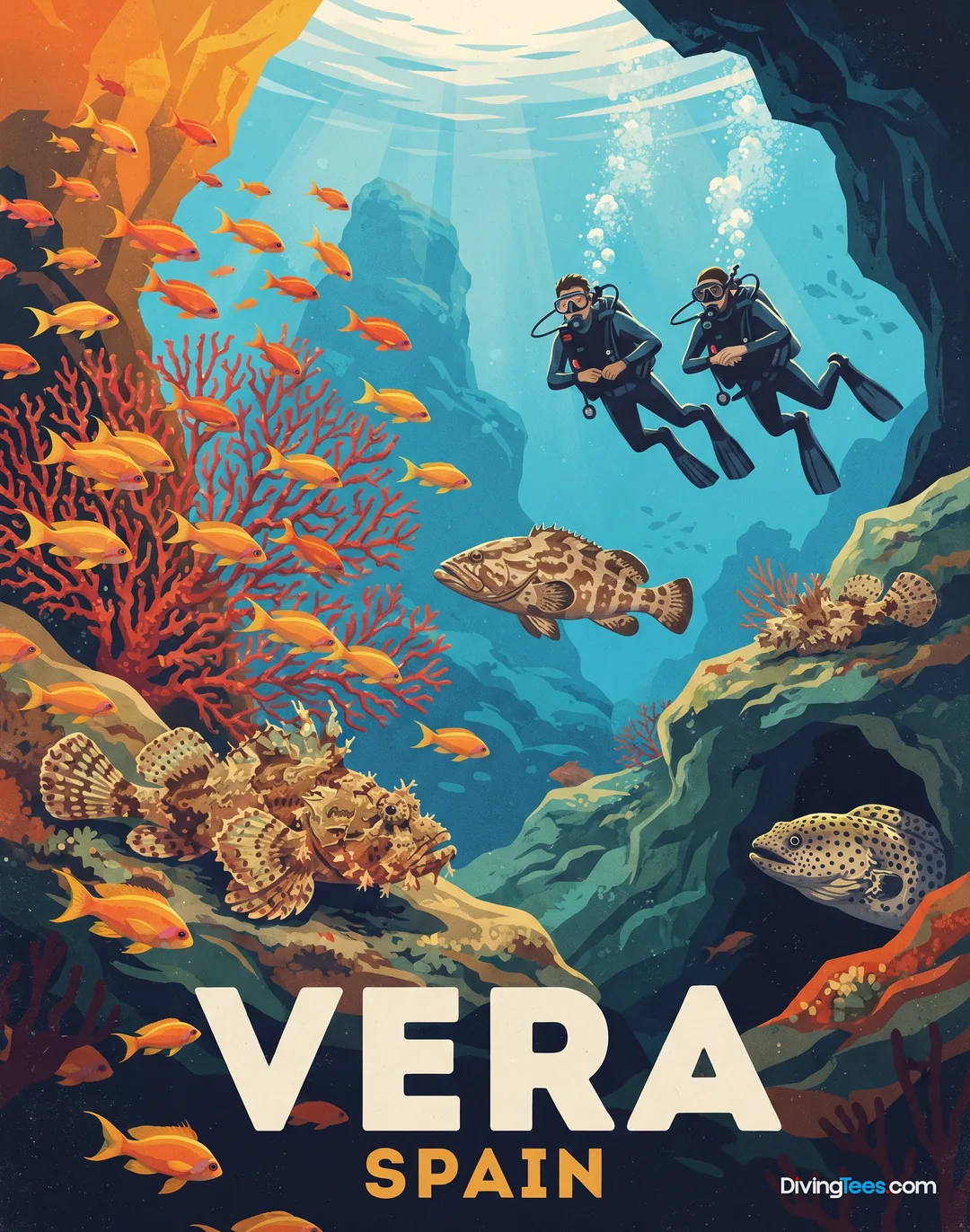
The volcanic reefs and underwater mountains are home to a diverse range of fish, including dentex, sea breams, amberjack, and barracuda. You will often see schools of salema porgy, mackerel, and various species of snapper and grouper patrolling the walls.
Macro life is abundant throughout the region, particularly among the rocky crevices and seagrass meadows. Divers can find a variety of nudibranchs, octopuses, seahorses, and crabs, alongside scorpionfish and various species of gobies.
The seabed and rocky structures host many crustaceans, such as spiny lobsters and slipper lobsters. In the seagrass meadows, you may encounter large fan mussels and various species of sea slugs and sea cucumbers.
Divers should be aware that certain sites, particularly the outer edges of Isla de Terreros and the open-sea site of Losa del Payo, can experience strong currents. These areas require a higher level of experience and buoyancy control.
The topography varies from shallow, sheltered sandy bottoms at Isla Negra to deep underwater mountains and vertical walls. Planning is essential when navigating the tunnels and chimneys found at sites like Las Clavelinas.
Hello, I'm Marina, DivingDeal.com's AI assistant. I answer in detail about hotels, dive centres and liveaboards.

Thinking about the whole trip and the flights? Talk it over with Edith →
Marina is an AI. Some links are affiliate links: DivingDeal may earn a commission, at no extra cost to you. Bookings are made with the partner.
★ 9.1/10 (693 reviews)
12 km away as the crow flies
★★★
★ 8.7/10 (1,428 reviews)
13 km away as the crow flies
★★★★
★ 8.7/10 (1,090 reviews)
12 km away as the crow flies
★ 8.1/10 (318 reviews)
12 km away as the crow flies