
Buceo Calamar Gigante
Google 4.8/5 (50 reviews)
Vera · Spain · Mediterranean
Max. depth · 30 mDescend into La Catedral to explore a distinctive underwater mountain featuring a large cave system, where light plays through five distinct openings at depth.
For subtitles in English: start the video firstthen click the gearat the top right of the video, select “Subtitles/CC”, then “Auto-translate” and choose “English”.
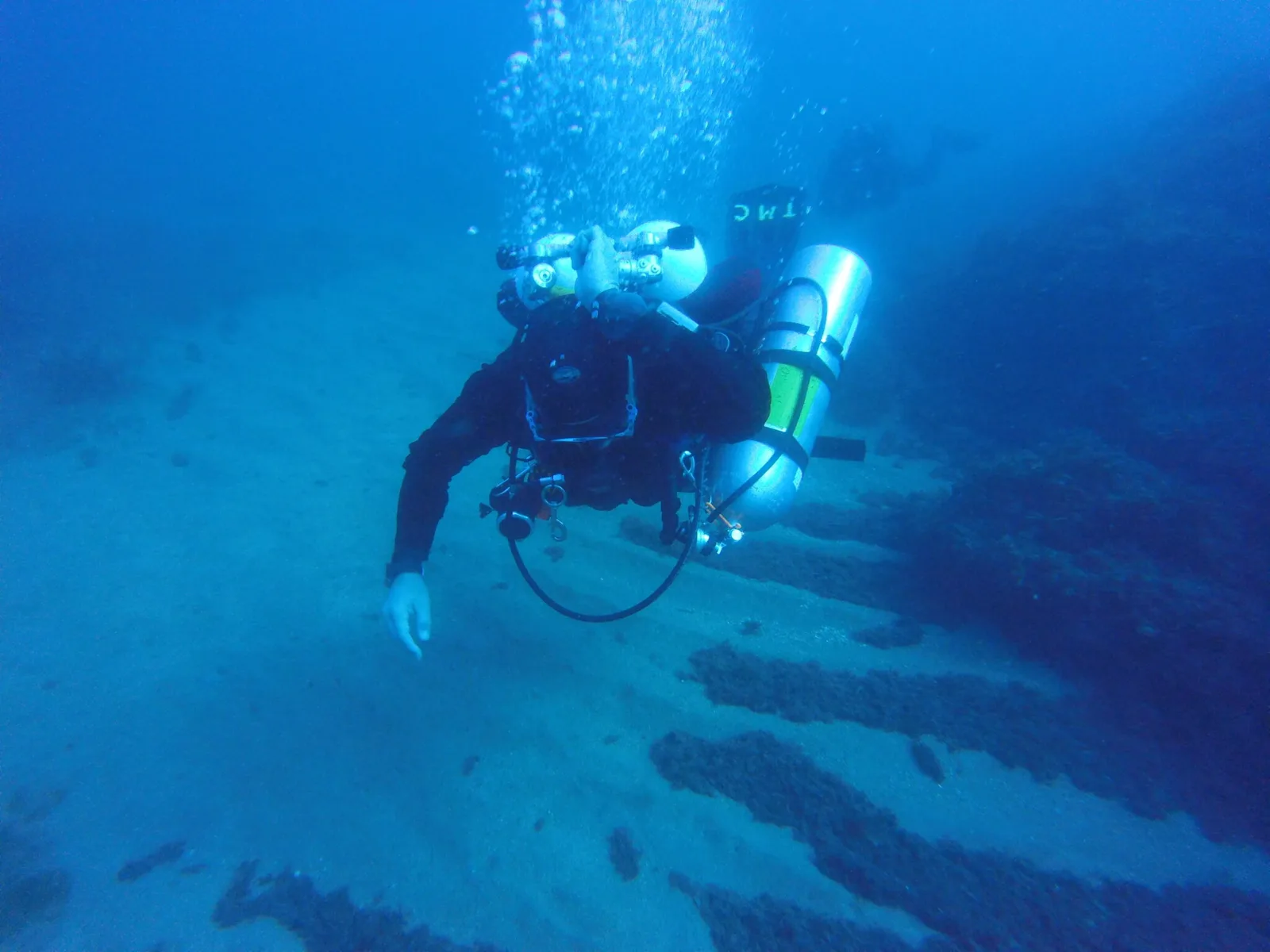
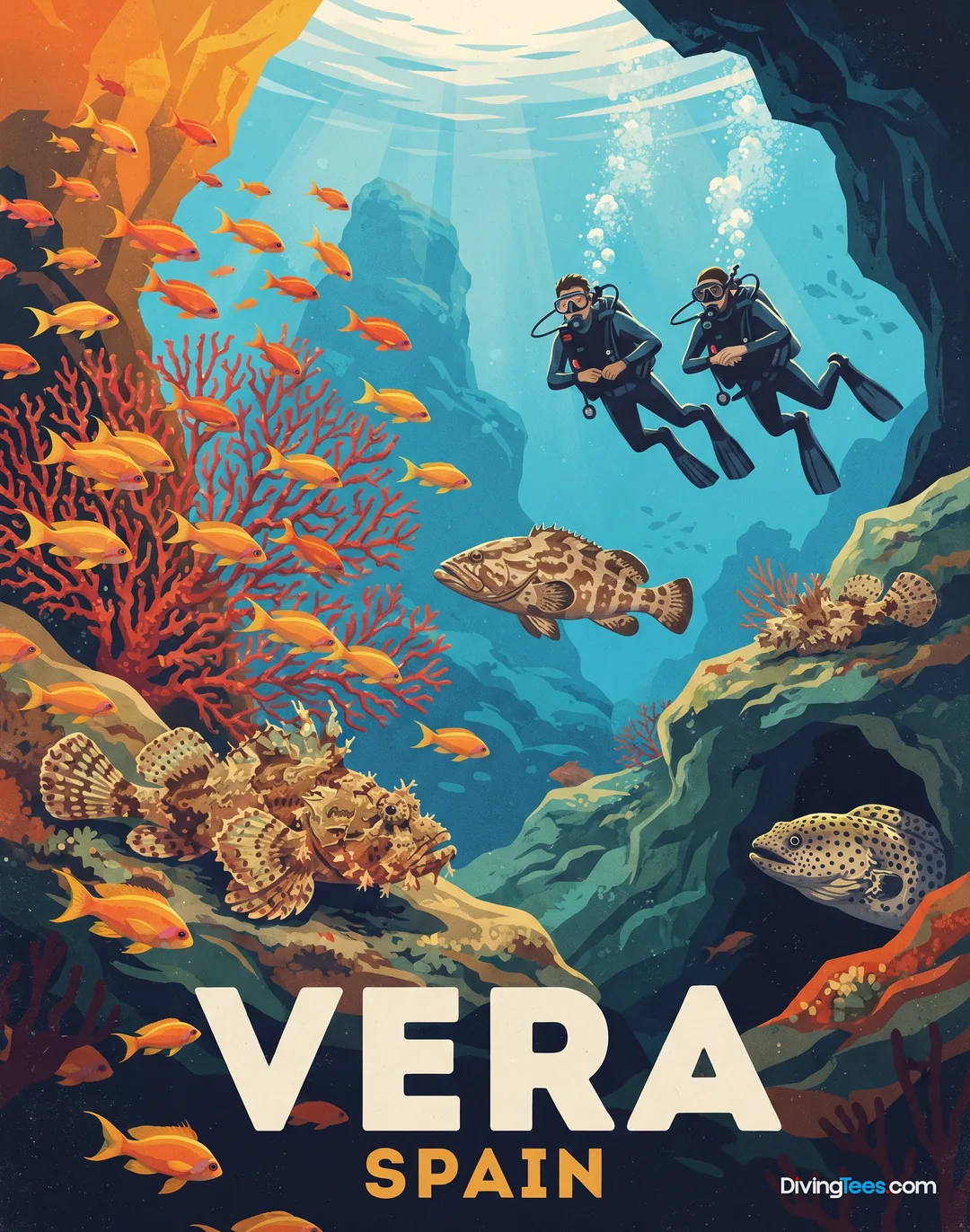
La Catedral sits off Vera, Spain, as an underwater mountain formation. Your descent here lands you on its summit at 18 metres before dropping towards the base at around 30 metres. This submarine topography defines the dive, leading directly to the primary feature: a substantial cave, known as Cueva de la Catedral, which gives the site its name. The cave itself is large enough to accommodate multiple divers, but its sandy bottom requires precise buoyancy control to avoid disturbing the sediment and impacting visibility for others.
The character of the cave is shaped by five distinct openings, two main entries and exits near 30 metres, complemented by two smaller, higher ones. These openings provide a visual connection to the deep blue of the Mediterranean from within the cave's darker interior, creating dramatic light effects as sunlight penetrates the water. Exploring inside involves navigating these light shafts and observing how the natural light interacts with the cavern's structure, a key draw of the site.
Beyond the cave's interior, the surrounding rock formations recall natural columns, particularly in the northern part of Urdiales cove, near Punta Pepina. This area offers a series of smaller grottoes, but the central 'Cathedral' is the most striking. The interplay of light and shadow, especially when viewing the natural light from within, makes this a visually engaging dive, distinct from open reef dives in the region.
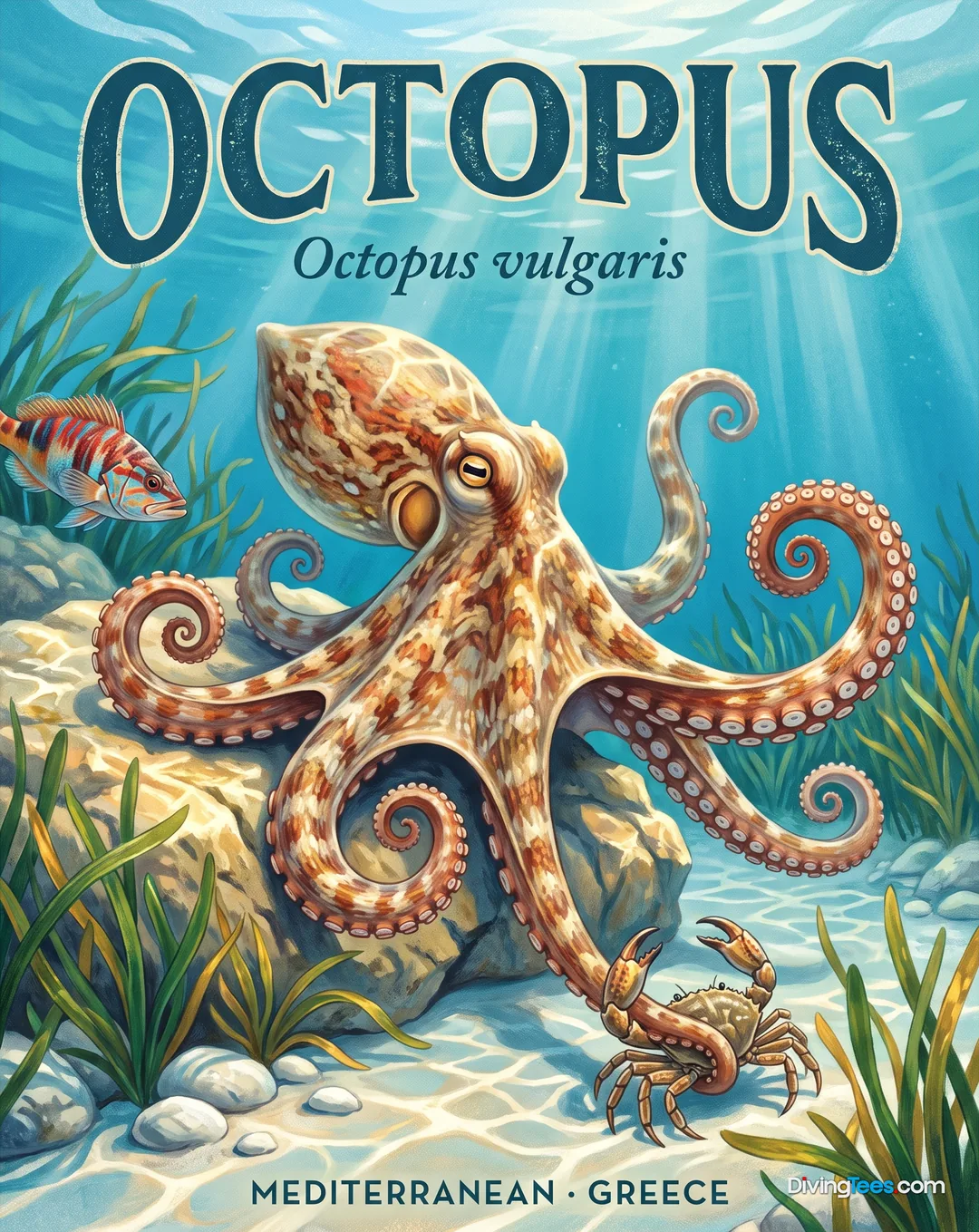
Marine life here often concentrates around the cave exit and the mountain base. You can expect to encounter large dentis (Dentex dentex) and pagres, often in schools, alongside espetons (Sphyraena sphyraena). Muraenas (Muraena helena), corvallos, chopas, rascasses, false groupers, and slipper lobsters (Scyllarides latus) are residents. Octopus (Octopus vulgaris), borriquetes, and salgos seek refuge in the rock crevices and a porous rock allows air bubbles to escape, adding a dynamic element to small sections of the dive.
This dive site is accessible to Advanced Open Water Diver (AOWD) certified divers, with depths ranging from a minimum of 18 metres to a maximum of 30 metres. The primary cave has a sandy bottom, necessitating good buoyancy control to maintain visibility. While precise current data for this specific site is not available, the general area can experience light currents.
La Catedral is accessible to Advanced Open Water Diver certified divers. You should also have good buoyancy control because the primary cave has a sandy bottom. Careful positioning helps you avoid disturbing sediment, which could reduce visibility for you and other divers exploring the cave.
At La Catedral, you begin on the summit of an underwater mountain at 18 metres. The dive then descends toward the mountain base and the cave openings, reaching around 30 metres. The site’s depth profile combines the summit, surrounding rock formations, and the substantial underwater cave.
At La Catedral, you can explore a large underwater cave with five openings and watch natural light shafts enter the darker interior. Near the exit and mountain base, you may see dentis, pagres, espetons, muraenas, octopus, corvallos, chopas, rascasses, false groupers, and slipper lobsters.
At La Catedral, the general area can experience light currents. The cave’s sandy bottom also makes buoyancy control important, since disturbed sediment can affect visibility. You should maintain a controlled position while moving through the cave, around its openings, and among the surrounding rock formations.