

Centre Djerba Plongee
Google 5/5 (327 reviews)
6.8 km away as the crow flies
Djerba · Tunisia · Mediterranean
Max. depth · 16 mExplore a network of shallow rock formations, small tunnels, and ledges that attract a diverse Mediterranean reef population.
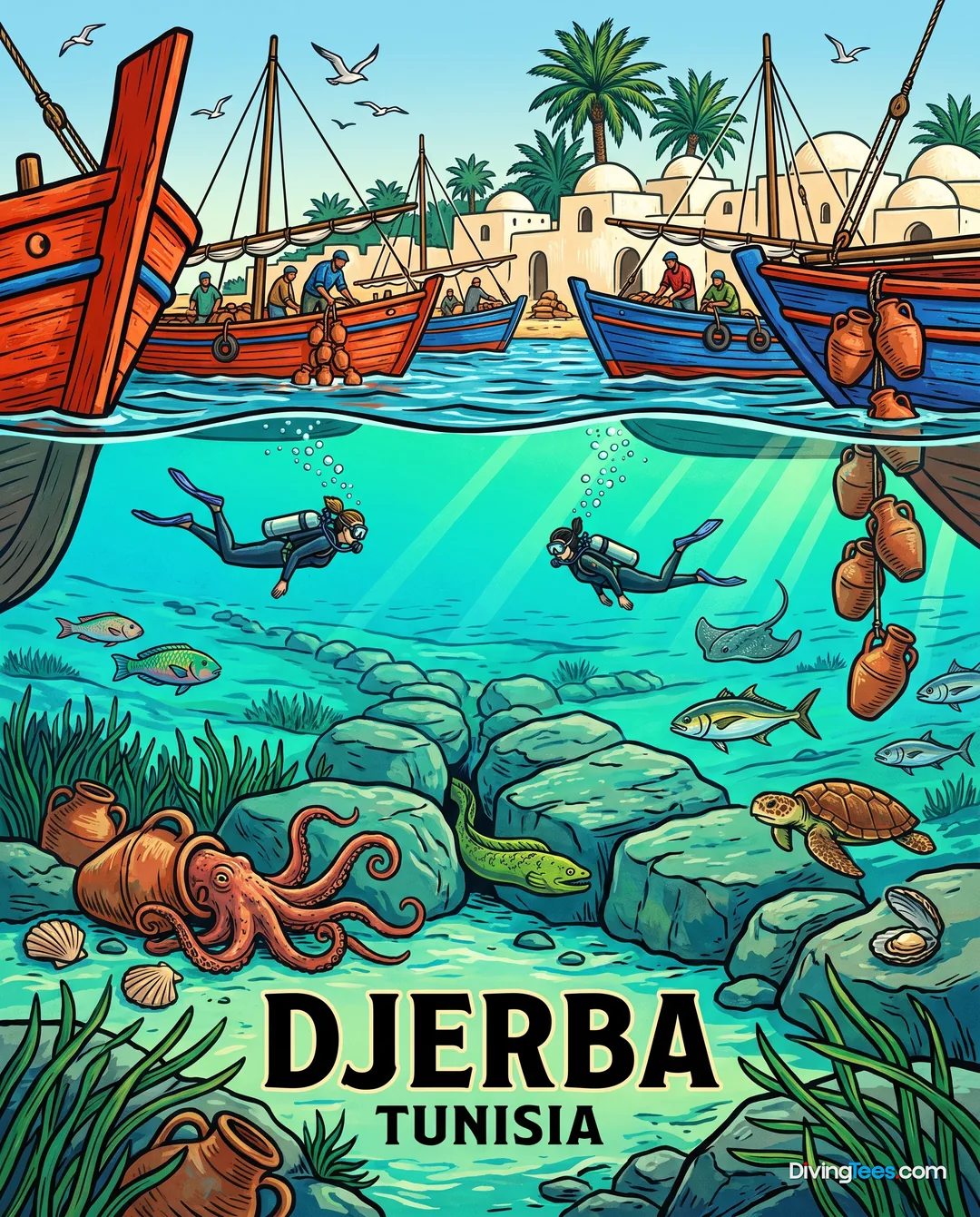
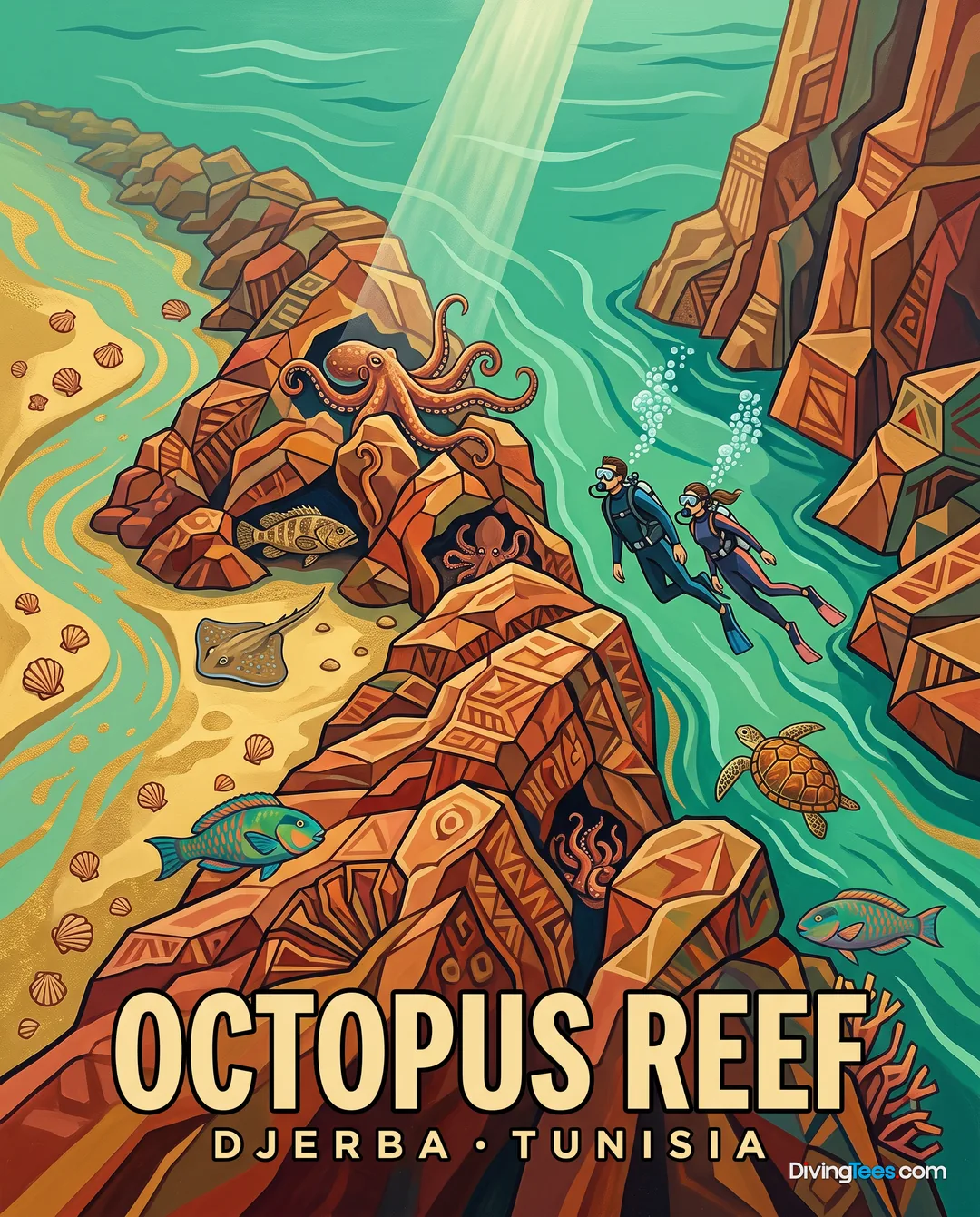
The Rocks Of Mongi, often referred to as Mongi I and Mongi II, is a submerged reef system off Djerba, structured around distinct rock blocks set amidst sand and Posidonia seagrass beds. These formations create a complex underwater landscape, featuring numerous fault lines and small tunnels. This topography provides both shelter and hunting grounds for a variety of marine species, making it a focal point in the surrounding flatter seabed.
Your dive here will typically range between 10 and 16 metres, making it accessible while still offering a substantial bottom time. The rocky structures themselves are the main draw, forming natural refuges and swim-throughs that you can navigate. In certain sections, a small canyon, approximately 1,000 metres long, offers the possibility of a drift dive, allowing the current to guide you along its contours and observe the life concentrated there.
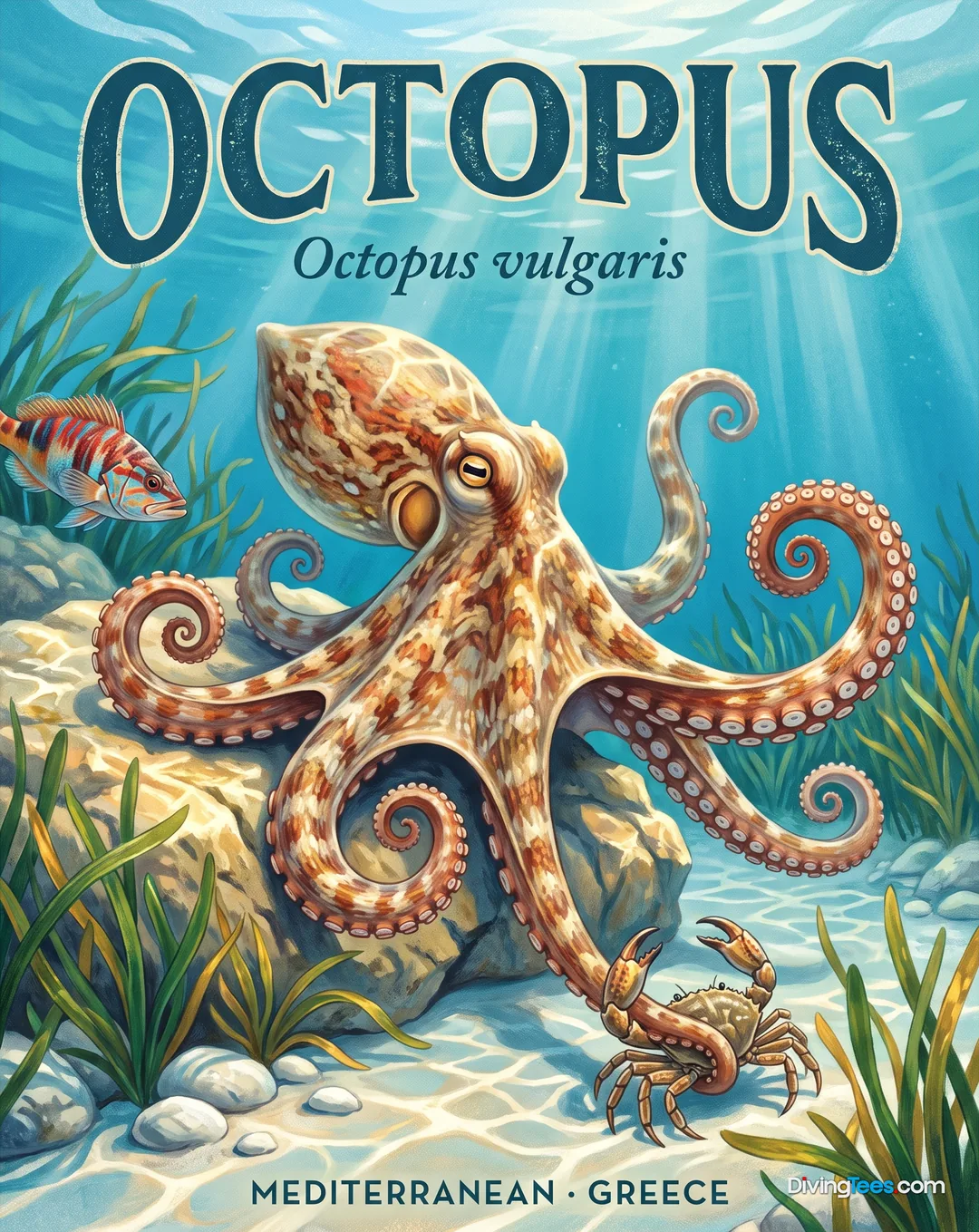
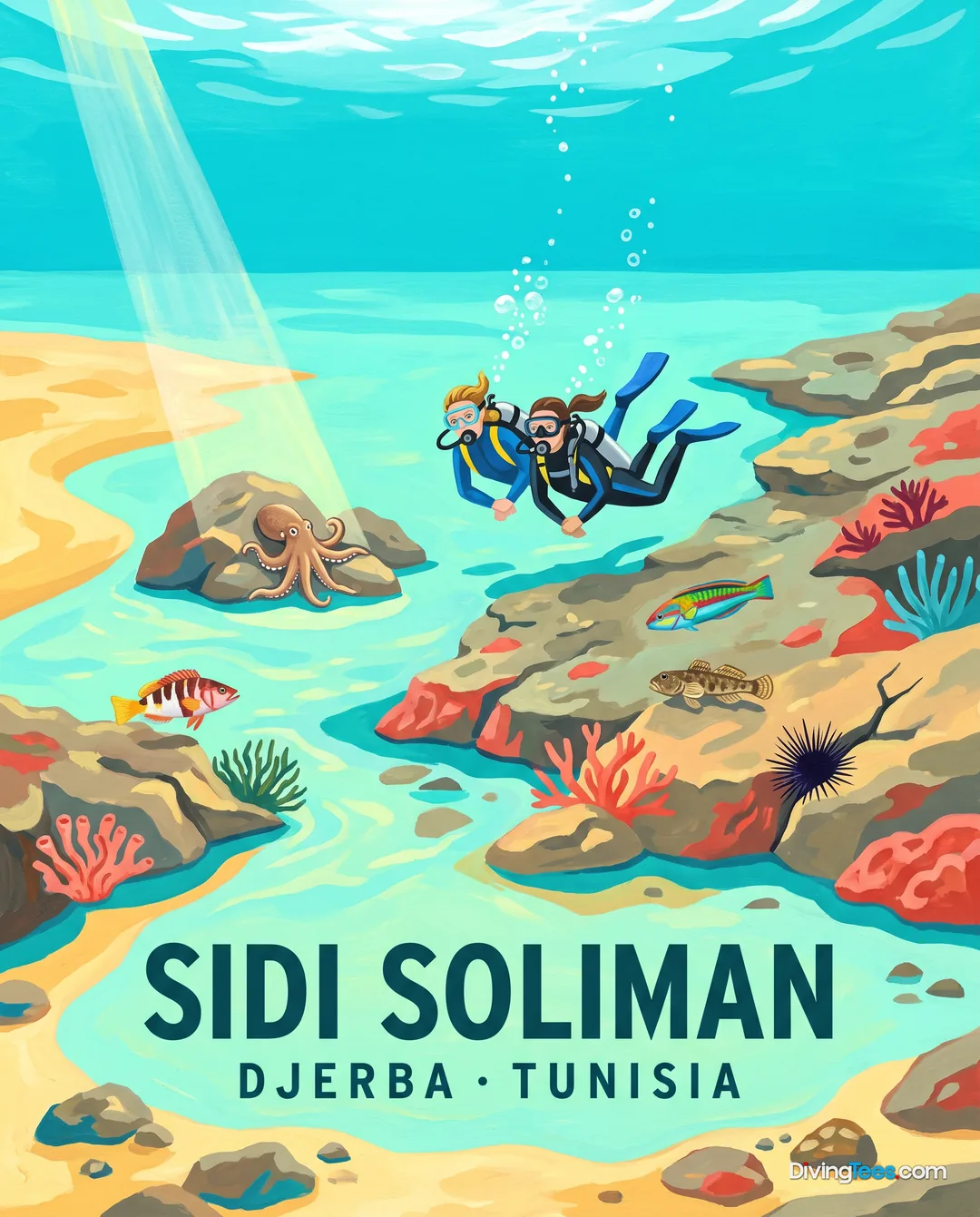
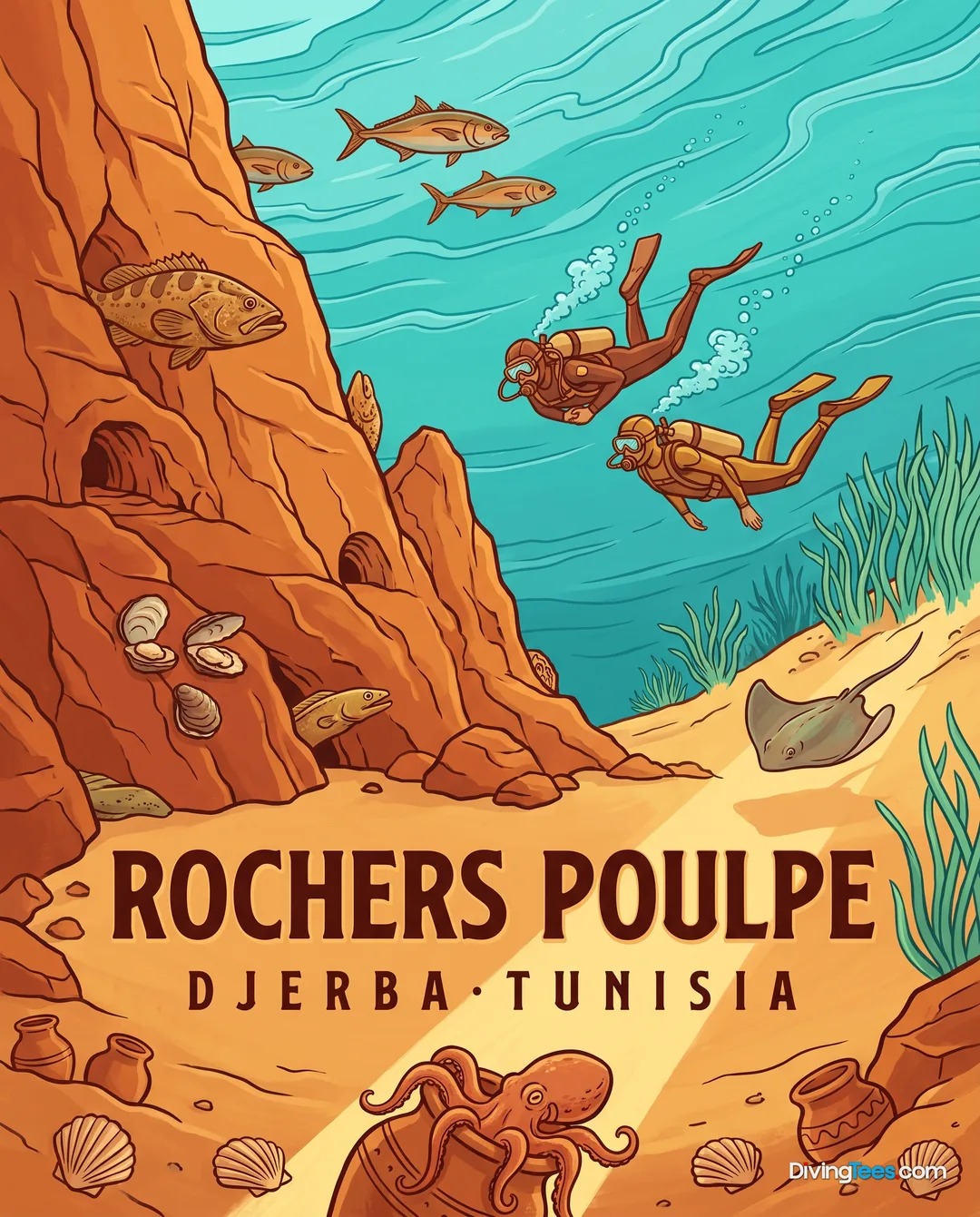
Life on the reef is active, with octopuses commonly found tucked into crevices and parrotfish grazing on the rocky surfaces. You’ll also spot groupers patrolling the larger rock formations and amberjacks moving in the blue. The site's numerous shelters mean you need to take your time to peer into the smaller openings, as moray eels often reside within these rocky retreats.
Beyond the prominent reef fish, keep an eye out for pearl oysters attached to the rocks and anthias schooling around the higher points of the formations. Rays are known to glide over the sandy patches between the rock blocks, and sea stars are common on the seabed. Flatfish, like flounders, camouflage themselves against the sand, blending into the environment, rewarding a slow and deliberate search.
While the site is primarily known for its resident reef inhabitants, occasional larger visitors such as turtles and dolphins are reported in the area. These encounters are less frequent but highlight the site's connection to the broader open water. The varied topology, from dense rock structures to open sand, creates a rich mosaic of habitats supporting this diversity.
What sets The Rocks Of Mongi apart from other sites in the vicinity is its combination of accessible depth and dynamic topography. Unlike purely sandy bottoms, the intricate rock formations here provide a concentrated habitat that draws in a greater density and variety of marine life. This makes it a site that feels more alive, offering more interactions than the surrounding flat areas.
This site is shallow, with depths between 10 and 16 metres. It is accessible from Open Water Diver level when diving with an instructor. While currents around Djerba are generally calm, a variable current can be present here, especially along the identified drift sections. This variability makes it better suited for novice to intermediate divers, allowing for the possibility of a guided drift dive along the reef's length when conditions allow.
The Rocks Of Mongi is a shallow reef site, with dives typically ranging from 10 to 16 metres. You can access it from Open Water Diver level when diving with an instructor. Rock blocks, sand patches, Posidonia seagrass beds, small tunnels, and fault lines create an accessible underwater landscape to explore.
Currents around Djerba are generally calm, but a variable current can occur at The Rocks Of Mongi, particularly along the identified drift sections. The site is suited to novice and intermediate divers, with the possibility of a guided drift dive along the reef’s length when conditions allow.
At The Rocks Of Mongi, you can look for octopuses in crevices, parrotfish grazing on rocks, groupers, moray eels, pearl oysters, anthias, sea stars, and rays over sandy patches. Flatfish may blend into the sand, while turtles and dolphins are reported occasionally in the surrounding open water.
The Rocks Of Mongi consists of distinct rock blocks set among sand and Posidonia seagrass beds. Fault lines, small tunnels, crevices, and natural swim-throughs form a varied underwater landscape. In certain sections, a canyon approximately 1,000 metres long offers the possibility of a guided drift dive along its contours.