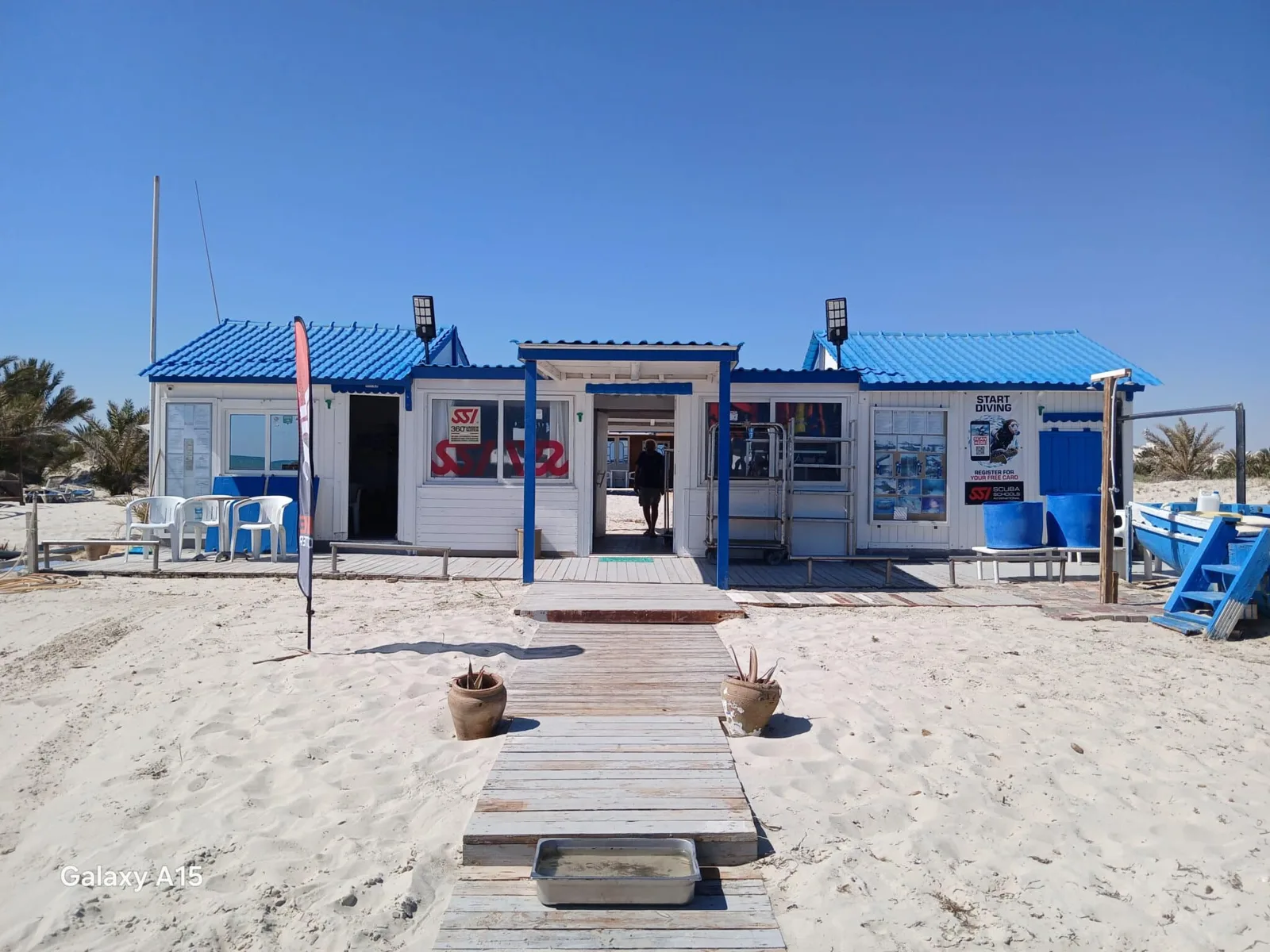


Centre Djerba Plongee
Google 5/5 (327 reviews)
Tunisia · Mediterranean
Rock tunnels, drifting octopus reefs, sandy-bottom wrecks and depths down to 28 metres shape Djerba’s easy-going Mediterranean diving from an island base.
For subtitles in English: start the video firstthen click the gearat the top right of the video, select “Subtitles/CC”, then “Auto-translate” and choose “English”.
Djerba is a stay-based island destination where diving sits alongside beaches, markets and excursions into southern Tunisia. Underwater, the character is set by low rocky reefs, small tunnels and wrecks rather than a single protected marine complex. Rochers Poulpe brings a kilometre-long formation at five to 16 metres, while Epave Ricardo reaches 28 metres. The result suits divers who want straightforward local outings and a wider holiday, rather than a trip built solely around intensive diving.
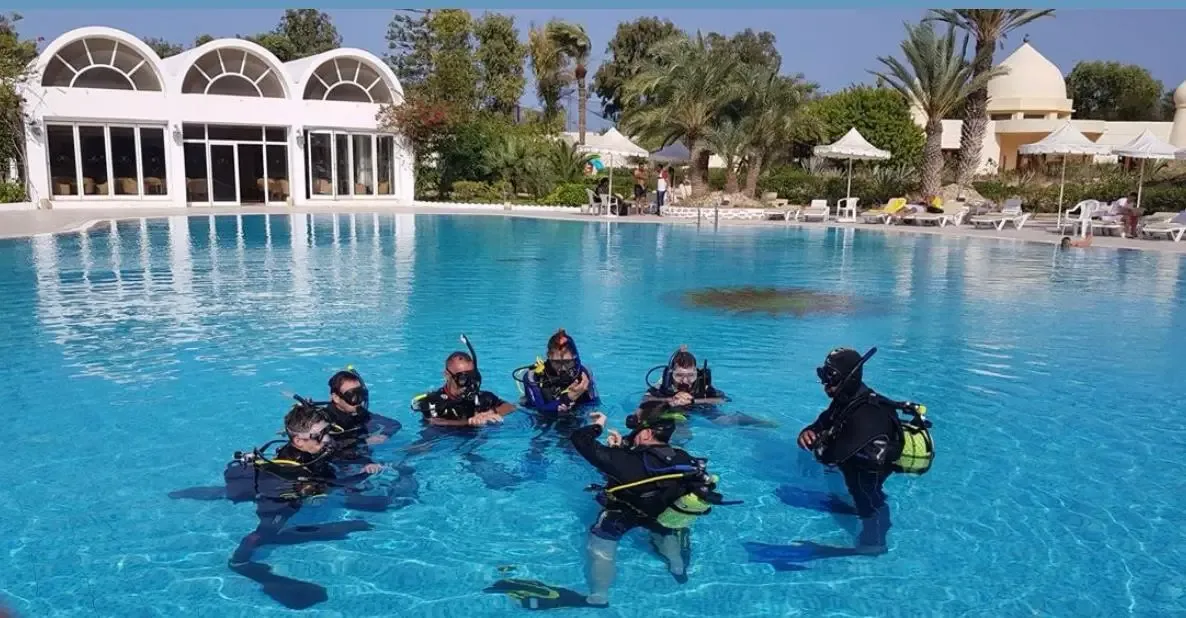
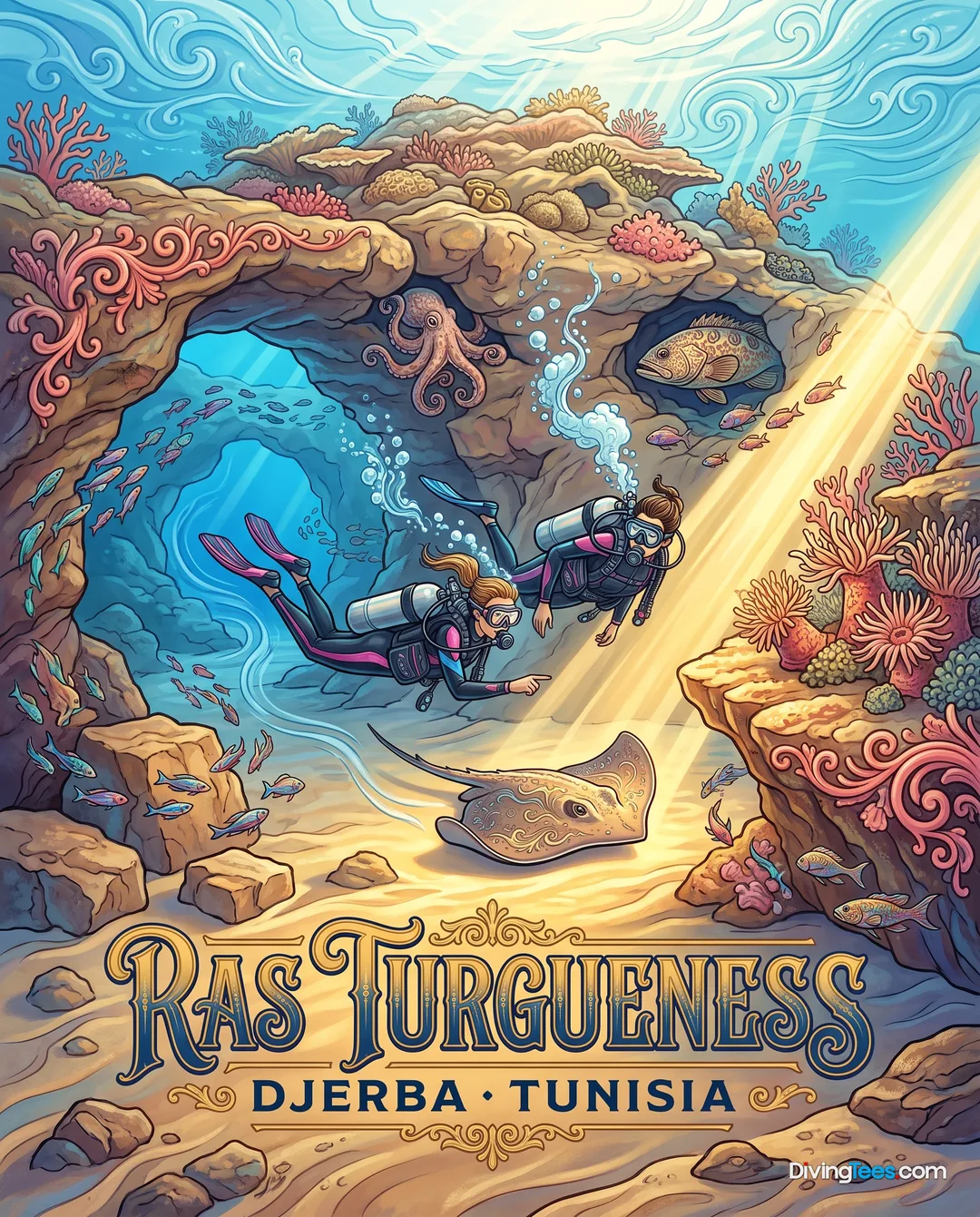
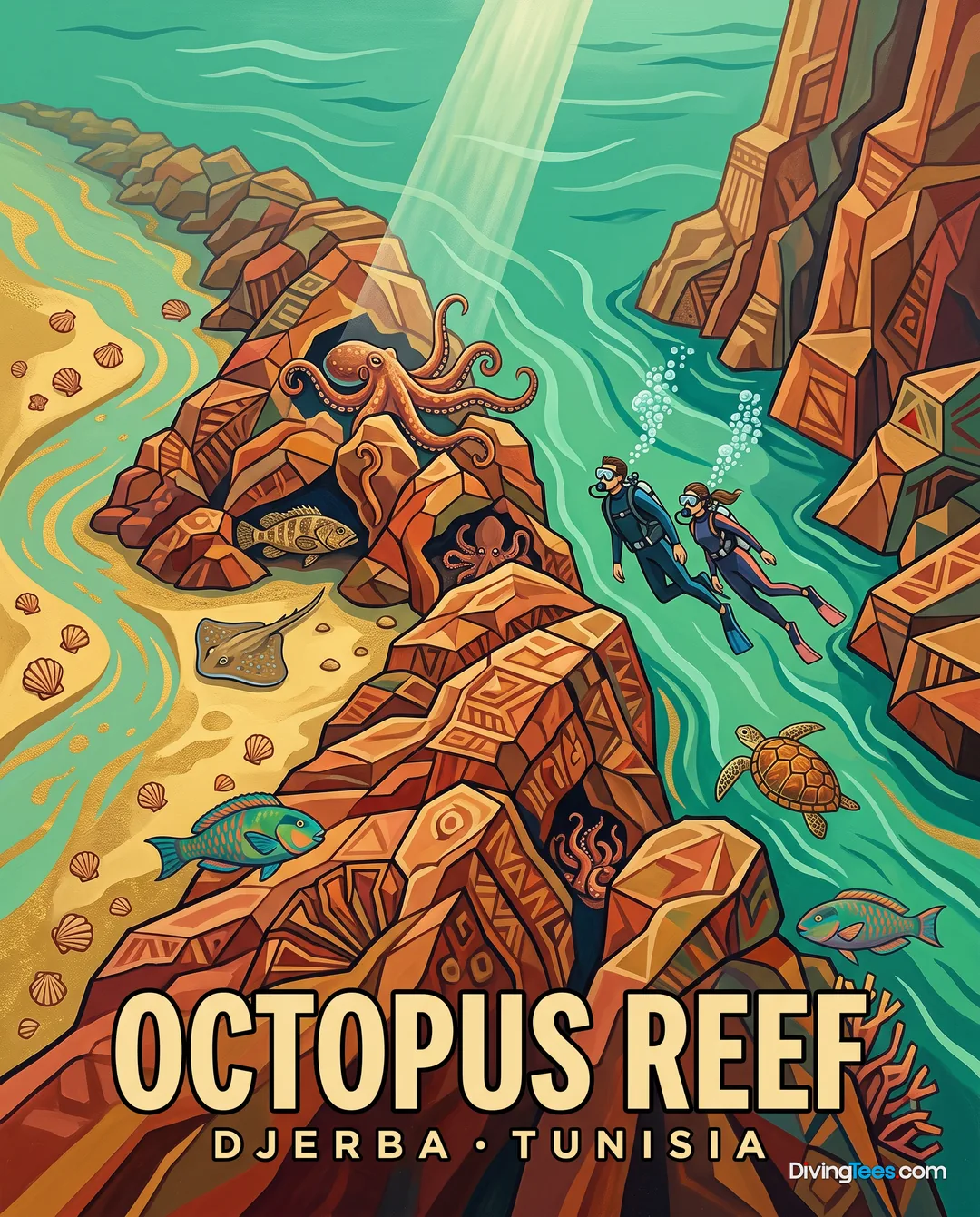
The local sites range from very shallow rocky ground to deeper wrecks. Sidi Soliman starts at one metre and reaches only five, with generally calm water and no significant current, making it useful for introductory dives and training. The Rock of Ras Turgueness adds small underwater tunnels between four and ten metres. Rochers Poulpe and Octopus Reef are drift dives along extensive rock formations, where a gentle to moderate current carries divers past shelters and overhangs; conditions can become variable. The wrecks require more planning: Khorda lies at 21 metres, Saguia between 18 and 24, and Ricardo on sand between 19 and 28 metres. Visibility at Rochers Poulpe is typically 10 to 20 metres. Access is by local shore- and boat-based operations, with some wrecks reached only by boat.
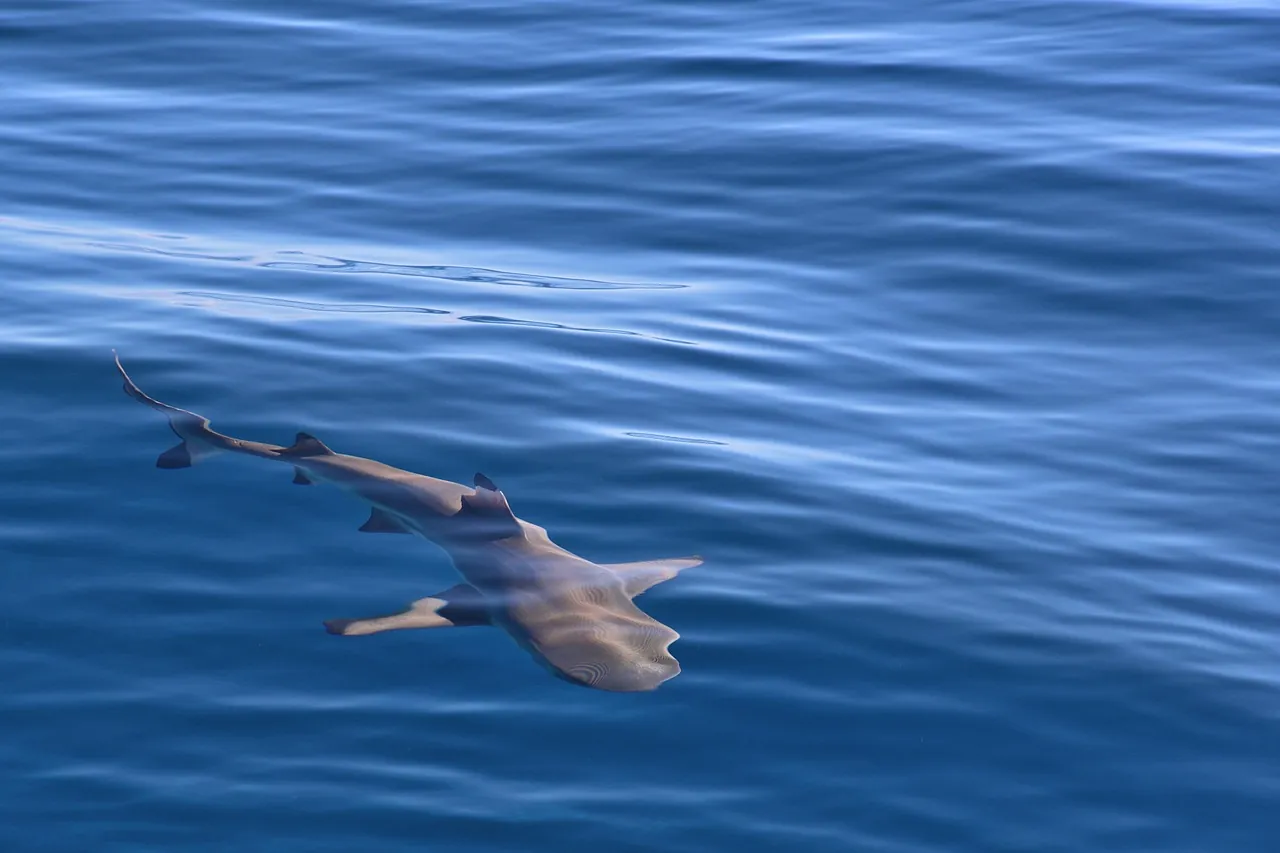
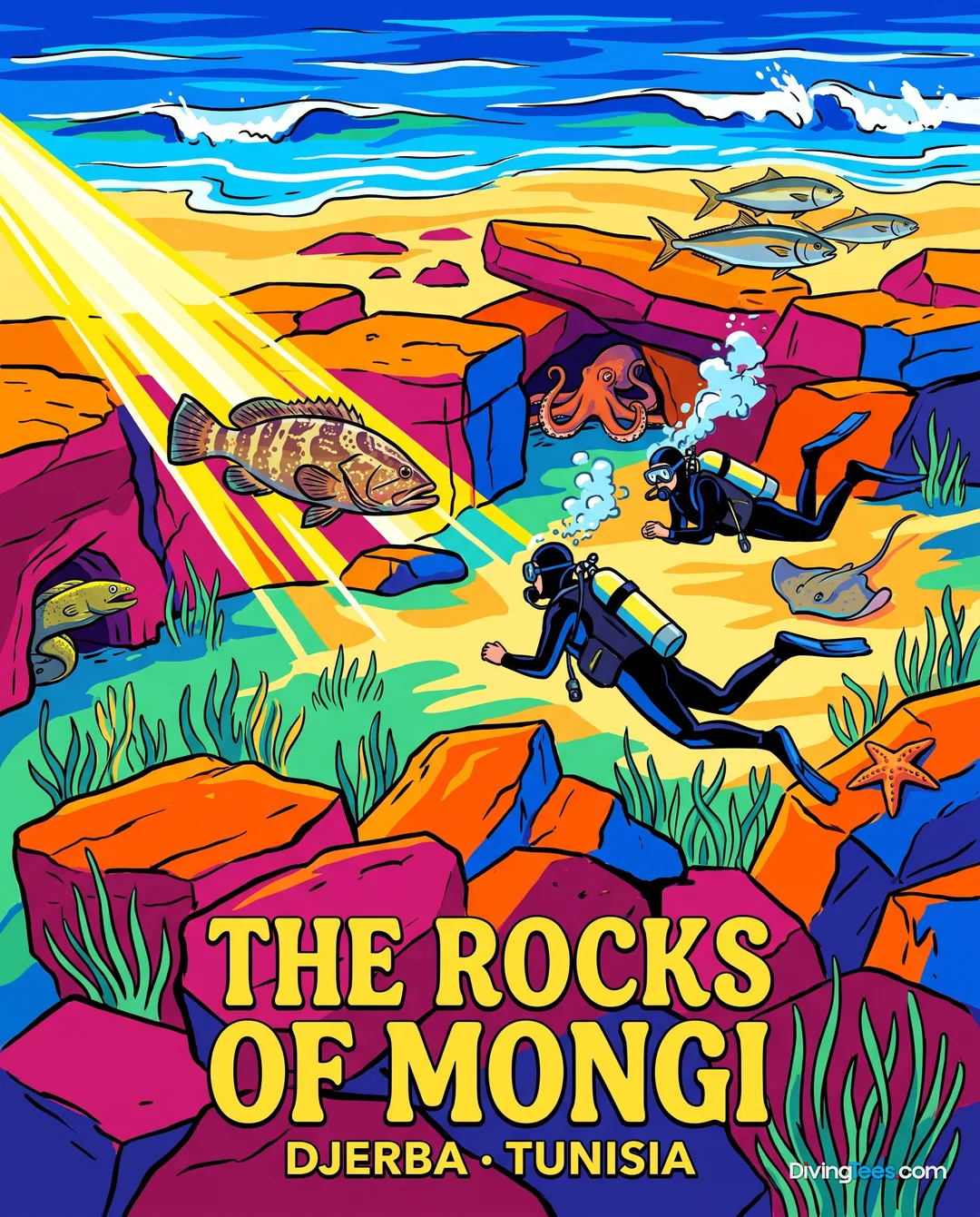
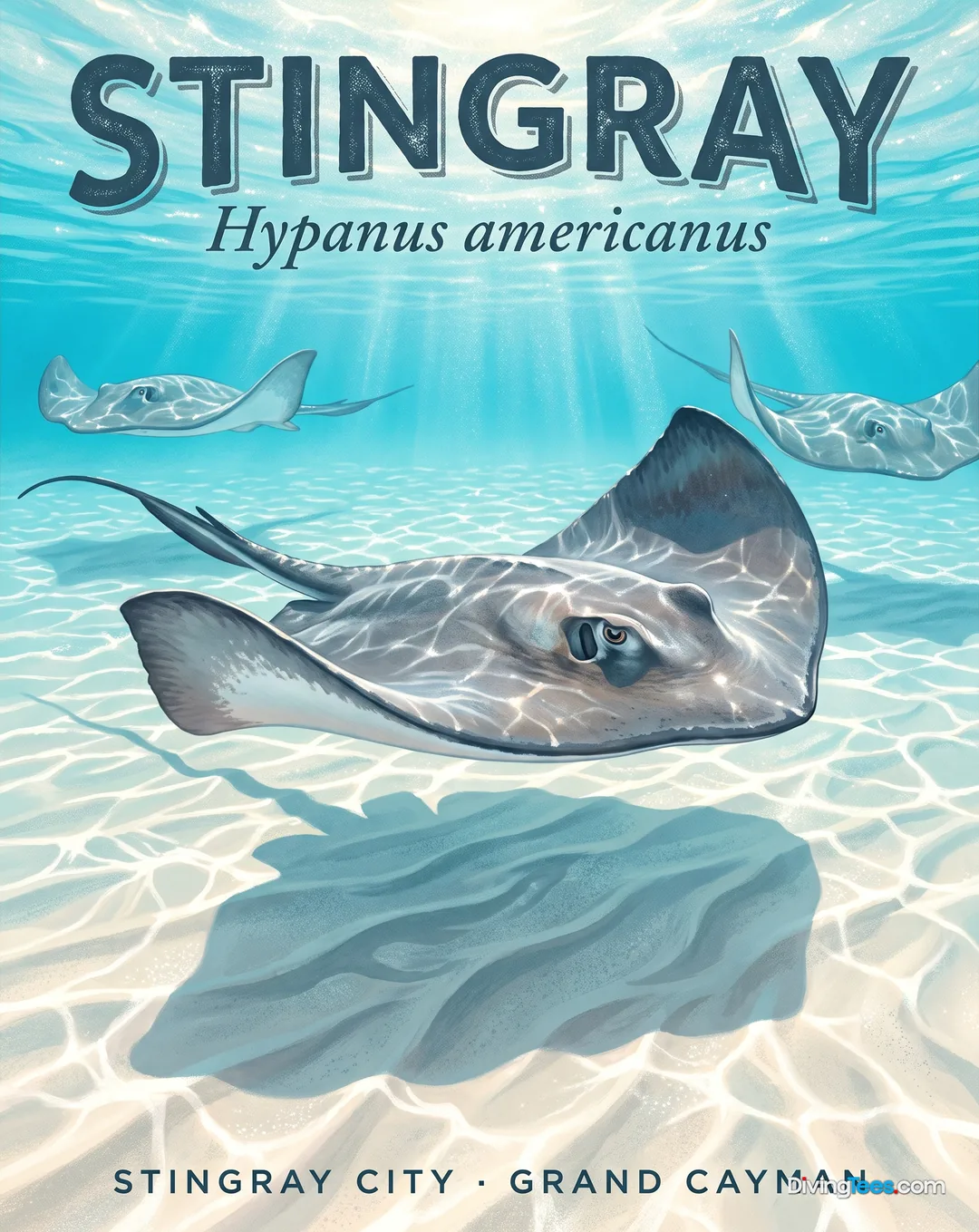
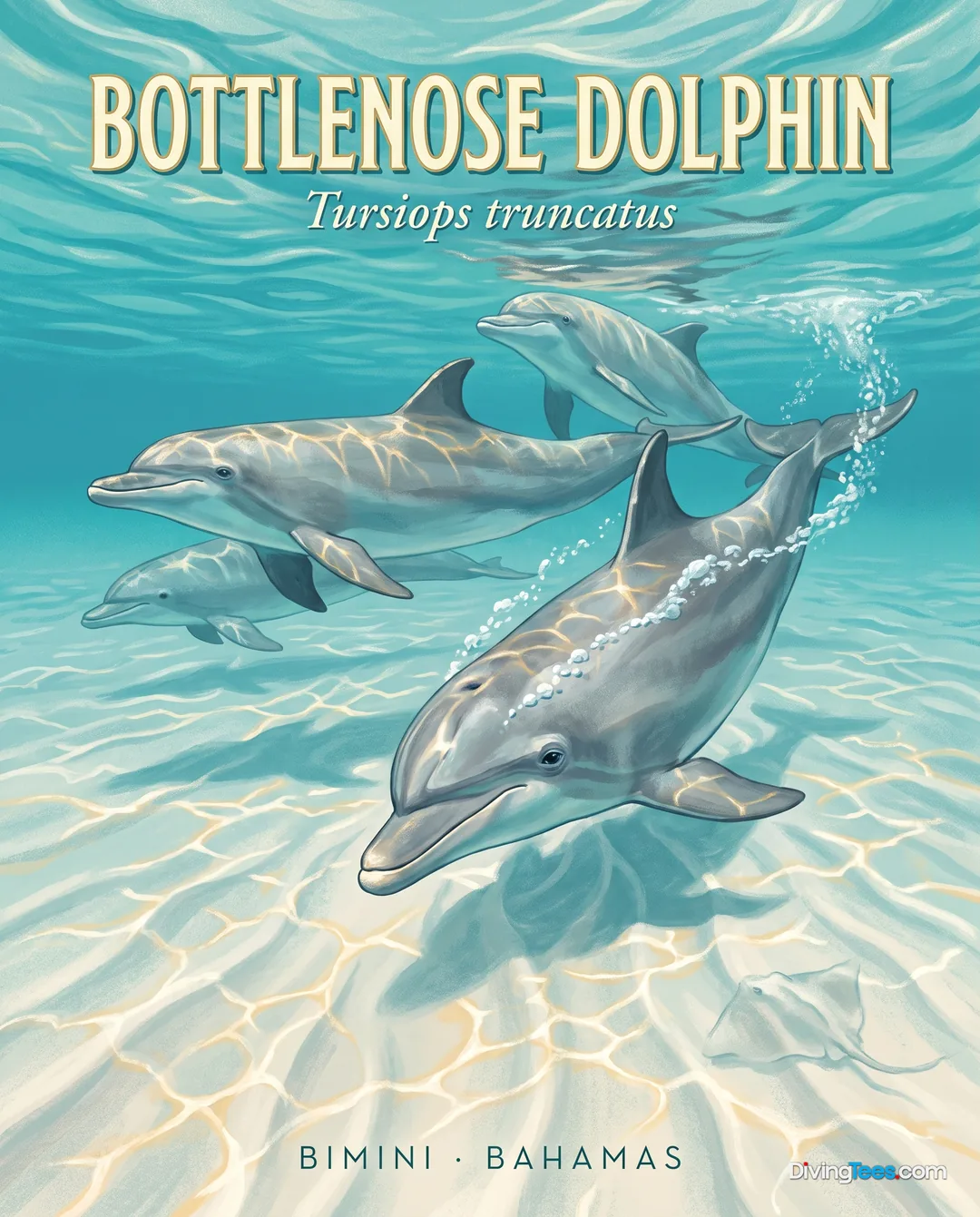
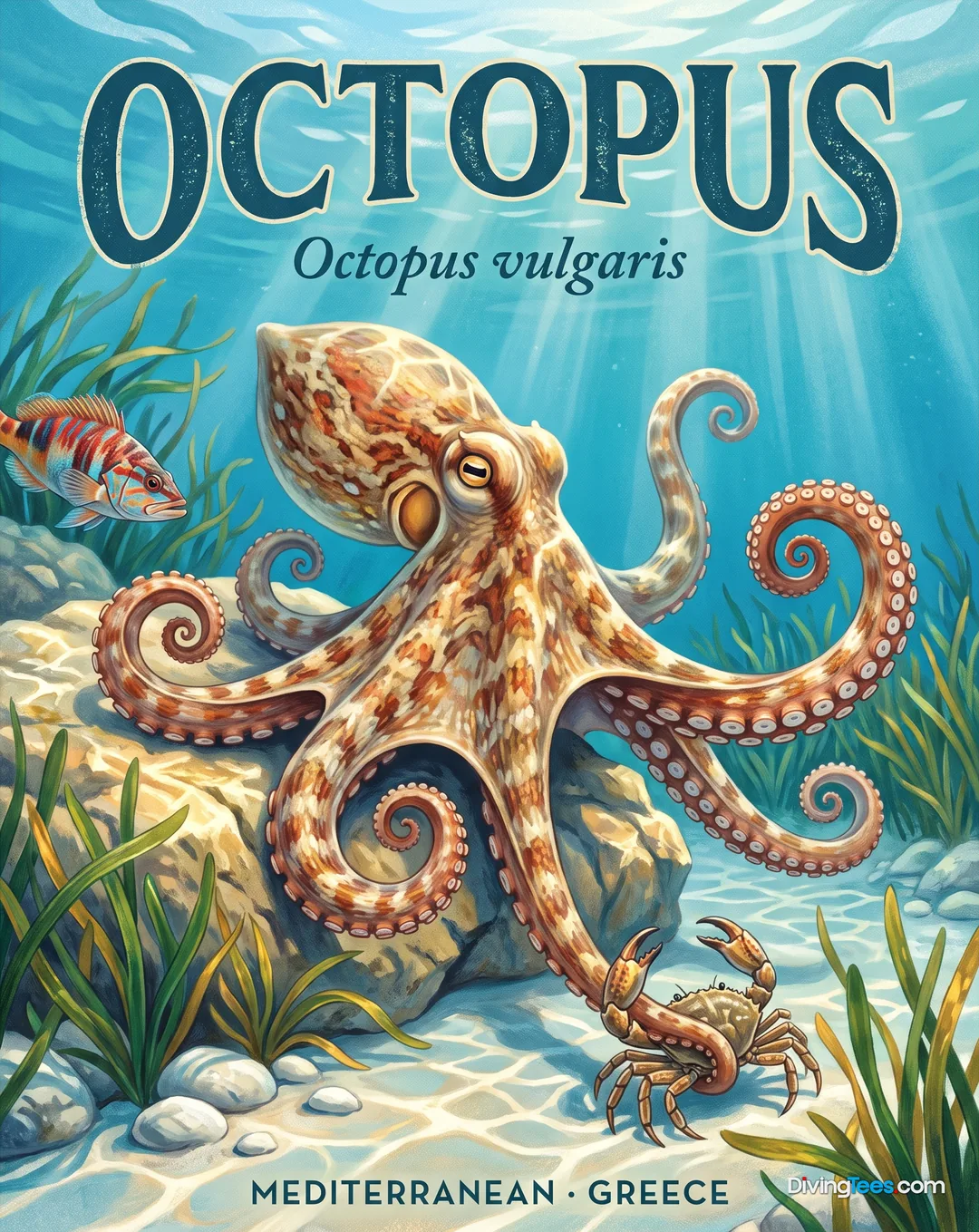
The rocky ground is the place to slow down and look into cracks, tunnels and overhangs. Octopuses are a recurring attraction at Rochers Poulpe, Octopus Reef and the scattered blocks of The Rocks Of Mongi. Groupers, parrotfish, anthias and moray eels add colour and movement around the reef, while southern stingrays may appear over sand. Sea turtles are among the possible larger encounters, and greater amberjack can bring a faster-moving presence to the blue. Pearl oysters are also listed among the local marine life. Dolphins feature in the wider area’s sightings. The site material does not attach particular species to a precise month, so the reliable seasonal choice is driven by sea conditions rather than a promised migration.
June to November is the clearest practical window for Djerba diving: the sea is at its calmest during these months, while rainfall is lowest from June through September. That combination matters because several outings depend on boat access and the deeper wrecks are more exposed to changing sea state and current. June to September favours the driest island stay; October and November remain within the calmer diving period but sit outside the lowest-rainfall stretch. Conditions can still vary locally, particularly around wrecks and drift sections, so the day’s plan should remain flexible rather than treating the calendar as a guarantee.
Djerba works for all levels, provided the site matches the diver’s experience. Sidi Soliman is suited to first dives and certification work, while Ras Turgueness and the shallower rocky reefs are comfortable Open Water territory. Rochers Poulpe can also suit Open Water divers, but an instructor is sensible for a first drift dive. Octopus Reef calls for Advanced Open Water and drift experience is recommended. The deeper wrecks require Advanced training, with prior deep-wreck experience particularly useful for Ricardo.
From London, the practical journey starts at Heathrow or Gatwick; Manchester is the other relevant departure point for this market. Djerba can be reached by road from mainland Tunisia over the Roman causeway and bridge connection, or by ferry across the short channel when using the historic crossing. The island also has its own domestic airport, so the final approach does not depend on a boat transfer. The main planning issue is arranging the onward connection into the island rather than building a liveaboard-style chain of transfers. Once on Djerba, local diving is organised from an island base, with boat outings to nearby sites rather than a separate offshore expedition.
Treat the first dive as a useful orientation rather than chasing the deepest wreck immediately. Sidi Soliman’s one-to-five-metre water offers a gentle way to settle after the journey, while Ras Turgueness provides shallow tunnels without committing to a demanding profile. For Rochers Poulpe, allow for the fact that the kilometre-long formation is a drift dive: a first outing with an instructor makes sense even for an Open Water diver. Octopus Reef needs Advanced Open Water and drift familiarity, not merely the ability to reach its depth. Keep some flexibility in the diving schedule for the wrecks, where current and sea state can change the plan. Remember that Khorda, Saguia and Ricardo are boat-dependent outings, so they should not be treated as interchangeable with the shallow offshore reefs. Divers wanting a specialist protected-area experience should set expectations accordingly; Djerba’s appeal is the combination of local rock formations, wrecks and an island holiday.
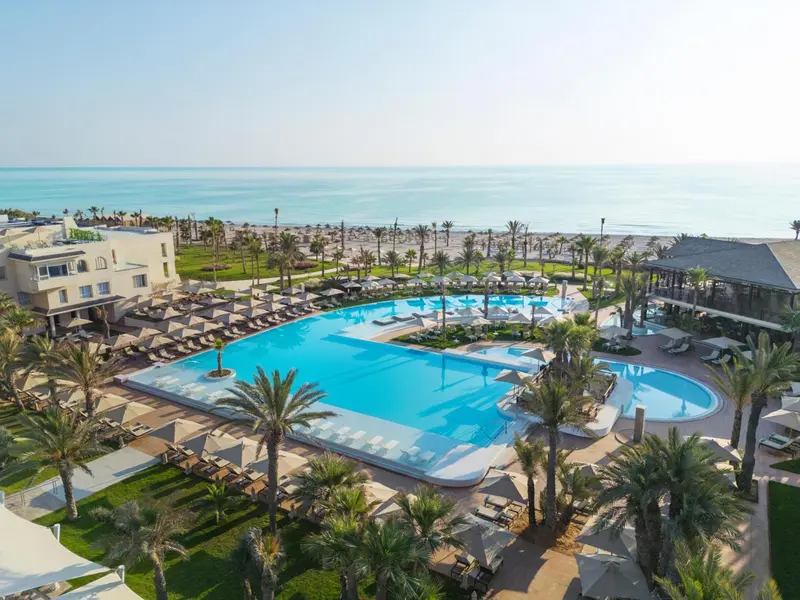
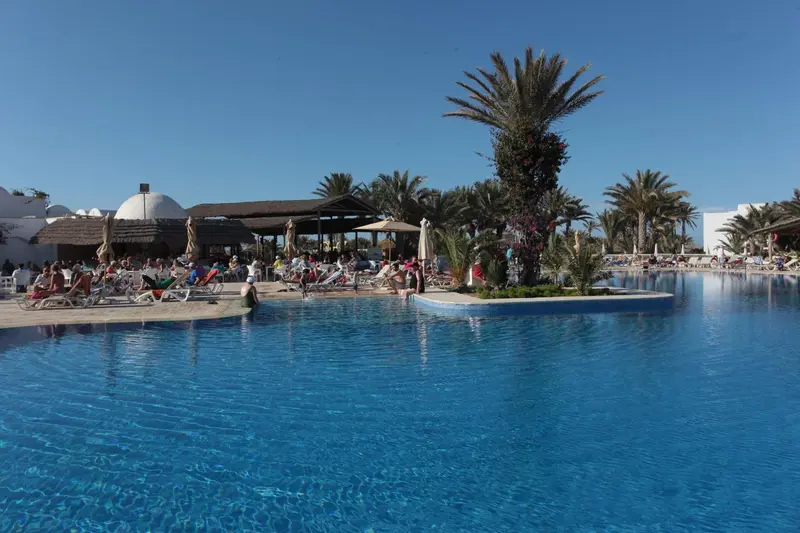
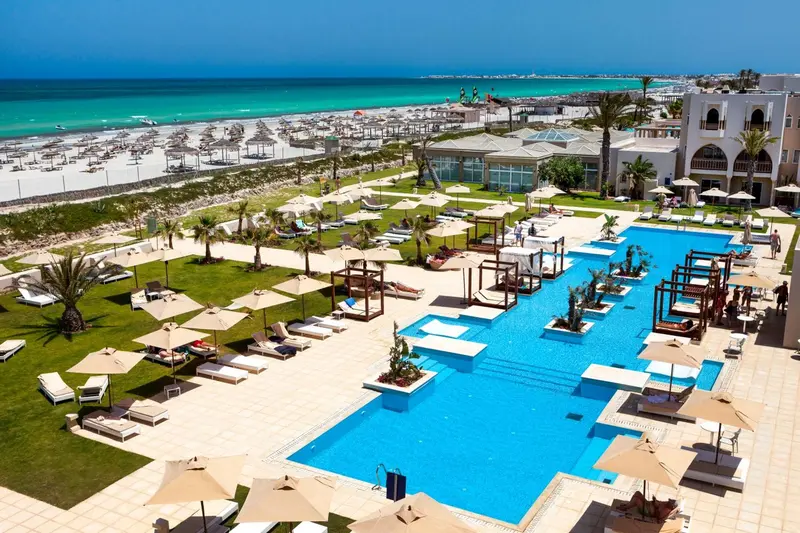
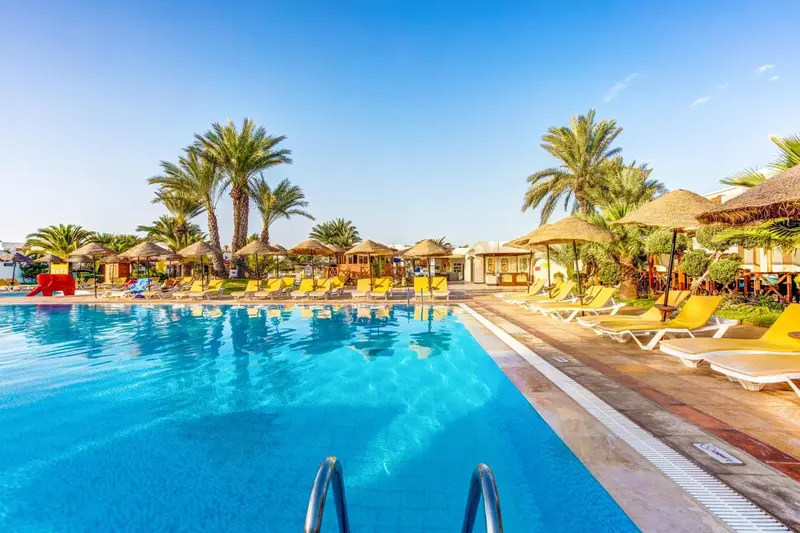
A sensible stay alternates diving with beach time and island sightseeing, leaving room for conditions to dictate the boat days. Non-divers have an established leisure base beyond the water, while divers can use quieter days for markets or local exploration. Djerba also works as a starting point for mainland excursions into southern Tunisia, including cultural and desert-related day trips. It is best approached as a mixed-activity holiday with diving woven into the stay, not as a liveaboard substitute.
Hello, I'm Marina, DivingDeal.com's AI assistant. I guide you through destinations, areas and countries.
Thinking about the whole trip and the flights? Talk it over with Edith →
Marina is an AI. Some links are affiliate links: DivingDeal may earn a commission, at no extra cost to you. Bookings are made with the partner.
Your last day stays dry: no diving in the 18-24 hours before a flight, the perfect window to see the destination from another angle.
 Adventure
⏱ 2 h · ★ 5.0 (11 reviews)
from £23$30€27
see on Viator ↗
 Desert
⏱ 9 h · ★ 5.0 (6 reviews)
from £75$101€90
see on Viator ↗
 Culture
⏱ 2 h · ★ 4.7 (17 reviews)
from £18$25€22
see on Viator ↗
 Culture
⏱ 5 h · ★ 4.6 (60 reviews)
from £25$34€30
see on Viator ↗
Ratings and reviews collected by Viator and Tripadvisor.
Choose Djerba from June through November, when the sea is generally calmer and boat outings are easier to organise. June through September also brings the lowest rainfall for a drier island stay. October and November remain within the calmer diving period, but local conditions can still change around drift sections and wrecks.
Djerba suits different experience levels when you match the site to your training. Sidi Soliman supports first dives and certification work, while Ras Turgueness and shallow reefs suit Open Water divers. Rochers Poulpe is a drift dive where instructor guidance helps initially. Octopus Reef and the deeper wrecks require Advanced training.
Djerba offers rocky reefs, small tunnels, overhangs and sandy-bottom wrecks. You may encounter octopuses, groupers, parrotfish, anthias, moray eels, southern stingrays, sea turtles, greater amberjack and pearl oysters. Rochers Poulpe and Octopus Reef feature drifting reef profiles, while wrecks including Ricardo, Khorda and Saguia add different underwater settings.
Base yourself on the island and combine local shore and boat diving with beaches, markets and excursions into southern Tunisia. Start with a shallow orientation dive, then leave flexibility for drift and wreck outings because sea state and current can change plans. Arrange the onward connection to Djerba, then alternate diving with island sightseeing.