Liveaboards · Australia
Spirit of Freedom — a serious Australian dive vessel built for remote reefs
For subtitles in English: start the video firstthen click the gearat the top right of the video, select “Subtitles/CC”, then “Auto-translate” and choose “English”.
The invitation
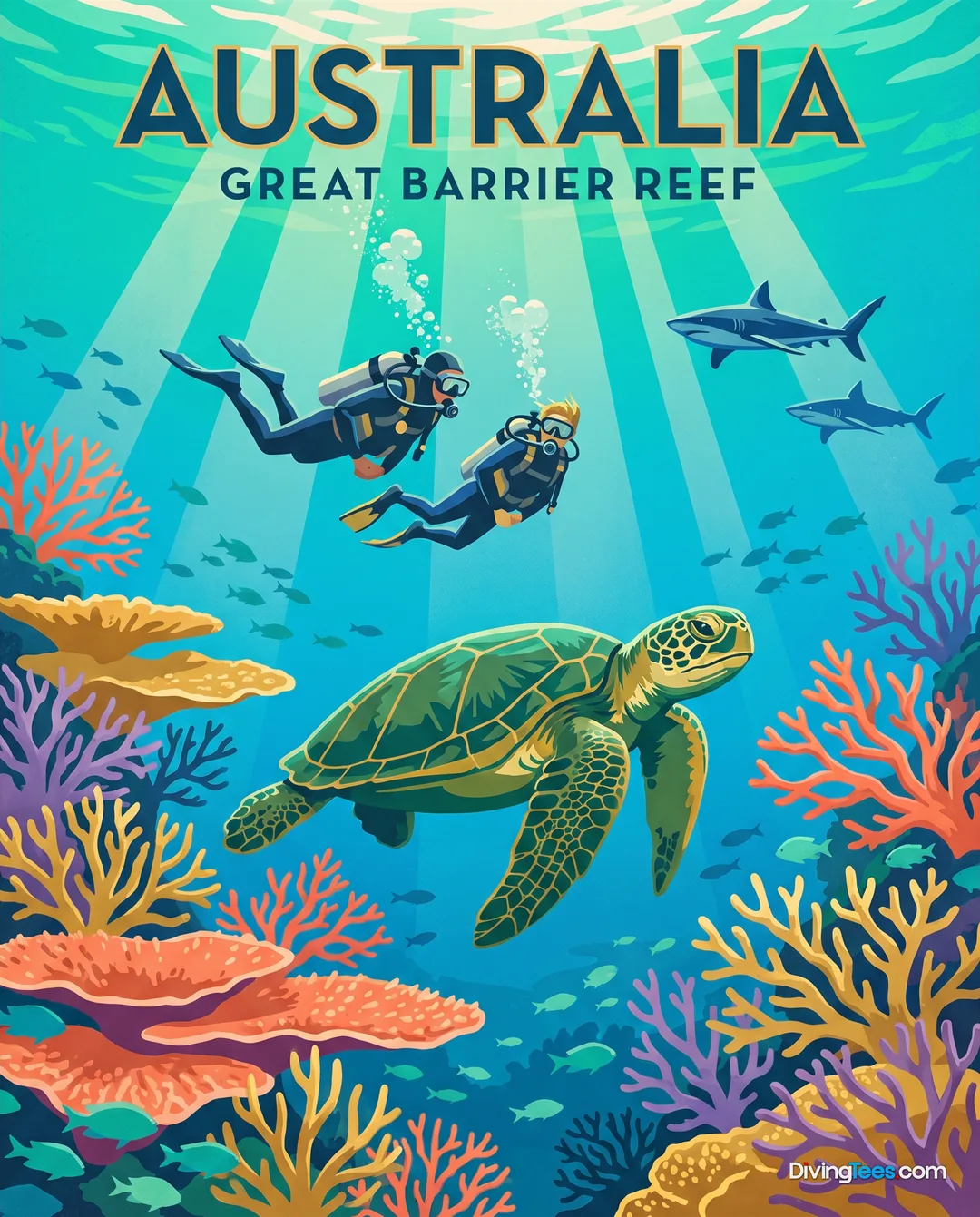
Spirit of Freedom is for divers who choose the boat for what lies beyond the day-trip circuit. From Cairns, it reaches the Ribbon Reefs, Cod Hole and the exposed Coral Sea, with longer trips combining several very different kinds of diving rather than repeating one reef in front of a resort. The reason to come is the range: a giant potato cod encounter at Cod Hole, current-swept walls and shark action at Osprey Reef, and remote reef diving at Holmes Reef. The boat supports that ambition without turning the week into a guided procession. Buddy teams plan and conduct their own dives after a detailed briefing, while the dive staff provide real surface support and may join the water when useful. That suits competent divers who want freedom, but not isolation. Weather can change the route, especially in the Coral Sea; the crew works with alternatives rather than pretending the ocean follows an itinerary.
Boarding
From the dock, Spirit of Freedom looks like a working dive vessel given a careful new lease of life. The steel hull and electronic stabilisers make sense once the boat leaves the inner reef and heads into open Coral Sea water. The 2023 renovation matters less as a date than as a feeling: the spaces are maintained, clean and arranged around divers rather than dressed as a floating hotel. Movement is straightforward, with the dive deck close to the lower cabins, the dining saloon in the centre and the top deck above it for air and shade. The boat is large enough to spread people out between dives, yet the dive operation keeps everyone in the same working rhythm. There are two Naiad RIB tenders for drift entries and pickups. The best arrival detail is practical rather than decorative: guests step aboard knowing the next important place is not the lounge, but the station where their cylinder is already waiting.
The atmosphere on board
The atmosphere is shaped less by formal service than by a crew that stays close to the diving. Guests find the same people on the briefing deck, at the ladder, in the tender and at the table, and that continuity shows when weather forces a change of plan. The crew has backup sites ready and keeps the operation moving without making the decision feel dramatic. Dive debriefs and reef talks give the day more shape than a list of entries in a logbook; they explain what the group has just seen and why it matters. The staff are attentive to individual needs, from nervous divers to photographers working with delicate equipment, while still leaving competent buddy teams to manage their own dives. By evening, the dining saloon fills with stories, images and marine-life identifications, then the group usually spreads onto the top deck or forward lounge. The crew remains present without taking over the trip.
The sites you’ll dive
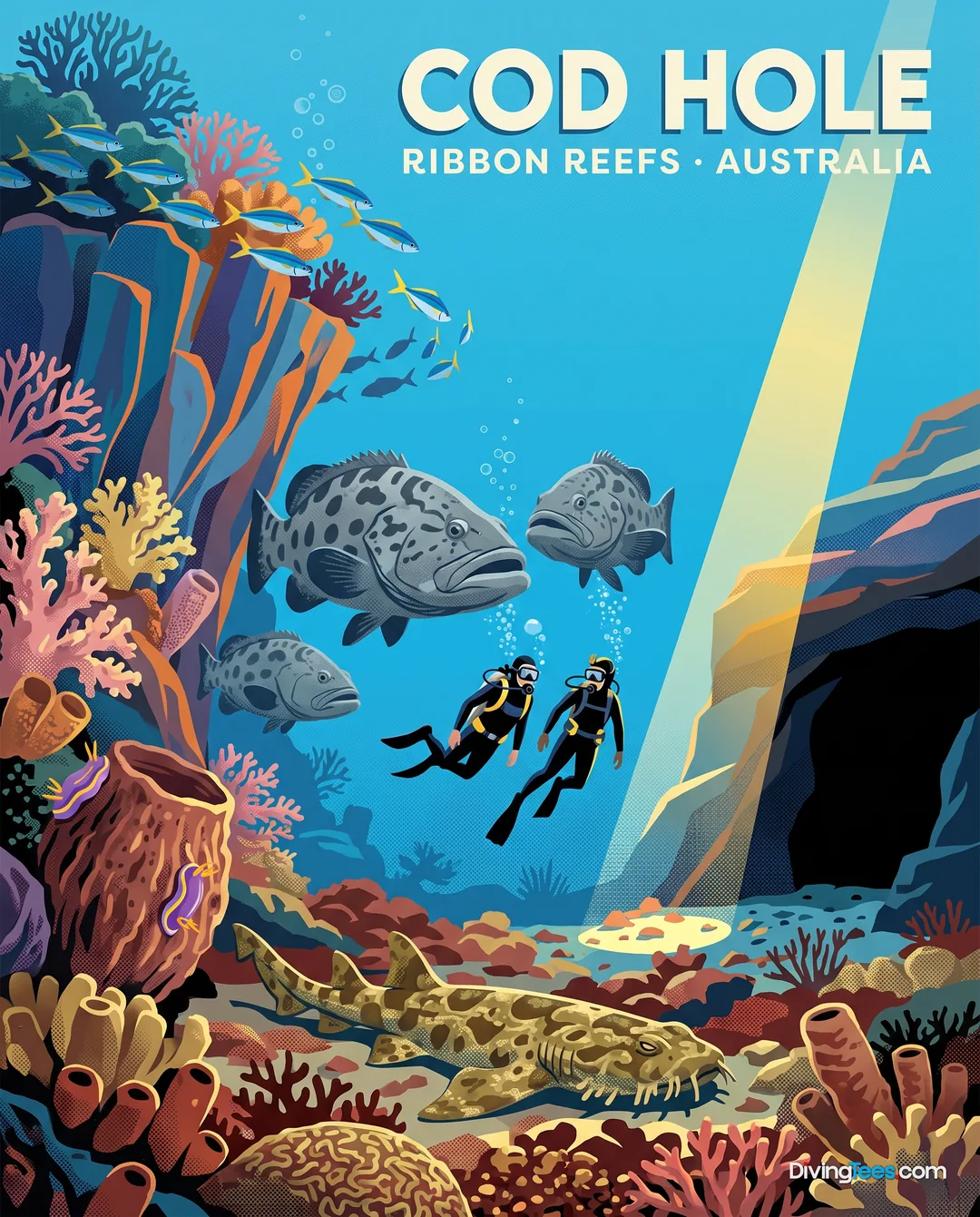
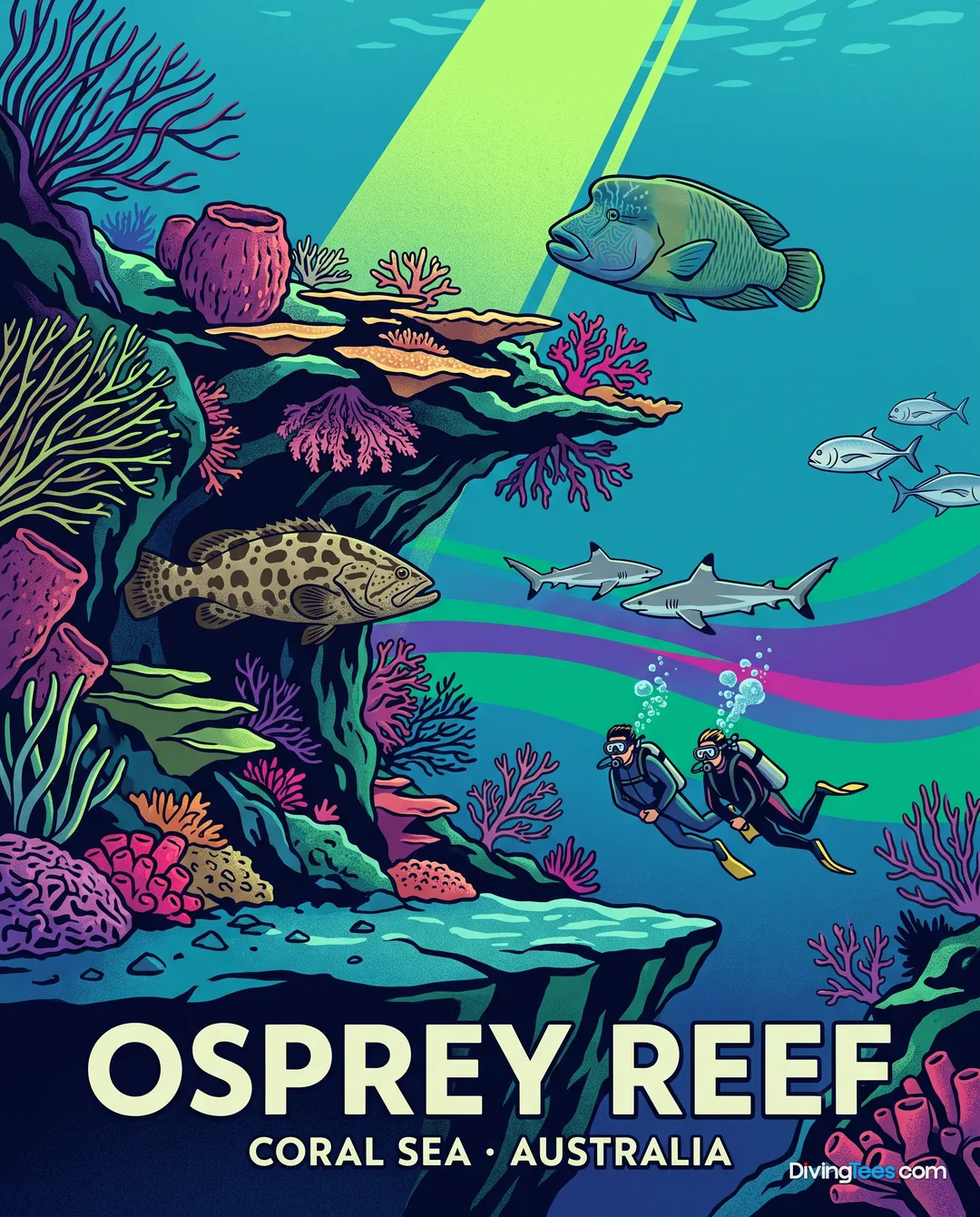
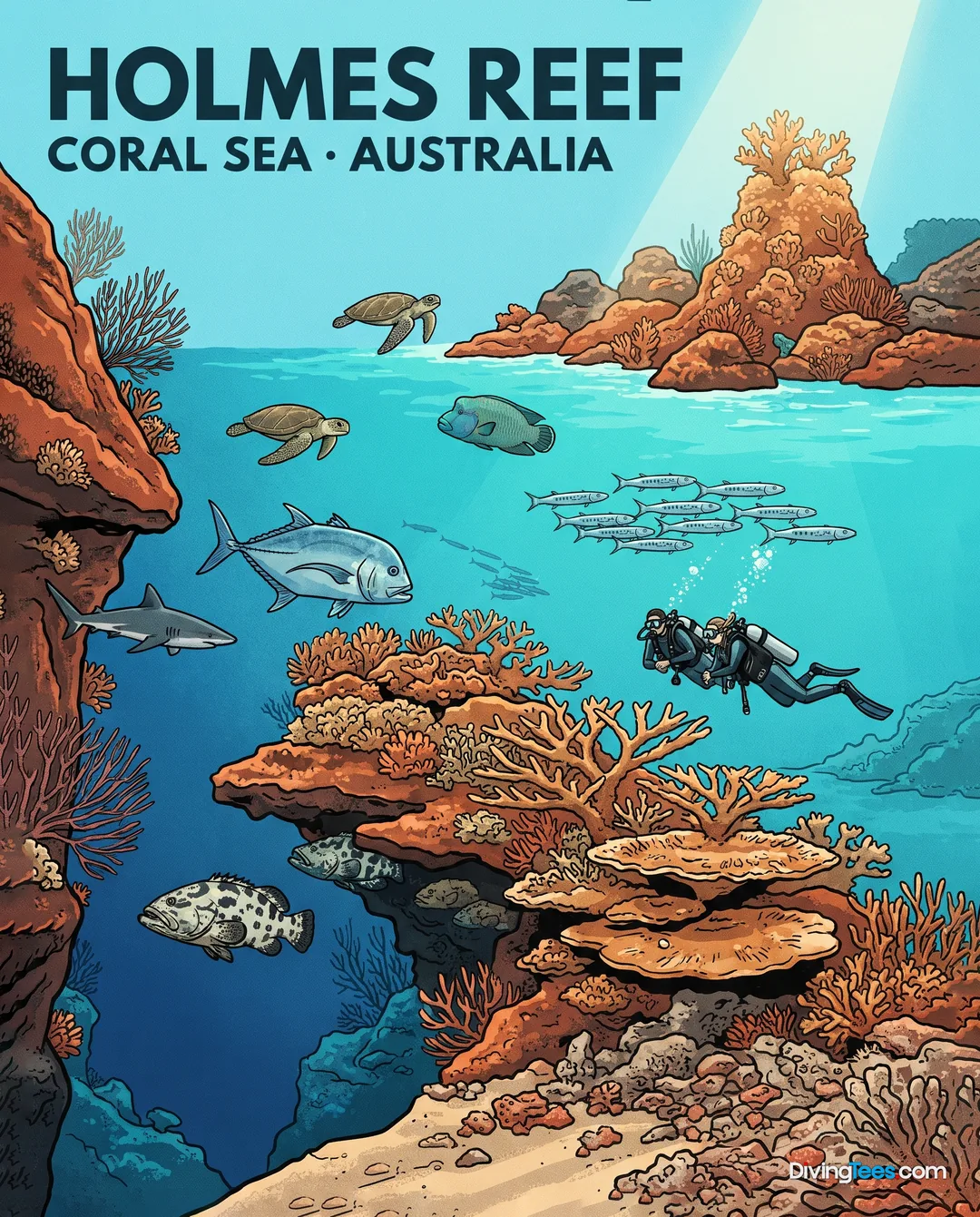
Cod Hole is the shallowest named highlight on this route, with a maximum depth of -16m and the resident giant potato cod that gives the site its name. Around it, soft corals, sponges, nudibranchs and wobbegongs turn a familiar reef profile into a close animal encounter rather than a deep-water exercise. Osprey Reef is different: a remote Coral Sea atoll with sheer walls dropping to 1,000 metres and dives reaching a maximum of -40m. Its open-ocean position brings consistent pelagic encounters, including grey reef, whitetip and silvertip sharks. Holmes Reef also reaches -40m, with remote walls, current-swept pinnacles and strong pelagic potential in excellent visibility. The three-night Cod Hole & Ribbon Reef trip runs Cairns to Cairns over 4 days and 3 nights. The four-night Coral Sea & Ribbon Reef trip also returns to Cairns over 5 days and 4 nights. The seven-night Cod Hole + Coral Sea trip combines both routes over 8 days and 7 nights, weather permitting.
What you’ll meet underwater
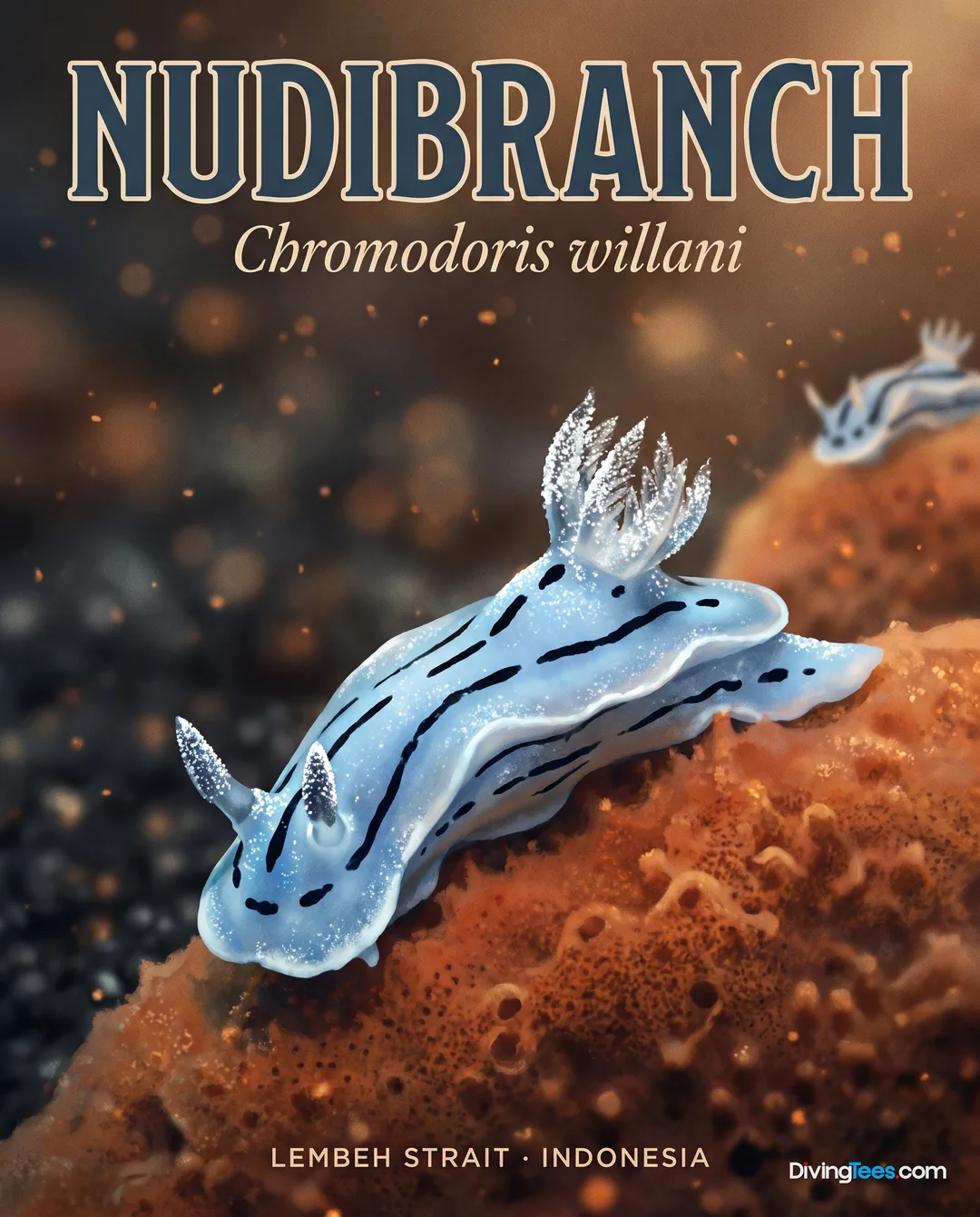
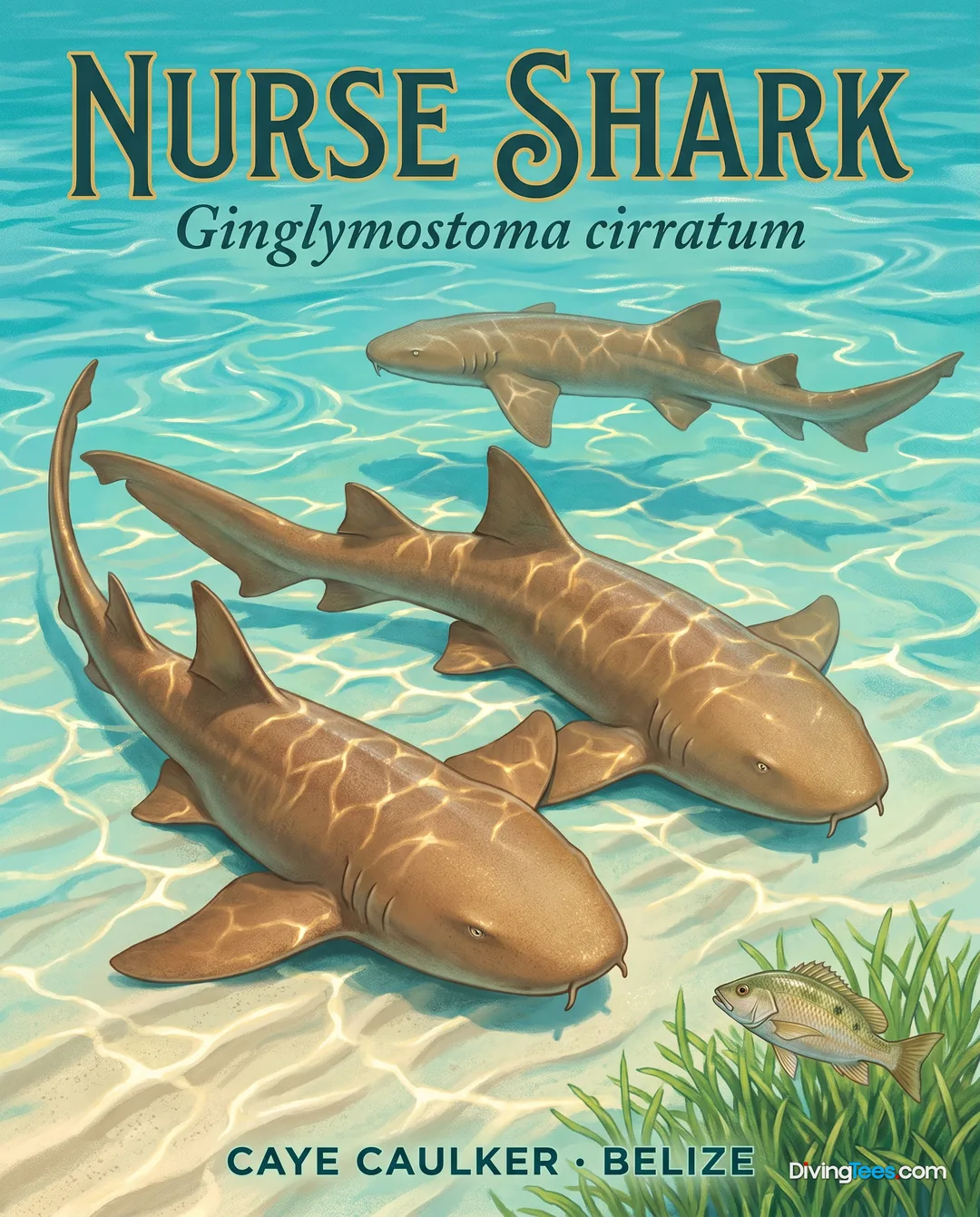
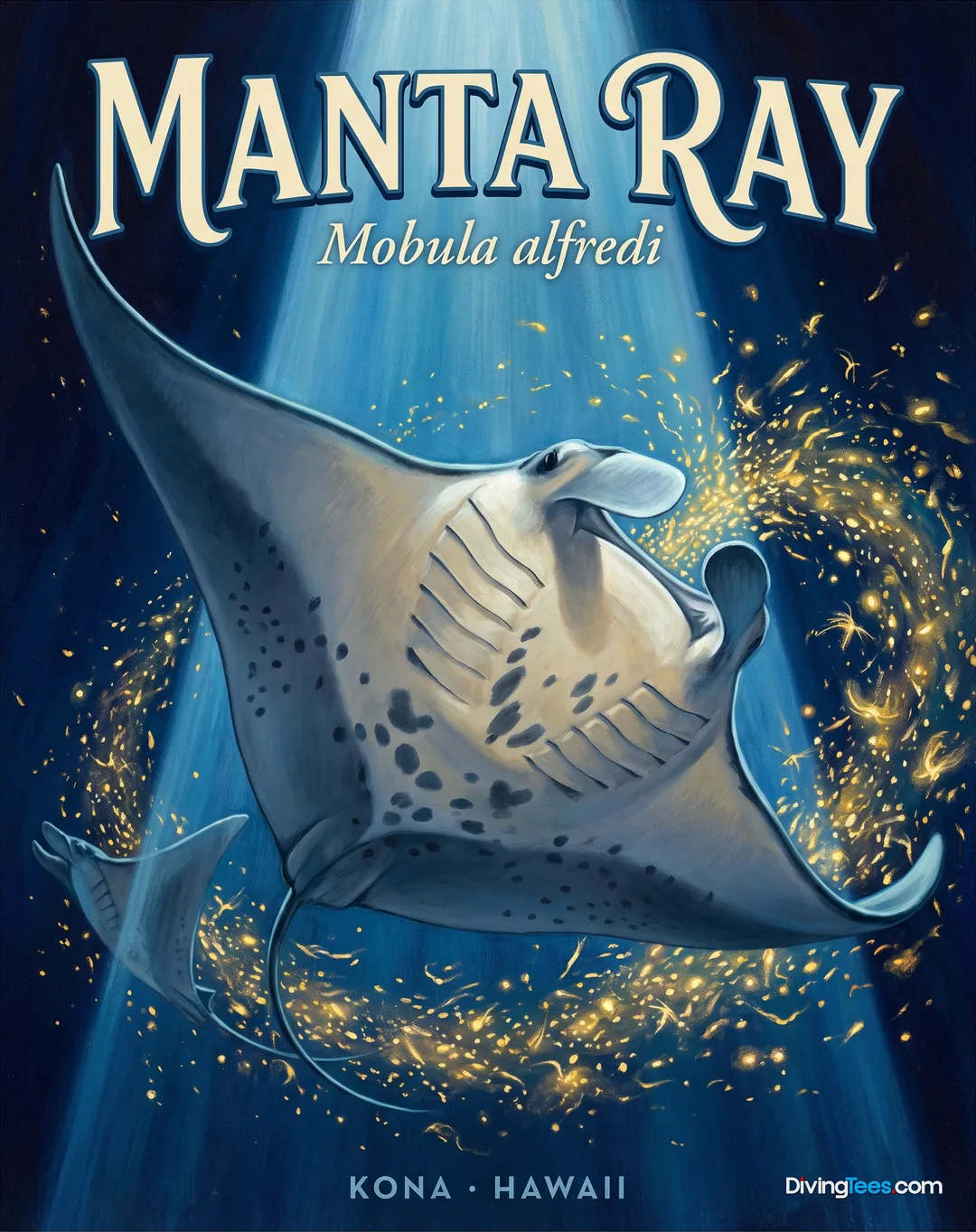
Across the route, the reef can bring clouds of tropical fish, hard and soft corals, sponges, anemones, turtles, wobbegongs and pelagic fish moving through blue water. Sharks are part of the Coral Sea spectacle rather than a promise: grey reef, whitetip and silvertip sharks are recorded at Osprey Reef, while tawny nurse sharks, dogtooth tuna, barracuda, trevally and mackerel are recorded at Holmes Reef. Some encounters give a specific reason to choose one site over another. Osprey Reef is the place for a possible manta ray, hammerhead, green turtle, tuna, fusilier, gaterin, moray eel or octopus, with current and open-ocean walls helping explain the larger visitors. Holmes Reef is where a giant grouper and sea turtle may appear. Cod Hole is the site for giant potato cod, soft corals and the nudibranch Chromodoris willani. The animals are not a checklist; the attraction is seeing what remote reef, current and visibility bring on that particular dive.
Who puts you in the water
The Trip Director runs the dive operation, supported by three instructors and a divemaster. Briefings are detailed and every dive has surface support: crew divers are in the water, lookouts watch from above, and the tender stays in VHF contact with the dive deck. This is not a full guided-dive service. Buddy teams plan their own dives and dive their own plan, while Safety Divers can lead less experienced groups, assist students and provide in-water help when available. Staff may also join a dive for photography or critter spotting. The three-night Ribbon Reef and Cod Hole trip is aimed at Open Water divers with at least 10 ocean dives, including five in the last 12 months; Coral Sea routes are for Advanced divers with at least 20 ocean dives and the same recent-diving requirement. Advanced Open Water and Enriched Air Nitrox courses run on board, with a refresher available before departure through the local dive centre. The crew speaks English. Oxygen, a defibrillator, first-aid equipment and emergency-trained crew support the remote operation.
The dive deck and the gear
The dive deck is arranged around individual stations for all 24 guests, with dry storage above and a storage box for every two divers. Tanks stay in their racks while air or Nitrox is supplied through whips. The cylinder bank includes two 15-litre steel tanks, thirty-six 11-litre aluminium tanks and two 9-litre aluminium tanks; all are DIN and DIN K compatible. Two Bauer 21 CFM compressors handle the fills, and the membrane system produces Nitrox at 32%. Nitrox is available as a paid option rather than being included by default. Rental sets use Scubapro X-Force BCDs, Cressi T10 regulators, Cressi Leonardo computers, Cressi boots and Tusa Solla open-heel fins; torches are available for night dives. The camera setup includes a separate rinse tank, small camera table and air gun, with a separate camera rinse area. Freshwater showers are aft, and re-entry is by ladder with crew assistance. Two Naiad RIB tenders handle drift entries, surface pickups and transfers away from the main platform. Each diver also carries a Nautilus Lifeline locator beacon, with whistle, surface marker buoy and cyalume stick as surface-signalling equipment.
Between dives
Between dives, the top deck is the useful refuge: undercover timber tables and chairs on one side, open air and sunloungers on the other. A diver can dry out in the shade, read, sleep briefly or watch the tender come back with the next group. The forward lounge is quieter, with couches, beanbags, marine reference books and films. Photographers have a separate workstation in the lounge and a camera area on the dive deck, so charging and sorting images do not have to happen on a bunk. When the boat is underway, the view changes from reef edge to open water, especially during the overnight crossings toward the Coral Sea. On evenings at anchor, the top deck becomes the social space, sometimes around the barbecue, sometimes with only a drink and the sound of the boat. There is enough room to choose company or distance.
A day on board
A day begins with the first briefing, then the deck shifts into its working pattern: cylinders are checked, buddy teams enter from the boat or tender, and the crew is ready at the ladder when divers return. Breakfast comes before or after the first dive according to the trip’s operating rhythm, followed by lunch, dinner and snacks between dives. On the three-night route, the itinerary allows 11 dives including one night dive; the four-night Coral Sea trip allows up to 15 including one night dive; the seven-night combination reaches 26 including two night dives. Between entries, people move upstairs for shade, food, a shower or a short sleep, while photographers work through images and the crew gives debriefs or reef talks. Some periods are spent underway, including the overnight crossing to the Coral Sea. After the last dive, the boat becomes quieter: cameras are rinsed, wet gear is secured, dinner is served, and the evening ends in the saloon or under the open sky before the next briefing starts the cycle again.
What you eat aboard
The galley sends out four meals a day: breakfast, lunch, dinner and snacks between dives. That order matters when the next meal is part of the dive plan rather than an event at the end of a sightseeing day. Breakfast can be continental or cooked, lunch and dinner are chef-prepared, and at least one dinner is planned as an outdoor barbecue on the top deck. The food covers local and Western cooking, buffet service, vegetarian choices and vegan options, with dietary requirements planned ahead. Wine and soft drinks are served with the evening meal, while beer and other drinks are available separately. On a four-dive day, plentiful food is not luxury language; it is recovery, something warm after a ladder climb and a reason to sit down with the people from the last briefing. The dining saloon also doubles as the briefing and film room, so meals stay tied to the reef rather than becoming a break from it.
Nights at sea
The cabins sit on the lower deck, amidships, where the distance to the dive deck matters after a long day in the water. Every cabin has air-conditioning, a private bathroom and daily service. The Ocean View Deluxe and Ocean View Standard cabins are on the top deck, while the Stateroom and the standard share cabins keep the sleeping arrangements closer to the diving spaces. The categories range from a private double-bed cabin to Double/Twin Share and Quad Share, so the choice changes both privacy and the people heard moving around outside. Inside, the emphasis is on function: a berth, storage, reading light where provided, and a bathroom that removes the usual liveaboard queue. A small cabin is still a small cabin after four dives. The advantage here is that the boat gives divers places to leave it: the forward lounge, dining saloon and top deck mean the bunk does not have to serve as the only quiet room.
Ocean View Deluxe Cabin
Ocean View Standard Cabin
Stateroom
Standard Double/Twin Share Cabin
Quad Share
Standard Double Cabin
Standard Twin Cabin
What to know before boarding
Spirit of Freedom departs from and returns to Cairns on the Cairns-to-Cairns itineraries. Transfers from Cairns hotels or the airport are included; the four-night trip provides airport drop-off only. The three-night trip leaves Cairns at noon on Thursday and returns at noon on Sunday, while the four-night trip departs Sunday morning and returns Thursday morning. Arriving in Cairns the night before is the sensible choice, leaving room for an uncomplicated transfer to the boat.
Deck plan
What the boat does for the ocean
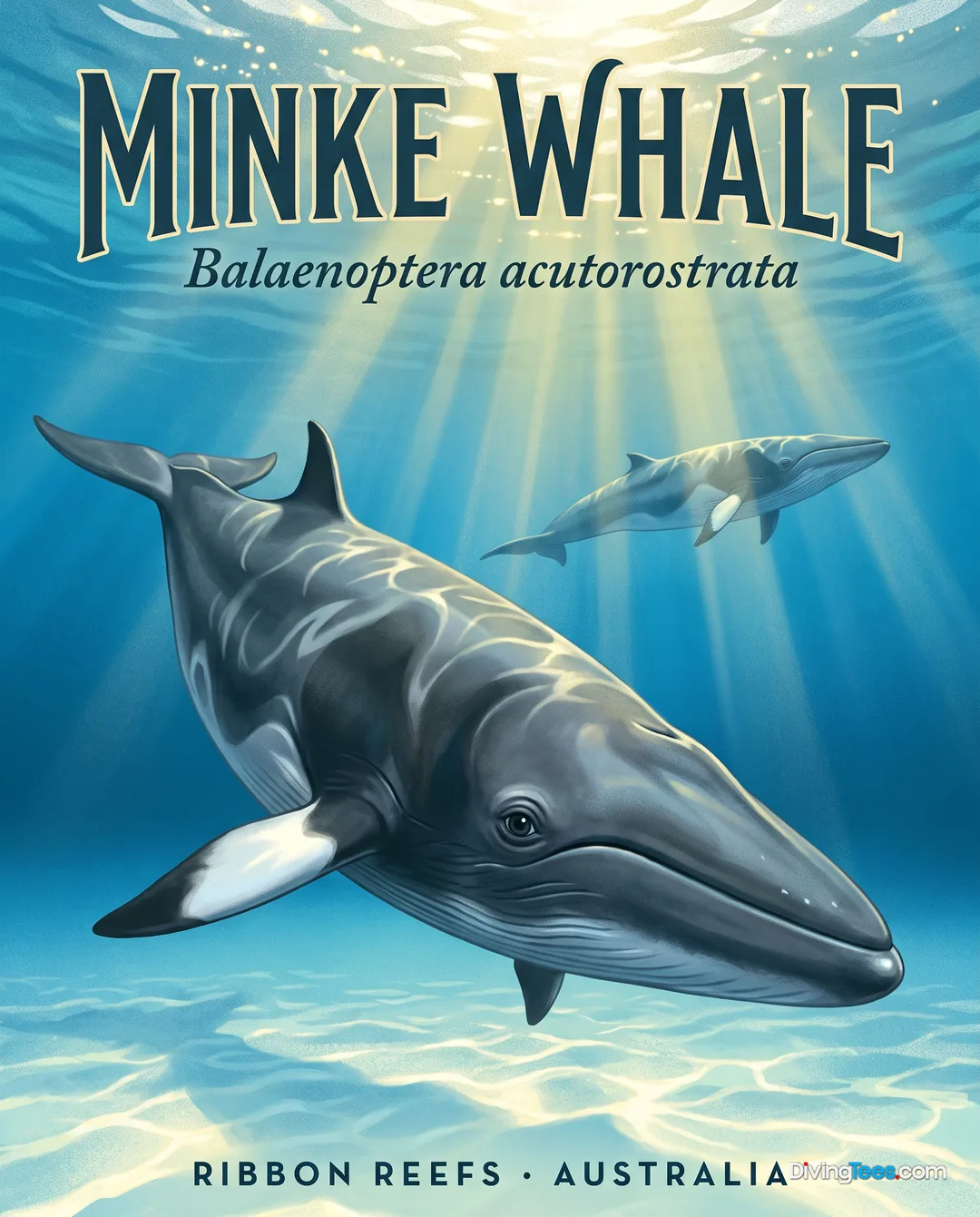
Spirit of Freedom contributes to the Minke Whale Project’s research into dwarf minke whale biology and behaviour, and its seasonal whale trips operate under a Great Barrier Reef Marine Park Authority permit. The boat also hosts Great Reef Census expeditions, during which guests collect photographic data from remote Ribbon Reef sites to help fill gaps in reef monitoring and management. This is conservation work that happens in the water, not a paragraph about conservation added after the diving.
- Year built
- 1992
- Year renovated
- 2023
- Length
- 37 m
- Beam
- 7.1 m
- Maximum number of passengers
- 24
- Number of cabins
- 11
- Number of bathrooms
- 11 + 2 toilets on the dive deck
- Engines
- 2 × Rolls Royce C8M 410 249.8 kW diesel
- Cruising speed
- 8 knots
- Tenders
- 2 × Naiad RIB tender boats
- Website
- spiritoffreedom.com.au ↗
Hello, I'm Marina, DivingDeal.com's AI assistant. I answer in detail about hotels, dive centres and liveaboards.

Thinking about the whole trip and the flights? Talk it over with Edith →
Marina is an AI. Some links are affiliate links: DivingDeal may earn a commission, at no extra cost to you. Bookings are made with the partner.