
Walindi Dive Center
Google 4.5/5 (149 reviews)
Kimbe Bay · Papua New Guinea · Pacific
Max. depth · 9 mDescend into Kimbe Bay's Ema North, where deep gorgonian bommies and rare orange anemonefish redefine reef diving in Papua New Guinea.
Ema North presents a distinct dive profile characterized by its deep bommie, a prominent feature connected to the main reef by an even deeper saddle. As you descend, the bommie quickly reveals itself, blanketed in a rich tapestry of gorgonian corals. The white feeding polyps of these gorgonians stand in stark contrast to their fiery red skeletal structures, creating a visual spectacle at depth. Beneath these fan corals, a dense undergrowth of leather corals thrives, adding further texture and complexity to this vibrant underwater garden.
Beyond the gorgonian-covered bommie, you'll encounter colonies of 'burning bush' soft corals, their unique forms adding to the site’s distinct character. While time on the deeper bommie is often brief due to its depth, the journey is rewarding, offering glimpses into a specialized ecosystem. The opportunity to explore this singular formation truly sets Ema North apart, presenting a captivating start to your dive in Kimbe Bay.
Transitioning from the deeper structure, a shallow tour of the main reef provides an ideal way to prolong your bottom time and initiate your decompression. The eastern flank of the reef plunges almost vertically, forming a dramatic wall where life clings to every surface. Along this living cliff face, you'll discover a recurring pattern of sea anemones, each hosting industrious pink anemonefish (Amphiprion perideraion) at consistent intervals between three and nine meters.
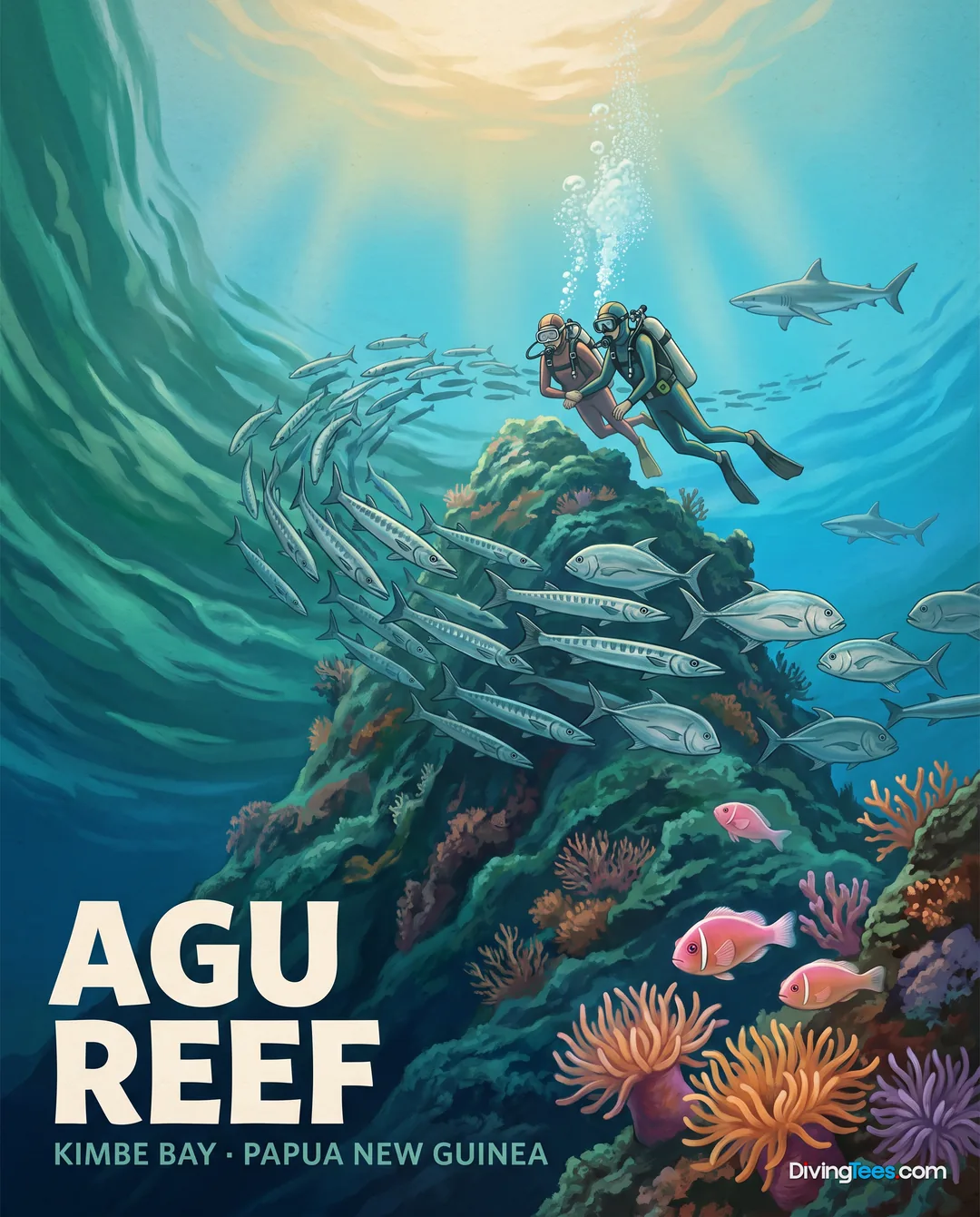
Moving towards the southern extreme of Ema North, the deep wall gives way to a more gradual slope composed of hard corals. This section is a classic example of a healthy reef, teeming with typical reef fish that dart amongst the branching and plating coral formations. On occasion, the deeper blue here can surprise you with the fleeting presence of a shimmering school of barracuda, adding a touch of pelagic excitement to the otherwise resident reef community.
Your return journey along the western wall offers another chance for discovery. Keep a keen eye out for a particularly large sea anemone, which houses a population of orange anemonefish (Amphiprion percula). This species, less common in Kimbe Bay, provides a valuable encounter and a photographic opportunity. Observing these distinct orange individuals, as they navigate their host anemone, underscores the rich biodiversity that defines Ema North and its surrounding waters.
Accessible for divers of all experience levels, Ema North offers a comfortable dive profile with depths ranging from 3 to 9 meters. This shallow range makes it ideal for extended bottom times and detailed exploration. While specific current information for this site is not provided, expect conditions to vary across Kimbe Bay depending on tidal movements and local topography.
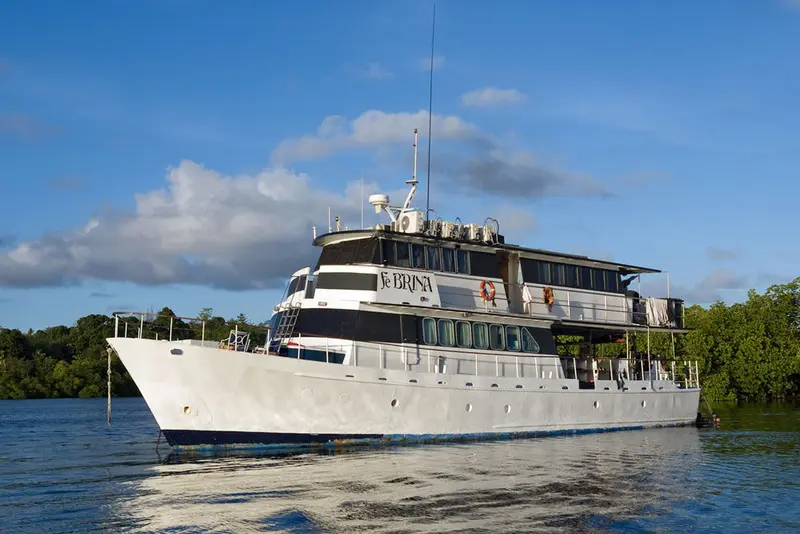
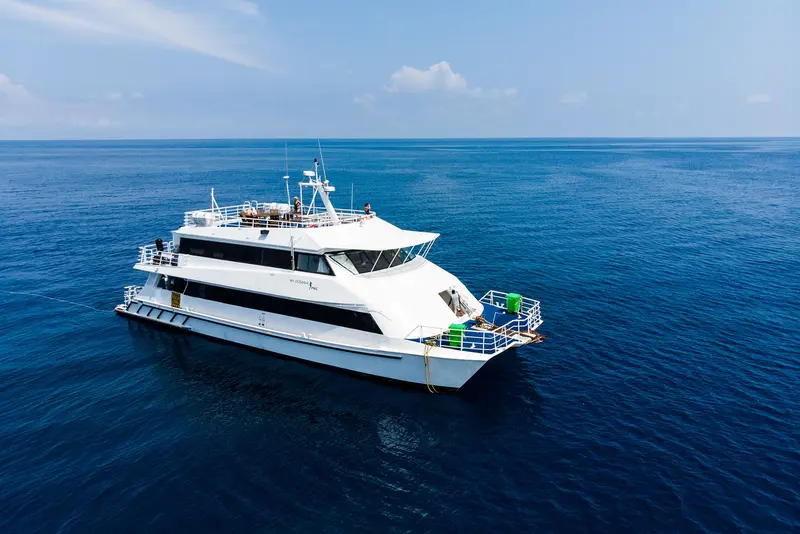
2 liveaboards depart from Kimbe Bay another way to explore the region, over several days at sea.
Ema North is accessible to divers of all experience levels. Its comfortable profile and shallow reef sections allow you to explore at a relaxed pace, with opportunities to examine the bommie, walls, slopes, anemones and corals. The site also offers extended bottom times for detailed reef exploration.
Ema North ranges from 3 to 9 meters deep. You can begin with the deeper bommie, covered in red gorgonians with white feeding polyps, then continue across the shallow main reef. The depth range supports extended bottom times and detailed exploration along the eastern wall, southern slope and western wall.
At Ema North, conditions can vary across Kimbe Bay according to tidal movements and local topography. The site offers a comfortable profile for divers of all experience levels, but you should expect conditions to change around the reef. The available site information does not identify a specific current pattern for this location.
At Ema North, you can see a deep bommie covered with red gorgonians and white polyps, alongside leather corals and burning bush soft corals. The eastern wall hosts pink anemonefish, while the southern hard coral slope may have barracuda schools. On the western wall, look for orange anemonefish.