
Walindi Dive Center
Google 4.5/5 (149 reviews)
15 km away as the crow flies
Kimbe Bay · Papua New Guinea · Pacific
Max. depth · 30 mDescend onto Christine's Reef, a submerged saddle connecting multiple reef systems, where ancient gorgonians and bustling anemone communities thrive.
For subtitles in English: start the video firstthen click the gearat the top right of the video, select “Subtitles/CC”, then “Auto-translate” and choose “English”.
Your dive at Christine's Reef begins as you descend onto a distinctive submerged saddle, a natural bridge connecting a substantial main reef to two smaller, outlying reef systems. While you have the option to circumnavigate the first of these detached reefs before returning to the saddle, the core experience of this site lies in exploring the saddle itself. The dive profile here is straightforward, allowing for a relaxed exploration of its unique topography and the diverse marine life it supports, making it an accessible dive for many.
Starting from the main reef, you'll glide downwards through extensive fields of staghorn corals, which form a dense, intricate canopy. This vibrant coral garden transitions smoothly into the saddle proper, where the underwater landscape shifts dramatically. Here, you'll encounter a rich assembly of large gorgonian fans, interspersed with striking red whip gorgonians, and the impressive forms of barrel sponges, many of which are beautifully draped with crinoids, adding splashes of color to the underwater scenery.
The southern end of the saddle holds a particular draw, marked by two prominent dark red gorgonian fans. These are prime locations for observing the elusive longnose hawkfish (Paracirrhites forsteri), often found perched delicately amidst the fan's intricate branches. The deep red hues of these gorgonians also create a visually compelling backdrop for any underwater photography you might undertake, especially when framing these unique hawkfish or other curious reef inhabitants.
As you traverse the saddle towards its northern extreme, just beyond the clusters of gorgonians and the singular barrel sponge, you'll discover several thriving sea anemones. Each of these anemones hosts bustling families of clownfish (Amphiprioninae), their vibrant colors and characteristic movements providing a lively spectacle. Observing their symbiotic relationship with their anemone homes is a highlight, offering a glimpse into the intricate social dynamics of the reef.
Christine's Reef is set on an underwater platform in central Kimbe Bay, close to other similar sites. The site's topography features several reef flats separated by these submerged saddles, with the main southern and a smaller middle reef linked by the broad saddle you will explore. This compact reef allows divers to circumnavigate it in a single dive, focusing on the richly decorated saddles and their resident marine life.
Beyond the smaller inhabitants, the reef also hosts a variety of reef fish, including snapper, fusiliers, anthias, and damselfish, which populate the coral structures. Keep an eye out for larger pelagics such as barracuda, and occasional reef sharks patrolling the perimeter of the reef. The close packing of gorgonian fans, red sea whips, and barrel sponges on the main saddle creates a dense, photogenic environment, particularly appealing for macro photographers seeking the longnose hawkfish.
Visibility at Christine's Reef typically ranges from 20 to 30 metres, offering clear views of the intricate reef structure and its inhabitants. While currents in Kimbe Bay are generally mild, allowing for relaxed exploration, it's always prudent to be aware of potential changes. The site's design, with its broad saddles and reef flats, provides ample opportunity for divers to navigate comfortably even with slight water movement.
Christine's Reef is accessible to divers holding an Open Water certification or equivalent, with good buoyancy control recommended for optimal exploration. Depths range from a minimum of 12 metres to a maximum of 30 metres. Currents are typically light, allowing for relaxed exploration of the saddles and reef perimeter, though divers should always be prepared for potential variations. Visibility generally ranges between 20 and 30 metres. The site is diveable year-round, with May to June and September to November often offering calmer seas and clearer water in Kimbe Bay.
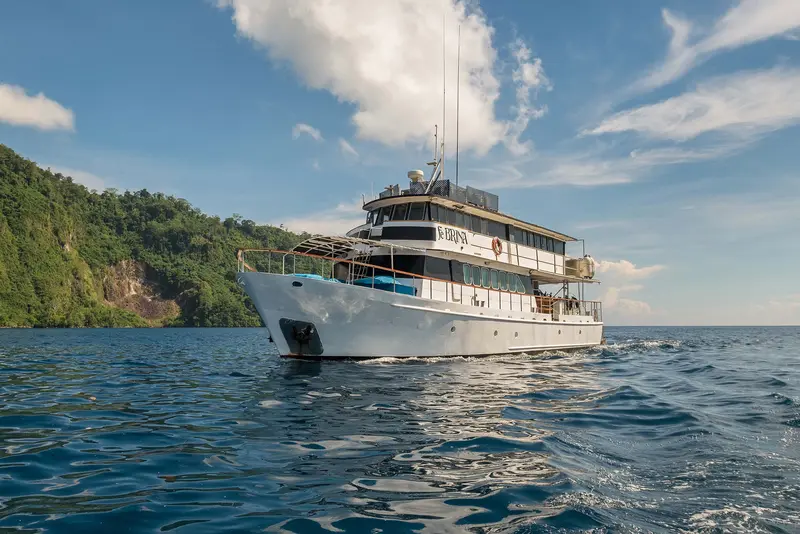
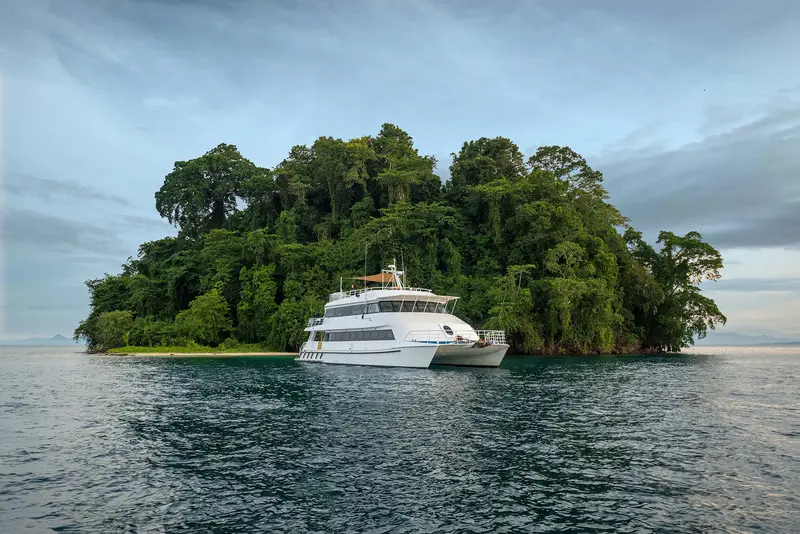
2 liveaboards depart from Kimbe Bay another way to explore the region, over several days at sea.
Christine's Reef is diveable year-round in Kimbe Bay. May to June and September to November often bring calmer seas and clearer water. Visibility generally ranges from 20 to 30 metres, so these periods can support comfortable exploration of the submerged saddle, reef perimeter, coral gardens, and surrounding reef structures.
Christine's Reef is accessible to divers holding an Open Water certification or equivalent. Good buoyancy control is recommended for optimal exploration, especially while moving through thick staghorn coral formations and around gorgonian fans, red whip gorgonians, barrel sponges, and the submerged saddle connecting the reef structures.
Christine's Reef ranges from 12 to 30 metres deep. Currents are typically light, allowing relaxed exploration of the saddles and reef perimeter, although you should remain prepared for potential variations. The broad saddles and reef flats provide room to navigate comfortably when slight water movement is present.
At Christine's Reef, you can explore a submerged saddle, thick staghorn corals, large gorgonian fans, red whip gorgonians, and barrel sponges decorated with crinoids. Look for longnose hawkfish, clownfish in sea anemones, reef fish, barracuda, and reef sharks around the coral structures and reef perimeter.