

Walindi Dive Center
Google 4.5/5 (149 reviews)
38 km away as the crow flies
Kimbe Bay · Papua New Guinea · Pacific
Max. depth · 27 mBradford's Shoal rises from the deep like a beacon, drawing large pelagic species to its coral-covered peaks near the surface in Kimbe Bay.
Descending onto Bradford's Shoal, you immediately sense the isolation of this underwater mountain. It's an oasis in the blue, its two distinct summits breaking the current at around 20 meters, carpeted with flat plates of hard corals perfectly adapted to capture the filtered sunlight. These plate corals create an intricate topography, offering shelter to the smaller reef residents while forming the foundation for the larger inhabitants that patrol its edges.
The reef structure itself is dominated by these resilient hard corals, particularly evident on the flatter sections just beneath the peaks. Interspersed among them are numerous colonies of Sarcophyton, the leathery soft corals that sway gently with the subtle movements of the water. This dense coral growth provides a rich tapestry for observation, even before the larger species reveal themselves, establishing the shoals as a thriving, self-contained ecosystem.
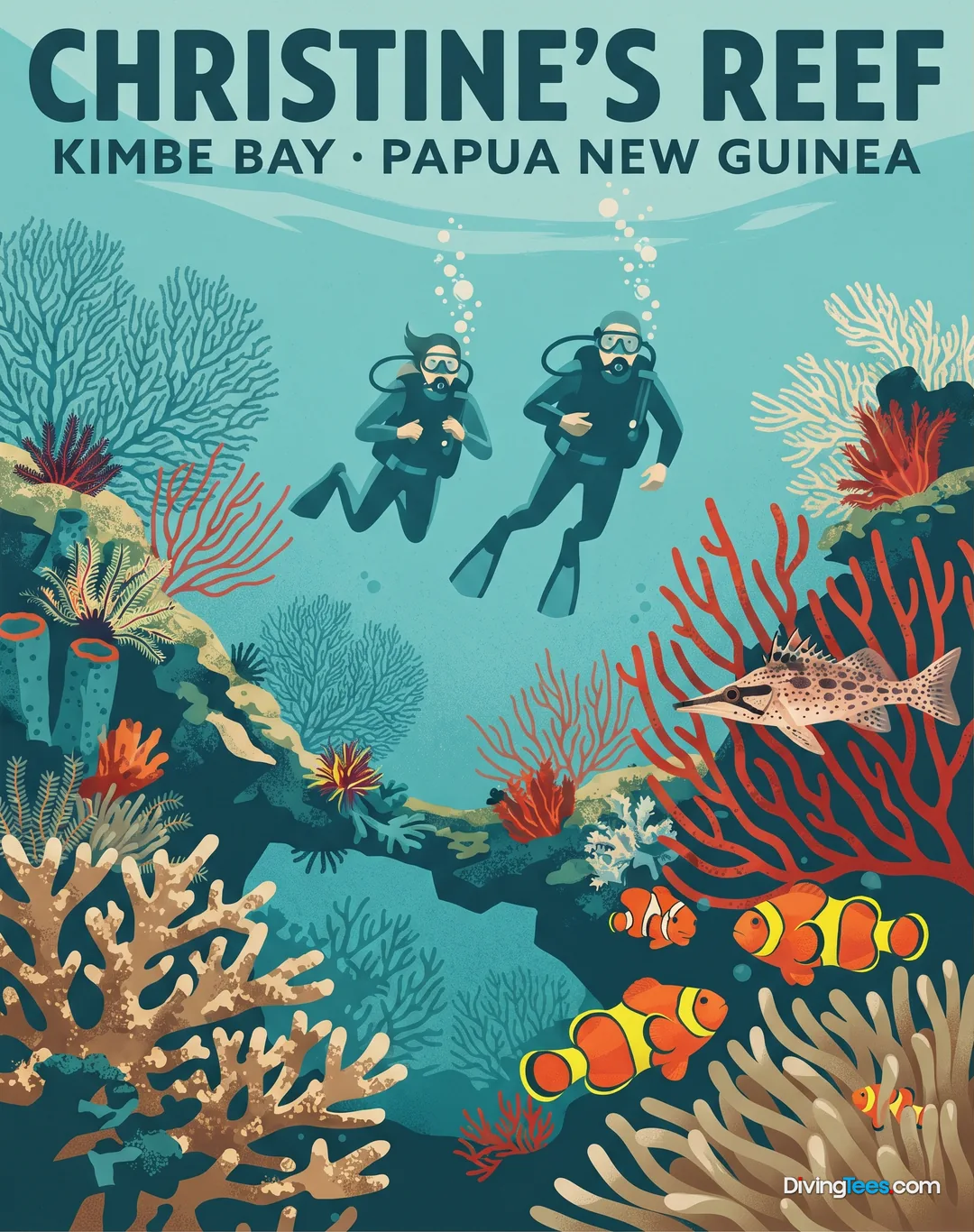
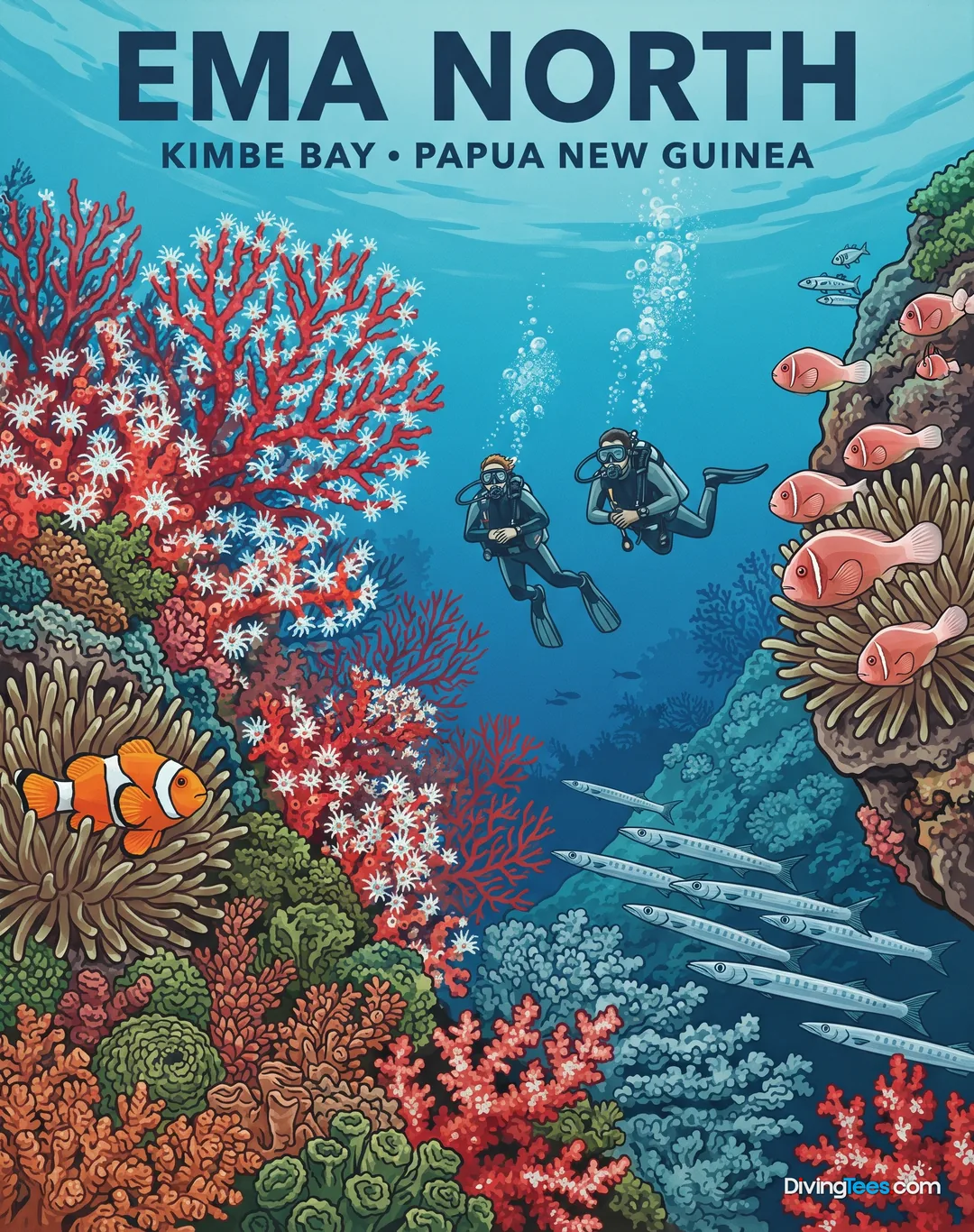
Between the coral formations, if you look closely, you will discover the smaller, resident reef fish. Anthias (Pseudanthias squamipinnis) flit and dart in bright clouds, while butterflyfish (Chaetodontidae) pick at the corals, and damselfish (Pomacentridae) guard their territories. The presence of numerous pink anemonefish (Amphiprion perideraion) nestled within their host anemones adds a splash of vibrant colour against the deeper hues of the reef.
While the macro life holds its own appeal, the primary draw of Bradford's Shoal is undeniably its reputation as a magnet for larger pelagic species. The isolated nature of the seamount acts as a natural aggregation point, concentrating baitfish and in turn, their predators. This is a site where you should always be looking out into the blue, anticipation building with every turn of your head.
During almost any dive here, you are likely to encounter substantial schools of barracuda (Sphyraena barracuda), their silvery bodies flashing in unison as they hold their position against the current. Pinjaros, another form of mackerel, and curious bigeye trevally (Caranx sexfasciatus) often join these aggregations, creating a dynamic spectacle as they swirl and shift around the seamount's edges.
Beyond the schooling fish, the deeper sections and the drop-off around 27 meters are prime hunting grounds for dogtooth tuna (Gymnosarda unicolor), their powerful forms cutting through the water. Unicornfish (Naso unicornis) drift gracefully, and fusiliers (Caesionidae) streak by in vibrant formations, all contributing to the sense of continuous movement that defines this site.
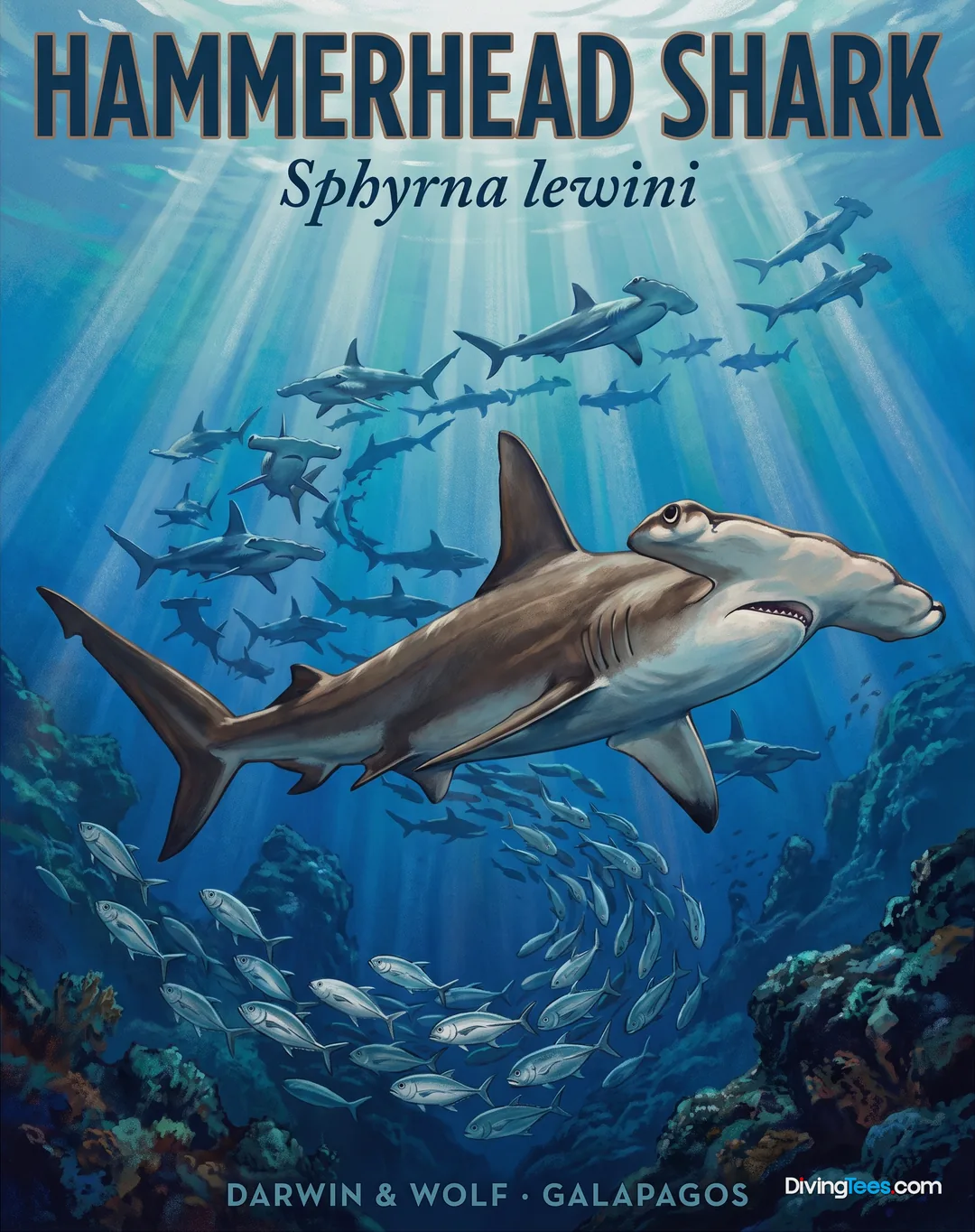
The presence of sharks at Bradford's Shoal is a consistent feature, often including grey reef sharks (Carcharhinus amblyrhynchos) patrolling the deeper drop-offs and patrolling the perimeter of the seamount. While less common, the occasional sighting of a hammerhead shark (Sphyrna lewini) adds an element of raw excitement, underscoring the truly oceanic nature of this remote dive location.
The reef begins its more dramatic descent from a distinct ledge at approximately 27 meters, after which the wall plunges almost vertically into the abyss. This deeper section, where the light fades and the true scale of the seamount reveals itself, is where the larger predators often cruise, using the topography to their advantage as they hunt the schools of fish that shelter closer to the reef dome.
Bradford's Shoal is recommended for advanced divers, with depths ranging from 20 meters on the peaks down to a maximum of 27 meters along the main ledge before the vertical drop-off. The isolated nature of the seamount means that currents can vary depending on oceanic movements, requiring divers to be proficient in managing different water conditions.
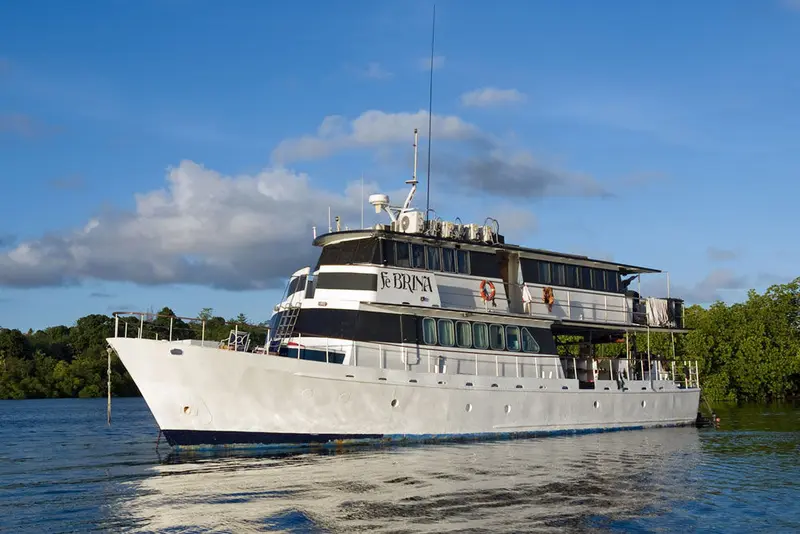
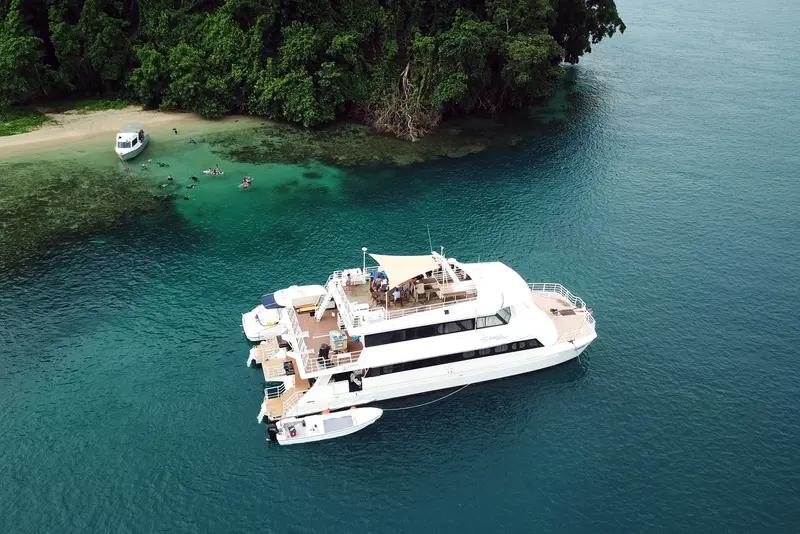
2 liveaboards depart from Kimbe Bay another way to explore the region, over several days at sea.
Bradford's Shoal is recommended for advanced divers because its isolated seamount can expose you to varying water conditions. You need to be proficient at managing different conditions while navigating the summits, ledge and vertical drop-off. The site rises to around 20 metres and descends to 27 metres.
Bradford's Shoal reaches about 20 metres at its peaks and extends to 27 metres along the main ledge before the vertical drop-off. After that ledge, the wall plunges almost vertically into the abyss. The deeper section is where larger predators often cruise around the seamount.
Because Bradford's Shoal is an isolated seamount, currents can vary with oceanic movements. You should be proficient in managing different water conditions. The two summits break the current around 20 metres, while fish and predators use the seamount's edges and deeper drop-off.
At Bradford's Shoal, you can see large schools of barracuda, bigeye trevally, fusiliers and other reef fish, along with hard coral plates and Sarcophyton. Grey reef sharks patrol the deeper areas, while hammerheads appear occasionally. Dogtooth tuna, unicornfish, anthias and anemonefish also inhabit the seamount.