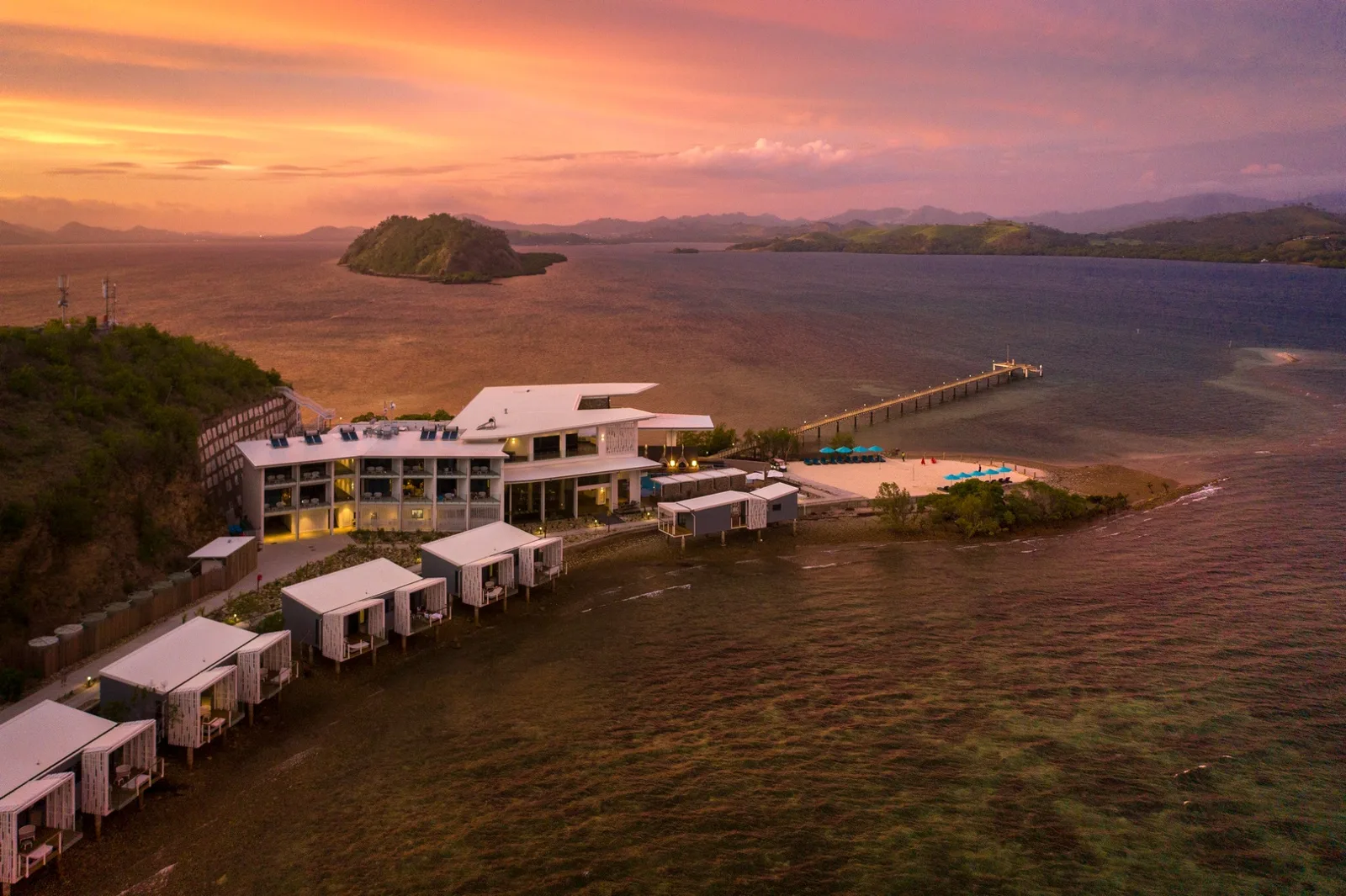

Loloata Dive Resort
Google 4.4/5 (523 reviews)
4.1 km away as the crow flies
Port Moresby · Papua New Guinea · Pacific
Max. depth · 45 mDescend onto the 65-meter upright wreck of the Pacific Gas, a purpose-sunk freighter now teeming with marine life near Port Moresby.
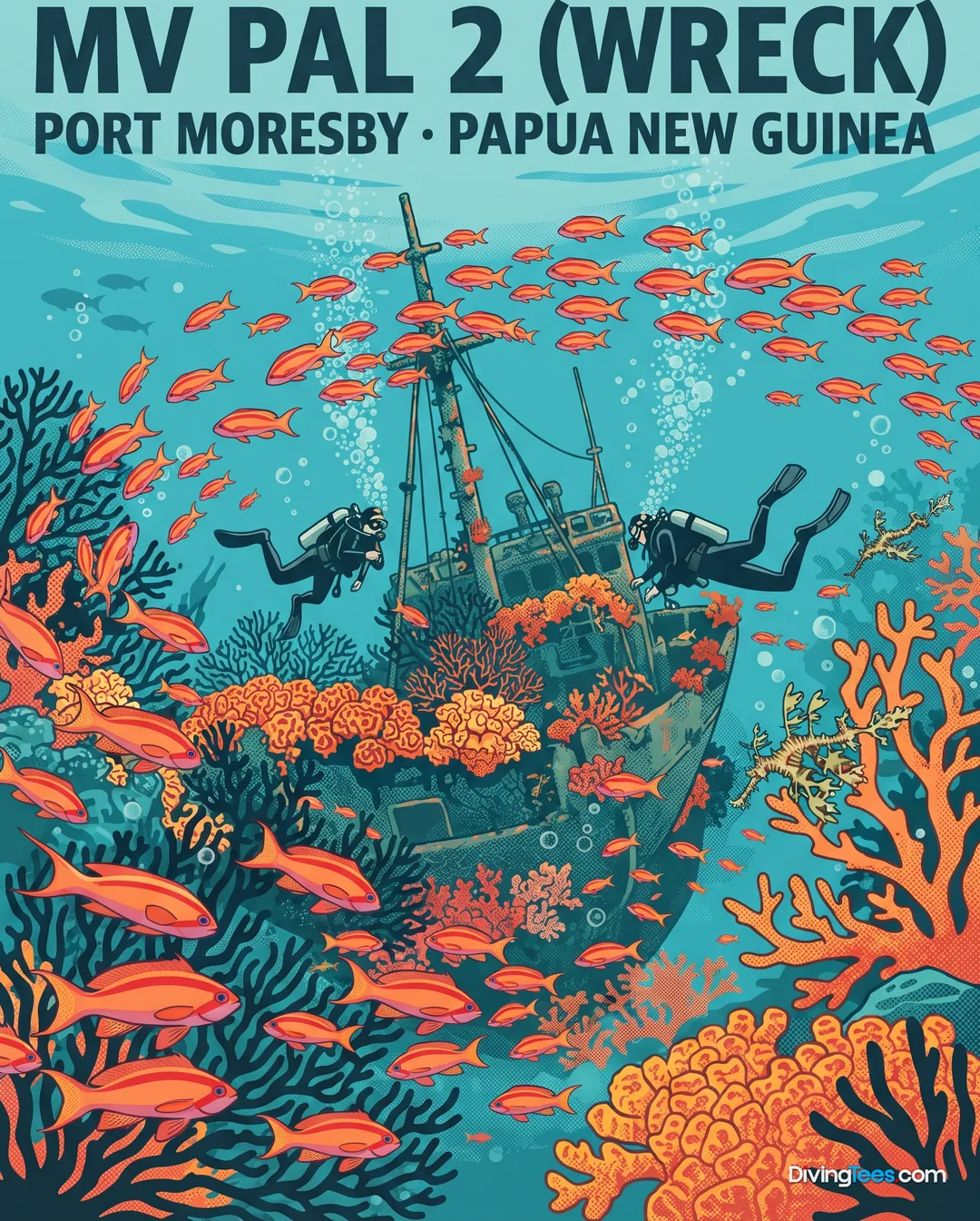
Dropping onto the Pacific Gas, you'll find a 65.1-meter freighter resting upright on the slope of a sunken barrier reef, near Horseshoe Reef. The wreck was deliberately sunk in 1986 to form an artificial reef, and its position on the leeward side of the reef offers some shelter, though it remains part of an exposed offshore system. Your descent typically follows a mooring line, bringing you directly to the wreck, which begins at a minimum depth of 9 meters at the bow and slopes down to 45 meters at the stern.
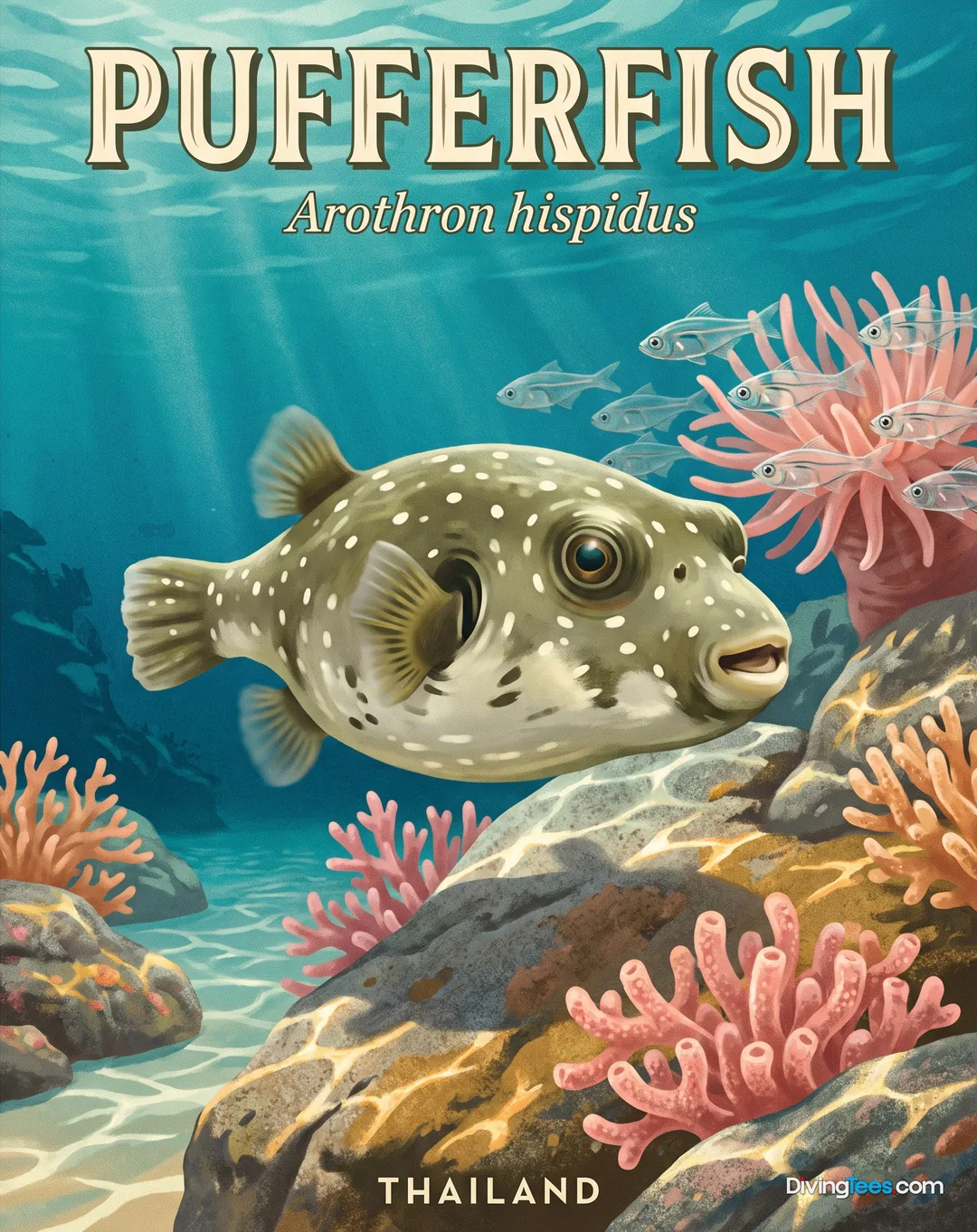
As you approach, the sheer volume of fish around the wreck is immediately apparent. Snapper, sweetlips, and pufferfish form dense schools, creating a living cloud that envelops the entire structure. This concentration of marine life is a clear indicator of a healthy ecosystem, where the wreck's intricate details provide both shelter and hunting grounds. The scale of the vessel allows for extensive exploration along its decks and superstructure, with each section revealing distinct communities of inhabitants.
The wreck's mast stands out as a focal point, adorned with a vibrant growth of corals. These corals transform the metal structure into a mosaic of colours and textures, offering critical habitat for smaller, often camouflaged creatures. This biological transformation highlights the ocean's capacity to integrate human artifacts into thriving marine environments, providing a dynamic backdrop for your dive as you navigate through the structure.
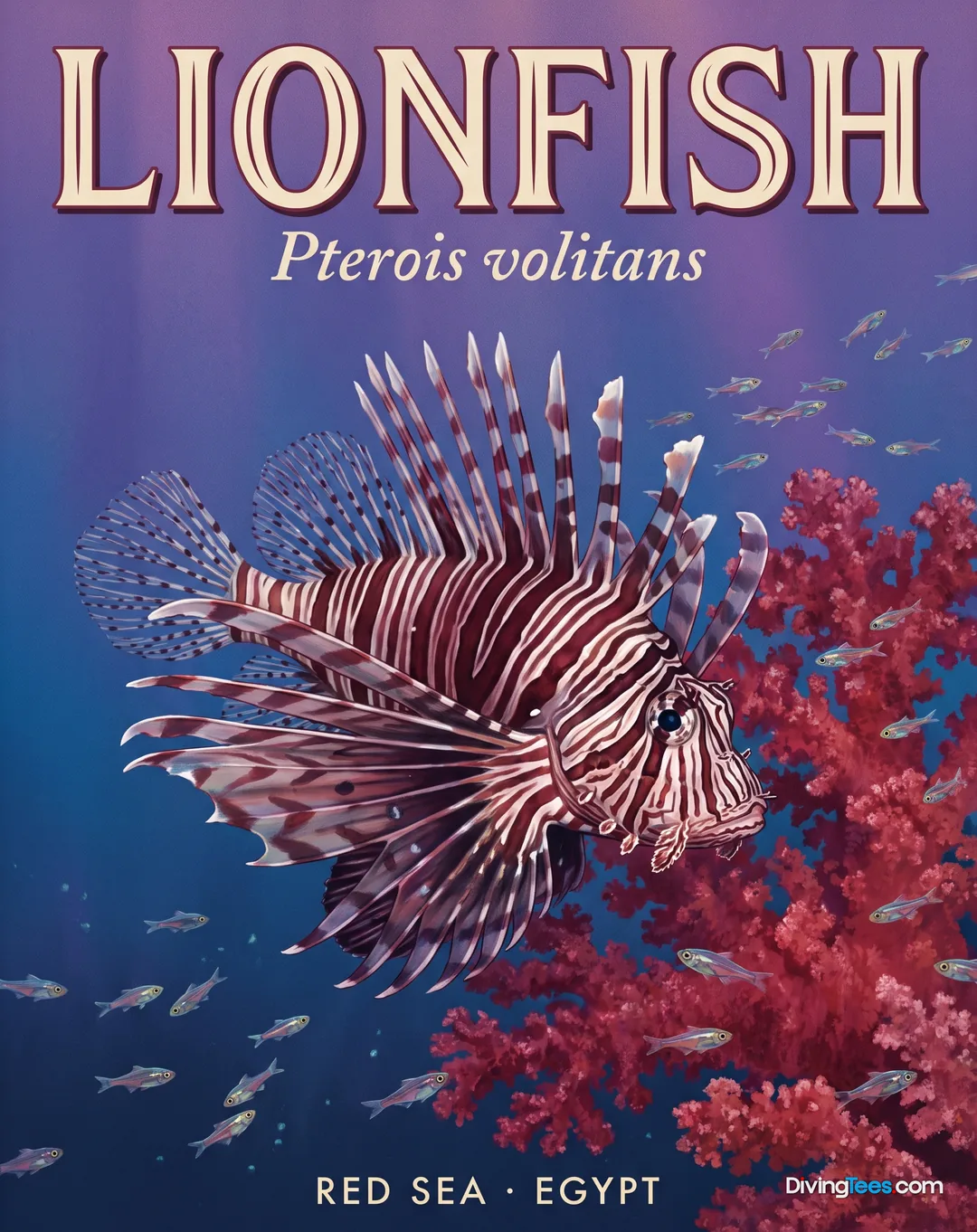
Resident lionfish (Pterois volitans/miles) patrol the nooks and crannies of the wreck with their characteristic deliberate movements. Keep a sharp eye out for the leaf scorpionfish (Taenianotus triacanthus), which often sways gently with the surge, perfectly mimicking a fallen leaf. For those with patience and a keen eye, the elusive ghost pipefish (Solenostomus sp.) can be found blending seamlessly into the colourful corals or hydroids, requiring a slow approach to spot.
The bridge area, wheelhouse, and stern are key features of the Pacific Gas, offering distinct exploration opportunities. Soft corals and Tubastrea corals have established themselves across the wreck's structure, adding to its biological richness. Schools of red-lined anthias (Pseudanthias cooperi) flit in dense formations, adding flashes of brilliant colour, particularly in the deeper sections of the wreck, enhancing the visual experience.
The wreck's depth profile, ranging from 9 meters at the bow to 45 meters at the stern, allows for varied dive plans. The main highlights, including the coral-encrusted bow, the bridge, and the stern, are spread across this depth range. This allows divers to tailor their exploration based on their certification and experience, ensuring there is always something new to discover on subsequent dives.
Batfish and angelfish are also common sightings around the Pacific Gas, adding to the diversity of the fish population. The wreck acts as a magnet for these species, providing both food sources and protection. The constant activity around the wreck, from the smallest invertebrates to the schooling fish, creates a dynamic and engaging dive experience, making it a significant site for marine observation.
The Pacific Gas is accessible from Open Water Diver level, though the deeper sections extending to 45 meters require Advanced Open Water certification or equivalent experience. Current at the site is variable; while generally sheltered on the leeward side of the reef, conditions can change with weather and sea state, particularly in strong winds. Divers typically use a mooring line for descent and ascent. Visibility is generally at its peak from late October until early December, which is also considered the best season for diving here, though the site is diveable year-round. Water temperatures remain comfortable, ranging between 25°C and 30°C.
You can dive Pacific Gas year-round, with visibility generally at its peak from late October until early December. Water temperatures remain comfortable between 25°C and 30°C. The site lies offshore near Horseshoe Reef, so weather and sea conditions remain relevant when planning your visit.
Pacific Gas is accessible to Open Water Divers, with the bow beginning at 9 meters. The wreck slopes down to 45 meters at the stern, so exploring its deeper sections requires Advanced Open Water certification or equivalent experience. You typically descend and ascend using a mooring line.
Current at Pacific Gas is variable. The wreck sits on the leeward side of the reef, where conditions are generally sheltered, but weather and sea state can change the situation, particularly during strong winds. The site remains part of an exposed offshore system, so use the mooring line for descent and ascent.
At Pacific Gas, you can explore a purpose-sunk freighter resting upright on a sloping reef, with coral growth on the mast, bridge, wheelhouse, and stern. Look for schooling snapper, sweetlips, pufferfish, and red-lined anthias, plus resident lionfish, leaf scorpionfish, ghost pipefish, batfish, and angelfish.