
Aqaba Pro Divers
Google 4.9/5 (574 reviews)
1.8 km away as the crow flies
Aqaba · Jordan · Red Sea
Max. depth · 27 mBlack Rock offers a detailed exploration of a thriving fringing reef, where extensive coral gardens meet experimental restoration efforts in the heart of Aqaba Marine Park.
For subtitles in English: start the video firstthen click the gearat the top right of the video, select “Subtitles/CC”, then “Auto-translate” and choose “English”.
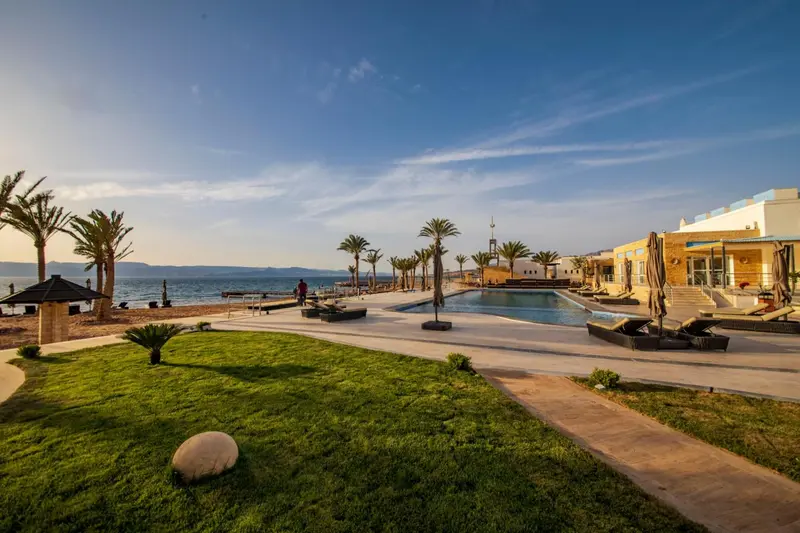
Dropping into Black Rock, you'll find yourself on a fringing reef that begins just below the surface, sloping gradually down to around 27 metres and beyond. This site, also known as Research Station, is situated off the private beach of Club Berenice within the Aqaba Marine Park. The initial descent reveals a landscape dominated by healthy hard and soft corals, forming intricate patterns and textures that shift with the gentle surge, setting the tone for a detailed reef exploration.
The topography here is a series of coral slopes and valleys, creating a natural labyrinth of crevices and overhangs. As you navigate these formations, you'll encounter towering coral pinnacles and narrow passages, each turn opening to new expanses of growth. This structure encourages a relaxed pace, allowing you to focus on the details of the reef and the smaller inhabitants that call it home, rather than covering large distances quickly.
One of the distinctive features of Black Rock is the presence of extensive black coral forests, particularly as you gain a little depth. These ancient corals add a unique dimension to the reef, providing shelter and hunting grounds for various species. Additionally, around 10 metres, you'll find experimental artificial coral growth structures, a testament to ongoing conservation efforts within the marine park, blending seamlessly with the natural reef.
While the coral formations are the main draw, the site is teeming with a diverse array of reef fish. You'll commonly encounter emperor fish, snappers, and the vibrant lyretail anthias schooling over the reef. Keep an eye out for scorpionfish and lionfish camouflaged among the corals, along with triggerfish, parrotfish, and boxfish moving through the open water and grazing on the reef.
The current at Black Rock is typically moderate, often running from south to north. Many divers choose to start their dive at the southern end of the reef, allowing them to drift north against this current, which can reach about 1 knot. This approach helps manage the dive profile and ensures you can return to your exit point without battling the current on the way back, making it a good site for practicing current diving techniques.
Beyond the main reef, there's a possible extension under a nearby jetty. This area, while requiring careful observation, often reveals a concentrated abundance of marine life, offering a different perspective on the site's biodiversity. It's a spot where patience is rewarded with unique encounters, adding another layer to the Black Rock experience.
Larger marine life also frequents Black Rock. You might spot turtles gliding past, or encounter Napoleon wrasse, groupers, and barracudas patrolling the reef edges. Rays are also present, often resting on the sandy patches adjacent to the coral. This mix of macro and larger species ensures that every dive offers something new to observe, from the smallest invertebrates to the more substantial reef dwellers.
Black Rock is accessible for diving year-round, with water temperatures ranging between 20°C and 26°C. The dive depth extends from 1 metre down to 27 metres. This site is suitable for divers from beginner to advanced levels, though comfort in a moderate current is recommended. Visibility typically ranges from 25 to 30 metres or more, offering clear views of the extensive coral formations and marine life. While generally calm, be aware of a moderate current, up to 1 knot, which usually runs northwards; planning your dive to start south and head north against it is a common practice.
You can dive Black Rock year-round, with water temperatures ranging from 20°C to 26°C. Visibility typically reaches 25 to 30 metres or more, giving you clear views across the coral formations and marine life. The site is generally calm, although you should still plan for its moderate current.
Black Rock suits divers from beginner to advanced levels. The fringing reef starts just below the surface and slopes gradually to around 27 metres and beyond. You can explore coral slopes, valleys, crevices, overhangs, pinnacles, and narrow passages, while experimental artificial coral growth structures are located around 10 metres.
Black Rock commonly has a moderate current running northwards, reaching up to 1 knot. You should be comfortable in moderate current conditions. Many divers start at the southern end and head north against the current, a practical approach that helps manage the dive profile and return to the exit point.
At Black Rock, you can see healthy hard and soft corals, extensive black coral forests, and diverse Red Sea reef fish. Emperor fish, snappers, lyretail anthias, scorpionfish, lionfish, triggerfish, parrotfish, and boxfish inhabit the reef. You might also encounter turtles, Napoleon wrasse, groupers, barracudas, and rays near sandy patches.