
American Pro Diving Center, Inc.
Google 4.8/5 (1,077 reviews)
Crystal River · United States · Americas
Max. depth · 6 mExplore a compact freshwater spring basin known for its paleontological history and West Indian manatee presence.
For subtitles in English: start the video firstthen click the gearat the top right of the video, select “Subtitles/CC”, then “Auto-translate” and choose “English”.
Jurassic Spring is a compact, second-magnitude freshwater spring situated within the Hunter Springs Run area of Kings Bay. The site forms a roughly oval basin, measuring approximately 30 metres in length and 15 metres in width. As you approach, you will find the spring vents feeding clear, stable water into the surrounding bay. The topography is relatively simple, consisting of a sandy and silty bottom populated with various types of aquatic vegetation.
The spring is notable for its historical and paleontological significance, having been named after mammoth fossils discovered within the basin. This history adds a layer of interest to the dive as you navigate the small area. The water temperature remains consistent, typically between 22 and 23°C, which is regulated by the constant discharge from the spring vents. This thermal stability is a defining characteristic of the site's environment.
Accessing the site requires careful planning depending on your mode of transport. You can reach the spring by small boat or by swimming and kayaking from Hunter Springs Park along the Hunter Springs Run channel. If you choose the shore entry at the park, you will need to swim approximately 300 metres to reach the spring itself. Always ensure you are using a dive flag when navigating through the channel to maintain safety in this area.
The movement of water at the site is primarily driven by the spring discharge. However, the tidal state of Kings Bay does exert an influence on the local conditions. You may encounter mild currents that shift depending on the tide, which can cause slight changes in depth perception or water movement. During periods when manatee protection closures are in effect, boat traffic in the area stops, resulting in much calmer conditions.
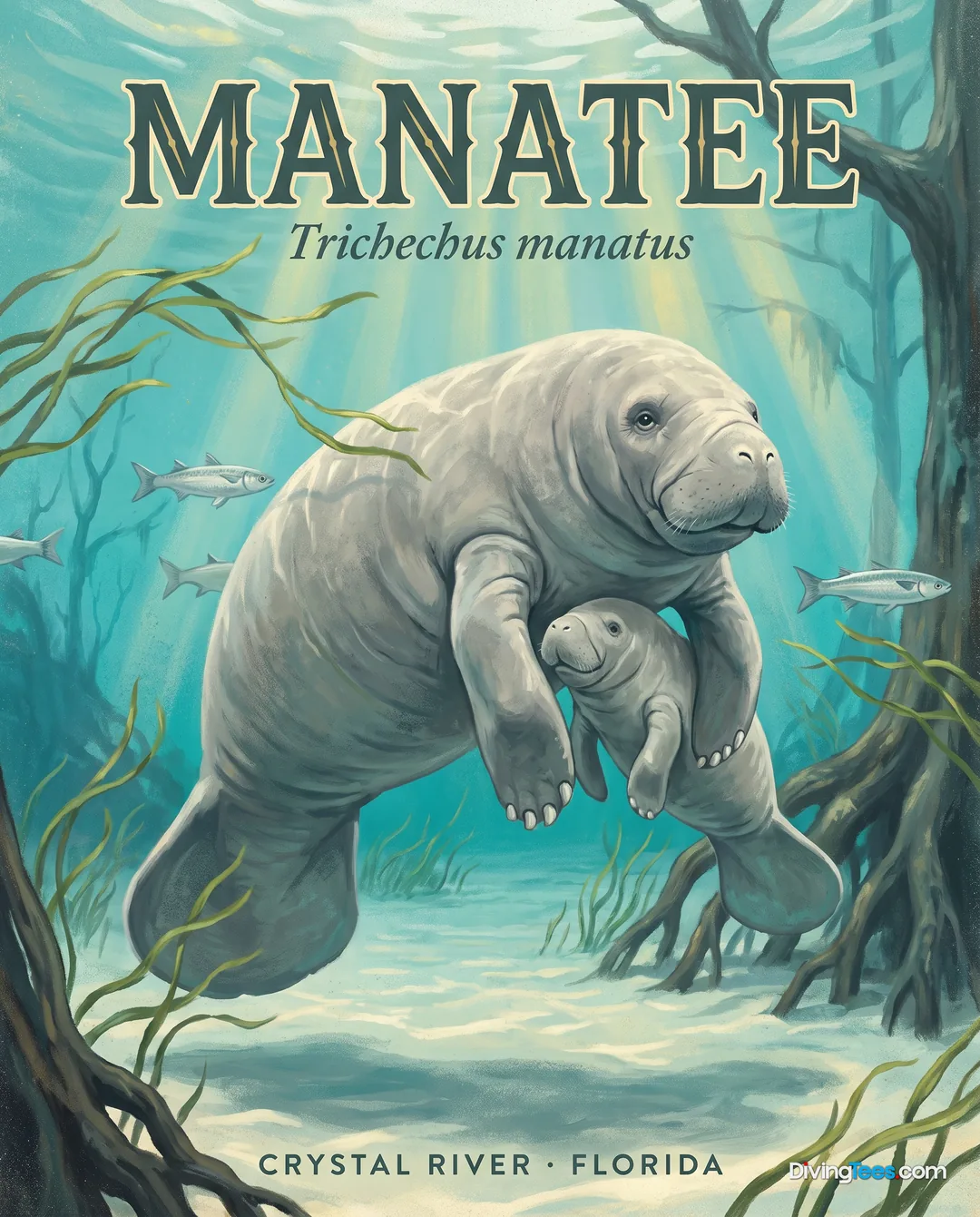
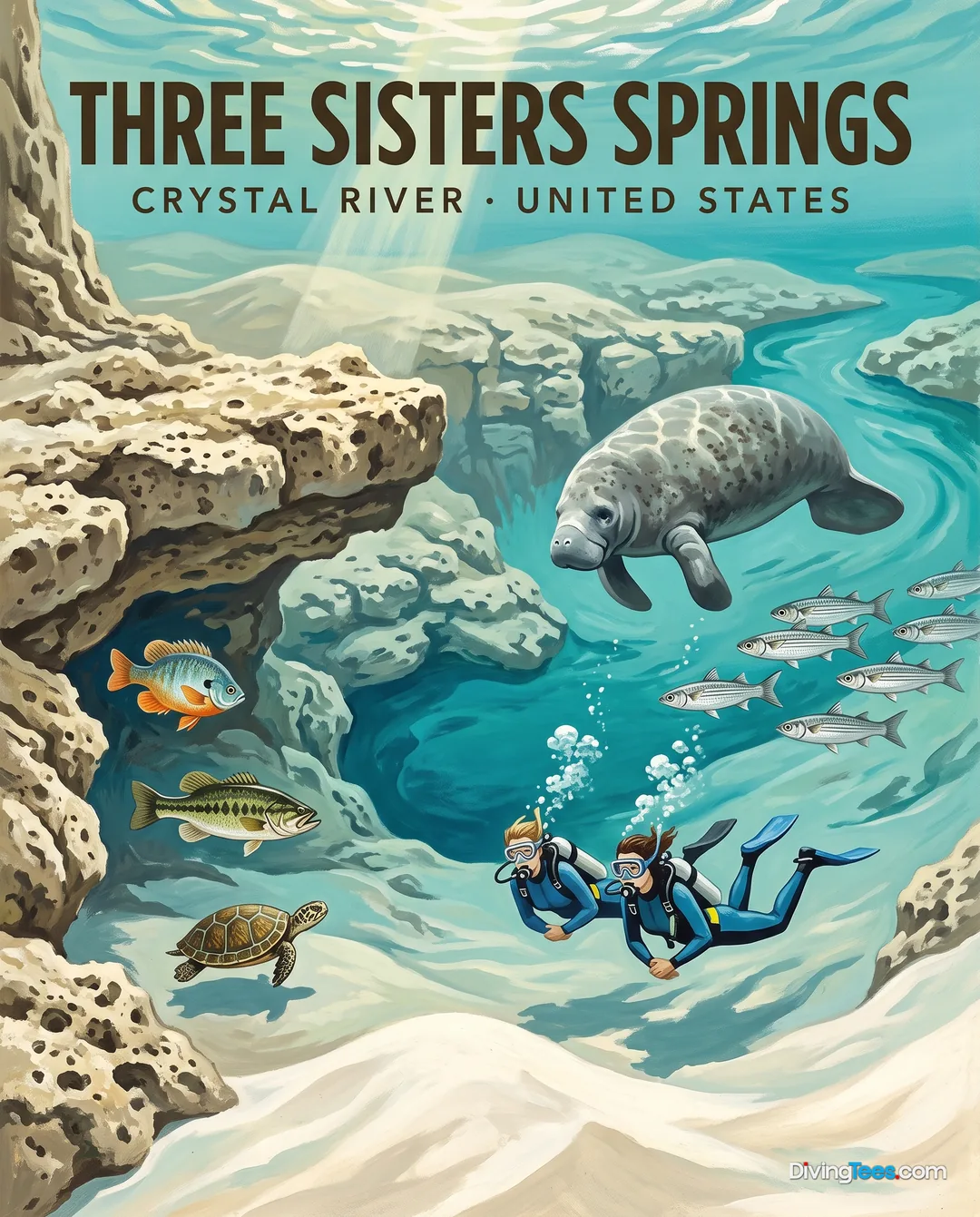
The fauna at Jurassic Spring is representative of the local freshwater ecosystem. You can observe West Indian manatees (Trichechus manatus) using the spring, as it is one of the primary locations for them in the Crystal River area. Other resident species include the Florida gar, largemouth bass, bluegill, and striped mullet. These animals are adapted to the specific vegetation and water clarity provided by the spring vents.
As you move along the bottom, keep an eye out for more specialized fish species like the snook, common mojarra, sheepshead, and mangrove snapper. The presence of aquatic vegetation provides various hiding spots and habitats for these residents. The visibility at the site is generally good, ranging between 10 and 20 metres, allowing for clear observation of the basin and the surrounding vegetation.
Seasonal changes significantly impact the way you experience this site. From November to March, the area sees peak manatee presence, making it a focal point for wildlife observation. During the months from April to November, recreational access is often more consistent because manatee-related closures are less frequent. It is important to check local regulations, as access can be restricted during the winter months to ensure the protection of the manatee population.
Maximum depth is 6 metres. The site is accessible to Open Water Divers who are comfortable in shallow spring conditions and around boat traffic and wildlife. Visibility typically ranges from 10 to 20 metres. Currents are generally light, driven by spring discharge and tidal shifts in Kings Bay. This site is used by both scuba divers and snorkellers, with access via kayak from Hunter Springs Park or by swimming about 300 m from Hunter Springs with a dive flag. Peak manatee presence occurs from November to March, and the spring may be closed in winter to protect manatees from cold stress. For more consistent recreational access with fewer manatee-related restrictions, plan your dives between April and November.
You can plan dives between April and November for more consistent recreational access and fewer manatee-related restrictions. From November to March, manatee presence is highest, and the spring may close during winter to protect them from cold stress. Check local regulations before diving, since seasonal access can change.
Jurassic Spring is accessible to Open Water Divers who are comfortable in shallow spring conditions, around boat traffic, and near wildlife. You can reach the site by small boat, kayak from Hunter Springs Park, or by swimming from the park along the channel with a dive flag.
Jurassic Spring reaches a maximum depth of six metres, with a sandy and silty bottom and aquatic vegetation. Currents are generally light, influenced by spring discharge and tidal shifts in Kings Bay. You may notice mild changes in water movement and depth perception as the tide changes.
You can explore clear spring vents, aquatic vegetation, and freshwater fish including Florida gar, largemouth bass, bluegill, striped mullet, snook, common mojarra, sheepshead, and mangrove snapper. West Indian manatees are also seen using the spring, while its mammoth fossil history adds paleontological interest to the dive.