
American Pro Diving Center, Inc.
Google 4.8/5 (1,077 reviews)
Crystal River · United States · Americas
Max. depth · 15 mExplore the deep freshwater vent of Kings Bay where manatees congregate in a bowl-shaped basin.
For subtitles in English: start the video firstthen click the gearat the top right of the video, select “Subtitles/CC”, then “Auto-translate” and choose “English”.
King Spring is the largest and deepest freshwater vent located in Kings Bay, acting as the primary water source for the Crystal River system. The site is defined by a large, circular basin approximately 75 to 200 feet in diameter. This bowl-shaped topography creates a unique underwater landscape where the outflow from the spring feeds the river. The descent begins in a shallow, open area that transitions into a more structured environment as you approach the central vent.
From the edges of the basin, the terrain drops toward a central cavern entrance located near Banana Island. This cavern structure descends from the main basin down to a maximum depth of approximately 15 metres. Unlike many ocean dives where light fades with depth, this area remains within natural daylight. The constant flow of fresh water ensures a bright, clear environment as you navigate the lower sections of the vent.
The water movement at King Spring is primarily driven by the spring's outflow as it feeds into the Crystal River. You will generally experience light currents, though these can be influenced by external factors. During warmer months, boat traffic in Kings Bay can create localized surge or slight disturbances near the surface. Monitoring the flow is essential when navigating the transition between the open basin and the cavern entrance.
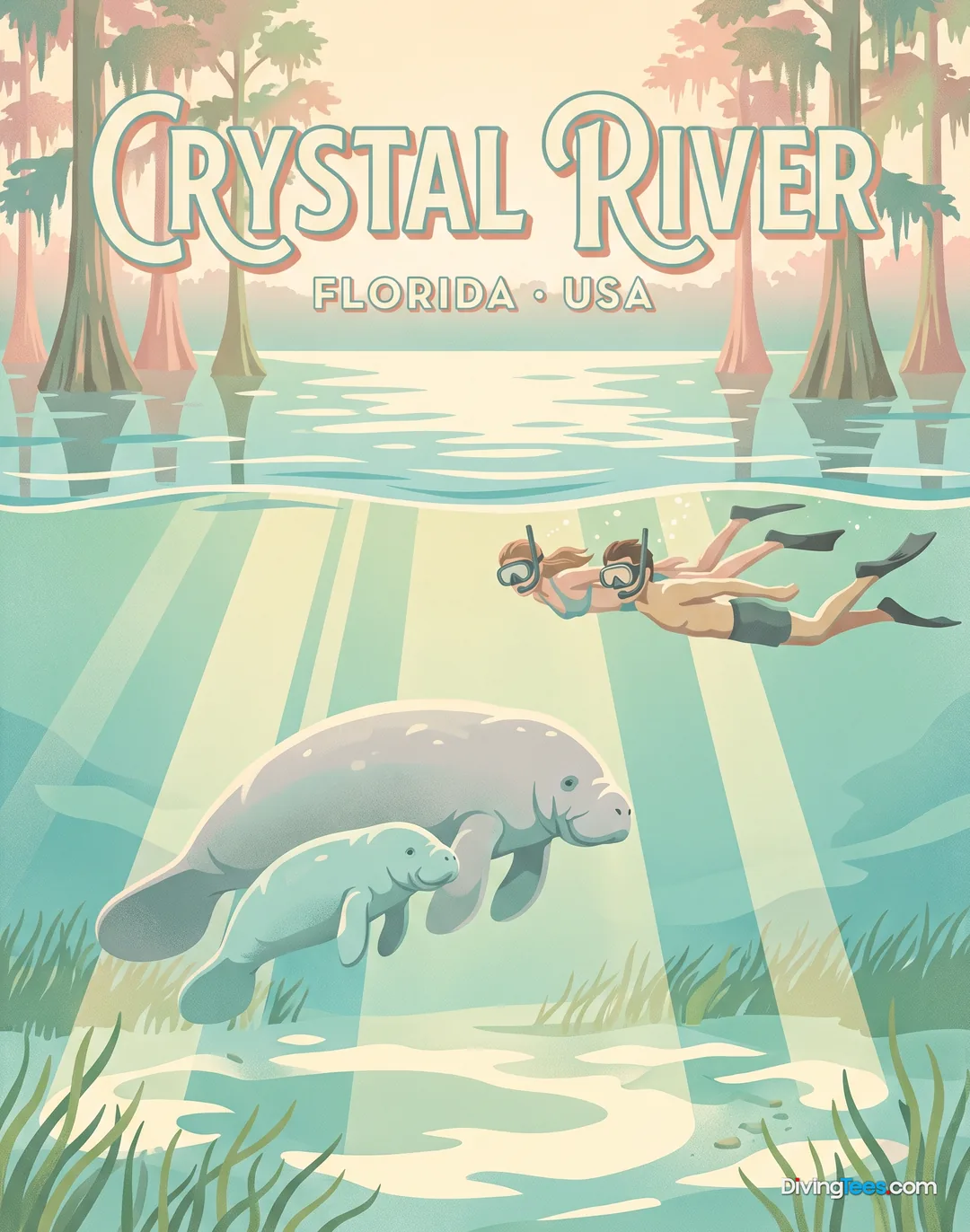
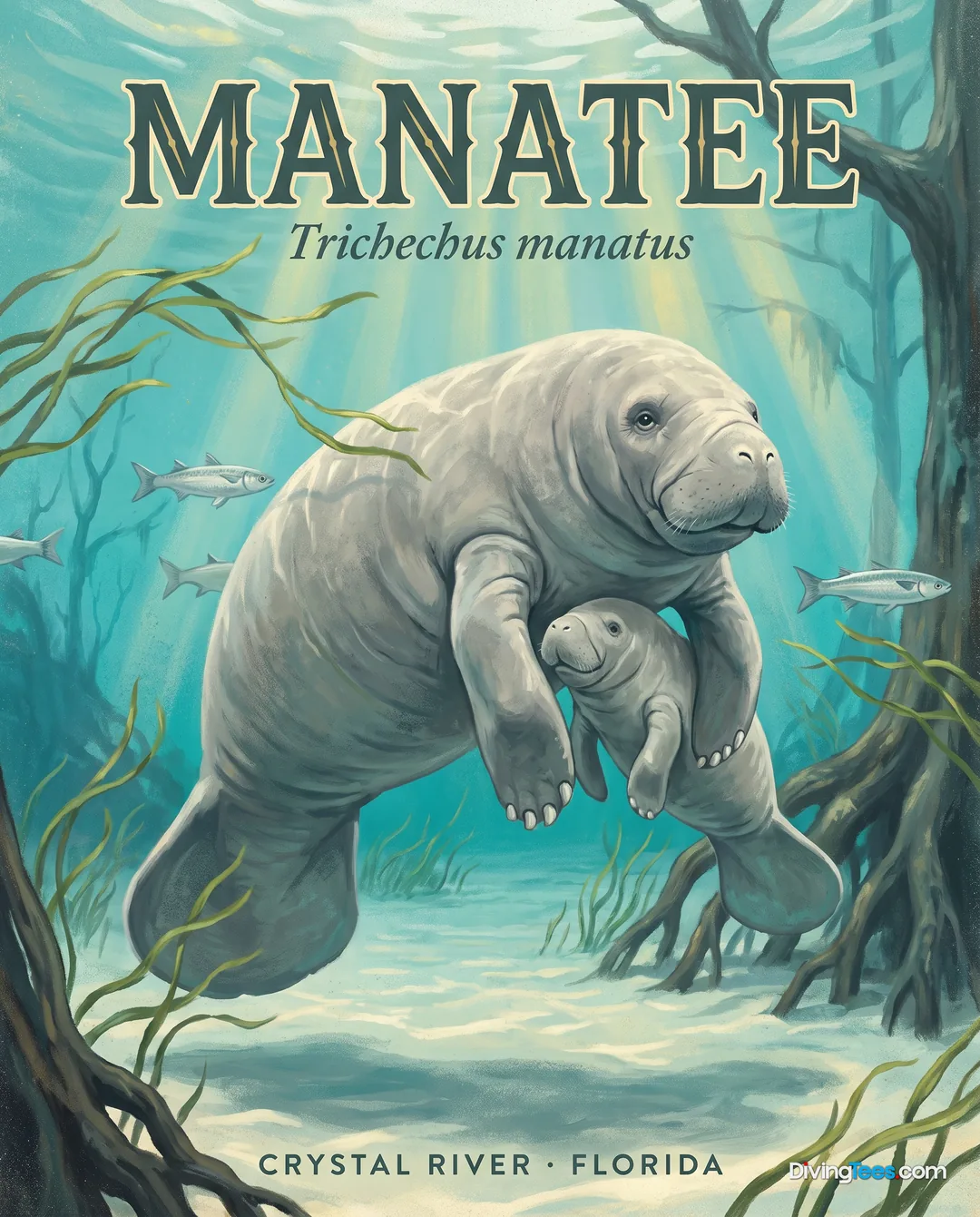
One of the most significant aspects of this site is the presence of the West Indian manatee. Between November and March, these animals frequently use the spring as a sanctuary and thermal refuge. You will often encounter them in the shallower sections of the basin or near the cavern openings. It is important to observe them within the designated sanctuary and keyhole zones to respect their protected status.
The resident fauna extends beyond manatees to include various species typical of the freshwater ecosystem. You can observe bluegill, largemouth bass, and mullet moving through the water column. Other species like snook, tarpon, and snapper are also present within the spring's depths. Crustaceans such as crabs inhabit the bottom, adding detail to the floor of the basin.
Navigating this site requires an understanding of its specific layout to make the most of the depth changes. The open basin allows for easy, relaxed exploration, while the cavern section provides a more technical experience. Divers must be comfortable with light cavern penetration and understand the specific topography of the vent. Because the site is located in an area with active boat traffic, staying within the designated dive and swim areas is necessary for safety.
Maximum depth reaches 15 metres and visibility typically ranges from 3 to 24 metres. Scuba diving is allowed at King Spring year-round, though Open Water certification is required and cavern penetration is strictly limited to those with appropriate training and guidance. During manatee season from 15 November to 31 March, the Banana Island sanctuary is closed to all activity, meaning diving is only permitted inside the buoy-marked 'keyhole' or outside the sanctuary boundary. Snorkelling is permitted year-round and access to the site is by boat. Best encounters with West Indian manatees occur from November to March.
You can scuba dive at King Spring year-round. From November to March, West Indian manatees frequently use the spring as a sanctuary and thermal refuge, making this the primary season for encounters. During manatee season, diving is limited to the buoy-marked keyhole or areas outside the Banana Island sanctuary.
You need Open Water certification to dive at King Spring. The open basin offers relaxed exploration, while the cavern section requires comfort with light cavern penetration and an understanding of the vent’s topography. Cavern penetration is strictly limited to divers with appropriate training and guidance.
King Spring descends from a shallow open basin toward a central cavern reaching a maximum depth of 15 metres. Visibility typically ranges from 3 to 24 metres. You will generally experience light currents from the spring’s outflow, while warmer-month boat traffic can cause localized surface surge or disturbances.
You may encounter West Indian manatees in the shallower basin or near the cavern openings, especially from November to March. The freshwater environment also contains bluegill, largemouth bass, mullet, snook, tarpon, snapper, and bottom-dwelling crabs, with natural daylight extending through the lower sections of the vent.