
Flare Dive
Google 5/5 (424 reviews)
4.3 km away as the crow flies
Okinawa · Japan · Asia
Max. depth · 21 mNavigate a grid of historical fishing lines across a sandy slope to find specialized macro life.
For subtitles in English: start the video firstthen click the gearat the top right of the video, select “Subtitles/CC”, then “Auto-translate” and choose “English”.
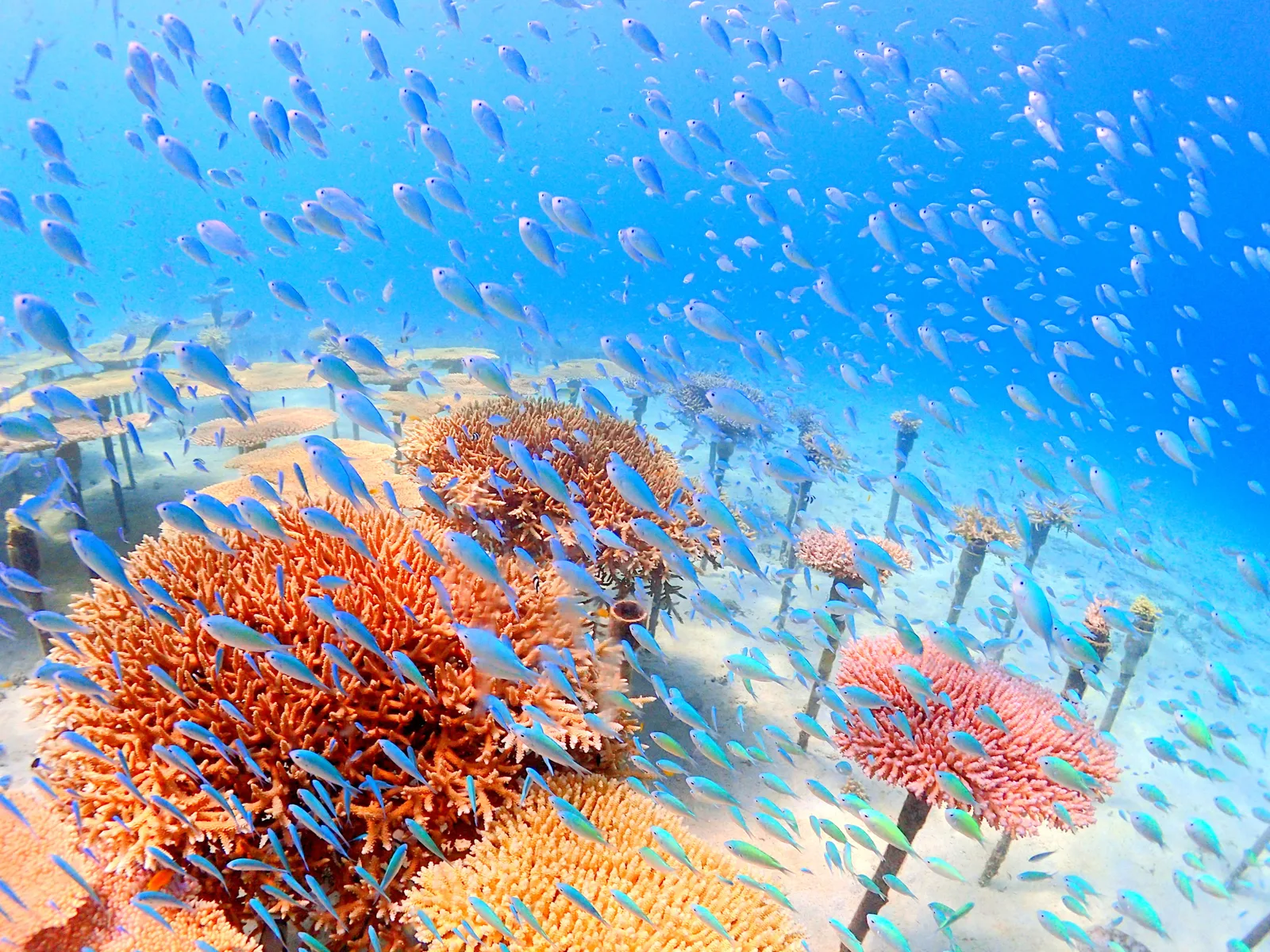
The topography of Cross Line consists of a mix of coral reef patches and sandy bottom sections. A gentle slope defines the site, transitioning from shallow areas down to a maximum depth of 21 metres. Low reef hills and patches of rubble are spread across the terrain, creating a varied landscape for exploration. You will notice the seafloor is marked by old fishing ropes and net lines that lie across the sand. These remnants of former fishing gear and whale shark trapping equipment create a distinct reference grid across the bottom.
These intersecting lines of rope and net are the defining characteristic of the site's layout. Rather than acting as debris, they have become integral parts of the local ecosystem. They provide structure in an otherwise sandy environment, hosting numerous macro critters that typical reefs might lack. As you navigate the site, these lines serve as useful navigation markers to help you maintain position on the slope. They transform the seafloor into a structured habitat for the small, specialized organisms that frequent this part of Okinawa.
The site is particularly suited for those focused on macro photography or observation. You can find several types of goby species inhabiting the sandy areas and reef edges. These include the shrimp goby, the Yasha goby, and the prawn goby. These small fish rely on the stable substrate and the shelter provided by the scattered debris and reef patches. The combination of sand and reef structure makes this an ideal location for spotting creatures that prefer disturbed or textured seafloors.
Beyond the gobies, the site hosts a variety of other specialized reef life. You can expect to encounter frogfish and pipefish hidden among the coral patches and rubble. The biodiversity includes seamoths and various species of anemonefish, such as the tomato anemonefish. Remora are also frequently seen hovering near larger marine life or reef structures. For those observing the reef edge, the presence of these specific macro species makes the site a technical interest for specimen hunters.
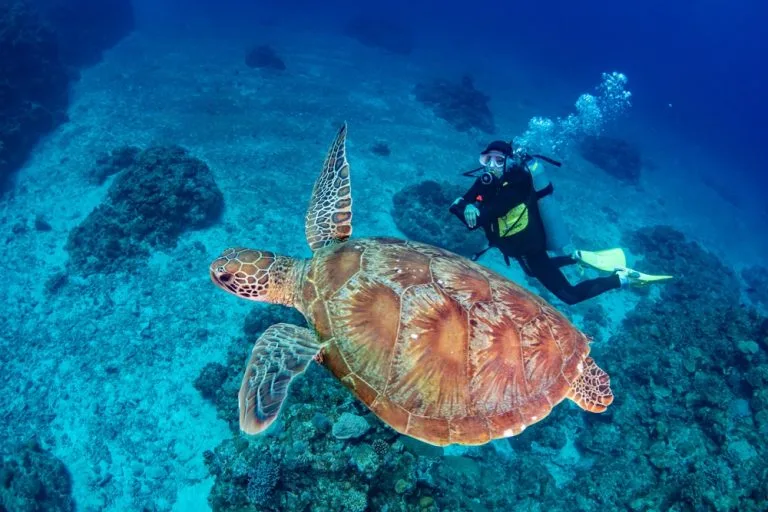
Large marine life is also a regular presence in these waters, particularly in the form of green sea turtles. These turtles move through the area, often accompanied by remora. The presence of these larger animals adds a layer of movement to an otherwise calm and focused macro dive. You will often see them grazing or cruising along the reef edges as you work your way through the shallower sections. Their predictable presence makes them a staple of the Cross Line experience.
Conditions at Cross Line are generally very calm, making it an easy and relaxing dive. The site is characterized by light to no current, which is ideal for the close-up observation required for macro species. However, you should be aware that the environment can change if weather conditions around Manza deteriorate. During such periods, the site can experience increased current and reduced visibility. Understanding this local variability is key to choosing the right moment for a dive here.
The best time to visit this site is between May and July. During these months, you can expect the warmest water temperatures, ranging between 22 and 29 °C. Visibility is at its peak during this window, often reaching up to 25 metres. This clarity is essential for both navigating the reef patches and clearly capturing the smaller macro life forms that define the site. While the site is technically open year-round, the seasonal window offers the most reliable conditions for clear underwater viewing.
Depth ranges from 5 to 21 metres. The site is accessible from Open Water Diver level, provided you are comfortable with basic buoyancy over sand and reef. Current is generally light, but can become variable during poor weather or when sea conditions in the Manza area deteriorate. Visibility typically reaches 20-25 metres, with the best clarity observed from May to July.
You can dive Cross Line year-round, but May to July offers the most reliable conditions for clear underwater viewing. During this period, visibility typically reaches 20 to 25 metres, and water temperatures range from 22 to 29 °C. This seasonal window supports both reef navigation and macro photography.
Cross Line is accessible from Open Water Diver level if you are comfortable maintaining basic buoyancy over sand and reef. The site follows a gentle slope from shallow areas to a maximum depth of 21 metres, with coral patches, rubble, and sandy sections providing varied terrain to explore.
Cross Line is generally a calm, relaxed dive with light to no current, which suits close-up observation and macro photography. Conditions can change when weather around Manza deteriorates, bringing increased current and reduced visibility. Check the local sea conditions before choosing your timing for this site.
You can explore crossed fishing ropes and net lines that provide habitat for specialized macro life. Look for shrimp, Yasha, and prawn gobies, along with frogfish, pipefish, seamoths, tomato anemonefish, and remora. Green sea turtles are also frequently seen grazing or cruising along reef edges.