

Diving Shop Lei
Google 5/5 (3,134 reviews)
5.9 km away as the crow flies
Okinawa · Japan · Asia
Max. depth · 40 mNavigate through natural arches and a heart-shaped cave opening before the reef drops away into the deep.
For subtitles in English: start the video firstthen click the gearat the top right of the video, select “Subtitles/CC”, then “Auto-translate” and choose “English”.
Apogama is characterized by a varied topography that begins with a shallow reef flat before transitioning into a significant descent. As you move away from the shore, the seabed drops into a series of structured formations, including tunnels, arches, and crevices that define the site's character. This layout makes it an ideal location for divers who enjoy navigating through geological structures rather than simply hovering over a flat reef. The site orientation allows for a diverse dive profile that can cater to different depth preferences within a single area.
The most distinctive feature of the site is the natural cave complex, often referred to as Mermaid’s Grotto. Within this structure, you will encounter a prominent heart-shaped opening that serves as a focal point for many divers. Navigating these caves requires careful buoyancy control and awareness of the surrounding rock formations to ensure a smooth passage through the various swim-throughs. These geological features create a sense of enclosure and discovery as you move from the light of the reef flat into the shadowed recesses of the cave system.
Beyond the cave structures, the site features a prominent wall or steep slope that descends to 40 metres. This verticality provides a different experience than the shallow reef, as you move into deeper, more shaded zones. The transition from the reef flat to the wall offers a clear change in environment, where the hard corals become the primary focus. Divers often use the wall to observe how the local fauna interacts with the increased current and changing light levels as they descend.
The marine life at Apogama is diverse, with many species utilizing the complex topography for shelter. You will often find groupers and lobsters tucked into the crevices and caves along the wall. The reef itself is populated by various hard corals that provide a foundation for a healthy ecosystem. Observing the smaller residents requires a steady hand and a calm approach, as the structural complexity of the site provides ample hiding spots for many of the local inhabitants.
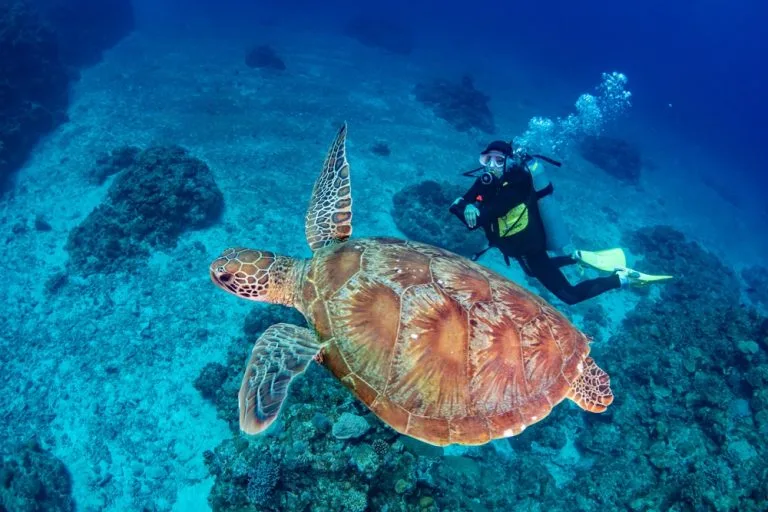
In the open water sections and along the edge of the drop-off, larger species are frequently encountered. Barracuda and yellowfin seabream often patrol these areas, appearing as silver flashes against the blue. You may also see giant trevally or eagle rays passing through the site, particularly when the conditions are stable. The presence of turtles and rabbitfish adds to the biodiversity, with these animals often found grazing or cruising along the shallower sections of the reef.
One aspect that sets Apogama apart is its dual identity as both a technical dive site and a public area. Because it is accessible from the beach and is also used for snorkeling, the site can feel more active than more remote offshore locations. This proximity to the shore means you must be mindful of other users and the specific entry and exit points. The association with the Uduigama or Onna Point area means the site is well-known locally, contributing to its reputation as a landmark in the Okinawa diving scene.
Light penetration through the various arches and the Mermaid’s Grotto creates a dynamic visual environment. As you swim through the tunnels, the play of light and shadow can be striking, especially during midday when the sun is high. This interplay of light makes the cave sections particularly rewarding for those who appreciate the aesthetic side of cave and wreck-style diving. The visibility remains consistent, allowing these light effects to remain visible even as you move deeper along the wall.
The site's geography requires a certain level of technical competence, particularly regarding entry and exit. Accessing the reef from the shore can involve a significant surface swim, and the transition from the beach to the water must be managed carefully. Because the site is so closely tied to the tidal cycle, your ability to manage your ascent and descent in relation to the water movement is critical. The combination of shallow reef flats and deep vertical walls makes Apogama a site of significant depth and structural variety.
The site has a depth range of 5 to 40 metres. An Advanced level of certification is required, supplemented by strong current awareness and experience with shore entries. Currents are variable and highly dependent on the tide; they can shift from calm to strong, making certain tidal windows essential for safe access. Visibility typically ranges between 20 and 30 metres. The best period to dive this site is from May to July.
You can dive Apogama during the best period from May to July. Plan around the tide, because conditions can change from calm to strong and certain tidal windows are essential for safe access. Visibility typically ranges between 20 and 30 metres, helping you appreciate the caves, arches, tunnels, and wall.
You need an Advanced certification for Apogama, along with strong current awareness and experience with shore entries. Careful buoyancy control is important when navigating the natural caves, arches, tunnels, and crevices. You should also manage the surface swim, entry, exit, and changing water movement attentively.
Apogama ranges from 5 to 40 metres, beginning on a shallow reef flat before descending toward a steep wall. Currents are variable and strongly influenced by the tide, shifting from calm to strong. Choose the appropriate tidal window and be prepared for changing movement during your shore entry and dive.
At Apogama, you can explore a natural cave complex with a heart-shaped opening, plus arches, tunnels, and crevices. Hard corals cover the reef, while groupers and lobsters shelter in the formations. In open water, you may encounter barracuda, yellowfin seabream, turtles, rabbitfish, giant trevally, and eagle rays.