
潜癮沖縄 Dive Addicts Okinawa & Yellow Submarine
Google 5/5 (285 reviews)
4.1 km away as the crow flies
Okinawa · Japan · Asia
Max. depth · 25 mExplore a complex network of coral arches, tunnels, and crevasses within a shallow fringing reef system.
For subtitles in English: start the video firstthen click the gearat the top right of the video, select “Subtitles/CC”, then “Auto-translate” and choose “English”.
The topography around Sesoko Island is characterized by a wide, shallow fringing reef that sits relatively close to the coastline. You will find a landscape composed of scattered coral heads and patches of sand that transition into a more structured reef system as you move away from the shore. The terrain does not drop off into a deep wall but rather slopes gently toward a maximum depth of approximately 25 metres. This profile makes the site accessible for a wide range of divers looking for reef exploration without the immediate pressure of extreme depths.
The defining feature of this area is the Sesoko Island Labyrinth, a complex underwater network of geological formations. As you navigate the reef, you will encounter a series of caves, tunnels, and arches carved directly into the coral structure. These formations create a maze-like environment filled with overhangs and tight swim-throughs that reward careful buoyancy control. Exploring these crevices allows you to move through the reef in a three-dimensional way, shifting from open sandy areas into enclosed, sheltered spaces.
Light levels remain high throughout the site due to the relatively shallow nature of the reef. This clarity and brightness allow you to observe the intricate details of the coral structures and the small organisms living within the cracks. The combination of sand patches and reef structures creates varied micro-habitats, meaning you can transition quickly from wide-open visibility to the sheltered, darker corners of the labyrinth. This variety ensures that the visual landscape is constantly changing as you progress through your dive.
When observing the resident fauna, you will frequently encounter various reef inhabitants hiding within the labyrinth's crevices. Moray eels and octopus are common residents of the larger holes and coral heads, often staying well-camouflaged until they move. You can also find scorpionfish and red scorpionfish resting on the substrate, relying on their natural patterns to blend into the reef. For those looking at smaller details, the presence of nudibranchs, shrimp, and pipefish adds a layer of macro interest to the wider reef exploration.
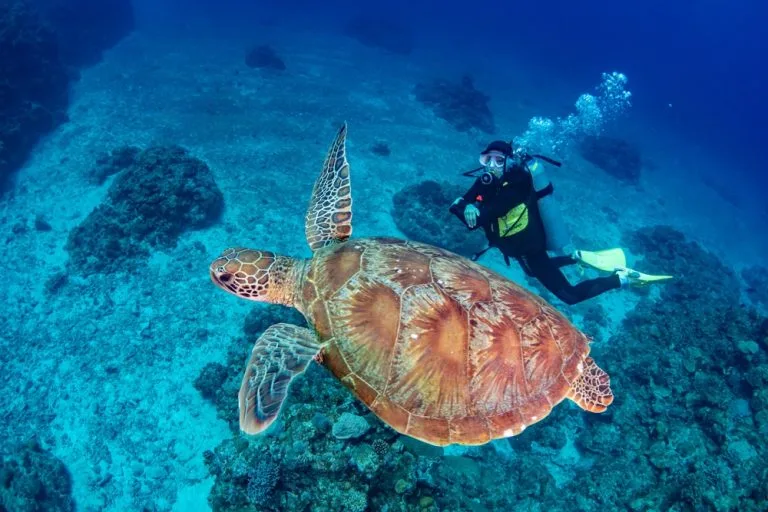
The mid-water column and the reef edges are active zones for larger species that patrol the area. You might see giant trevally and tuna moving through the water, or encounter green sea turtles grazing on the reef slopes. Whitetip reef sharks are also known to frequent these waters, often seen resting near the reef or patrolling the edges. Anemonefish and clownfish are easily spotted in their host anemones among the coral heads, providing familiar points of interest throughout the dive.
Current conditions at Sesoko Island are generally mild, making it a predictable site for most divers. However, the flow is not static and tends to vary based on the tidal phase and seasonal weather patterns. During certain tidal shifts, a more noticeable current can develop, turning the dive into a drift-style experience through the reef channels. If you are looking for a more relaxed exploration of the caves, timing your dive during calmer tidal periods is advisable to maintain precise control in the tighter swim-throughs.
Access to the site is versatile, catering to different preferences for dive starts. Many divers reach the reef via speedboat from nearby ports, which allows for quick positioning over the most interesting parts of the labyrinth. Alternatively, the site is accessible via shore entry from Sesoko Beach and other nearby points. This accessibility makes it an easy location to incorporate into a dive plan, whether you prefer the structured approach of a boat dive or the simplicity of a shore-based excursion.
The seasonal timing for diving here is most consistent between June and October. During these months, the environment is well-suited for exploring the diverse reef structures and the labyrinthine passages. While the site remains a reliable reef destination, the interplay of tides and the varying topography means that even a familiar site offers new perspectives on its caves and tunnels. Whether you are focused on the larger pelagics or the smaller reef residents, the site provides a dense concentration of marine life within a manageable depth range.
The dive depth ranges from 5 to 25 metres. The site is accessible to Open Water Diver levels, though recent diving experience is recommended to navigate the labyrinthine structures safely. Currents are generally light to mild, but can become stronger depending on the tidal phase. Visibility typically ranges between 15 and 30 metres. The best period for diving is from June to October.
Plan diving at Sesoko Island from June to October, the site's stated best period. You can explore the shallow reef, caves, tunnels, and arches then, with tides and seasonal weather still influencing the dive experience. The site offers both boat and shore entry for arranging your excursion.
Sesoko Island is accessible to Open Water Diver levels, so you can explore it without advanced certification. Recent diving experience is recommended because the labyrinthine structures include caves, tunnels, arches, overhangs, and tight swim-throughs. Careful buoyancy control helps you navigate these formations safely and comfortably.
At Sesoko Island, you dive from 5 to 25 metres across a gently sloping reef. Currents are generally light to mild, but tidal phases can strengthen the flow. Recent experience helps you maintain control through caves, tunnels, and arches, especially when the dive becomes a drift-style experience.
At Sesoko Island, you can look for whitetip reef sharks, green sea turtles, giant trevally, tuna, moray eels, octopus, scorpionfish, nudibranchs, shrimp, pipefish, anemonefish, and clownfish. The caves, tunnels, coral heads, sand patches, and reef edges offer varied places to observe both larger animals and macro life.