

潜癮沖縄 Dive Addicts Okinawa & Yellow Submarine
Google 5/5 (285 reviews)
1.7 km away as the crow flies
Okinawa · Japan · Asia
Max. depth · 35 mThree distinct coral pinnacles rise from the depths to create a vertical playground for macro life and pelagics.
For subtitles in English: start the video firstthen click the gearat the top right of the video, select “Subtitles/CC”, then “Auto-translate” and choose “English”.
Three Rocks, also known as Mitsuishi, is defined by its verticality rather than a continuous reef structure. The site consists of three separate coral pinnacles that emerge from a sandy bottom at approximately 35 metres and rise toward the surface, with the highest points reaching about 12 metres. This topography creates a varied environment where you can transition quickly from deep, shaded slopes to shallower, sunlit reef heads. The proximity of these three formations allows for a dynamic dive profile that moves between the structures and the sandy channels between them.
Approaching the site by boat, you will find an exposed location that is subject to the open ocean's influence. The descent typically begins along one of the slopes, where the light shifts as you move down the vertical relief of the pinnacles. As you descend towards the 35-metre mark, the terrain settles into a sandy floor that surrounds the base of the rocks. This combination of hard coral structures and soft sand makes the site an interesting study in how different species occupy specific niches within the same small area.
The current at Three Rocks is moderate but can change depending on the sea conditions offshore. You will often find that the strongest currents bring the best visibility, frequently reaching between 25 and 40 metres. Navigating the site requires awareness of how the water moves around the pinnacles, as the structures can create localized eddies or slight surges. Being comfortable with boat entries and managing your buoyancy in a moving water column is essential for a controlled experience here.
For those interested in macro photography, the crevices and sandy patches around the rock bases offer significant interest. You can find various nudibranchs and frogfish tucked into the coral formations or resting on the bottom. Scorpionfish are also common, often camouflaged against the rocky substrate or the reef edges. These smaller residents require a slower, more methodical approach to spotting, especially when moving through the more current-prone sections of the pinnacles.
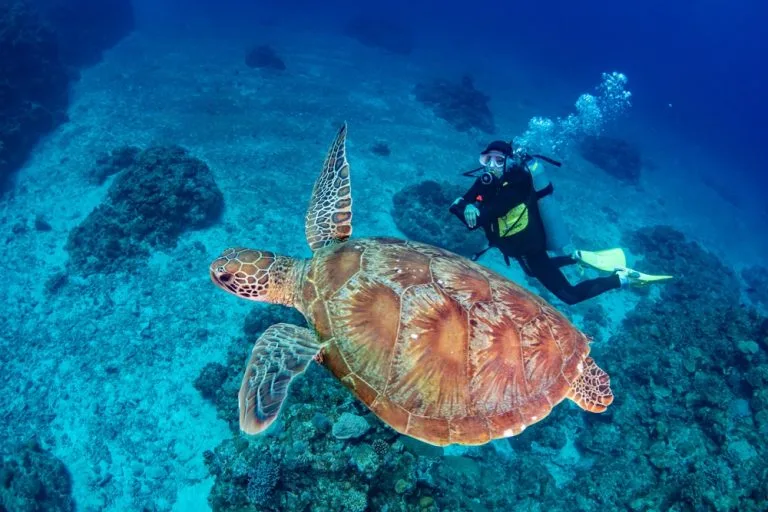
The larger scale of the site is revealed when you look toward the blue or scan the upper sections of the pinnacles. Manta rays are known to visit these structures, often cruising the currents around the rock edges. The vertical relief of the pinnacles provides a natural meeting point for larger pelagic species moving through the area. Watching these animals interact with the reef structure adds a significant dimension to the dive, especially when visibility is at its peak.
The site is accessible year-round, though your experience will be dictated by the seasonal sea states and the local operators' assessment of the conditions. Because the site is situated a few kilometres from the coast, the swell and water movement are more pronounced than in sheltered bay diving. This exposure is what maintains the nutrient-rich flow that supports the resident fauna, but it also means you must be prepared for a more oceanic environment. Planning your dive around the tide and local weather reports will help you make the most of the visibility and current.
Depth ranges from 12 to 35 metres. Advanced level is required due to the site's topography and variable currents; experience with current and boat diving is highly recommended. Visibility is typically between 25 and 40 metres.
You can access Three Rocks year-round, but seasonal sea states and local weather influence the experience. Because the site lies a few kilometres from the coast, swell and water movement are more pronounced than in sheltered bays. Planning around the tide and local weather reports helps you manage visibility and current.
Three Rocks requires an advanced level because of its vertical topography and variable currents. Experience with current and boat diving is highly recommended. You should also be comfortable managing buoyancy in a moving water column and staying aware of how water flows around the pinnacles, including localized eddies and slight surges.
Three Rocks ranges from 12 to 35 metres, with three coral pinnacles rising from a sandy bottom toward the surface. The current is moderate but may change with offshore sea conditions. Stronger currents can bring visibility between 25 and 40 metres, while the pinnacles create localized eddies and slight surges.
At Three Rocks, you can explore three separate coral pinnacles, vertical reef relief, sandy channels, and shaded slopes that transition to sunlit reef heads. Manta rays may cruise around the rock edges, while nudibranchs, frogfish, and scorpionfish occupy crevices, coral formations, sandy patches, and rocky reef edges.