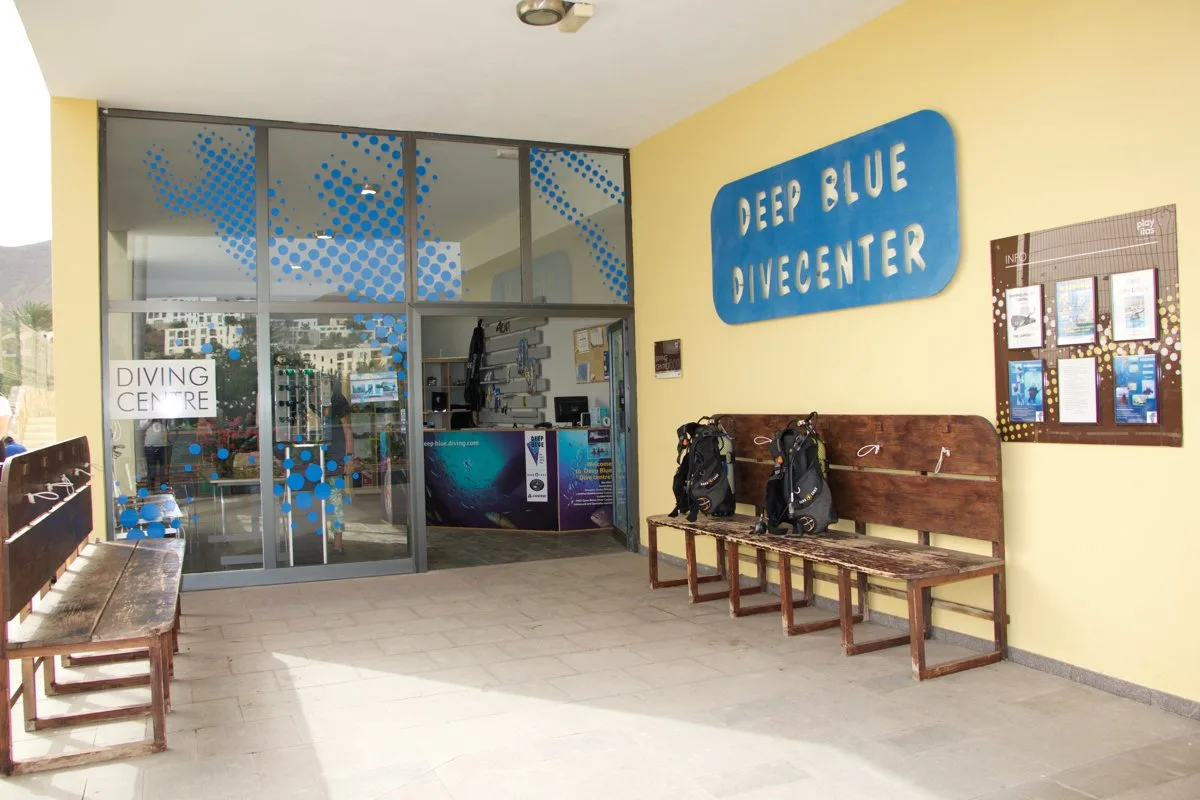

Deep Blue Diving Fuerteventura
Google 4.8/5 (411 reviews)
Canary Islands · Atlantic
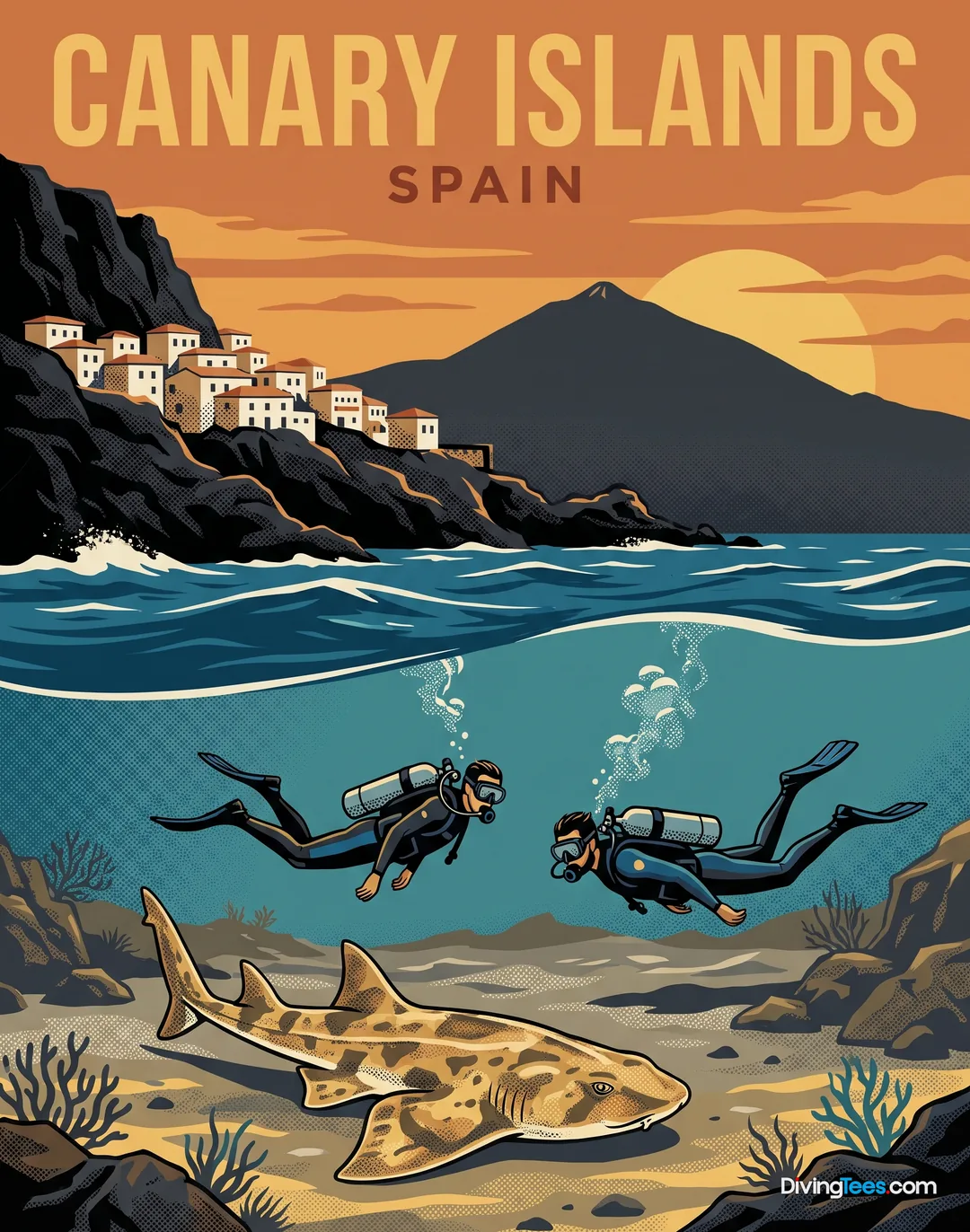
Sheltered shallows, rocky arches, sandy seabeds and possible encounters with rays and angel sharks shape Caleta de Fuste’s straightforward Atlantic diving.
For subtitles in English: start the video firstthen click the gearat the top right of the video, select “Subtitles/CC”, then “Auto-translate” and choose “English”.
Caleta de Fuste puts a sheltered bay, rocky coastal reefs and sandy seabeds within easy reach of a shore-based holiday. Castillo, Salinas and Nuevo Horizonte give the area its underwater shape, from gentle shallows around seven metres to deeper reef dives approaching 40 metres. It suits a first try in calm water, but it is not confined to training: certified divers can move on to arches, drop-offs and boat-accessed ground.
The diving alternates between rocky reefs, arches and sandy areas, with the local sites ranging from about seven metres to roughly 40 metres. Around the bay and Castillo, a gently sloping sandy bottom and generally light currents make the water manageable for a first dive or a relaxed refresher. Salinas Reef and Nuevo Horizonte Reef offer a different proposition, with deeper rock and less shelter in places. Some dives can be made from the coast, while the marina provides access to boat outings when the intended site lies beyond the easy shallows. Visibility is generally good, although swell and local conditions can change it. Do not treat the name Caleta de Fuste as a single underwater profile: the planned sector matters more than the resort label.
The sandy ground is worth more than a simple swim between rocks. It can bring encounters with rays and angel sharks, particularly when the guide knows which patches are holding life on the day. Moray eels are associated with the rocky reef, while turtles and shoals of fish are among the wider Fuerteventura sightings. These are possibilities rather than guaranteed appointments, so the character of the dive matters: search the sand rather than staying only on the reef, then inspect arches and rock for smaller movement and sheltering animals. Marine activity is present throughout the year, with no narrow wildlife season needed to make the destination worthwhile. Patience and a slow pace suit the open sandy sections best.
Diving is possible throughout the year, so Caleta de Fuste is useful when a fixed wildlife season is not the reason for travelling. The sheltered bay keeps the entry-level sites practical, while the more exposed reefs depend more on the conditions on the day. Swell can affect both access and visibility, even when the resort itself feels calm. In practice, choose dates for the combination of diving and island activities rather than waiting for a single supposedly perfect month. A flexible plan also leaves room to move from the bay to a deeper boat dive if conditions and experience allow.
Beginners can start in the bay, where shallow, gently sloping sand and little current make an introduction less demanding. That includes first dives and early training for divers working towards BSAC, PADI or SSI qualifications. Autonomous certified divers have more to use here, with rocky sections and sites approaching 40 metres. Experience matters when moving away from the shelter of Castillo towards deeper or more exposed ground, so the planned sector should match the diver’s qualification and comfort in open water.
From London Heathrow, London Gatwick or Manchester, reach Fuerteventura and continue by road to Caleta de Fuste. No ferry or domestic flight is needed for the final journey, and the resort also lies close to Puerto del Rosario. Allow for the connections attached to the flight chosen from your departure airport, as the total journey depends on them. Once in the resort, accommodation near the bay or marina may put the diving within walking distance. For other locations, centres arrange road transfers, while boat dives leave from the marina or nearby coastal access points. A vehicle or organised transfer is therefore more useful than trying to link every site on foot.
For a first dive, ask for the bay or Castillo rather than accepting the resort name as enough detail. Confirm whether the plan is Castillo Reef, Salinas Reef or Nuevo Horizonte Reef, because depth and exposure change between them. If you want more than shallow training ground, check that the day includes a deeper reef or a boat outing before booking. On sandy sections, ask where rays and angel sharks are most likely, instead of spending the whole dive over rock. Conversely, do not assume the calm bay represents every local condition: the outer reefs may feel more exposed and visibility can respond to swell. Certified divers should avoid booking a programme made entirely of introductory dives when the deeper terrain is their reason for coming. Keep one day free from diving for the bay, marina or a land excursion, rather than treating every day as an identical repeat of the sheltered entry.
This is a land-based stay, with the bay and marina forming the practical centre of the holiday. Three to seven days gives enough time to alternate Castillo’s calmer ground with Salinas, Nuevo Horizonte or a boat outing, while keeping a non-diving day available. Non-divers have the bay, water activities and harbour walks, and the island offers excursions towards Puerto del Rosario, volcanic landscapes and the coast. Longer stays make sense if diving is combined with exploring Fuerteventura beyond the resort.
Hello, I'm Marina, DivingDeal.com's AI assistant. I guide you through destinations, areas and countries.
Thinking about the whole trip and the flights? Talk it over with Edith →
Marina is an AI. Some links are affiliate links: DivingDeal may earn a commission, at no extra cost to you. Bookings are made with the partner.
You can dive in Caleta de Fuste throughout the year, with no narrow wildlife season needed. Choose dates that also suit your island plans, while keeping some flexibility for swell and visibility. The sheltered bay may remain manageable when outer reefs are more exposed, so conditions can influence which sites are practical.
Caleta de Fuste suits beginners starting in the sheltered bay, where shallow, gently sloping sand and light currents support first dives, refreshers and early training. Certified autonomous divers can explore rocky reefs, arches and deeper sites approaching forty metres. Your qualification and comfort in open water should guide the move beyond sheltered Castillo.
Diving in Caleta de Fuste includes rocky reefs, arches and broad sandy seabeds. The sand may bring rays and angel sharks, while moray eels are associated with rocky reef. Turtles and shoals of fish are among wider Fuerteventura sightings. Move slowly across open sand, then inspect rock and arches for sheltered marine life.
Plan Caleta de Fuste as a land-based stay centred on the bay and marina. Alternate sheltered Castillo with Salinas, Nuevo Horizonte or a boat outing, and leave a day for non-diving activities. Accommodation near the bay or marina can make diving walkable; centres arrange road transfers for other sites, while boats depart from the marina.