

Fuerteventura Buceo
Google 4.9/5 (1,089 reviews)
Canary Islands · Atlantic
Volcanic arches, sandy seabeds, wrecks and regular encounters with stingrays, groupers and angel sharks shape Fuerteventura’s straightforward, land-based diving.
For subtitles in English: start the video firstthen click the gearat the top right of the video, select “Subtitles/CC”, then “Auto-translate” and choose “English”.
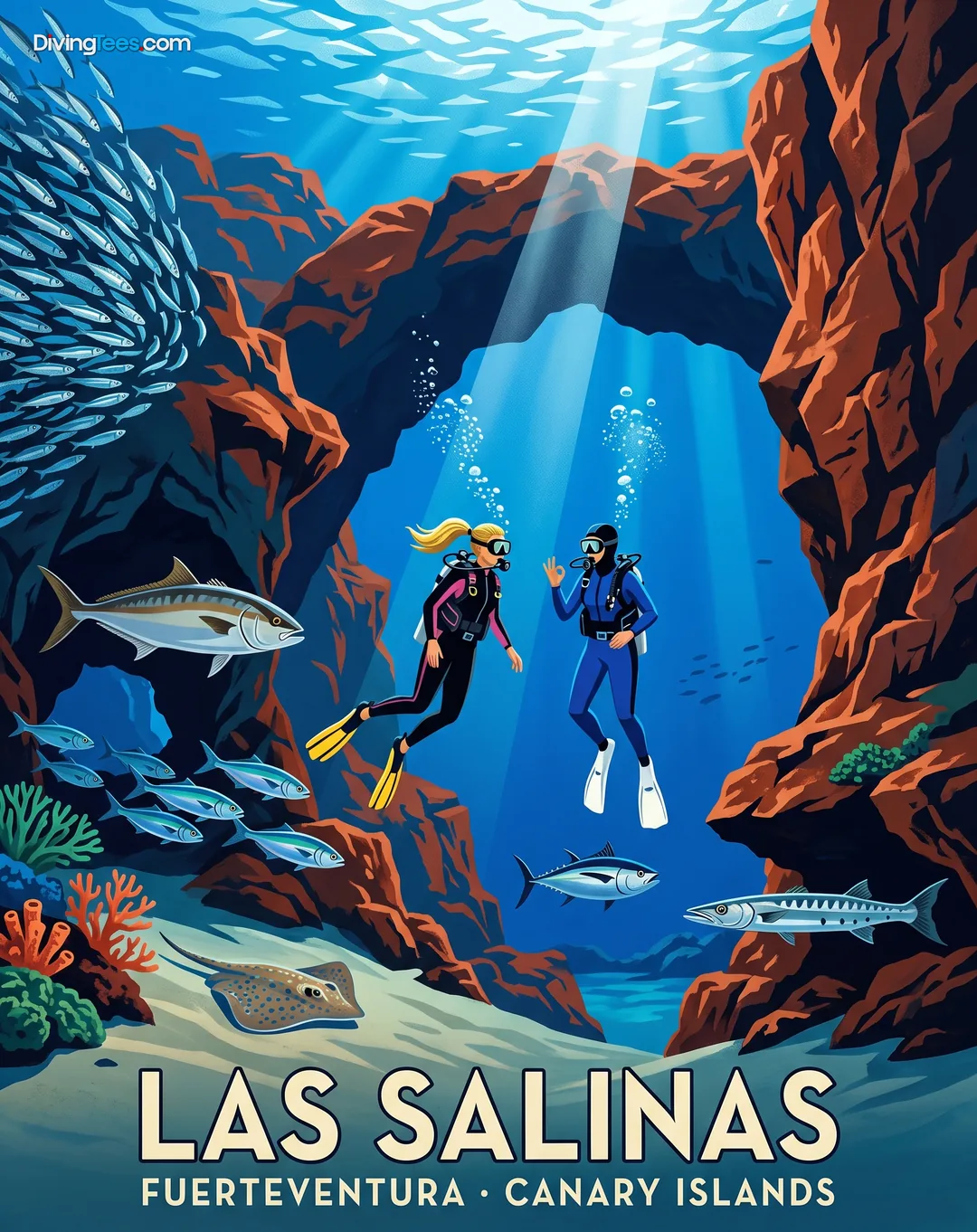
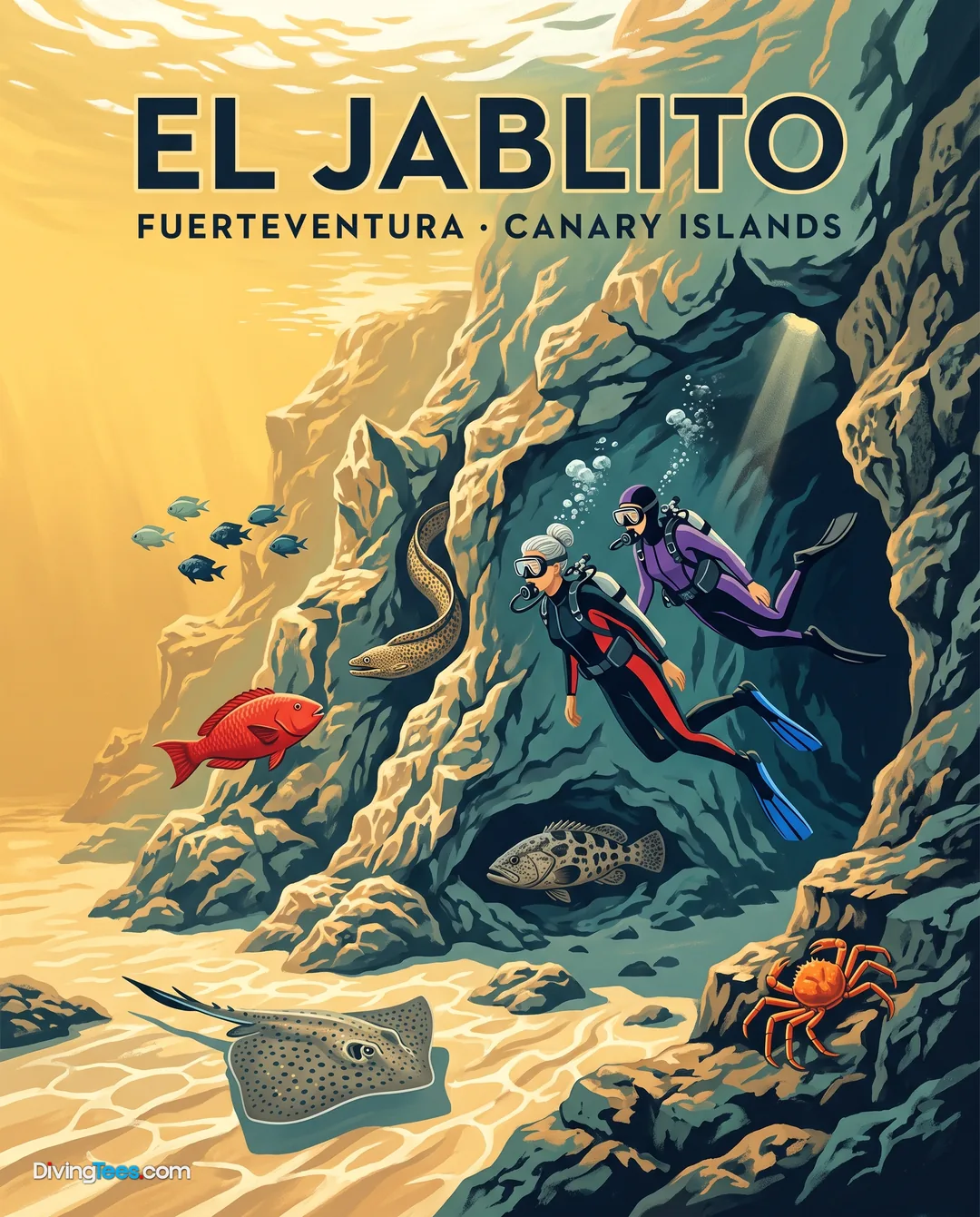
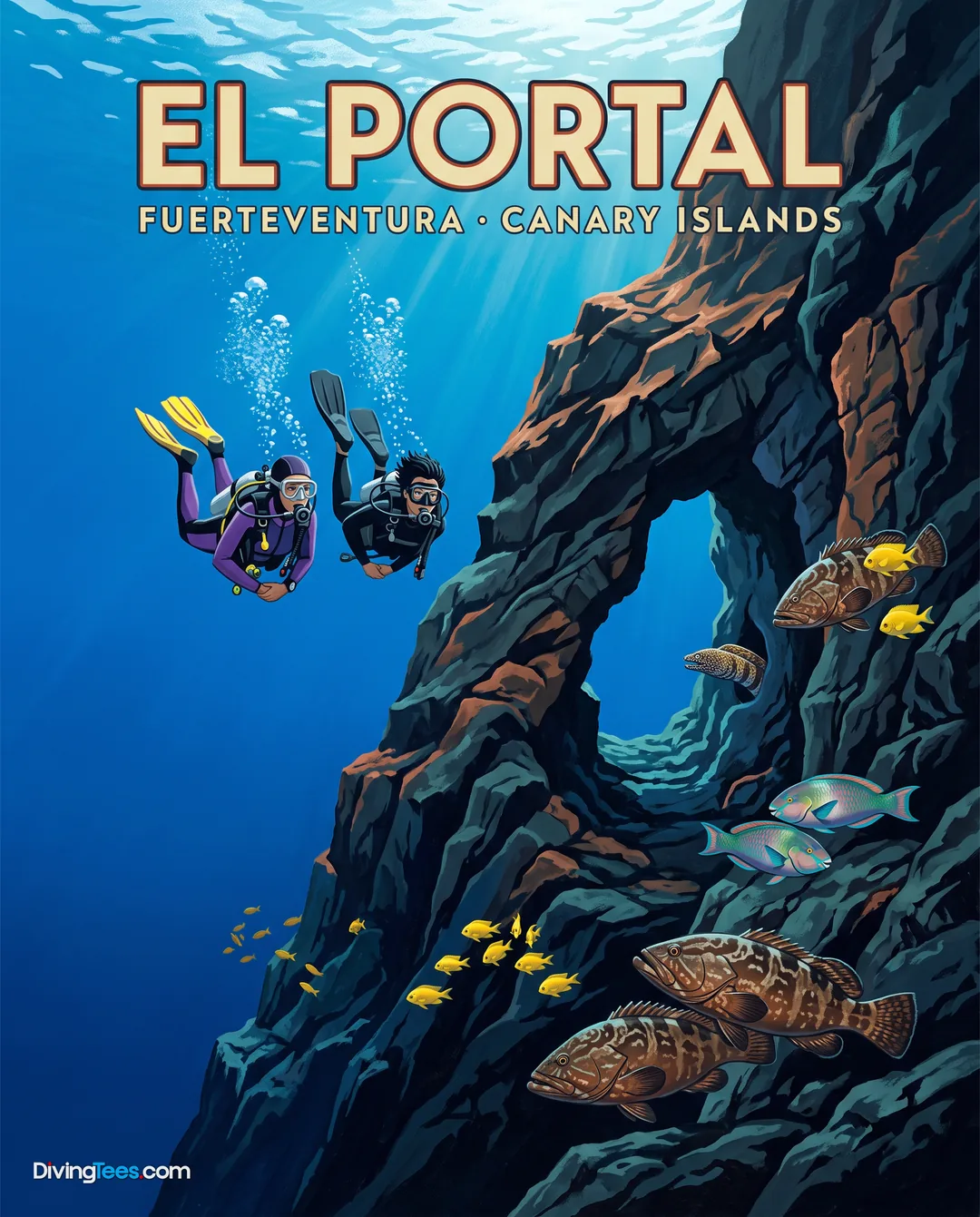
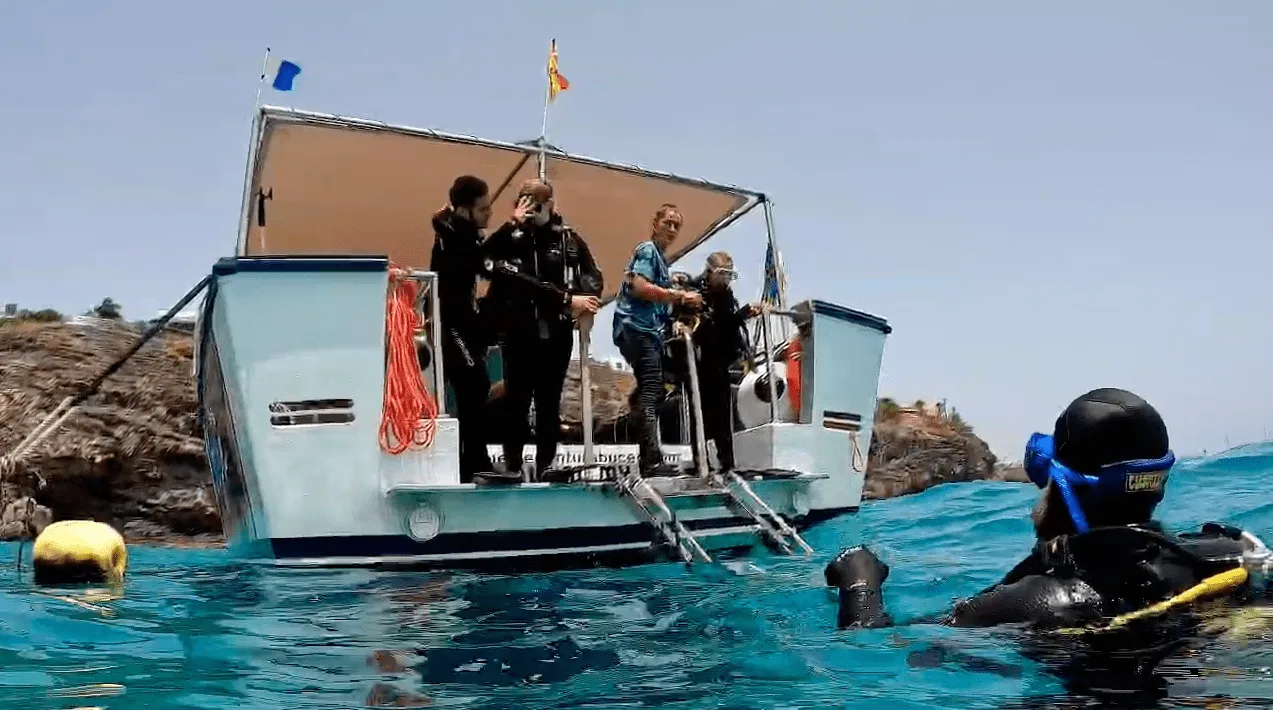
Fuerteventura is a land-based diving island where black volcanic rock, sandy patches and open Atlantic water sit side by side. Corralejo, Caleta de Fuste and Morro Jable each give access to a different stretch of coast, while Lobos adds protected volcanic scenery reached by boat from the north. Expect arches, cavities, overhangs, drop-offs, wrecks and artificial reefs rather than tropical coral. The appeal is the contrast between simple shore dives and outings where rays or a large grouper appear from the rock.
Underwater, Fuerteventura is built from volcanic relief. Arches, caves, ledges and overhangs break up rocky reefs, with sandy areas between them and deeper drop-offs in some sectors. Wrecks and artificial reefs add a different shape to the landscape. Depths range from moderate sites suitable for training to deeper terrain better suited to experienced divers, and current is variable rather than a constant feature. Most days combine shore diving with boat trips, depending on the base and the weather. Lobos is a boat outing from Corralejo, not an extension of a shore dive, and brings protected-looking volcanic ground with a different feel from the sites beside the resorts. Visibility is commonly around 15 to 25 metres, though swell, strong winds, Saharan dust and stirred-up particles can reduce it, particularly on shallow sites.
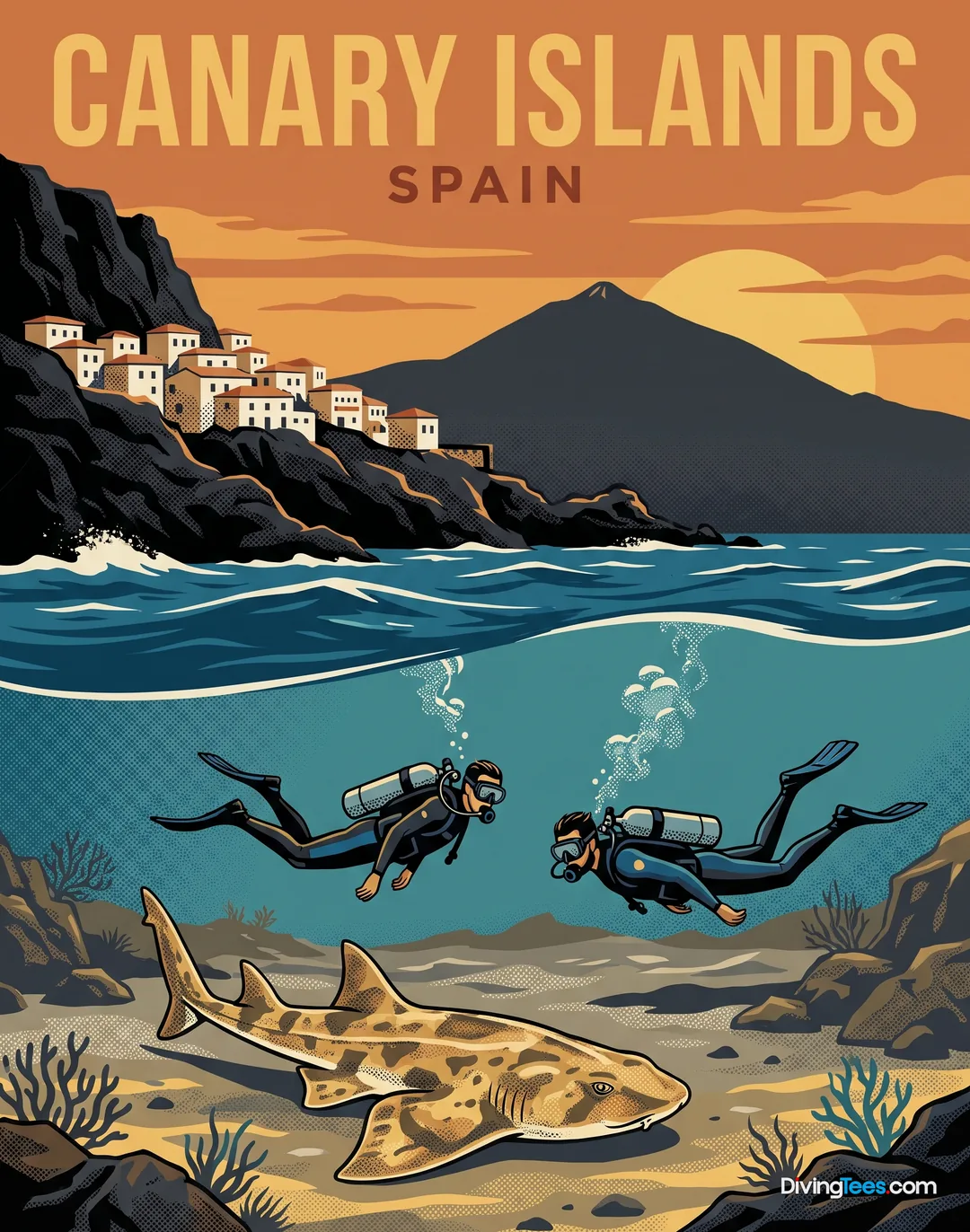
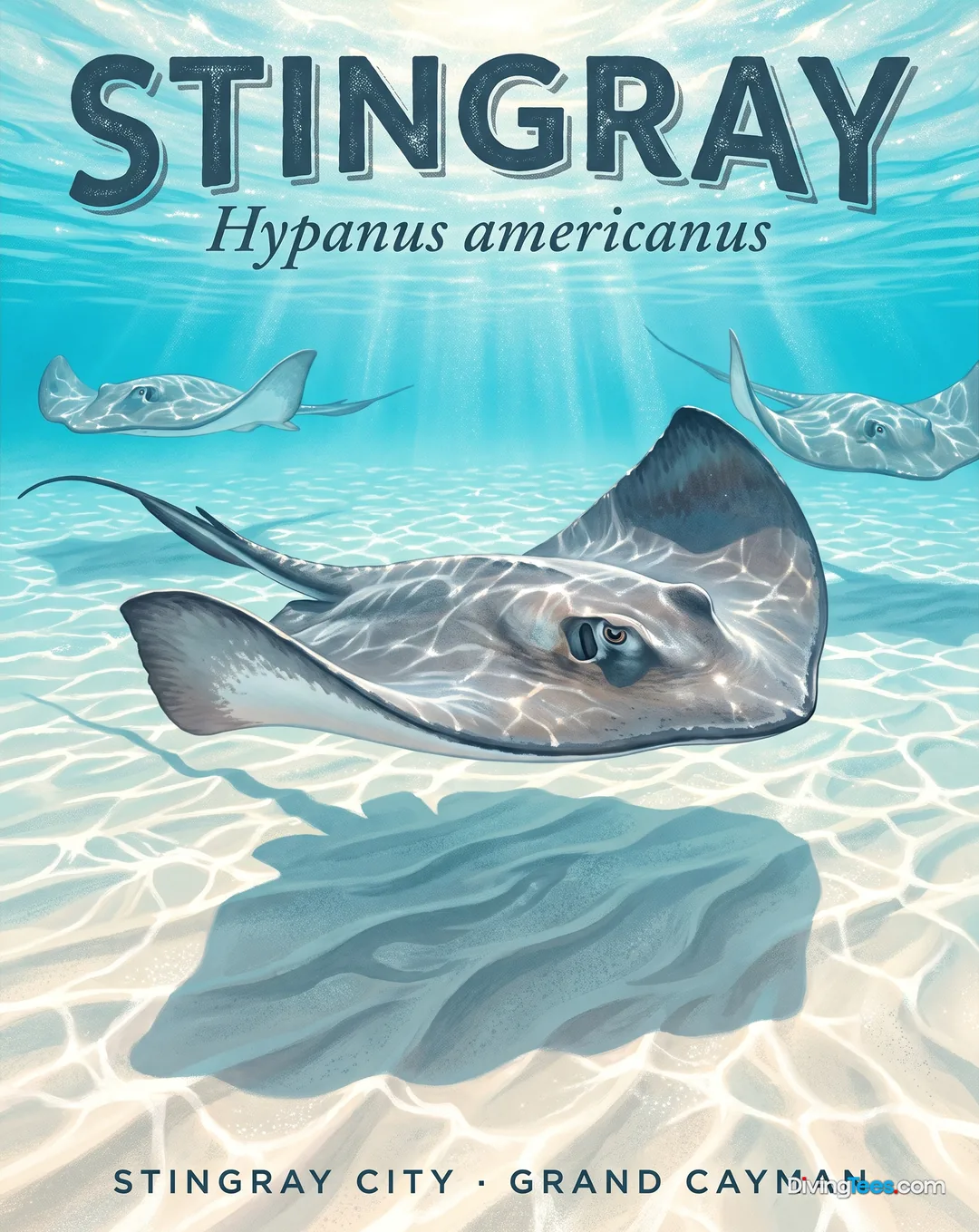
Stingrays are a regular possibility throughout the year, often encountered over the sandy ground between volcanic outcrops. Large groupers are also a dependable part of the attraction, holding station around rock, arches and overhangs. Eagle rays and barracudas occur occasionally, while marine turtles are possible but rare. Angel sharks are the seasonal speciality: winter is the time to search sandy areas, although no sighting is guaranteed. The same applies to any larger animal encounter. Fuerteventura rewards a diver who watches the bottom as carefully as the reef, rather than swimming only along the most obvious wall. That combination of sand and rock is where the character of the island’s wildlife becomes clear.
May to October is the most comfortable period for a diving holiday, combining more forgiving water, generally favourable conditions and good marine activity. Summer is not automatically calm, however, and wind can still alter the plan. Winter remains perfectly diveable, but swell and wind create more variation and may close exposed sites or change the boat programme. It is also the period worth considering for angel sharks over sandy ground. A full 5 mm suit suits most divers, with more insulation sensible for winter or repeated dives. Visibility can be excellent on calm days, but dust and suspended particles quickly change the picture.
Fuerteventura suits beginners, refresher divers and experienced visitors who want to mix straightforward sites with deeper drop-offs and changing conditions. Moderate-depth volcanic sites can support training, while exposed ground, depth and current demand more experience. Advanced training is useful for the deeper walls and drop-offs, and Nitrox makes sense for repeated diving days. BSAC, PADI and SSI divers should find the range familiar, provided the planned site matches their recent experience and comfort in variable conditions.
From London Heathrow or Gatwick, and from Manchester, reach Fuerteventura by air, using a direct service when available or a connection through the Canaries or mainland Spain. Allow a full travel day when a connection is involved, as schedules vary by departure city and season. The island also connects by ferry with Lanzarote, notably between Corralejo and Playa Blanca, with the crossing taking about half an hour, and with Gran Canaria on a longer route. Once there, a hire car is the practical way to combine Corralejo, Caleta de Fuste and Morro Jable. Transfers can work for one base, but public transport is less convenient when several coastal sectors are part of the plan.
Base yourself according to the diving you actually want: Corralejo for Lobos and the north, Caleta de Fuste for the central coast, or Morro Jable for the south. Keep a spare day in the programme. Wind often strengthens as the day progresses, and a site that looks manageable from shore may not be the site reached by boat. Ask whether each booking is a shore or boat dive, because the two options do not cover the same ground. Leave Lobos as a proper boat day, not a casual add-on. Do not judge the island from shallow sites beside the resorts, as deeper drop-offs and Lobos change the topography and density of life. In winter, take more thermal protection than a light suit suggests, especially for repeated dives. If angel sharks are a priority, search sandy areas without treating the encounter as a promise.
A week works well for one or two bases, a Lobos day and a weather reserve. Ten days allow the north, central coast and south to be combined without turning every day into a road transfer. Group dives by sector rather than crossing the island repeatedly, and start early when possible, both to work with the wind and to avoid the busiest boat departures. Non-divers have beaches, dunes, volcanic walks, villages and wind-powered watersports to fill the gaps.
Hello, I'm Marina, DivingDeal.com's AI assistant. I guide you through destinations, areas and countries.
Thinking about the whole trip and the flights? Talk it over with Edith →
Marina is an AI. Some links are affiliate links: DivingDeal may earn a commission, at no extra cost to you. Bookings are made with the partner.
Your last day stays dry: no diving in the 18-24 hours before a flight, the perfect window to see the destination from another angle.
 Culture
⏱ 3 h · ★ 5.0 (117 reviews)
from £49$66€59
see on Viator ↗
 City
⏱ 4 h · ★ 5.0 (27 reviews)
from £88$118€105
see on Viator ↗

⏱ 1 h · ★ 5.0 (18 reviews)
from £17$22€20
see on Viator ↗
 Culture
⏱ 7 h · ★ 5.0 (12 reviews)
from £502$670€599
see on Viator ↗
Ratings and reviews collected by Viator and Tripadvisor.
May to October generally brings more forgiving water, favourable conditions and good marine activity, although summer wind can still change plans. Winter remains diveable but brings more variation from swell and wind, while sandy areas become worth searching for angel sharks. A full 5 mm suit suits most divers, with extra insulation in winter.
Fuerteventura suits beginners, refresher divers and experienced visitors. Moderate-depth volcanic sites can support training, while exposed ground, deeper drop-offs and variable current require more experience. Advanced training is useful for deeper walls and drop-offs, and Nitrox can help with repeated diving days. Choose each site to match your recent experience and comfort.
You can explore volcanic arches, caves, ledges, overhangs, sandy seabeds, wrecks and artificial reefs, with visibility commonly around 15 to 25 metres. Stingrays regularly cross the sand, while groupers hold around the rocks. Eagle rays and barracudas occur occasionally, turtles are rare, and winter offers a chance of resting angel sharks.
Choose Corralejo for Lobos and the north, Caleta de Fuste for the central coast, or Morro Jable for the south. A hire car helps combine coastal sectors, while transfers suit one base. Keep a spare day for weather, confirm whether bookings are from shore or by boat, and plan Lobos as a dedicated boat outing.