
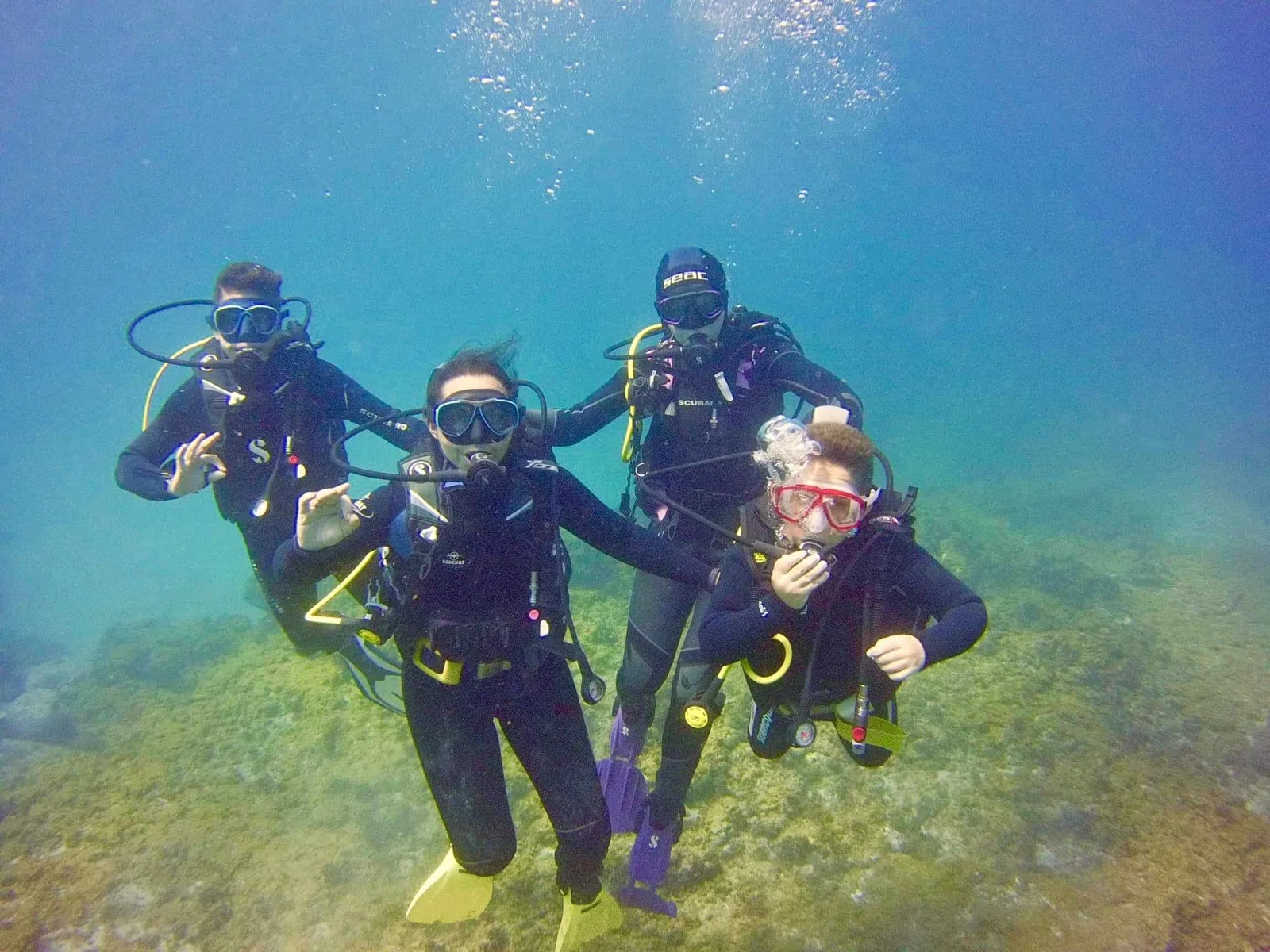

LJ Diving Tenerife
Google 5/5 (920 reviews)
Canary Islands · Atlantic
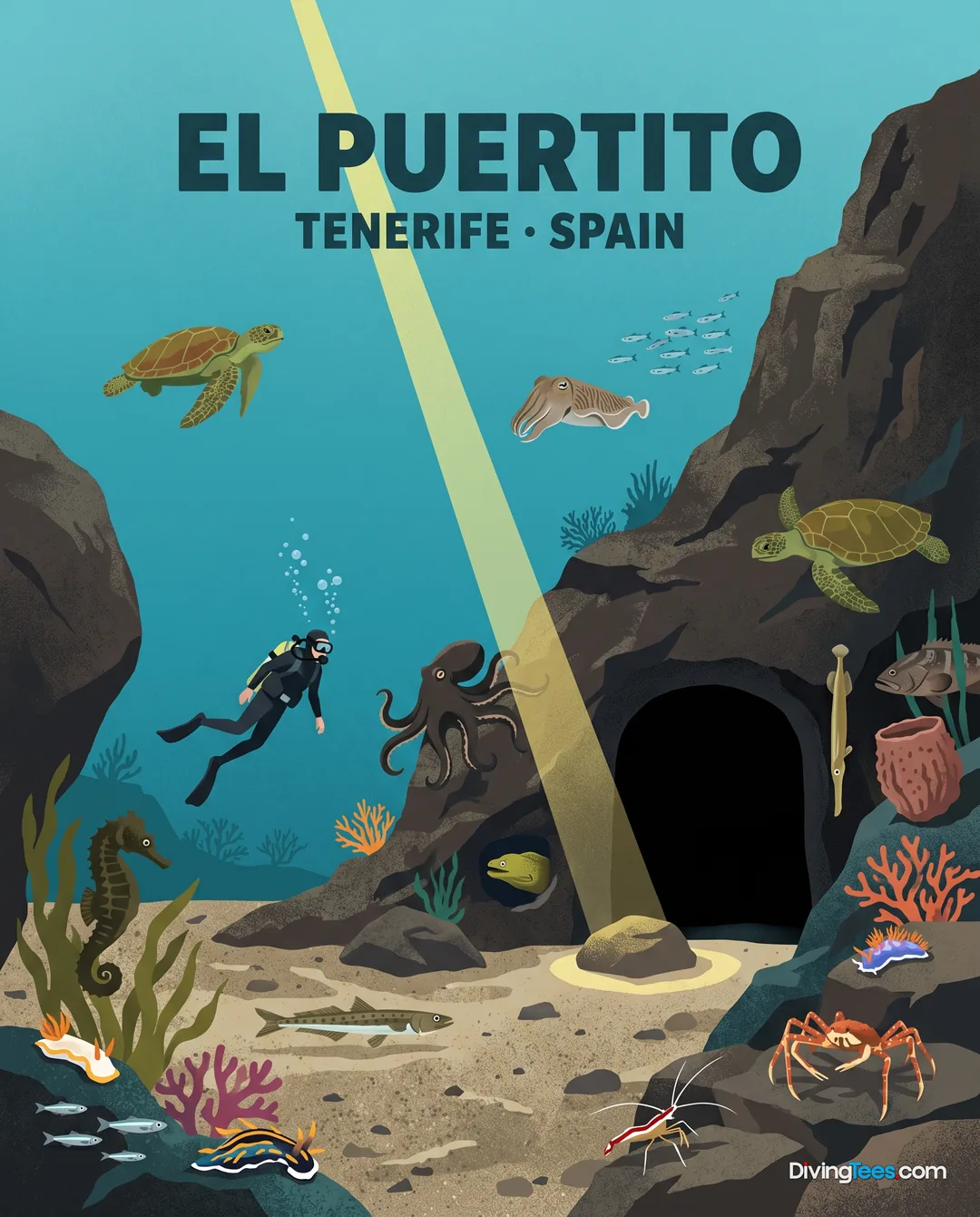
Volcanic walls, sandy seagrass beds and green turtles meet in boat diving around Adeje, with sheltered El Puertito reaching 15 metres.
For subtitles in English: start the video firstthen click the gearat the top right of the video, select “Subtitles/CC”, then “Auto-translate” and choose “English”.
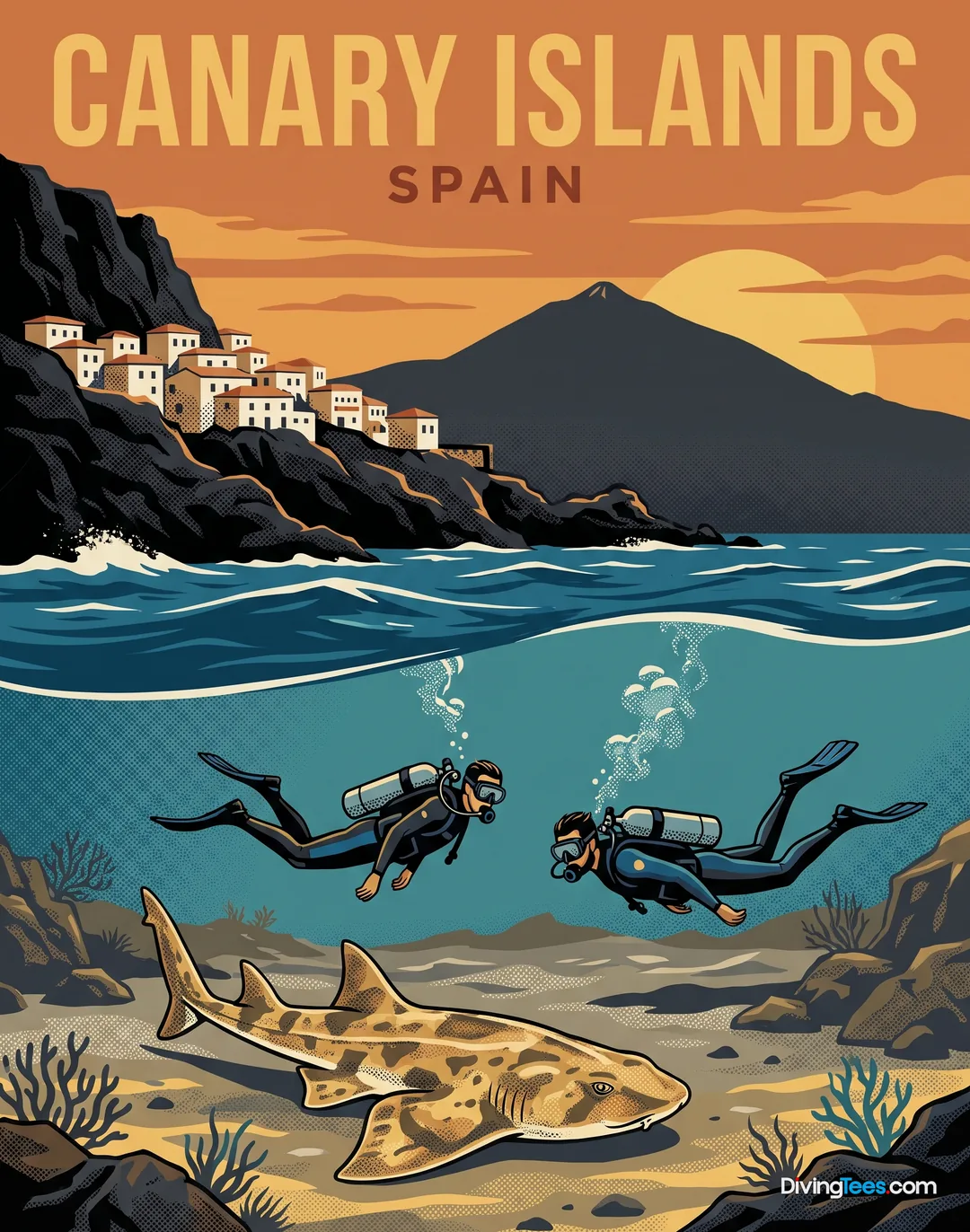
Adeje is a shore-based Tenerife base for boat diving along the south-west coast. The underwater scenery is volcanic rather than coral-built: arches, drop-offs, fissures and darker passages shape the dives, while sheltered bays offer a gentler start. El Puertito is the clearest example, combining seagrass, sandy patches and a maximum depth of 15 metres with resident green turtles. The trade-off is practical: boats, weather and sea state matter more than a permanent shore-diving routine.
Most diving is done from boats, with departures from the ports along Tenerife's south-west coast. Depending on the day, the plan may use a site close to shore or head farther out to volcanic reliefs and drift profiles. Arches, drop-offs, fissures and passages give the dives their shape, and a dive light is useful when exploring darker cracks and small volcanic features. Current is variable rather than consistently strong: it can change markedly between sites and with the sea state, so a planned dive may be moved to a more sheltered alternative. El Puertito is the calmer reference point, with a 15-metre maximum depth and generally good visibility. Visibility elsewhere is best treated as a day-to-day matter. Nitrox is useful for repeated boat diving, while Advanced Open Water experience helps when the itinerary includes current or exposed profiles.
Green turtles are the defining encounter at El Puertito, where a resident population uses the sheltered bay. They can be found around the seagrass beds, sandy patches and low-relief volcanic ground, giving divers something to watch while moving slowly across a shallow profile. The maximum depth of 15 metres leaves plenty of time for observation without turning the dive into a deep-water exercise. El Puertito is diveable throughout the year, so the turtles are not presented as a short seasonal event. May to November generally brings calmer sea conditions, which can make access and visibility more comfortable, but the encounter remains tied to the site rather than to a particular migration period. Other dives are primarily about volcanic structure and movement through the relief.
May to November is the measured window for the calmer sea around Adeje, while July to October brings the lightest rainfall. That combination matters because boat diving depends on the coast being workable: calmer conditions make it easier to reach the intended volcanic sites and reduce the need for last-minute changes. El Puertito remains diveable year-round, but conditions there and farther offshore are still judged on the day. A visit outside the May-to-November window is therefore possible, provided the itinerary allows for a more weather-dependent boat schedule rather than assuming every planned site will run.
Adeje suits all levels, with El Puertito offering an uncomplicated Open Water Diver-level introduction in a sheltered bay and at a maximum depth of 15 metres. More exposed boat dives, drift profiles and variable current are better matched to divers comfortable with entries from a boat and changing conditions. Advanced Open Water is useful rather than compulsory, particularly when the plan involves deeper or more open volcanic terrain. Nitrox is also worth considering for a run of repeated dives.
From London Heathrow, London Gatwick or Manchester, the useful arrival point is Tenerife South, followed by a road journey to Adeje and the south-western ports used for diving. There is no compulsory sea crossing to reach Adeje itself. Once in the area, divers staying in the tourist centre may be able to walk to local arrangements, while taxi or hire car is more practical from accommodation farther away. The port and site used can change with wind and swell, so the transport plan needs some flexibility rather than being built around one fixed launch point. Keeping the diving base close to the south-west coast reduces unnecessary transfers on boat days.
Do not arrive expecting a shore-only holiday. Adeje works best when the boat is treated as the normal route underwater, with the possibility that the departure point or site will change when swell or wind makes the original plan unsuitable. Booking a block of dives gives the itinerary room to absorb a weather cancellation better than relying on one fixed outing. El Puertito is a sensible first dive or fallback: its sheltered bay, sandy patches and seagrass make a calmer introduction than an exposed volcanic profile. Pack a small dive light for cracks and darker volcanic recesses; specialist macro equipment is less central here than the ability to inspect the structure. If staying outside the main tourist area, allow time for a taxi or hire-car journey to the port. Keep one day available for land activities, particularly if sea conditions have already disrupted the boat schedule.
A four- to seven-day stay works well as a land-based diving holiday, leaving enough room for several boat outings and a weather-adjusted timetable. The programme can begin with El Puertito before moving to more exposed volcanic profiles as conditions and experience allow. Adeje also suits non-divers, with beaches, coastal walks and boat excursions nearby. Rest days can be used for Tenerife's western and southern landscapes, rather than forcing a dive when the sea has closed the planned route.
Hello, I'm Marina, DivingDeal.com's AI assistant. I guide you through destinations, areas and countries.
Thinking about the whole trip and the flights? Talk it over with Edith →
Marina is an AI. Some links are affiliate links: DivingDeal may earn a commission, at no extra cost to you. Bookings are made with the partner.
Your last day stays dry: no diving in the 18-24 hours before a flight, the perfect window to see the destination from another angle.
 Adventure
⏱ 3 h · ★ 4.8 (23 reviews)
from £109$146€130
see on Viator ↗
 Culture
⏱ 2 h · ★ 4.8 (252 reviews)
from £32$43€38
see on Viator ↗
 Nature
⏱ 7 h · ★ 4.5 (1261 reviews)
from £33$45€40
see on Viator ↗

⏱ 1 h · ★ 5.0 (7 reviews)
from £28$37€33
see on Viator ↗
Ratings and reviews collected by Viator and Tripadvisor.
May to November generally brings calmer sea conditions around Adeje, helping boats reach planned volcanic sites and reducing changes caused by swell or wind. July to October also has the lightest rainfall. El Puertito remains diveable throughout the year, although boat schedules and offshore conditions are still judged on the day.
Adeje suits all levels, with El Puertito providing a sheltered Open Water Diver-level introduction and a maximum depth of 15 metres. More exposed boat dives, drift profiles and variable current suit divers comfortable with boat entries and changing conditions. Advanced Open Water experience is useful for deeper or more open volcanic terrain.
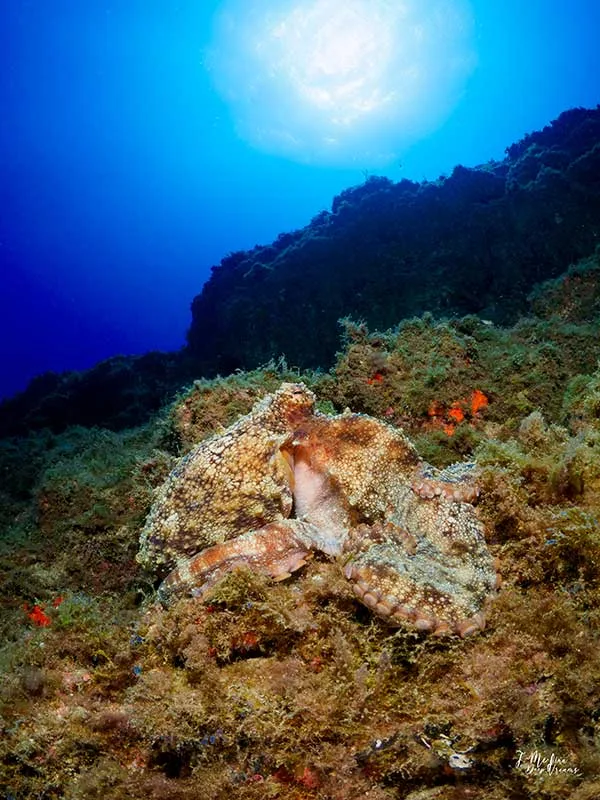
Adeje offers volcanic underwater scenery rather than coral reefs, including arches, drop-offs, fissures, darker passages and small reliefs. At El Puertito, resident green turtles move around seagrass beds, sandy patches and low-relief volcanic ground. A dive light helps you inspect cracks and darker sections of the volcanic structure.
Use Adeje as a land-based base near Tenerife's south-west coast, where most dives depart by boat. Booking several dives allows room for weather changes, while El Puertito works as a calmer first dive or fallback. Keep transport flexible, especially if staying away from the tourist centre, and consider a four- to seven-day visit.