


Mojo Dive - Tu centro de buceo en Lanzarote
Google 5/5 (1,728 reviews)
Canary Islands · Atlantic
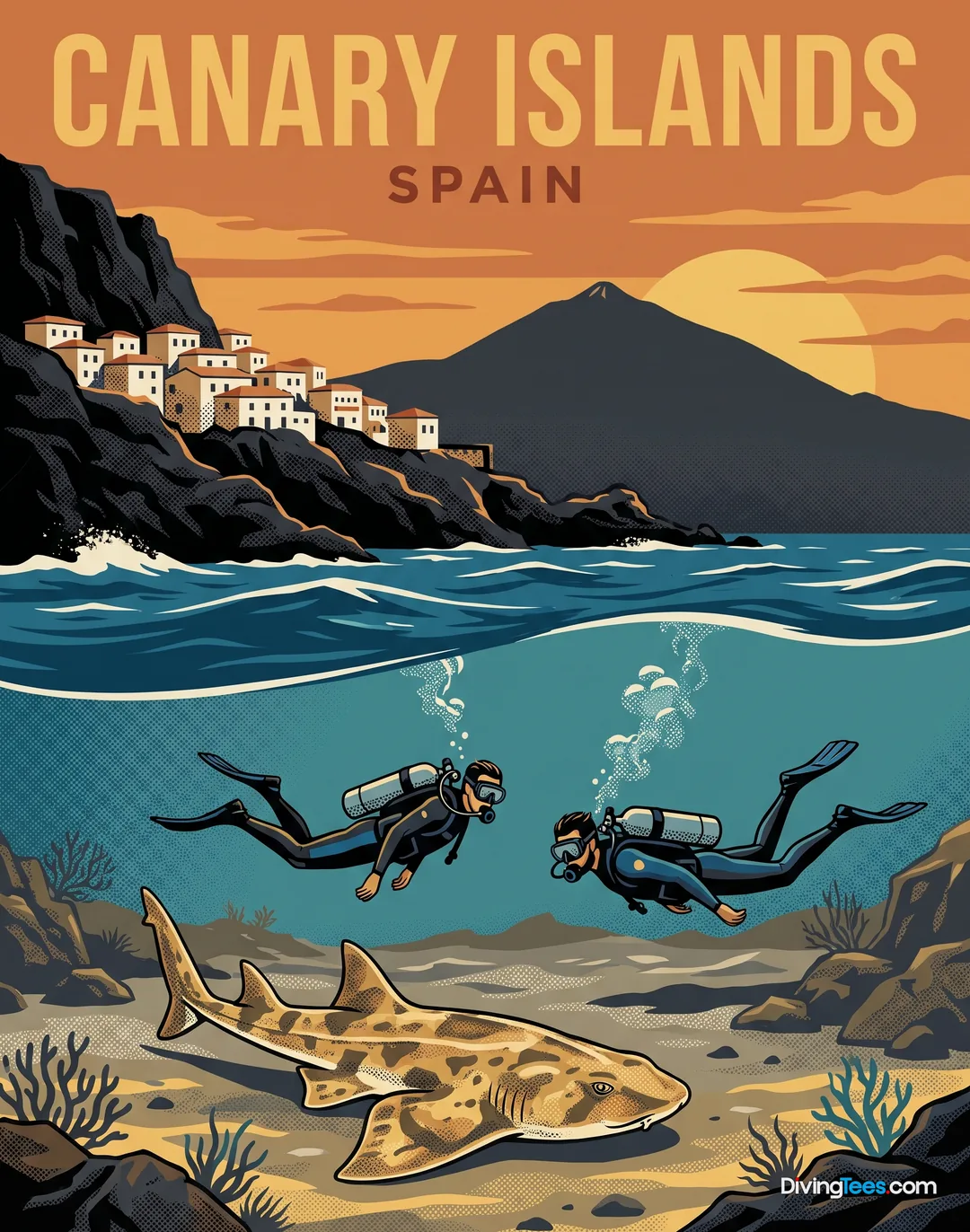
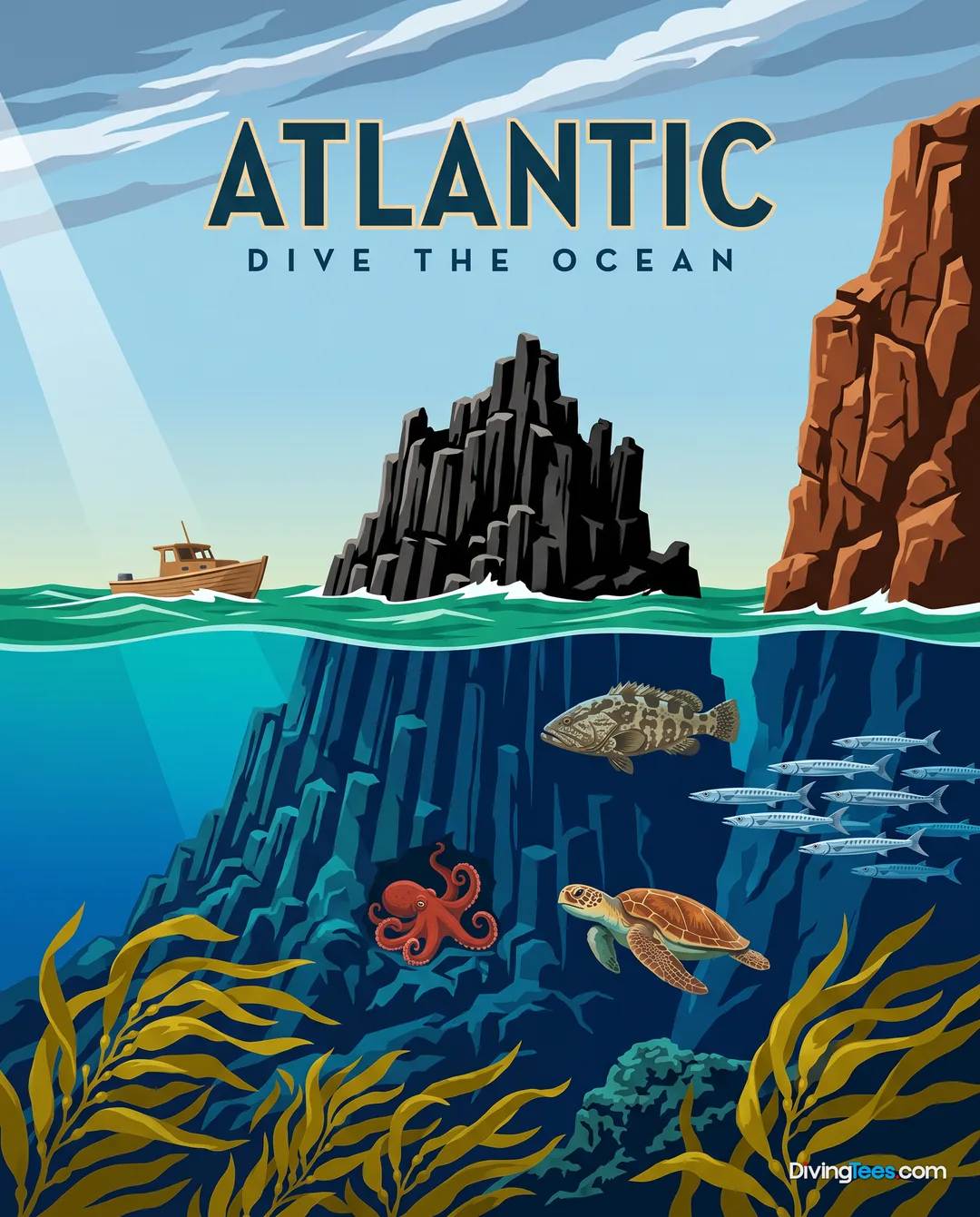
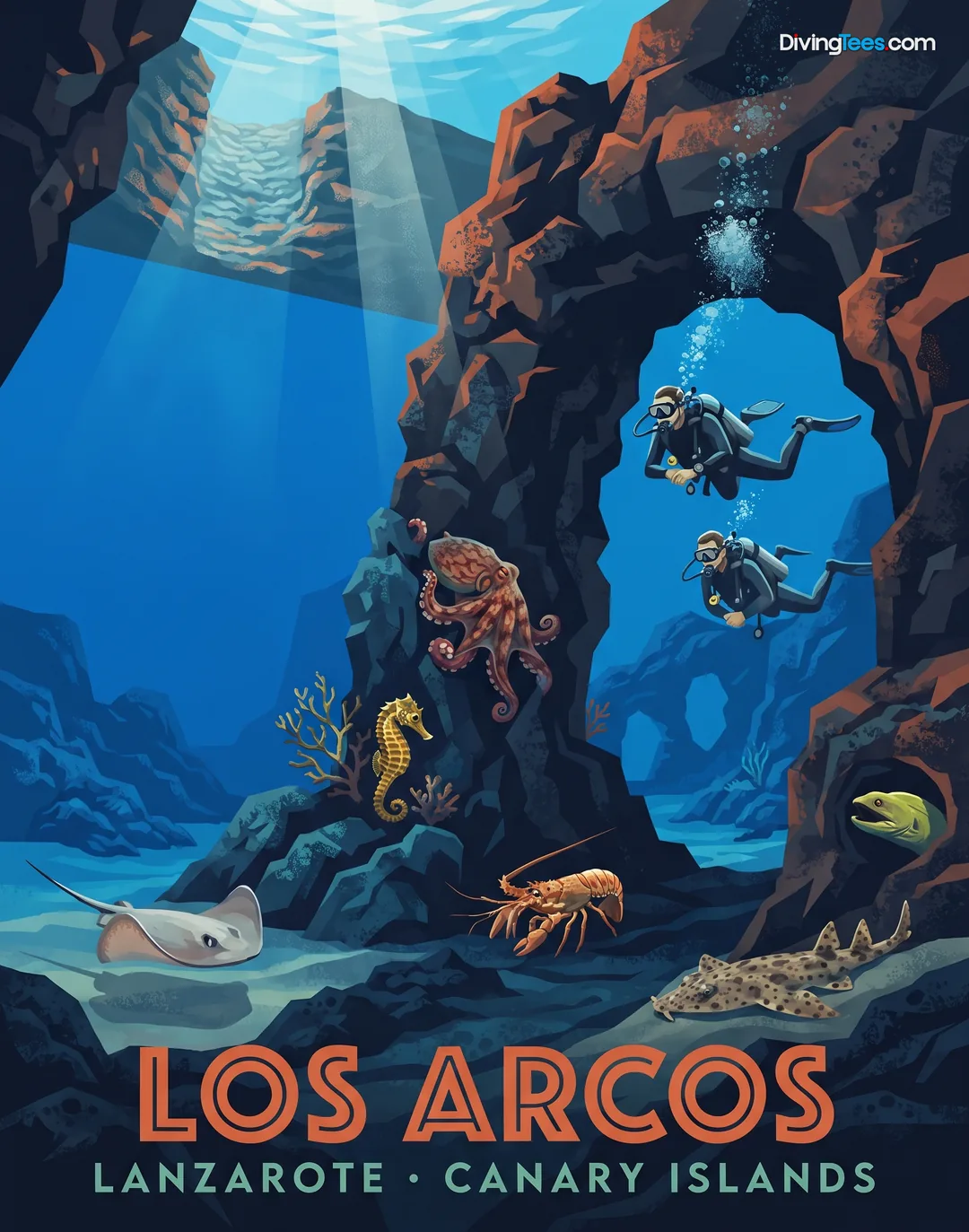
Lava tunnels, black volcanic walls, wrecks and angelsharks define Lanzarote, where sheltered shore dives sit alongside deeper boat routes and Atlantic fish life.
For subtitles in English: start the video firstthen click the gearat the top right of the video, select “Subtitles/CC”, then “Auto-translate” and choose “English”.
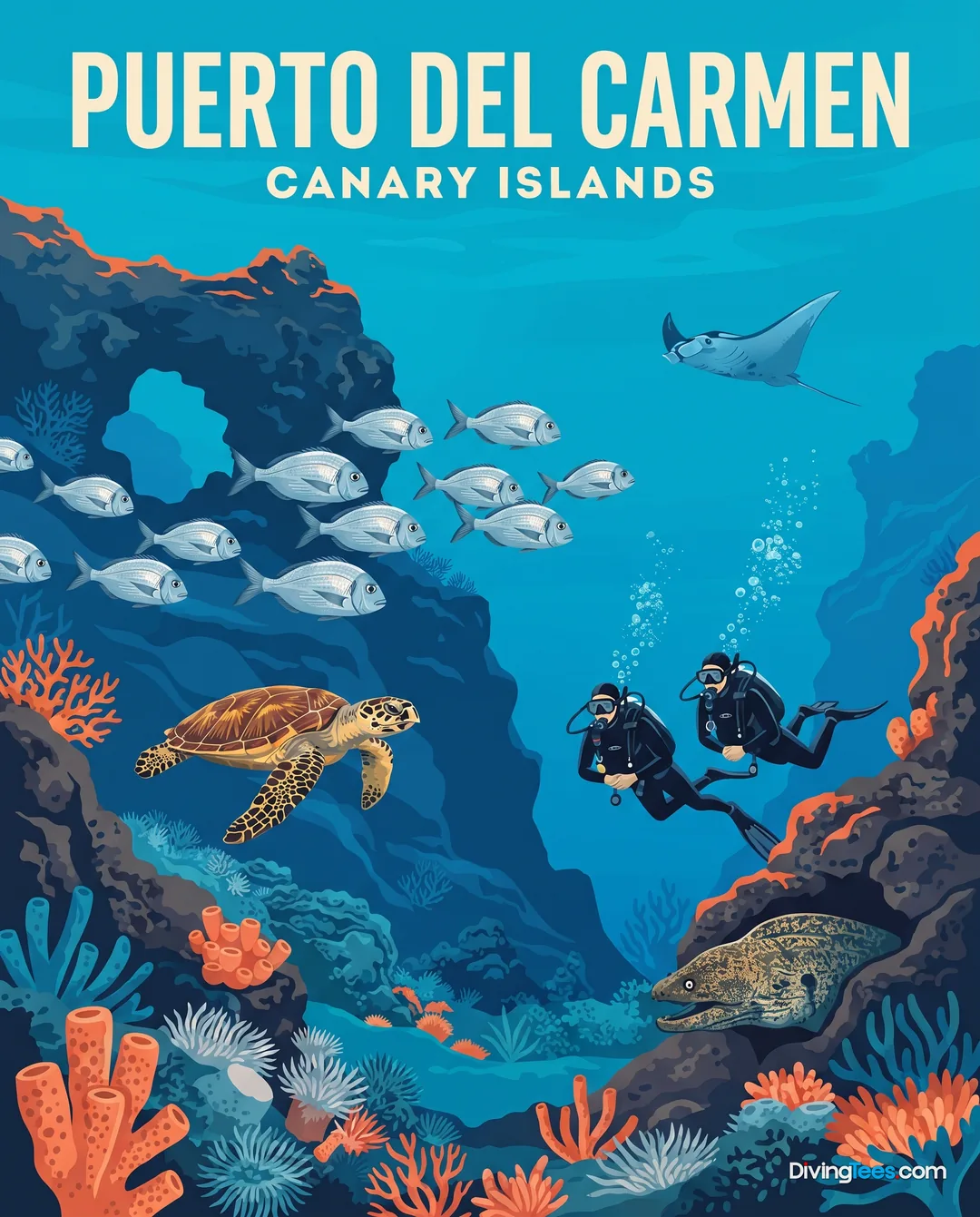
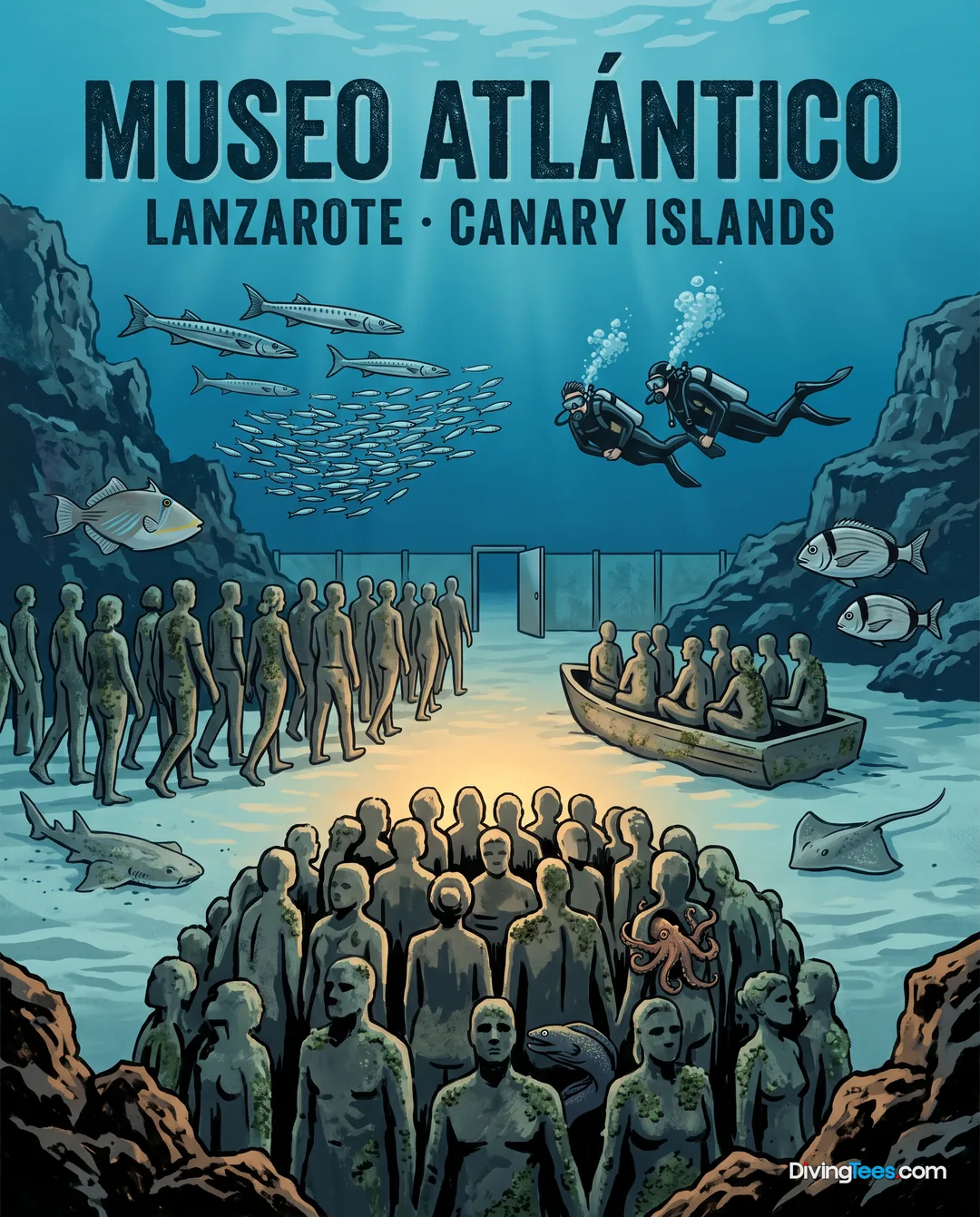
Lanzarote is a land-based diving island built around volcanic rock rather than tropical coral. Shore entries and short boat trips lead to lava tunnels, arches, walls, sandy slopes and wrecks, with Playa Blanca and Puerto del Carmen providing particularly practical bases. At Museo Atlántico, sculpture and marine habitat meet in shallow water; elsewhere, Cathedral and Charco del Palo offer a more serious deep-diving profile. It is a sensible choice for divers who want several days underwater without liveaboard logistics.
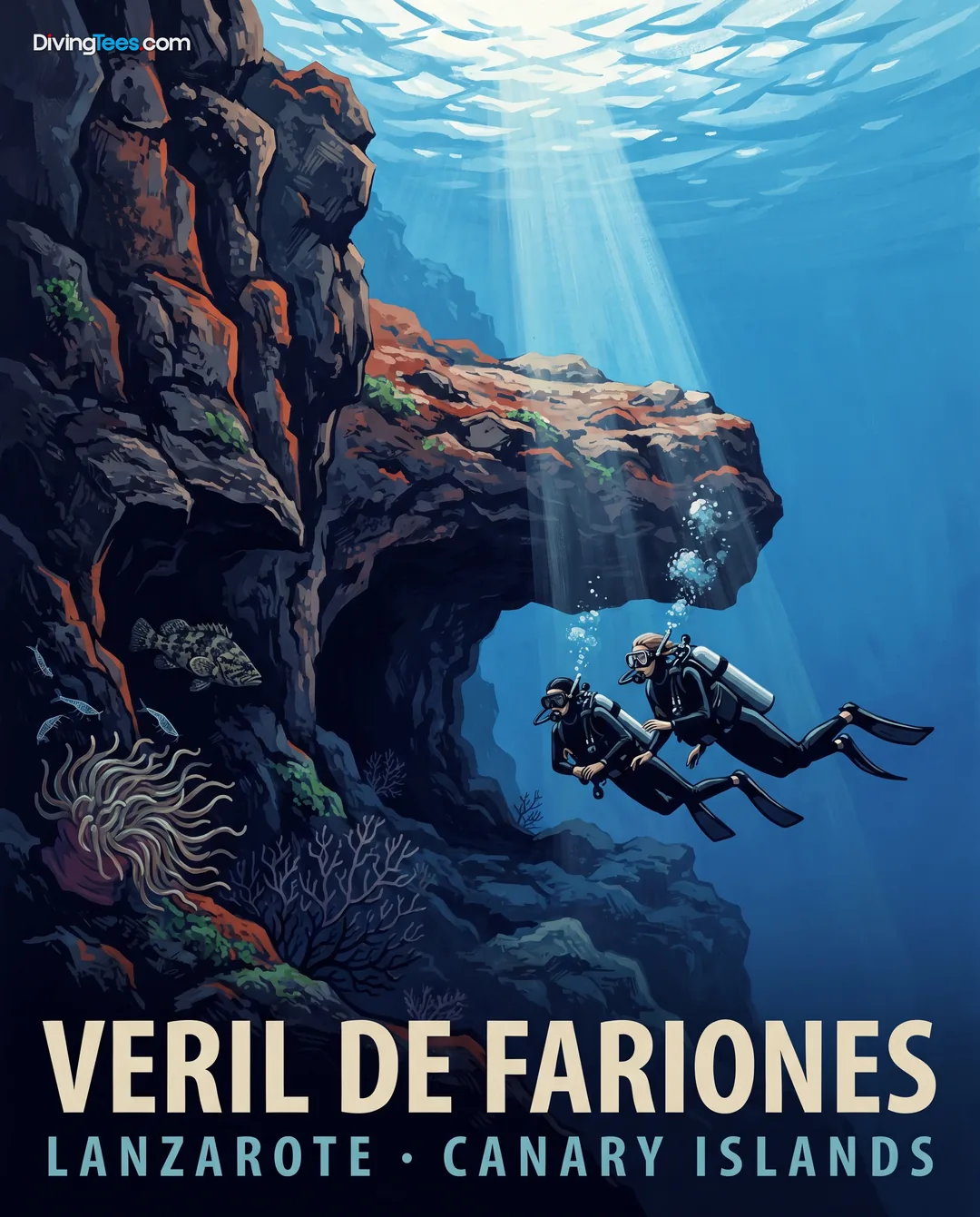
The underwater scenery is consistently geological: black lava, ledges, caverns, swim-throughs, walls and narrow passages replace coral gardens. Some dives begin on sand before reaching rock, as at Black Beach, while Punta Tiñosa moves from shallow volcanic gardens to a deeper wall. Veril de Playa Chica combines a steep underwater cliff with a small wreck and a resident grouper. Conditions are generally manageable, but current is variable and Atlantic swell or wind can close off exposed shore entries. Sheltered sites such as Las Coloradas and Flamingo Wall are useful when comfort matters; boat sites add depth and different exposure. Visibility is often good, but local swell and plankton can change the picture. Buoyancy and trim matter around rock, caves and overhangs, especially at Cathedral and the deeper sections of Charco del Palo.
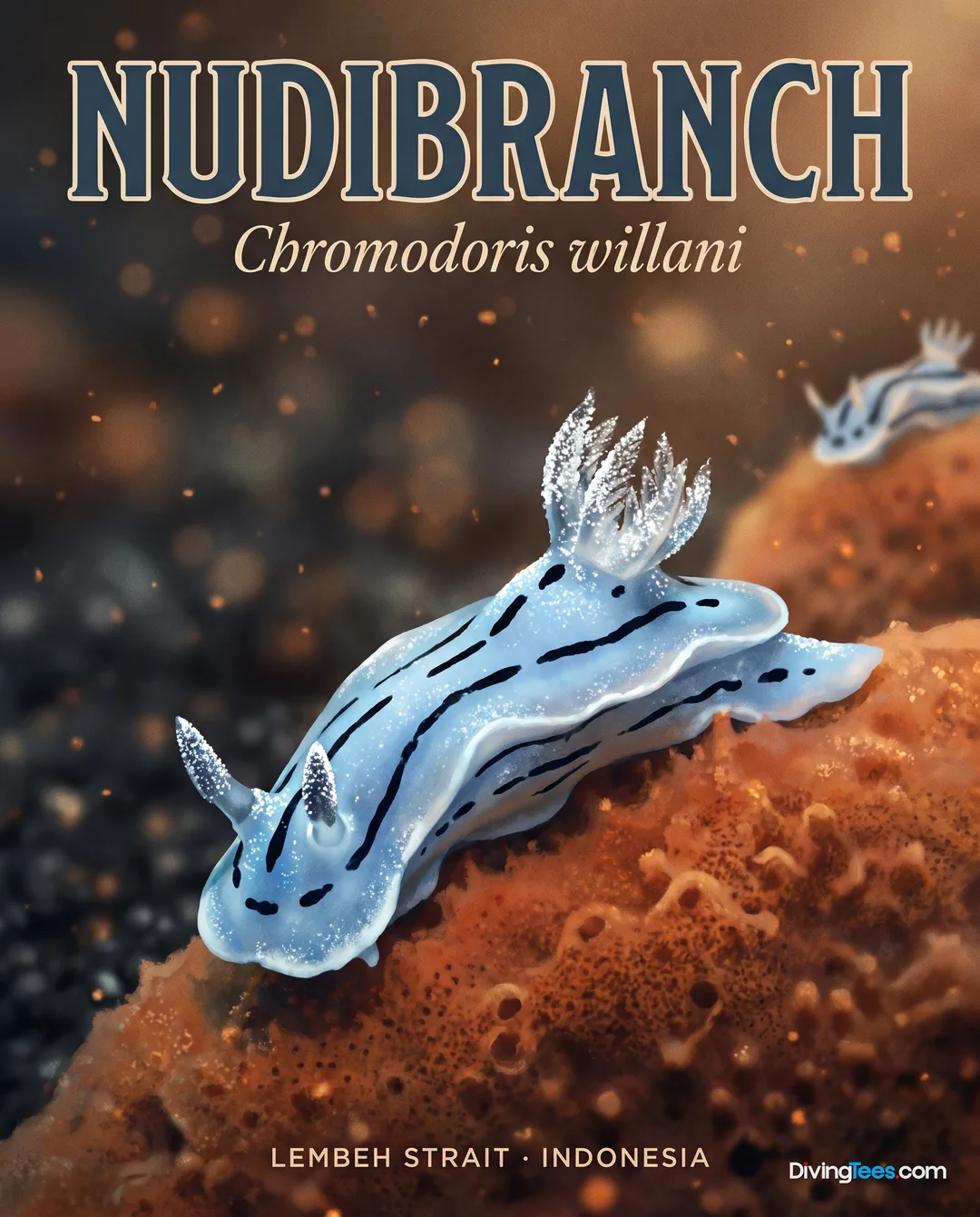
Lanzarote’s wildlife belongs to the Atlantic volcanic reef rather than a tropical reef catalogue. Moray eels occupy cracks at Punta Berrugo and Black Beach, while octopus, grouper, rays, barracudas, nudibranchs and sponges reward a slower search along the rock. Veril de Playa Chica is associated with a resident grouper, and Punta Tiñosa can produce stingrays among its lava formations. Museo Atlántico adds an artificial reef surface around the sculptures, where marine life is becoming established. Angelsharks are among the island’s distinctive encounters, although they should be treated as a fortunate sighting rather than a seasonal guarantee. Atlantic pelagics are rare. May to November is the calmer diving window, not a dependable promise of particular animals.
The most useful period is May to November, when the sea is generally at its calmest and exposed sites are more likely to be practical. Rainfall is lowest from May to October, which also suits a stay built around several shore and boat days. Lanzarote has no monsoon season to plan around; wind direction and Atlantic swell are the real variables. September, October and November can therefore be as useful as spring, while a flexible itinerary remains important throughout the year. A full suit in roughly 3mm to 5mm is more appropriate than tropical exposure protection.
Lanzarote suits beginners and experienced divers, with sheltered sites such as Museo Atlántico, Las Coloradas, Flamingo Wall and House Reef offering straightforward profiles. Open Water certification is enough for many dives, including shallower sections of Blue Hole and Punta Tiñosa. Advanced Open Water, or equivalent experience, becomes useful for deeper walls, Cathedral, Charco del Palo and profiles beyond twenty metres. Nitrox can also be useful for suitable repetitive diving, but depth control and comfort in overhead volcanic terrain matter more than collecting another qualification.
From London Heathrow, London Gatwick or Manchester, the journey starts with a flight to Lanzarote’s island airport. There is no internal flight or compulsory long boat transfer once the island is reached. Divers then travel by road to the coast and their chosen diving base; a hire car is practical for combining centres and shore sites, while taxis cover shorter transfers. A ferry is an alternative only for travellers arriving from another Canary Island, not a structural part of a UK journey. Lanzarote is compact, so road transfers are usually straightforward, but a stay on one coast does not remove the need to cross the island when weather or site choice changes. Accommodation may be close enough for walking, otherwise a short taxi or car journey is typical.
Build the week around both shore and boat diving. That simple mix gives more options when wind or swell makes one coast awkward, rather than leaving the whole plan tied to a single entry point. Keep at least one flexible day in the schedule, particularly if the trip depends on exposed sites or a deeper boat dive. Do not mistake every black-lava shoreline for an easy shore entry: the practical difficulty can be getting in and out, not the underwater route. A 3mm to 5mm full suit is a more sensible starting point than tropical kit, especially for repetitive dives. Bring the discipline to hold position and avoid touching rock around lava tunnels, arches and caves; Lanzarote offers little soft bottom to forgive poor trim. Expect volcanic scenery, not coral colour. Cathedral and the deep sections of Charco del Palo deserve genuine depth comfort, while Museo Atlántico provides a useful shallow day when conditions or energy levels call for something less demanding.
Five to seven days works well for a stay-based trip: it allows several dives while leaving room for wind and swell to rearrange the plan. Playa Blanca, Puerto del Carmen and other coastal bases can support a combination of shore and short boat outings, with road transfers kept manageable on this compact island. Non-divers are not stranded between dives, with beaches, volcanic landscapes, coastal walks and boat excursions providing straightforward alternatives. A day away from the water before flying is also easy to arrange.
Hello, I'm Marina, DivingDeal.com's AI assistant. I guide you through destinations, areas and countries.
Thinking about the whole trip and the flights? Talk it over with Edith →
Marina is an AI. Some links are affiliate links: DivingDeal may earn a commission, at no extra cost to you. Bookings are made with the partner.
Your last day stays dry: no diving in the 18-24 hours before a flight, the perfect window to see the destination from another angle.
 Nature
⏱ 4 h · ★ 5.0 (17 reviews)
from £48$64€57
see on Viator ↗
 Nature
⏱ 1 h · ★ 5.0 (12 reviews)
from £17$22€20
see on Viator ↗
 Culture
⏱ 2 h · ★ 5.0 (7 reviews)
from £24$32€29
see on Viator ↗

⏱ 1 h · ★ 5.0 (6 reviews)
from £42$56€50
see on Viator ↗
Ratings and reviews collected by Viator and Tripadvisor.
May through November is generally the calmer diving window, with exposed sites more likely to be practical. Rainfall is lowest from May to October, but wind direction and Atlantic swell remain the main variables. Keep your itinerary flexible, since conditions can affect shore entries and boat plans throughout the year.
Lanzarote suits beginners and experienced divers. Open Water certification is enough for many dives, including shallower sections of Blue Hole and Punta Tiñosa. Advanced training or equivalent experience is useful for deeper walls, Cathedral, Charco del Palo and dives beyond recreational shallow profiles. Buoyancy, trim and overhead comfort matter around volcanic rock.
You can explore black lava walls, ledges, arches, caverns, swim-throughs, sandy slopes and wrecks rather than tropical coral gardens. Wildlife includes morays, octopus, grouper, rays, barracudas, nudibranchs and sponges. Angelsharks may appear as a fortunate encounter, while Museo Atlántico combines underwater sculptures with an artificial reef habitat.
Build your stay around both shore and boat diving, with a flexible day for wind or swell. Playa Blanca and Puerto del Carmen are practical bases, while a hire car helps combine centres and shore sites. Pack a full suit, allow time for road transfers, and plan a day away from the water before flying.