






Mojo Dive - Tu centro de buceo en Lanzarote
Google 5/5 (1,728 reviews)
Canary Islands · Atlantic
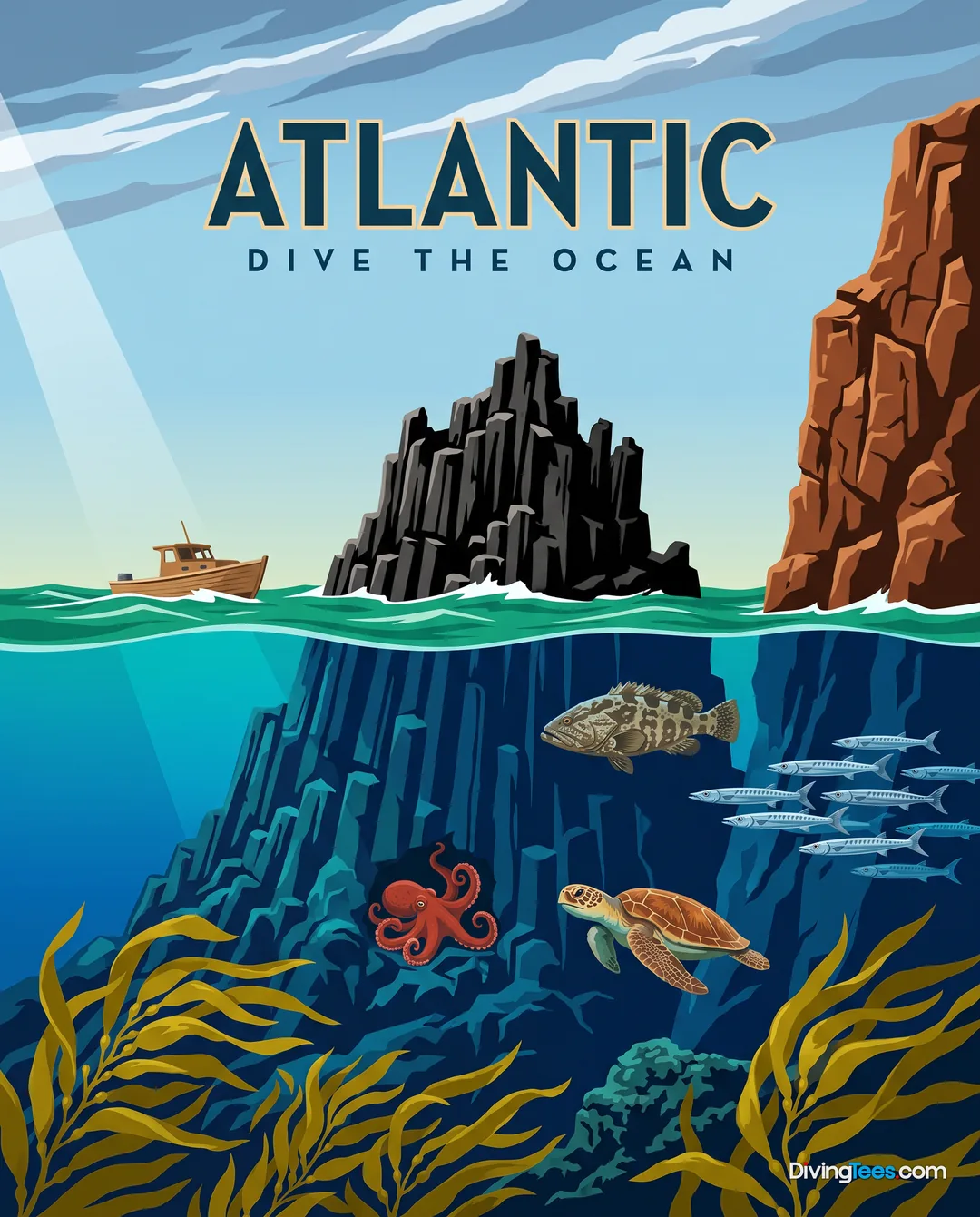
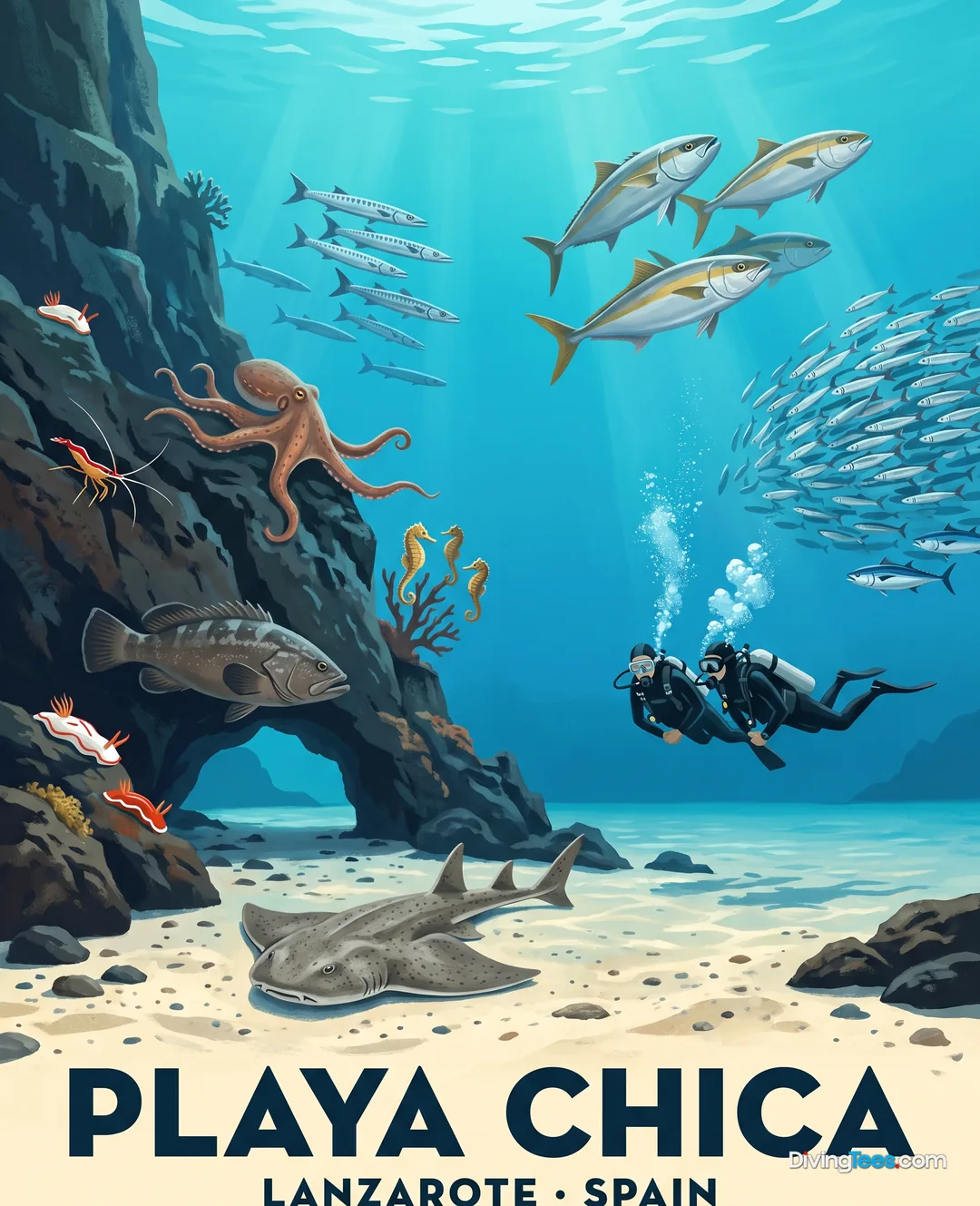
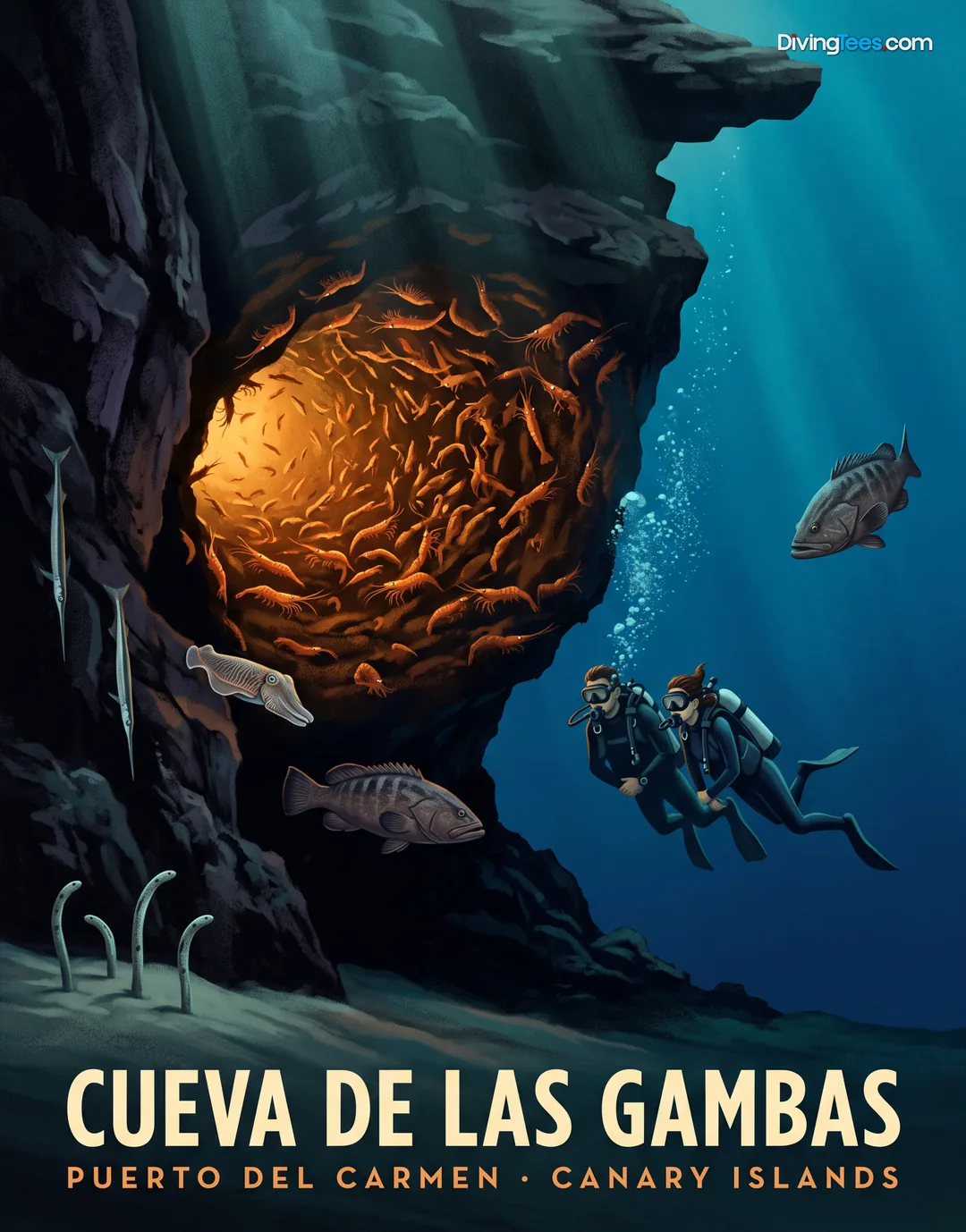
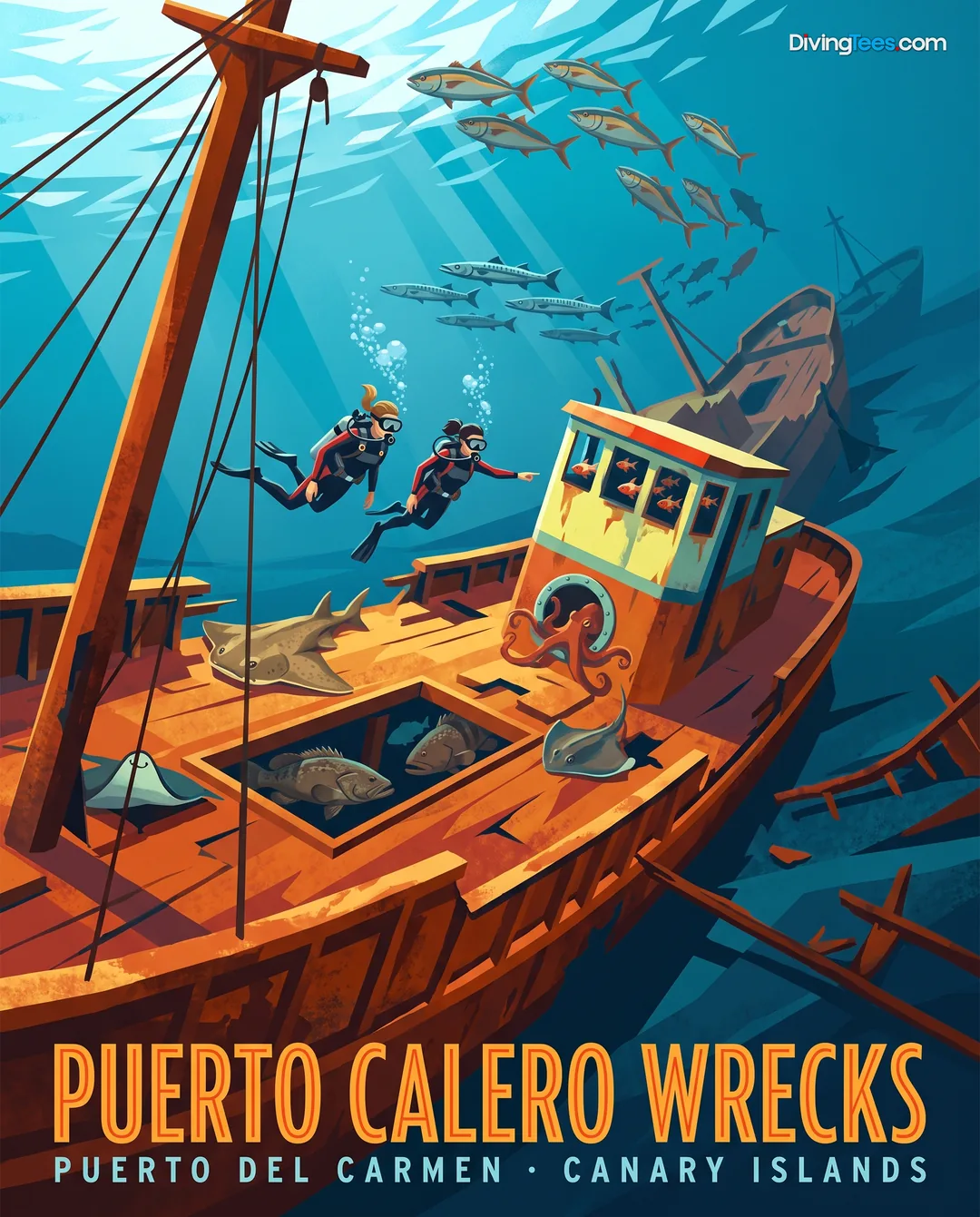
Volcanic walls drop beyond 40 metres at Playa Chica, while Puerto Calero Wrecks and Cueva De Las Gambas add fishing boats, shrimp and groupers.
For subtitles in English: start the video firstthen click the gearat the top right of the video, select “Subtitles/CC”, then “Auto-translate” and choose “English”.
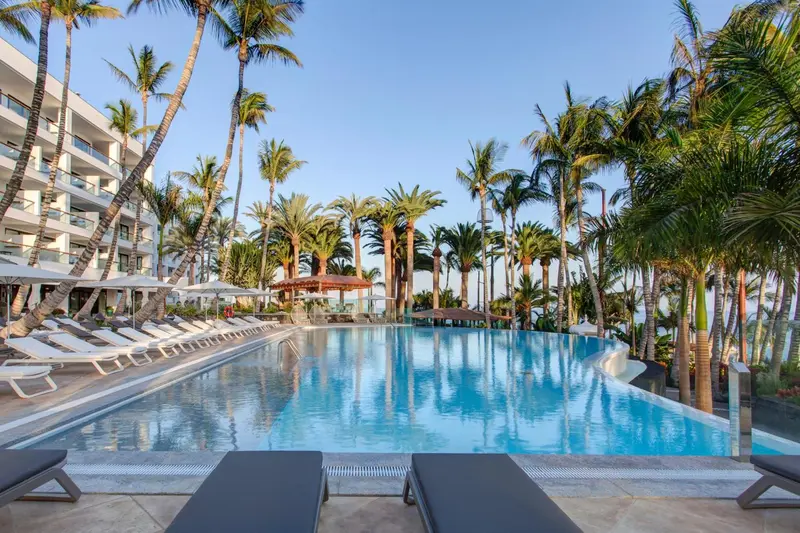
At Puerto del Carmen, diving fits around a proper coastal holiday rather than dictating it. Playa Chica gives straightforward access to volcanic walls, caves and deeper corridors, while short boat trips reach sites such as the Puerto Calero Wrecks. The area suits divers who want several local immersions, a choice of shore and boat departures, and a base where beaches, promenades and restaurants remain close at hand. It is a practical Lanzarote stay, not an expedition.
Volcanic topography is the common thread. At Playa Chica, the wall falls beyond 40 metres and is cut by caves and deep corridors, allowing shallower plans as well as more committed profiles. Cueva De Las Gambas centres on a dark cave at roughly 40 metres, reached from Playa Chica’s stairs or by boat. The Puerto Calero Wrecks add submerged fishing vessels and scattered debris, beginning around 12 metres and extending to 40 metres, where the artificial reef meets volcanic formations. Currents are generally light, but they can vary and occasionally strengthen, particularly on deeper or more exposed sections. Visibility at Cueva De Las Gambas is commonly around 20 to 30 metres, while Playa Chica can offer up to 40 metres. Most diving is from the shore or on short local boat runs, keeping the day flexible.
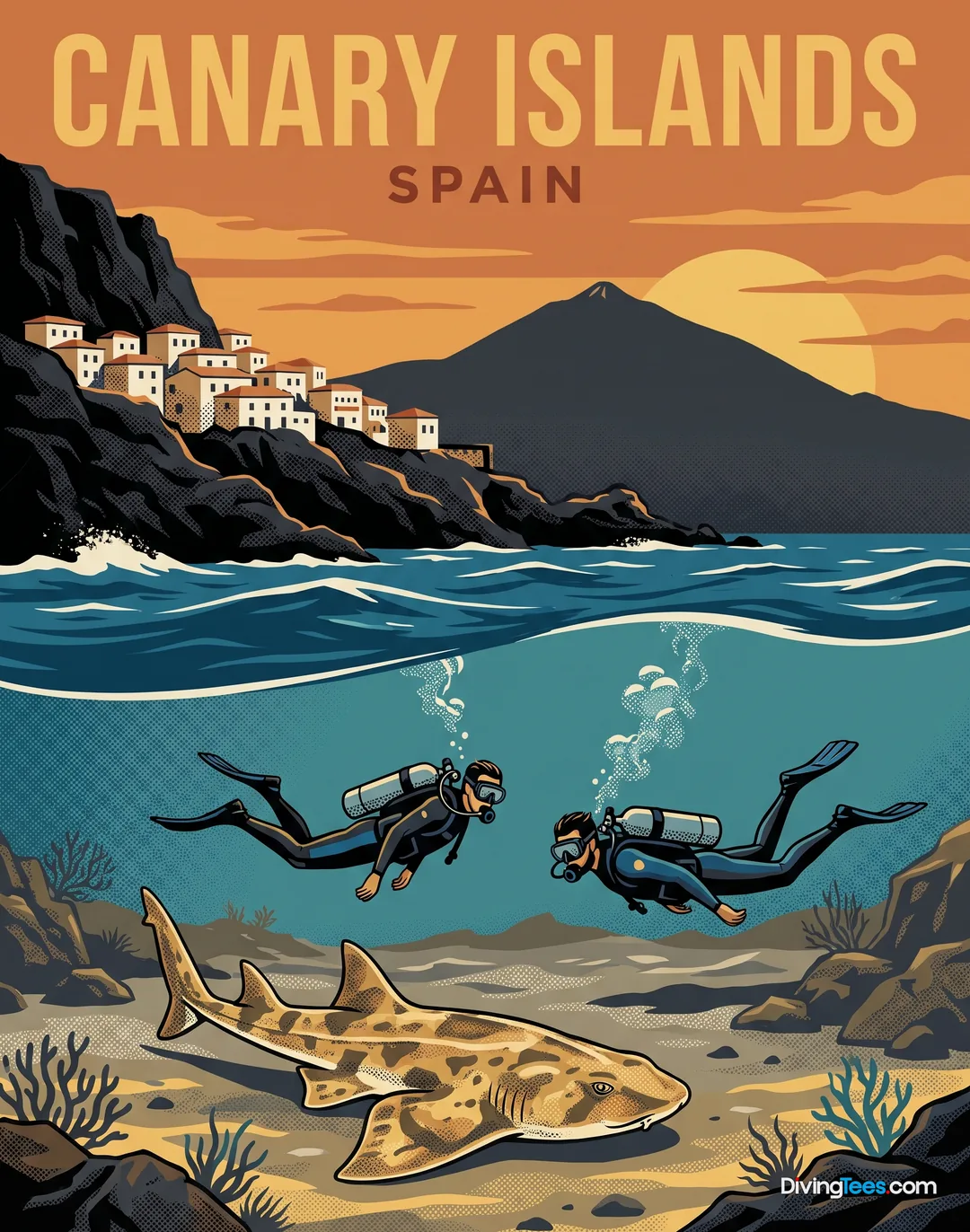
The clearest wildlife interest comes from looking carefully rather than expecting a parade of large animals. Cueva De Las Gambas earns its name from dense shrimp concentrations around the dark volcanic cave, with resident groupers hunting nearby. Playa Chica brings the chance of angel sharks and rays along its wall, caves and coral-covered areas. The wrecks at Puerto Calero also create surfaces and shelter for marine life among the fishing boats and debris. These encounters are tied to the character of each site rather than a documented seasonal migration, so the sensible approach is to leave room in the week for repeat visits and patient observation. The May-to-November period is useful mainly for calmer diving conditions, not because a particular animal is guaranteed then.
May to November is the measured window for the calmest sea, making it the most straightforward period for combining shore entries with short boat departures. Rainfall is lowest from May to October, which also helps keep a mixed diving and holiday itinerary uncomplicated. Puerto del Carmen remains usable beyond that window, but the calmer months give more flexibility when planning deeper profiles, visiting the wrecks or deciding between Playa Chica and a boat mooring. As conditions can still vary from day to day, a fixed schedule is less useful than keeping one or two days adaptable.
Puerto del Carmen works for all levels, particularly on its accessible shore dives and shallower volcanic profiles. Open Water divers can use the Puerto Calero Wrecks, but logged experience with deeper wreck diving is sensible before following them towards 40 metres. Cueva De Las Gambas is depth-oriented, with its main feature at about 40 metres and potentially variable current, so it suits experienced divers with appropriate depth training. Advanced certification is useful for the deeper options. BSAC, PADI and SSI divers should match the site and plan to their actual recent experience, not simply the maximum depth on a qualification card.
From London, departures through Heathrow or Gatwick, and from Manchester, the route is by air to Lanzarote followed by a road transfer to Puerto del Carmen. No ferry is required, and there is no compulsory sea crossing before the diving begins. The local arrangement is uncomplicated: accommodation near the waterfront or port can put divers within walking distance of centres, while other properties are usually reached by a short transfer. Short boat departures operate from the area, but the destination is organised around a land-based stay. For the return journey, allow the day’s diving schedule to finish before travelling, and keep the road transfer separate from any rushed connection.
Treat Puerto del Carmen as a base for linked local dives, not as a liveaboard destination. Its strength is the ability to repeat shore and short boat outings while deciding the next day around sea conditions. Staying near the waterfront or port makes a noticeable difference, especially when carrying personal equipment; a small kit that fits properly is worth bringing because the week may involve repeated entries. Use the opening dives to settle into Playa Chica and the local style, then place the deeper wreck sections or Cueva De Las Gambas when the group is comfortable and the conditions suit them. Do not build the holiday around a single site or a promise of large pelagics: the useful variety lies in volcanic walls, the fishing-boat wrecks and the shrimp cave. Keep some flexibility in a short week, rather than filling every day before arrival, and remember that the deeper parts are not simply extensions of an easy beach dive.
Five to seven days gives enough time to repeat local shore dives, add a short boat outing and leave space for changing sea conditions. The most comfortable arrangement is a central waterfront base, allowing diving days to sit alongside beach time, promenades and meals without long transfers. A non-diving companion has plenty to do in Puerto del Carmen, while a day without immersion can be used for an excursion elsewhere in southern Lanzarote.
Hello, I'm Marina, DivingDeal.com's AI assistant. I guide you through destinations, areas and countries.
Thinking about the whole trip and the flights? Talk it over with Edith →
Marina is an AI. Some links are affiliate links: DivingDeal may earn a commission, at no extra cost to you. Bookings are made with the partner.
Your last day stays dry: no diving in the 18-24 hours before a flight, the perfect window to see the destination from another angle.
 Nature
⏱ 4 h · ★ 5.0 (17 reviews)
from £48$64€57
see on Viator ↗
 Culture
⏱ 4 h · ★ 5.0 (231 reviews)
from £75$100€89
see on Viator ↗
 Nature
⏱ 1 h · ★ 5.0 (44 reviews)
from £13$17€15
see on Viator ↗

⏱ 3 h · ★ 5.0 (774 reviews)
from £17$22€20
see on Viator ↗
Ratings and reviews collected by Viator and Tripadvisor.
Choose Puerto del Carmen between May and November for calmer sea, which makes it easier to combine shore entries with short boat departures. Rainfall is lowest from May to October. Conditions can still change daily, so keep one or two days adaptable rather than fixing every dive in advance.
Puerto del Carmen suits all levels through accessible shore dives and shallower volcanic profiles. Open Water divers can visit the Puerto Calero Wrecks, while deeper sections towards 40 metres require suitable experience and training. Cueva De Las Gambas, with variable current and its deep cave, suits experienced divers.
In Puerto del Carmen, Playa Chica offers volcanic walls, caves and deep corridors, with angel sharks and rays reported nearby. Cueva De Las Gambas features a dark volcanic cave with shrimp and groupers. The Puerto Calero Wrecks contain submerged fishing boats, debris and shelter for marine life.
Plan Puerto del Carmen as a land-based stay with linked local dives, repeating shore entries and adding short boat trips. Stay near the waterfront or port for easier access to diving centres. A five-to-seven-day visit allows repeat dives, changing conditions, beach time, promenades and meals without long transfers.