
Aquatis Diving Lanzarote
Google 5/5 (881 reviews)
Canary Islands · Atlantic
A sandy, sheltered bay for training, volcanic arches and shore entries towards Charco del Palo and Playa Chica make Costa Teguise a practical Lanzarote base.
For subtitles in English: start the video firstthen click the gearat the top right of the video, select “Subtitles/CC”, then “Auto-translate” and choose “English”.
Costa Teguise is a shore-based Lanzarote base rather than a destination built around one spectacular dive. Playa del Jablillo gives beginners a sheltered, shallow sandy bay for a first immersion, refresher or training session. From there, local centres can take experienced divers by road to Playa Chica, Charco del Palo and other coastal sectors, where volcanic rock, arches, drop-offs and swim-throughs replace the simplicity of the teaching bay. It suits a five- to seven-day stay that leaves room for both diving and exploring the island.
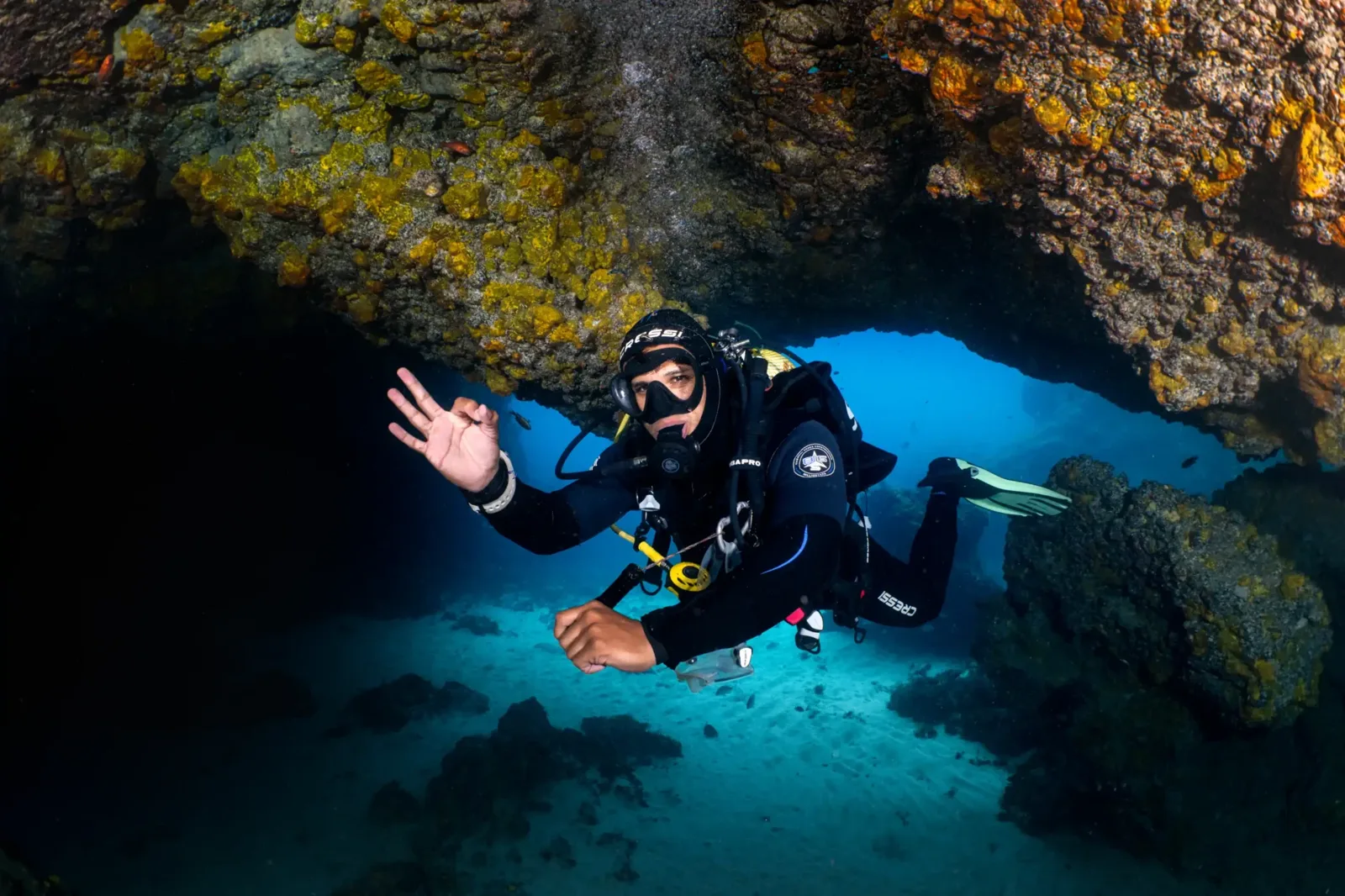
The local starting point is Playa del Jablillo, where a rocky breakwater protects a shallow sandy bottom and makes entry and surface work relatively straightforward. It is a place to settle buoyancy, practise skills and make an uncomplicated shore dive, not the whole reason to come to Lanzarote. Road trips open up more sculpted volcanic terrain. Around Charco del Palo and Playa Chica, expect rock faces, arches, drop-offs and passages under rock, with the character changing according to the site chosen. Currents are variable, so this is not a destination for assuming a fixed drift dive or a predictable downcurrent. Centres select the day’s location around weather and tides. Visibility can be good in the sheltered bay, but should be treated as a condition rather than a promise.
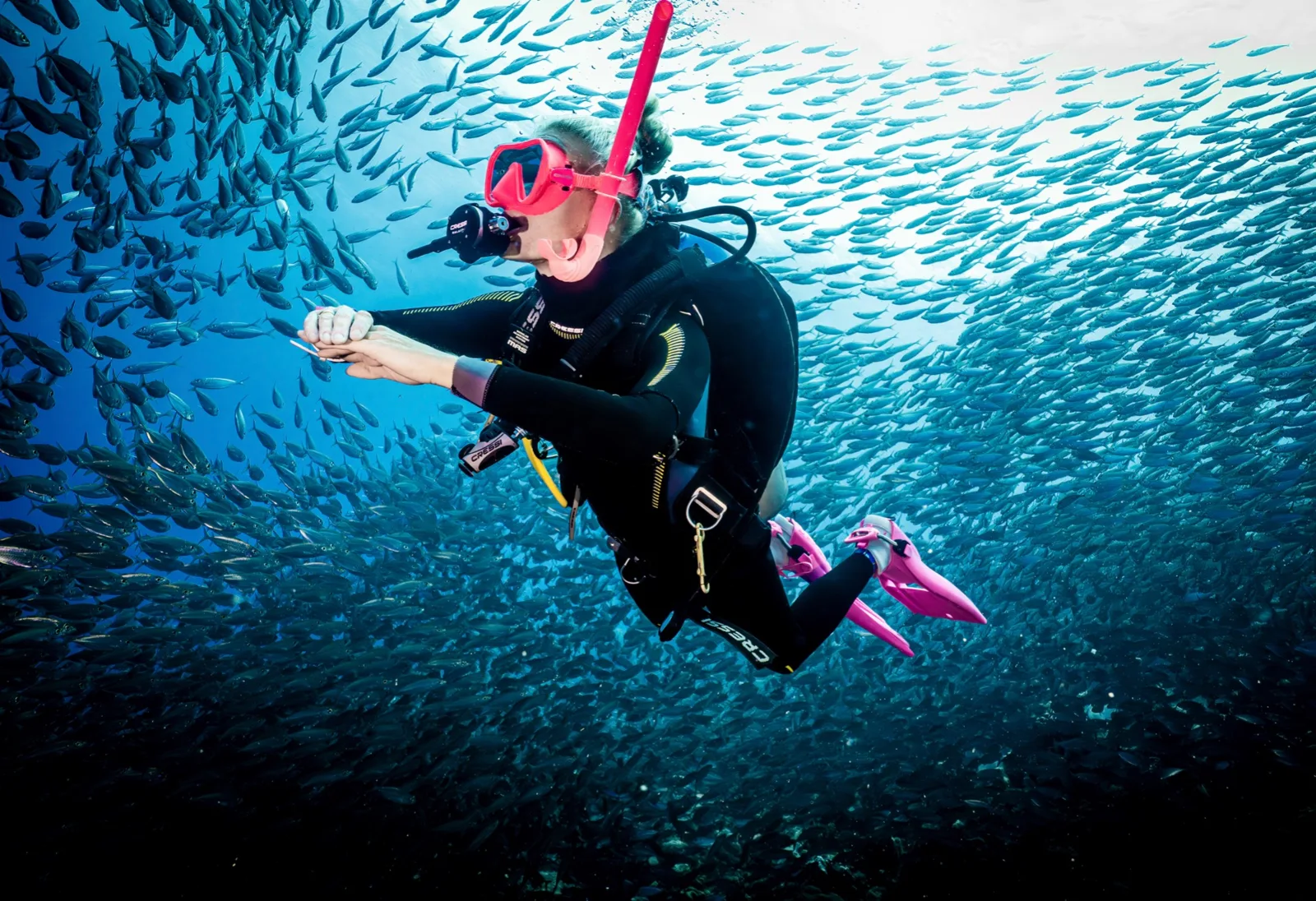
The underwater interest around Costa Teguise lies less in booking around one headline animal than in seeing how marine life occupies Lanzarote’s black volcanic edges. At Playa del Jablillo, the sandy shallows and rock margin give beginners time to look closely while instructors manage the first exercises. On the outer sites, arches, drop-offs and swim-throughs create more varied places to search as you move slowly over the rock. Playa Chica and Charco del Palo offer the change of setting, rather than a guaranteed seasonal encounter. There is no dependable wildlife calendar to build the trip around, so come for the combination of volcanic structure, easy observation and changing coastal conditions.
Costa Teguise works best when the itinerary can bend with the weather and tides. Playa del Jablillo offers the useful fallback of a sheltered bay, while Charco del Palo and other exposed shore sites need a more careful look at conditions on the day. The sensible approach is therefore not to chase a fixed best month, but to leave enough time for centres to move an outing or substitute a calmer site. A five- to seven-day stay gives that flexibility and still allows land excursions. Seasonal labels such as rainy season or monsoon do not define the planning here. Local wind, sea state and tides matter more to the dive choice.
This is a good fit for beginners, returning divers and anyone wanting a straightforward training base. Playa del Jablillo provides a sheltered setting for a first dive, refresher or certification course, whether through PADI, SSI or BSAC-aligned training. Certified divers can use it for an easy opening dive before travelling to more demanding volcanic shore sites. Experience with uneven rocky entries is more useful at Charco del Palo than at the beach bay, and conditions should decide whether a particular outing suits the diver on that day.
From London or Manchester, fly to Lanzarote and continue by road to Costa Teguise. No ferry is needed, and inter-island boats are not part of the normal journey to this base. Allow for the connection between the flight and the local road transfer, particularly if the accommodation or dive centre is outside the central resort area. Once in Costa Teguise, some centres around Playa del Jablillo, Playa de las Cucharas and Avenida del Mar can be reached on foot, with local pick-ups also available. A hire car, or an arranged transfer, makes the road trips to Playa Chica, Charco del Palo and other Lanzarote sectors much easier.
Use Playa del Jablillo deliberately, either as a first dive, a refresher or a training venue, rather than assuming it represents every dive available from Costa Teguise. If volcanic scenery is the point of the trip, reserve space in the plan for Playa Chica or Charco del Palo, while accepting that weather and tides may change the destination. Charco del Palo deserves particular flexibility because its rocky shore access is more exposed than Jablillo’s protected bay. Do not confuse Playa Chica with Costa Teguise: it is in the Puerto del Carmen area and needs a road transfer. Check the exact meeting point before setting out, as centres operate around the beach, commercial areas and Avenida del Mar. Staying near the promenade makes walking to several meeting points simpler, but a car is the practical choice for comparing Lanzarote’s different coasts.
A typical stay combines easy local dives at Playa del Jablillo with road excursions to other Lanzarote coasts. Keep one or two days flexible for the centre’s weather and tide decisions, then use the remaining time for the island’s volcanic landscapes, viewpoints and villages. Costa Teguise works well for non-divers too, with Las Cucharas, Jablillo, the seafront and water activities close at hand. The old town of Teguise and places associated with César Manrique add worthwhile days out between dives.
Hello, I'm Marina, DivingDeal.com's AI assistant. I guide you through destinations, areas and countries.
Thinking about the whole trip and the flights? Talk it over with Edith →
Marina is an AI. Some links are affiliate links: DivingDeal may earn a commission, at no extra cost to you. Bookings are made with the partner.
Plan around local wind, sea state and tides rather than a fixed month or seasonal label. Centres choose between Playa del Jablillo, Charco del Palo and other sites according to conditions. Keep your itinerary flexible, since weather and tides may lead to a different outing or a calmer substitute site.
Teguise suits beginners, returning divers and certified divers. Playa del Jablillo provides a sheltered, shallow sandy bay for a first immersion, refresher, skills practice or certification course. Certified divers can begin there before visiting volcanic shore sites, where uneven rocky entries and changing conditions require more care and suitable experience.
You can explore Lanzarote’s black volcanic edges, with sandy shallows and rock margins at Playa del Jablillo. Road trips to Charco del Palo and Playa Chica add rock faces, arches, drop-offs and swim-throughs. Marine life occupies these changing structures, but there is no dependable wildlife calendar for planning a specific encounter.
Use Playa del Jablillo for an easy local dive, refresher or training session, and leave flexible days for road trips to Playa Chica or Charco del Palo. Staying near the promenade simplifies access to meeting points, while a hire car or arranged transfer helps reach other coasts. Add time for Teguise, César Manrique landscapes and island excursions.